Kirjojen hintavertailu – 12 859 826 kirjaa ja 27 kauppaa
Kirjailija
Howard Gardner
Kirjat ja teokset yhdessä paikassa: 45 kirjaa, julkaisuja vuosilta 1982–2026, suosituimpiin kuuluu Leading Minds. Vertaile teosten hintoja ja tarkista saatavuus suomalaisista kirjakaupoista.
From ancient times, philosophers, theologians, and artists have attempted to describe and categorize the defining virtues of civilization. In Truth, Beauty, and Goodness Reframed , renowned education authority Howard Gardner explores the meaning of the title's three virtues in an age when vast technological advancement and relativistic attitudes toward human nature have deeply shaken our moral worldview. His incisive examination reveals that although these concepts are changing faster than ever before, they are- and will remain, with our stewardship- cornerstones of our society. Designed to appeal to a wide readership, Truth, Beauty, and Goodness Reframed is an approachable primer on the foundations of ethics in the modern age.
In Character Compass, Scott Seider offers portraits of three high-performing urban schools in Boston, Massachusetts that have made character development central to their mission of supporting student success, yet define character in three very different ways. One school focuses on students’ moral character development, another emphasises civic character development, and the third prioritises performance character development. Drawing on surveys, interviews, field notes, and student achievement data, Character Compass highlights the unique effects of these distinct approaches to character development as well as the implications for parents, educators, and policymakers committed to fostering powerful school culture in their own school communities.
Since it was first published in 1993, Creating Minds has served as a peerless guide to the creative self. Now available as a paperback reissue with a new introduction by the author, the book uses portraits of seven extraordinary individuals to reveal the patterns that drive the creative process,and to demonstrate how circumstance also plays an indispensable role in creative success.
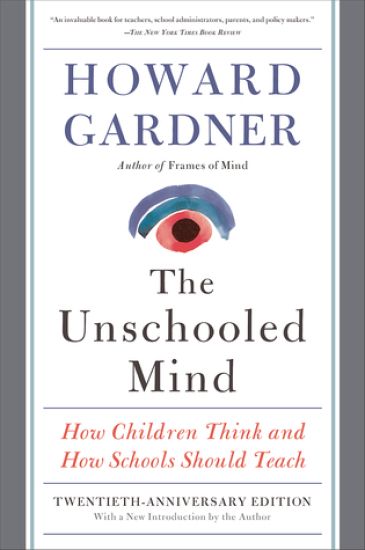
Merging cognitive science with educational agenda, Gardner makes an eloquent case for restructuring our schools by showing just how ill-suited our minds and natural patterns of learning are to the prevailing modes of education. This reissue includes a new introduction by the author.
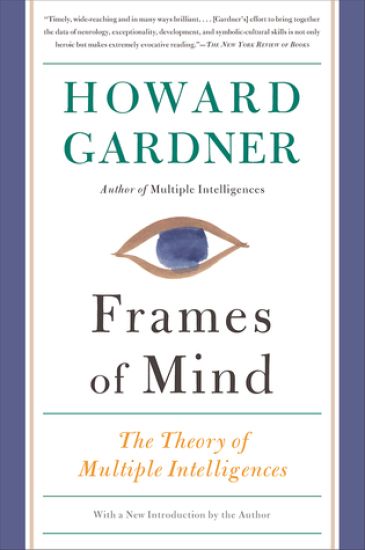
First published in 1983 and now available with a new introduction by the author, Gardner's trailblazing book revolutionized the worlds of education and psychology by positing that rather than a single type of intelligence, we have several- most of which are neglected by standard testing and educational methods.
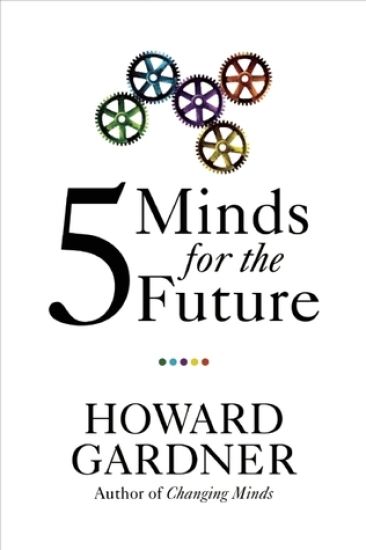
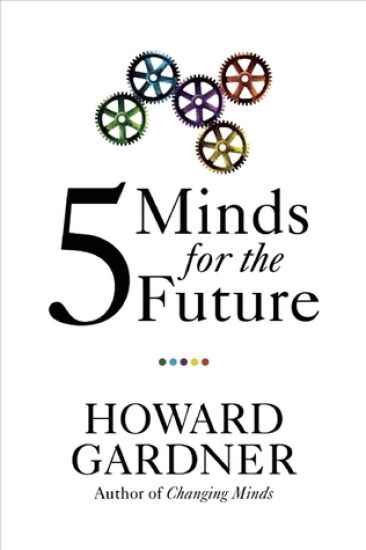
We live in a time of relentless change. The only thing that?s certain is that new challenges and opportunities will emerge that are virtually unimaginable today. How can we know which skills will be required to succeed? In Five Minds for the Future, bestselling author Howard Gardner shows how we will each need to master "five minds" that the fast-paced future will demand: * The disciplined mind, to learn at least one profession, as well as the major thinking (science, math, history, etc.) behind it * The synthesizing mind, to organize the massive amounts of information and communicate effectively to others * The creating mind, to revel in unasked questions - and uncover new phenomena and insightful apt answers * The respectful mind, to appreciate the differences between human beings - and understand and work with all persons * The ethical mind, to fulfill one's responsibilities as both a worker and a citizen Without these "minds," we risk being overwhelmed by information, unable to succeed in the workplace, and incapable of the judgment needed to thrive both personally and professionally. Complete with a substantial new introduction, Five Minds for the Future provides valuable tools for those looking ahead to the next generation of leaders - and for all of us striving to excel in a complex world. Howard Gardner--cited by Foreign Policy magazine as one of the one hundred most influential public intellectuals in the world, and a MacArthur Fellowship recipient--is the Hobbs Professor of Cognition and Education at the Harvard Graduate School of Education.
We live in a time of relentless change. The only thing that's certain is that new challenges and opportunities will emerge that are virtually unimaginable today. How can we know which skills will be required to succeed? In Five Minds for the Future, bestselling author Howard Gardner shows how we will each need to master "five minds" that the fast-paced future will demand: * The disciplined mind, to learn at least one profession, as well as the major thinking (science, math, history, etc.) behind it * The synthesizing mind, to organize the massive amounts of information and communicate effectively to others * The creating mind, to revel in unasked questions--and uncover new phenomena and insightful apt answers * The respectful mind, to appreciate the differences between human beings - and understand and work with all persons * The ethical mind, to fulfill one's responsibilities as both a worker and a citizen Without these "minds," we risk being overwhelmed by information, unable to succeed in the workplace, and incapable of the judgment needed to thrive both personally and professionally. Complete with a substantial new introduction, Five Minds for the Future provides valuable tools for those looking ahead to the next generation of leaders - and for all of us striving to excel in a complex world. Howard Gardner--cited by Foreign Policy magazine as one of the one hundred most influential public intellectuals in the world, and a MacArthur Fellowship recipient--is the Hobbs Professor of Cognition and Education at the Harvard Graduate School of Education.
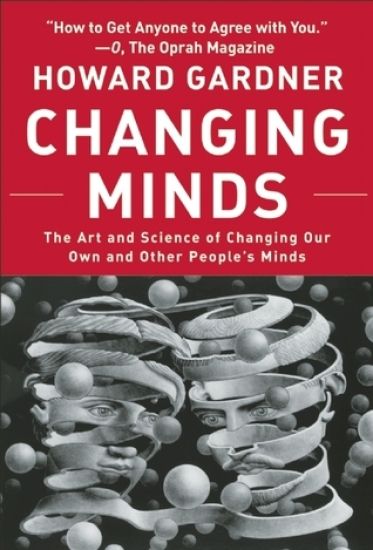
Think about the last time you tried to change someone's mind about something important: a voter's political beliefs; a customer's favorite brand; a spouse's decorating taste. Chances are you weren't successful in shifting that person's beliefs in any way. In his book, Changing Minds, Harvard psychologist Howard Gardner explains what happens during the course of changing a mind -- and offers ways to influence that process. Remember that we don't change our minds overnight, it happens in gradual stages that can be powerfully influenced along the way. This book provides insights that can broaden our horizons and shape our lives.
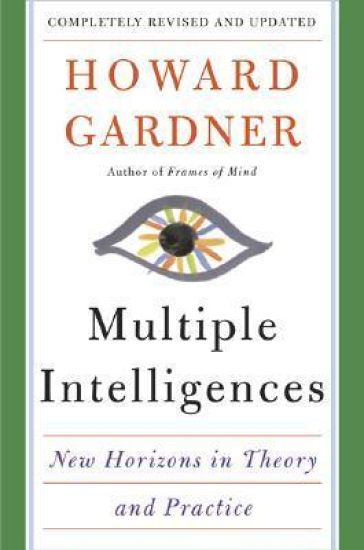
An updated edition of the multiple intelligences theory explains the concept of multiple intelligences, describes the diverse educational applications of the theory, and discusses its implications for future trends in teaching. Reprint.
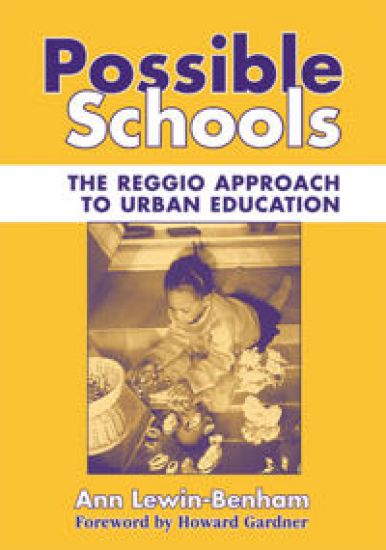
Possible Schools tells the compelling story of the Model Early Learning Center (MELC) in Washington, D. C. - the only school in a U. S. urban area to successfully implement the principles of the Municipal Preschools of Reggio Emilia. The author describes the origin of this school, which served impoverished urban families, and traces its evolution from a chaotic inception to its ability to apply Reggio practices. Both inspirational and straightforward in its details, this book describes: a new vision for early education, showing how children and families in poverty will thrive when their abilities are promoted and intellect respected; the structure of the program, providing guidance to anyone wanting to adapt the Reggio Approach in their school; children's incredible accomplishments, including many photos; teachers' development, both personally and professionally, as they learned to use an approach that involves a new role for teachers; the role of Reggio educator Amelia Gambetti, who spent a year at the MELC; parent involvement in many new and expanded roles; and, the complex circumstances that resulted in the eventual closing of the school.
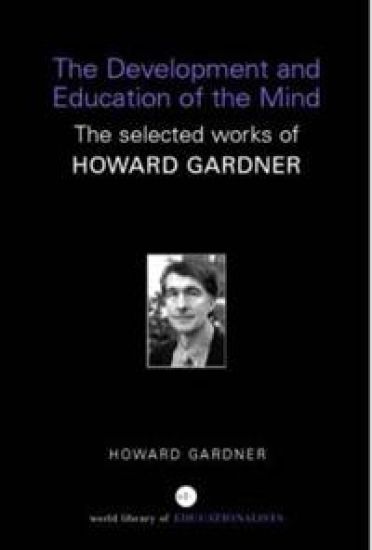
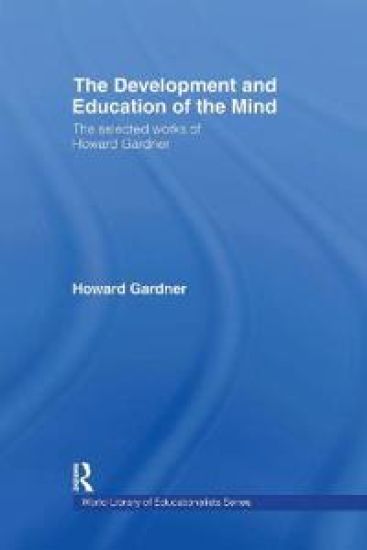
Leading American psychologist and educator Howard Gardner has assembled his most important writings about education. Spanning over thirty years, this collection reveals the thinking, the concepts and the empirical research that have made Gardner one of the most respected and cited educational authorities of our time. Trained originally as a psychologist at Harvard University, Howard Gardner begins with personal sketches and tributes to his major teachers and mentors. He then presents the work for which he is best-known – the theory of multiple intelligences – including a summary of the original theory and accounts of how it has been updated over the years. Other seminal papers featured include:education in the artsthe nature of understandingpowerful ways in which to assess learningbroad statements about the educational enterprisehow education is likely to evolve in the globalised world of the twenty-first century.
Leading American psychologist and educator Howard Gardner has assembled his most important writings about education. Spanning over thirty years, this collection reveals the thinking, the concepts and the empirical research that have made Gardner one of the most respected and cited educational authorities of our time. Trained originally as a psychologist at Harvard University, Howard Gardner begins with personal sketches and tributes to his major teachers and mentors. He then presents the work for which he is best-known – the theory of multiple intelligences – including a summary of the original theory and accounts of how it has been updated over the years. Other seminal papers featured include:education in the artsthe nature of understandingpowerful ways in which to assess learningbroad statements about the educational enterprisehow education is likely to evolve in the globalised world of the twenty-first century.
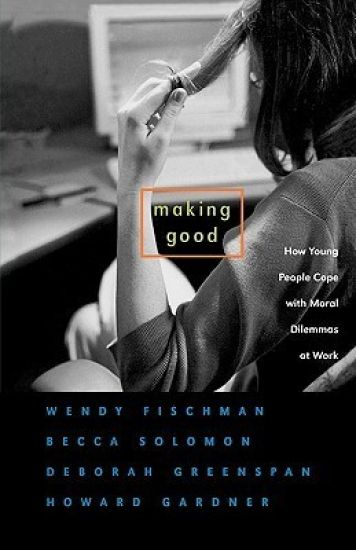
You're young, ambitious, entering the field of your dreams; you're on your own, the competition is fierce--and then you see your chance: the big story, the big role, the big discovery. But you'll have to cut a few corners, bend the rules, cheat a bit. What choices will you make? After studying more than a hundred young people launching their careers, these longtime researchers of "good work"--work that is both skillful and honorable--find unsettling answers. Although young workers know what it takes to do good work, they don't always feel they can follow the ethical route. "Later, when I'm successful," is their implicit promise. Making Good explores the choices confronting young workers who join the ranks of three dynamic professions--journalism, science, and acting--and looks at how the novices navigate moral dilemmas posed by a demanding, frequently lonely, professional life. The authors also uncover striking comparisons between these young professionals and the veterans in their fields--most notably, older workers recall inspiring models and mentors, while today's beginners see themselves as on their own. With extensive insights into how young workers view their respective domains, the nature of their ambitions, the sacrifices they are willing to make, and the lines they are prepared to cross, this study will prove instructive to young employees and employers alike, as well as to those who wish to understand the shifting moral and social character of the working world.
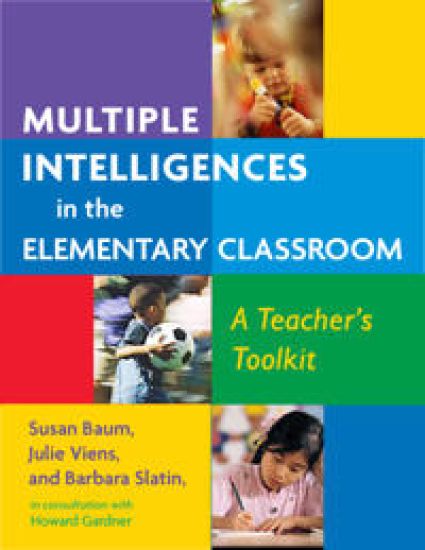
This book will help teachers design effective curriculum for their students with diverse learning abilities. The authors have created a guided process to apply MI theory to the elementary school classroom. The five ""pathways"" or approaches examined - Exploration, Bridging, Understanding, Authentic Problems, and Talent Development - represent the ways in which MI can be implemented and nurtured across the elementary grades. The Pathways Model promotes and supports the development of a well-grounded understanding of MI theory to inform goal-setting and planning for using multiple intelligences theory in the classroom. Each pathway addresses a different set of goals and provides appropriate guidelines and examples. This comprehensive guidebook shows teachers how to get started by choosing an appropriate pathway based on their specific goals, illustrates how to use each of these models for teaching and learning with ""Snapshots"" from actual classrooms, provides a ""Putting the Pathway into Action"" section that includes organizers to help teachers design lesson plans for each pathway, includes ""Thought Questions"" for group reflections and ""Implementation Activities"" for experimenting with ideas in the classroom, and supplies suggested resources, reproducible reference sheets, and the supporting materials needed to implement the activities presented in the book.
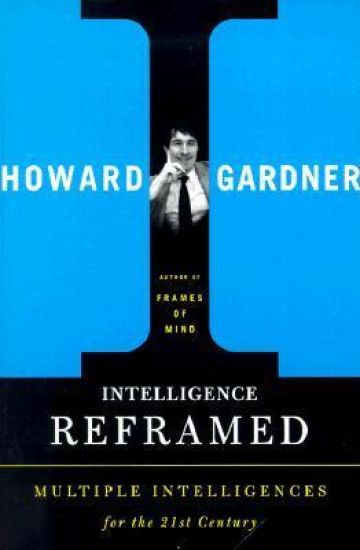
Harvard psychologist Howard Gardner has been acclaimed as the most influential educational theorist since John Dewey. His ideas about intelligence and creativity - explicated in such bestselling books as Frames of Mind and Multiple Intelligences (over 200,000 copies in print combined) - have revolutionized our thinking. In his ground-breaking 1983 book Frames of Mind , Howard Gardner first introduced the theory of multiple intelligences, which posits that intelligence is more than a single property of the human mind. That theory has become widely accepted as one of the seminal ideas of the twentieth century and continues to attract attention all over the world. Now in Intelligence Reframed , Gardner provides a much-needed report on the theory, its evolution and revisions. He offers practical guidance on the educational uses of the theory and responds to the critiques leveled against him. He also introduces two new intelligences (existential intelligence and naturalist intelligence) and argues that the concept of intelligence should be broadened, but not so absurdly that it includes every human virtue and value. Ultimately, argues Gardner, possessing a basic set of seven or eight intelligences is not only a unique trademark of the human species, but also perhaps even a working definition of the species. Gardner also offers provocative ideas about creativity, leadership, and moral excellence, and speculates about the relationship between multiple intelligences and the world of work in the future.
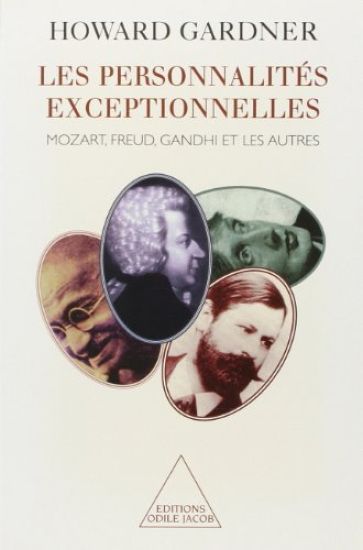
When Howard Gardner first proposed his theory of "multiple intelligences" in 1983, he created a sensation. He argued that there is no single intelligence which could be reduced to verbal and analytical skills ? both of which are taught and measured in school; in his view, intelligences are multiple and comprise many aptitudes, including artistic creativity, spatial reasoning, and the ability to understand others. Gardner's approach has profoundly modified the way we regard the nature of the mied, genius, creativity and even leadership. In his new book, Gardner addresses another question: Are there any common psychological traits among people who accomplish great things, regardless of their field of endeavour or historical era? He begins his investigation by describing the process that each person follows to become a competent adult, and then proceeds to describe four exceptional iedividuals: Mozart, who can be regarded as the master of his domain: Freud, the founder of a new field; Virginia Woolf, the great introspective artist; and Gandhi, the leader of vast influence. What made them exceptional? Why did they accomplish great things? Gardner argues that their greatness was not only the result of their exceptional abilities; they became great because they were more capable than others of identifying their strengths and weaknesses, of carefully analysing events and of adapting the ups and downs of life to their utmost advantage. Genius is not a stroke of luck. It is the product of special qualities of the mied which may or may not be developed. This is a brilliant overview covering the various aspects of the making of greatness, which should offer readers many useful pointers. Howard Gardner is renowned for his work in the field of cognitive psychology, and particularly for his revolutionary theory on multiple intelligences. He teaches educational science in the Department of Education at Harvard University and is one of the directors Harvard's Project Zero. He also teaches neurology at Boston University's medical school.
A revised edition of Gardner's classic on the development of creativity. Illustrated throughout with children's art, this book is a systematic examination of the relation between youthful participation in the arts and the ultimate craftsmanship attained by gifted artists.
In this volume three of the key figures in the field set out to establish some parameters for the study of creativity. After examining the earlier works on the subject, they present their current research findings, and then attempt to project where the field is likely to go in the decade ahead. Gardner, the proponent of biological aspects of creativity, ranges widely as he examines Freud's Vienna and the features of medicine that both constrained and challenged his revolutionary idea. Csikszentmihalyi, with his exploration of genes and memes, examines individual issues as well as broader contextual concerns. Feldman concentrates on the notions of coincidence and the transformational imperative. These essays point to the rejuvenation of the field of creativity research, and suggest where the field is likely to move in the future. This work is a major synthesis of value to advanced researchers as well as students and all those concerned with creativity.