
Kirjojen hintavertailu – 12 903 732 kirjaa ja 27 kauppaa

Kirjailija

Howard Wial

Kirjat ja teokset yhdessä paikassa: 3 kirjaa, julkaisuja vuosilta 2000–2017, suosituimpiin kuuluu New Rules for a New Economy. Vertaile teosten hintoja ja tarkista saatavuus suomalaisista kirjakaupoista.

3 kirjaa

Kirjojen julkaisuvuodet: 2000–2017.

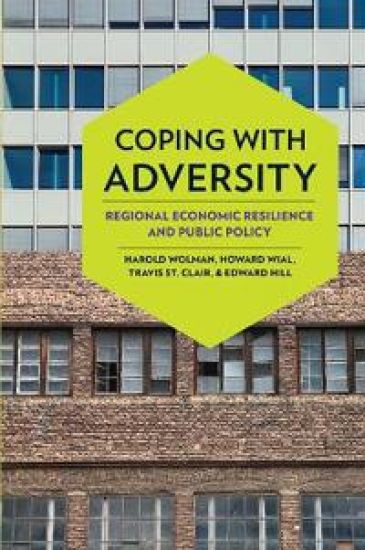
Coping with Adversity

Coping with Adversity

Harold Wolman; Howard Wial; Travis St. Clair; Edward Hill

Cornell University Press
2017
sidottu
Coping with Adversity addresses the question of why some metropolitan-area regional economies are resilient in the face of economic shocks and chronic distress while others are not. It is particularly concerned with what public policies make a difference in whether a region is resilient. The authors employ a wide range of techniques to examine the experience of all metropolitan area economies from 1978–2014. They then look closely at six American metropolitan areas to determine what strategies were employed, which of these contributed to regional economic resilience, and which did not. Charlotte, North Carolina, Seattle, Washington, and Grand Forks, North Dakota, are cases of economic resilience, while Cleveland, Ohio, Hartford, Connecticut, and Detroit, Michigan, are cases of economic nonresilience. The six case studies include hard data on employment, production, and demographics, as well as material on public policies and actions. The authors conclude that there is little that can done in the short term to counter economic shocks; most regions simply rebound naturally after a relatively short period of time. However, they do find that many regions have successfully emerged from periods of prolonged economic distress and that there are policies that can be applied to help them do so. Coping with Adversity will be important reading for all those concerned with local and regional economic development, including public officials, urban planners, and economic developers.
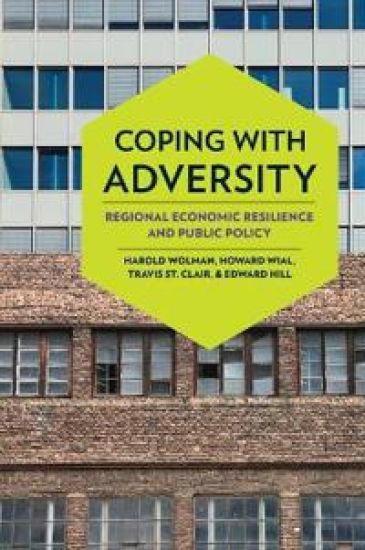
Coping with Adversity

Coping with Adversity

Harold Wolman; Howard Wial; Travis St. Clair; Edward Hill

Cornell University Press
2017
pokkari
Coping with Adversity addresses the question of why some metropolitan-area regional economies are resilient in the face of economic shocks and chronic distress while others are not. It is particularly concerned with what public policies make a difference in whether a region is resilient. The authors employ a wide range of techniques to examine the experience of all metropolitan area economies from 1978–2014. They then look closely at six American metropolitan areas to determine what strategies were employed, which of these contributed to regional economic resilience, and which did not. Charlotte, North Carolina, Seattle, Washington, and Grand Forks, North Dakota, are cases of economic resilience, while Cleveland, Ohio, Hartford, Connecticut, and Detroit, Michigan, are cases of economic nonresilience. The six case studies include hard data on employment, production, and demographics, as well as material on public policies and actions. The authors conclude that there is little that can done in the short term to counter economic shocks; most regions simply rebound naturally after a relatively short period of time. However, they do find that many regions have successfully emerged from periods of prolonged economic distress and that there are policies that can be applied to help them do so. Coping with Adversity will be important reading for all those concerned with local and regional economic development, including public officials, urban planners, and economic developers.
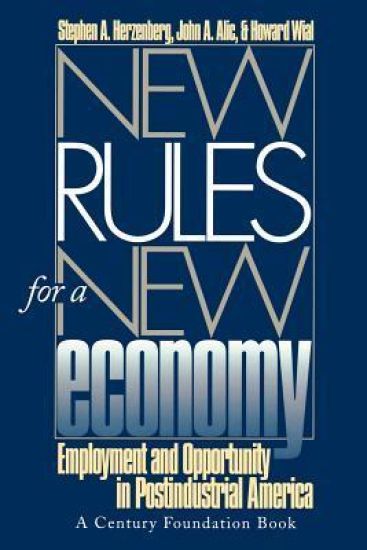
New Rules for a New Economy

New Rules for a New Economy

Stephen A. Herzenberg; John A. Alic; Howard Wial

ILR Press
2000
pokkari
Three quarters of the American workforce is now employed in services, a substantial portion in low-paying, dead-end jobs. Can the service economy do as well by the American worker as the old manufacturing economy? Can the widely shared prosperity that accompanied steady increases in productivity and performance in manufacturing be replicated in the services? They can and they will, the authors of this timely book contend, but only if outmoded policies and practices are brought into line with the new economy. New Rules for a New Economy explains why this must be accomplished and how we can start. The authors call for new, decentralized institutions suited to a dynamic economy in which change is constant and rapid. In particular, they see a need for job ladders and worker associations that cut across firm boundaries. These institutions would foster individual and collective learning, mark out career paths, and facilitate coordination among both individuals and organizations in a networked economy. The authors propose new rules to reshape labor market institutions and policy, improving economic performance and opportunities for workers. Unusual in providing a comprehensive theoretical perspective that is grounded in detailed case research, this book points the way to a better future, not just for elite knowledge workers but for everyone.