

Kirjailija
Howard Williams
Kirjat ja teokset yhdessä paikassa: 43 kirjaa, julkaisuja vuosilta 1996–2026, suosituimpiin kuuluu Lucian's Dialogues. Vertaile teosten hintoja ja tarkista saatavuus suomalaisista kirjakaupoista.
43 kirjaa
Kirjojen julkaisuvuodet: 1996–2026.
The Superstitions of Witchcraft
Howard Williams
Createspace Independent Publishing Platform
2015
nidottu
The Superstitions of Witchcraft
Howard Williams
Createspace Independent Publishing Platform
2015
nidottu

Superstitions of Witchcraft
Howard Williams
Createspace Independent Publishing Platform
2014
nidottu

The Superstitions of Witchcraft
Howard Williams
Createspace Independent Publishing Platform
2014
nidottu
Making IT Lean: Applying Lean Practices to the Work of IT presents Lean concepts and techniques for improving processes and eliminating waste in IT operations and IT Service Management, in a manner that is easy to understand. The authors provide a context for discussing several areas of application within this domain, allowing you to quickly gain insight into IT processes and Lean principles. The text reviews IT Service Management, with reference to the IT Infrastructure Library (ITIL®) as a framework for best practices—explaining how to use it to accommodate Lean processes and operations. Filled with straightforward examples, it provides enough modeling tools so you can start your Lean journey right away. Examining the work of IT from an IT practitioner perspective, the book includes coverage of: The OM Perspective—considers the work of IT from an Operations Management (OM) perspective, showing how many of the concepts that have been successfully applied within manufacturing can be applied to IT The Lean Improvement Model—explains Lean concepts and practices and details the authors’ Lean improvement model Lean Problem-Solving (Identifying and Understanding Problems)—considers operational work in IT and explains how to apply Lean practices related to problem identification and root cause analysis Lean Problem-Solving (Identifying and Managing Solutions)—describes how to use good problem identification as the basis for identifying the right solutions Lean IT Service Management—examines IT work from an IT Service Management perspective, using the ITIL® framework as a guide Implementing and Sustaining Lean IT Improvements—explains how to implement and sustain Lean IT improvementsThroughout the book, the authors use a simple model for Lean Improvement as the framework for communicating practical guidance on identifying and understanding problems, as well as identifying, implementing, managing, and improving solutions. Emphasizing alignment with core Lean concepts, such as A3 Thinking and Plan Do Check Act, it introduces concepts in a manner that allows you to take away small bits at a time and immediately apply them in your IT operations. Exploring the notion that any IT organization can benefit from the application of Lean, the text supplies you with virtually limitless opportunities for improvement in your IT organization.
The Superstitions of Witchcraft
Howard Williams
Createspace Independent Publishing Platform
2012
nidottu
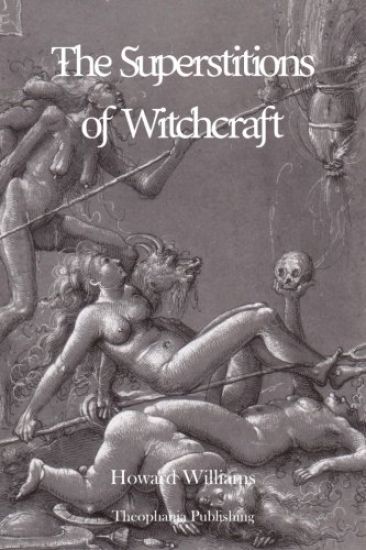
'The Superstitions of Witchcraft' is designed to exhibit a consecutive review of the characteristic forms and facts of a creed which (if at present apparently dead, or at least harmless, in Christendom) in the seventeenth century was a living and lively faith, and caused thousands of victims to be sent to the torture-chamber, to the stake, and to the scaffold. At this day, the remembrance of its superhuman art, in its different manifestations, is immortalised in the every-day language of the peoples of Europe. The belief in Witchcraft is, indeed, in its full development and most fearful results, modern still more than medi val, Christian still more than Pagan, and Protestant not less than Catholic.

The paperback edition (published in 2016) includes a new preface with a discussion of recent examples. Kant stands almost unchallenged as one of the major thinkers of the European Enlightenment. This book brings the ideas of his critical philosophy to bear on one of the leading political and legal questions of our age: under what circumstances, if any, is recourse to war legally and morally justifiable? This issue was strikingly brought to the fore by the 2003 war in Iraq. The book critiques the tradition of just war thinking and suggests how international law and international relations can be viewed from an alternative perspective that aims at a more pacific system of states. Instead of seeing the theory of just war as providing a stabilizing context within which international politics can be carried out, Williams argues that the theory contributes to the current unstable international condition. The just war tradition is not the silver lining in a generally dark horizon but rather an integral feature of the dark horizon of current world politics. Kant was one of the first and most profound thinkers to moot this understanding of just war reasoning and his work remains a crucial starting point for a critical theory of war today.

The paperback edition (published in 2016) includes a new preface with a discussion of recent examples. Kant stands almost unchallenged as one of the major thinkers of the European Enlightenment. This book brings the ideas of his critical philosophy to bear on one of the leading political and legal questions of our age: under what circumstances, if any, is recourse to war legally and morally justifiable? This issue was strikingly brought to the fore by the 2003 war in Iraq. The book critiques the tradition of just war thinking and suggests how international law and international relations can be viewed from an alternative perspective that aims at a more pacific system of states. Instead of seeing the theory of just war as providing a stabilizing context within which international politics can be carried out, Williams argues that the theory contributes to the current unstable international condition. The just war tradition is not the silver lining in a generally dark horizon but rather an integral feature of the dark horizon of current world politics. Kant was one of the first and most profound thinkers to moot this understanding of just war reasoning and his work remains a crucial starting point for a critical theory of war today.

Anthologia Anglica. A new selection from the English poets from Spenser to Shelley. With short literary notices.
Howard Williams
British Library, Historical Print Editions
2011
pokkari

Mediaeval Superstitions Of Witchcraft (Folklore History Series)
Howard Williams
READ BOOKS
2010
pokkari
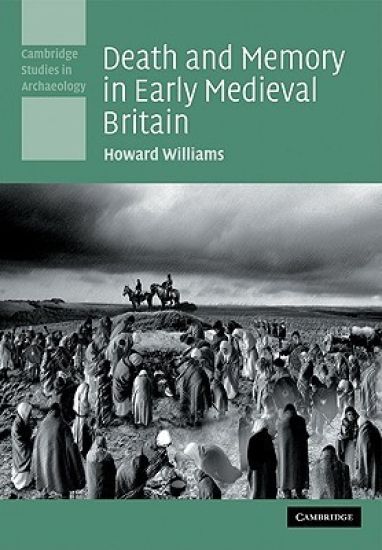
How were the dead remembered in early medieval Britain? Originally published in 2006, this innovative study demonstrates how perceptions of the past and the dead, and hence social identities, were constructed through mortuary practices and commemoration between c. 400–1100 AD. Drawing on archaeological evidence from across Britain, including archaeological discoveries, Howard Williams presents a fresh interpretation of the significance of portable artefacts, the body, structures, monuments and landscapes in early medieval mortuary practices. He argues that materials and spaces were used in ritual performances that served as 'technologies of remembrance', practices that created shared 'social' memories intended to link past, present and future. Through the deployment of material culture, early medieval societies were therefore selectively remembering and forgetting their ancestors and their history. Throwing light on an important aspect of medieval society, this book is essential reading for archaeologists and historians with an interest in the early medieval period.
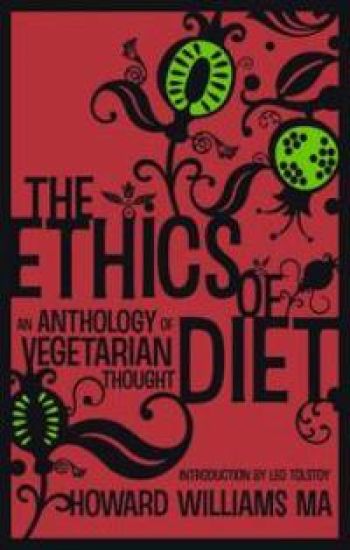
This book is a history of vegetarianism as told through the writings of some of history's great thinkers and writers. The author Howard Williams travels back in time to Antiquity and from there moves through the centuries all the way up to his contemporaries in the 19th century. Leo Tolstoy was impressed with 'The Ethics of Diet'; he had it translated into his native Russian and wrote the narrative for the Russian edition. Throughout the ages, many of the world's finest minds detested the eating of flesh and the cruelty that humans inflict on their fellow creatures. Buddha advocated a vegetarian diet for his monks and stated: "There hath been slaughter for the sacrifice, and slaying for the meat, but henceforth none shall spill the blood of life, nor taste of flesh; seeing that knowledge grows and life is one, and mercy cometh to the merciful." Pythagoras abstained from eating meat around the age of nineteen as he believed that abstaining from flesh kept the soul pure. Lamblichus, who studied Pythagoras stated that the great mathematician; "Enjoyed abstinence from the flesh of animals, because it is conducive to peace; for those who are accustomed to abominate the slaughter of other animals as iniquitous and unnatural, will think it still more unjust and unlawful to kill a man or to engage in war." Arthur Schopenhauer, the German philosopher said; "Since compassion for animals is so intimately associated with goodness of character, it may be confidently asserted that whoever is cruel to animals cannot be a good man." Plutarch, Seneca, Plato, Shelley and Wagner all grace these pages and many more... Thoreau observes, "One farmer says to me, "You cannot live on vegetable food solely, for it furnishes nothing to make the bones with;" and so he religiously devotes a part of his day to supplying himself with the raw material of bones; walking all the while he talks behind his oxen, which, with vegetable-made bones, jerk him and his lumbering plough along in spite of every obstacle."
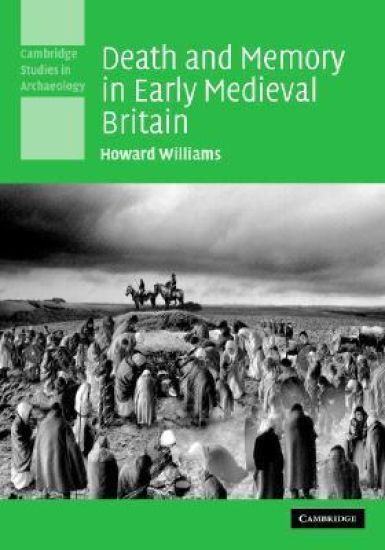
How were the dead remembered in early medieval Britain? Originally published in 2006, this innovative study demonstrates how perceptions of the past and the dead, and hence social identities, were constructed through mortuary practices and commemoration between c. 400–1100 AD. Drawing on archaeological evidence from across Britain, including archaeological discoveries, Howard Williams presents a fresh interpretation of the significance of portable artefacts, the body, structures, monuments and landscapes in early medieval mortuary practices. He argues that materials and spaces were used in ritual performances that served as 'technologies of remembrance', practices that created shared 'social' memories intended to link past, present and future. Through the deployment of material culture, early medieval societies were therefore selectively remembering and forgetting their ancestors and their history. Throwing light on an important aspect of medieval society, this book is essential reading for archaeologists and historians with an interest in the early medieval period.

A year in the life of Peartree House Bed & Breakfast describes the first year of trading of a Bed and Breakfast guest house operation in Scotland and is a cracking good read. Written with hints of the Bryson and Blackadder styles it has escapades as good as any Fawlty Towers episode and has something for everyone. For existing and aspiring B&B owners it is essential reading. Spread over 20 chapters it describes how a male ex-IT programme manager, management consultant and management executive gets to grips with mundane chores while trying to provide a superior service to tourists from around the world. From the arrival of the redundancy cheque through the first traumatic weeks of trading, subsequent quality inspection, the provision of dinner, management of websites and the Internet to the hilarious actions of guests the book is fast moving.