Kirjojen hintavertailu – 12 903 725 kirjaa ja 27 kauppaa

Kirjailija

Hugh Barton

Kirjat ja teokset yhdessä paikassa: 11 kirjaa, julkaisuja vuosilta 1995–2026, suosituimpiin kuuluu Shaping Neighbourhoods. Vertaile teosten hintoja ja tarkista saatavuus suomalaisista kirjakaupoista.

11 kirjaa

Kirjojen julkaisuvuodet: 1995–2026.

Shaping Neighbourhoods

Shaping Neighbourhoods

Hugh Barton; Marcus Grant; Richard Guise

Routledge
2021
nidottu
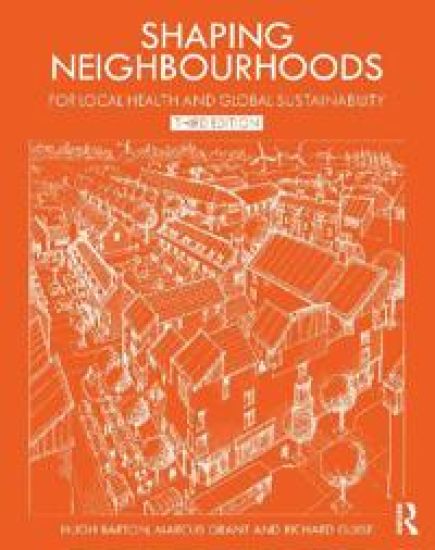
Shaping Neighbourhoods is unique in combining all aspects of the spatial planning of neighbourhoods and towns whilst emphasising positive outcomes for people’s health and global sustainability. This new edition retains the combination of radicalism, evidence-based advice and pragmatism that made earlier editions so popular. This updated edition strengthens guidance in relation to climate change and biodiversity, tackling crises of population health that are pushing up health-care budgets, but have elements of their origins in poor place spatial planning – such as isolation, lack of everyday physical activity, and respiratory problems. It is underpinned by new research into how people use their localities, and the best way to achieve inclusive, healthy, low-carbon settlements. The guide can assist with:• Understanding the principles for planning healthy and sustainable neighbourhoods and towns• Planning collaborative and inclusive processes for multi-sectoral working• Developing know-how and skills in matching local need with urban form• Discovering new ways to integrate development with natural systems • Designing places with character and recognising good urban formWhether you are a student faced with a local planning project; a public health professional, planner, urban designer or developer involved in new development or regeneration; a council concerned with promoting healthy and sustainable environments; or a community group wanting to improve your neighbourhood – you will find help here.
Shaping Neighbourhoods

Shaping Neighbourhoods

Hugh Barton; Marcus Grant; Richard Guise

Routledge
2021
sidottu
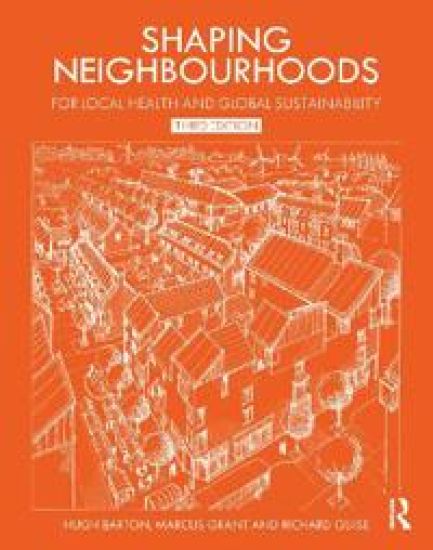
Shaping Neighbourhoods is unique in combining all aspects of the spatial planning of neighbourhoods and towns whilst emphasising positive outcomes for people’s health and global sustainability. This new edition retains the combination of radicalism, evidence-based advice and pragmatism that made earlier editions so popular. This updated edition strengthens guidance in relation to climate change and biodiversity, tackling crises of population health that are pushing up health-care budgets, but have elements of their origins in poor place spatial planning – such as isolation, lack of everyday physical activity, and respiratory problems. It is underpinned by new research into how people use their localities, and the best way to achieve inclusive, healthy, low-carbon settlements. The guide can assist with:• Understanding the principles for planning healthy and sustainable neighbourhoods and towns• Planning collaborative and inclusive processes for multi-sectoral working• Developing know-how and skills in matching local need with urban form• Discovering new ways to integrate development with natural systems • Designing places with character and recognising good urban formWhether you are a student faced with a local planning project; a public health professional, planner, urban designer or developer involved in new development or regeneration; a council concerned with promoting healthy and sustainable environments; or a community group wanting to improve your neighbourhood – you will find help here.

News from Somewhen

News from Somewhen

Hugh Barton

The Cloister House Press
2026
nidottu
A young woman called Robyn Ghorra, living life to the full in the Gloucestershire town of Stroud, is subjected to a life-changing accident. While lost to this world in a coma, she finds herself transported as if by magic to a future era. It is not a chance transfer. Rather part of a planned experiment that only slowly becomes clear to her. The place she finds herself in is strangely familiar, her own home territory, but transformed. She is progressively able to explore what feels like a utopian society. Her background as an urban designer enables her to grasp the changed nature of town and country, and how crises of climate, biodiversity, energy, technology, unhealthy environments and social inequality have been tackled and transformed. However, there is a dark undertow beneath this glittering surface. Catastrophic events mid-century have triggered economic and social dislocation, altering political dynamics, and still climate and oceanic change, the result of our own malign choices in this present day, threaten the long-term future. [/At its heart, this is the story of a cautious young woman forced out of her comfortable assumptions and thrown into a world of astonishing marvels and quiet horrors. Through extraordinary encounters and hard-won insights, she grows in courage and purpose, determined to return and help change her own time. More broadly, the novel offers a grounded, scientifically informed future history of the twenty-first century—local in focus, global in implication. It acknowledges the crises we already see on the horizon, yet refuses both easy dystopia and idealised utopia. Above all, it insists that a better future remains possible/]
A Guide to Local Environmental Auditing

A Guide to Local Environmental Auditing

Hugh Barton; Noel Bruder

Routledge
2017
sidottu
Sustainable development is still seen by authorities as an abstract concept. Local Environmental Auditing will help put it into practice. The book provides a comprehensive guide to monitoring the state of the local environment and establishing the impacts of local actions on global issues, and shows how current local authority policy and practice can be adapted to recognize environmental priorities. The authors provide both a guide to and an assessment of the subject: they link the processes with the issues, with specific information on carrying out the audit (including checklists, case studies and standards) and a detailed discussion of the issues and choices which local authorities may face. Clearly structured and accessible, this will be an essential handbook, both for local government departments and other local organizations, and students in a wide range of subjects, including environmental science and health, town planning, urban and rural studies, social science and politics.
City of Well-being

City of Well-being

Hugh Barton

Routledge
2016
sidottu
City of Well-being provides a radical and holistic introduction to the science and art of town planning. It starts from the premise that the purpose of planning is the health, well-being and sustainable quality of life of people. Drawing on current and historic examples it offers inspiration, information and an integrated perspective which challenges all professions and decision-makers that affect the urban environment. It is both authoritative and readable, designed for students, practitioners, politicians and civil society. The science. Summarizing the most recent research, the book demonstrates the interrelationships between the huge issues of obesity, unhealthy lifestyles, inequality, mental illness, climate change and environmental quality. The radical implications for transport, housing, economic, social and energy policies are spelt out. The art and politics. The book examines how economic development really happens, and how spatial decisions reinforce or undermine good intentions. It searches for the creative strategies, urban forms and neighbourhood designs that can marry the ideal with the real. The relationship of planning and politics is tackled head-on, leading to conclusions about the role of planners, communities and development agencies in a pluralistic society. Healthy planning principles could provide a powerful logical motivation for all practitioners.
City of Well-being

City of Well-being

Hugh Barton

Routledge
2016
nidottu
City of Well-being provides a radical and holistic introduction to the science and art of town planning. It starts from the premise that the purpose of planning is the health, well-being and sustainable quality of life of people. Drawing on current and historic examples it offers inspiration, information and an integrated perspective which challenges all professions and decision-makers that affect the urban environment. It is both authoritative and readable, designed for students, practitioners, politicians and civil society. The science. Summarizing the most recent research, the book demonstrates the interrelationships between the huge issues of obesity, unhealthy lifestyles, inequality, mental illness, climate change and environmental quality. The radical implications for transport, housing, economic, social and energy policies are spelt out. The art and politics. The book examines how economic development really happens, and how spatial decisions reinforce or undermine good intentions. It searches for the creative strategies, urban forms and neighbourhood designs that can marry the ideal with the real. The relationship of planning and politics is tackled head-on, leading to conclusions about the role of planners, communities and development agencies in a pluralistic society. Healthy planning principles could provide a powerful logical motivation for all practitioners.
Healthy Urban Planning

Healthy Urban Planning

Hugh Barton; Catherine Tsourou

Routledge
2000
sidottu
Healthy Urban Planning aims to refocus urban planners on the implications of their work for human health and well-being. If many of the problems faced in cities are to be resolved, improving health will be the fundamental goal of urban planners. Poor housing, poverty, stress, pollution, and lack of access to jobs, goods and services all impact upon health. This book provides practical advice on ways to integrate health and urban planning and will be essential reading for urban planners, developers, urban designers, transport planners, and those working in the fields of regeneration and renewal. It will also be of interest to those with an interest in sustainable development.
Healthy Urban Planning

Healthy Urban Planning

Hugh Barton; Catherine Tsourou

Routledge
2000
nidottu
Healthy Urban Planning aims to refocus urban planners on the implications of their work for human health and well-being. If many of the problems faced in cities are to be resolved, improving health will be the fundamental goal of urban planners. Poor housing, poverty, stress, pollution, and lack of access to jobs, goods and services all impact upon health. This book provides practical advice on ways to integrate health and urban planning and will be essential reading for urban planners, developers, urban designers, transport planners, and those working in the fields of regeneration and renewal. It will also be of interest to those with an interest in sustainable development.
Sustainable Communities

Sustainable Communities

Hugh Barton

Earthscan Ltd
1999
nidottu
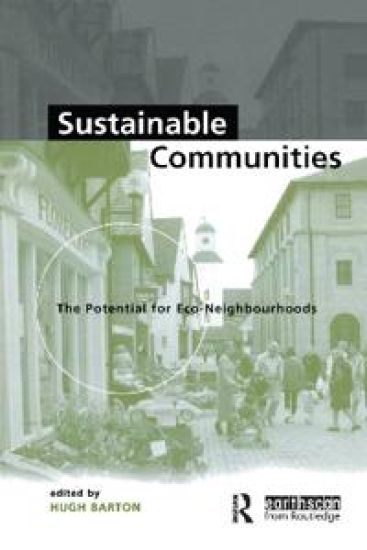
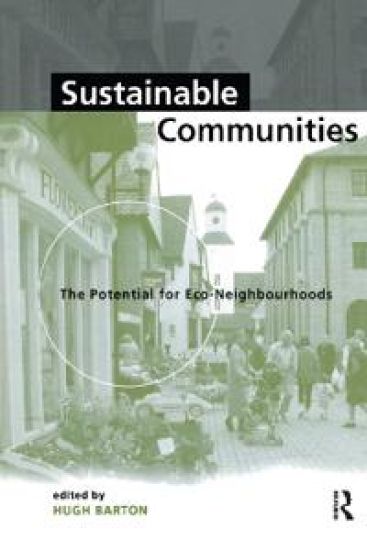
'This book re-addresses the concepts of neighbourhood and community in a refreshing and challenging way. It will be of immense benefit, not only to town planners but also to al those professional and voluntary groups and politicians who seek to create the new communities of tomorrow' From the Foreword by Jed Griffiths, Past President of the Royal Town Planning Institute. There is widespread support for the principle of creating more sustainable communities, but much hazy, wishful-thinking about what this might mean in practice. In reality, we witness more the death of local neighbourhoods than their creation or rejuvenation, reflecting an increasingly mobile, privatized and commodified society. Sustainable Communities examines the practicalities of re-inventing neighbourhoods. It is neither an idealistic, utopian tract nor a designer's manual, but is, rather, a serious attempt to address the real issues. This collection of expert contributions: * examines the nature of local community and methods of building social capital * presents the findings of a world-wide survey of eco-neighbourhoods and eco-villages with case studies from the United Kingdom, Europe, America and Australia * develops a fresh perspective on the planning and design of neighbourhoods in urban areas, based on the eco-system approach * explores practical programmes for local resource management and the implications for community-based decision-making * provides a detailed appendix listing current eco-village and eco-neighbourhood schemes by country Written by an interdisciplinary team of social and environmental scientists, town planners and urban designers, this is a thought-provoking and important contribution to both the theory and practice of the development of sustainable communities.
Sustainable Communities

Sustainable Communities

Hugh Barton

Earthscan Ltd
1999
sidottu
'This book re-addresses the concepts of neighbourhood and community in a refreshing and challenging way. It will be of immense benefit, not only to town planners but also to al those professional and voluntary groups and politicians who seek to create the new communities of tomorrow' From the Foreword by Jed Griffiths, Past President of the Royal Town Planning Institute. There is widespread support for the principle of creating more sustainable communities, but much hazy, wishful-thinking about what this might mean in practice. In reality, we witness more the death of local neighbourhoods than their creation or rejuvenation, reflecting an increasingly mobile, privatized and commodified society. Sustainable Communities examines the practicalities of re-inventing neighbourhoods. It is neither an idealistic, utopian tract nor a designer's manual, but is, rather, a serious attempt to address the real issues. This collection of expert contributions: * examines the nature of local community and methods of building social capital * presents the findings of a world-wide survey of eco-neighbourhoods and eco-villages with case studies from the United Kingdom, Europe, America and Australia * develops a fresh perspective on the planning and design of neighbourhoods in urban areas, based on the eco-system approach * explores practical programmes for local resource management and the implications for community-based decision-making * provides a detailed appendix listing current eco-village and eco-neighbourhood schemes by country Written by an interdisciplinary team of social and environmental scientists, town planners and urban designers, this is a thought-provoking and important contribution to both the theory and practice of the development of sustainable communities.
A Guide to Local Environmental Auditing

A Guide to Local Environmental Auditing

Hugh Barton; Noel Bruder

Earthscan Ltd
1995
nidottu
Sustainable development is still seen by authorities as an abstract concept. Local Environmental Auditing will help put it into practice. The book provides a comprehensive guide to monitoring the state of the local environment and establishing the impacts of local actions on global issues, and shows how current local authority policy and practice can be adapted to recognize environmental priorities. The authors provide both a guide to and an assessment of the subject: they link the processes with the issues, with specific information on carrying out the audit (including checklists, case studies and standards) and a detailed discussion of the issues and choices which local authorities may face. Clearly structured and accessible, this will be an essential handbook, both for local government departments and other local organizations, and students in a wide range of subjects, including environmental science and health, town planning, urban and rural studies, social science and politics.