Kirjojen hintavertailu – 12 903 742 kirjaa ja 27 kauppaa

Kirjailija

Hugh Elton

Kirjat ja teokset yhdessä paikassa: 5 kirjaa, julkaisuja vuosilta 2012–2023, suosituimpiin kuuluu Frontiers of the Roman Empire. Vertaile teosten hintoja ja tarkista saatavuus suomalaisista kirjakaupoista.

5 kirjaa

Kirjojen julkaisuvuodet: 2012–2023.

Understanding Ancient Battle

Understanding Ancient Battle

Hugh Elton

PEN SWORD BOOKS LTD
2023
sidottu

Halvin toimitettuna 28,50 €

Traditional military history of battles focussed on the strategies of great leaders, though in modern times many scholars have discussed the ‘face of battle’, describing the personal experience of the ordinary soldier. But in between, there still lies a major gap in our understanding of ancient combat: the officer’s battle. This focuses on how units actually fought and manoeuvred in battle. Hugh Elton seeks to redress this through analysis of the interaction of equipment, morale, leadership, and terrain. After discussing source material and the general model of warfare the author follows, this book outlines by major periods what we know of equipment, organization and tactics, then shows how battle worked in a series of case studies including include Marathon, Issus, Cannae, Cynoscephalae, Mons Graupius, and Adrianople. A total of twenty-four battles are analyzed between the fifth-century BCE and the sixth century CE, covering the wars described by the great historians between Herodotus and Procopius, including accounts written by the soldiers Xenophon, Julius Caesar, and Ammianus Marcellinus.
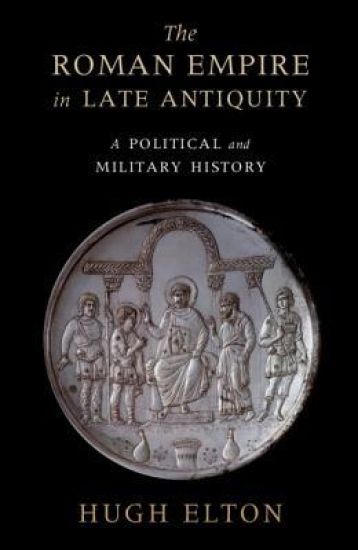
The Roman Empire in Late Antiquity

The Roman Empire in Late Antiquity

Hugh Elton

Cambridge University Press
2018
pokkari

Halvin toimitettuna 37,40 €

In this volume, Hugh Elton offers a detailed and up to date history of the last centuries of the Roman Empire. Beginning with the crisis of the third century, he covers the rise of Christianity, the key Church Councils, the fall of the West to the Barbarians, the Justinianic reconquest, and concludes with the twin wars against Persians and Arabs in the seventh century AD. Elton isolates two major themes that emerge in this period. He notes that a new form of decision-making was created, whereby committees debated civil, military, and religious matters before the emperor, who was the final arbiter. Elton also highlights the evolution of the relationship between aristocrats and the Empire, and provides new insights into the mechanics of administering the Empire, as well as frontier and military policies. Supported by primary documents and anecdotes, The Roman Empire in Late Antiquity is designed for use in undergraduate courses on late antiquity and early medieval history.
The Roman Empire in Late Antiquity

The Roman Empire in Late Antiquity

Hugh Elton

Cambridge University Press
2018
sidottu
In this volume, Hugh Elton offers a detailed and up to date history of the last centuries of the Roman Empire. Beginning with the crisis of the third century, he covers the rise of Christianity, the key Church Councils, the fall of the West to the Barbarians, the Justinianic reconquest, and concludes with the twin wars against Persians and Arabs in the seventh century AD. Elton isolates two major themes that emerge in this period. He notes that a new form of decision-making was created, whereby committees debated civil, military, and religious matters before the emperor, who was the final arbiter. Elton also highlights the evolution of the relationship between aristocrats and the Empire, and provides new insights into the mechanics of administering the Empire, as well as frontier and military policies. Supported by primary documents and anecdotes, The Roman Empire in Late Antiquity is designed for use in undergraduate courses on late antiquity and early medieval history.
Shifting Genres in Late Antiquity

Shifting Genres in Late Antiquity

Geoffrey Greatrex; Hugh Elton; the assistance of Lucas McMahon

Routledge
2015
sidottu
Shifting Genres in Late Antiquity examines the transformations that took place in a wide range of genres, both literary and non-literary, in this dynamic period. The Christianisation of the Roman empire and the successor kingdoms had a profound impact on the evolution of Greek and Roman literature, and many aspects of this are discussed in this volume - the composition of church history, the collection of papal letters, heresiology, homiletics and apologetic. Contributors discuss authors such as John Chrysostom, Ambrose of Milan, Cassiodorus, Jerome, Liberatus of Carthage, Victor of Vita, and Epiphanius of Salamis as well as the Collectio Avellana. Secular literature too, however, underwent important changes, notably in Constantinople in the sixth century. Several chapters accordingly reassess the work of Procopius of Caesarea and literature of this period; attention is also given to the evolution of the chronicle genre. Technical writing, such as military manuals and legal texts, are the focus of other chapters; further genres considered include monody, epigraphy and epistolography. Changes in visual representation are also considered in chapters devoted to diptychs, monuments and coins. A common theme that emerges from the chapters is the flexibility and adaptability of genres in the period: late antique authors, whether orators or historians, were not slavish followers of their classical predecessors. They were capable of engaging with their models, adapting them to their own purposes, and producing work that deserves to be considered on its own merits. It is necessary to examine their texts and genres closely to grasp what they set out to do; on occasion, attention must also be paid to the transmission of these texts. The volume as a whole represents a significant contribution to the reassessment of late antique culture in general.
Frontiers of the Roman Empire

Frontiers of the Roman Empire

Hugh Elton

Routledge
2012
nidottu
With its succinct analysis of the overriding issues and detailed case-studies based on the latest archaeological research, this social and economic study of Roman Imperial frontiers is essential reading. Too often the frontier has been represented as a simple linear boundary. The reality, argues Dr Elton, was rather a fuzzy set of interlocking zones - political, military, judicial and financial. After discussion of frontier theory and types of frontier, the author analyses the acquisition of an empire and the ways in which it was ruled. He addresses the vexed question of how to define the edges of provinces, and covers the relationship with allied kingdoms. Regional variation and different rates of change are seen as significant - as is illustrated by Civilis' revolt on the Rhine in AD 69. He uses another case-study - Dura-Europos - to exemplify the role of the army on the frontier, especially its relations with the population on both sides of the border. The central importance of trade is highlighted by special consideration of Palmyra.