Kirjojen hintavertailu – 12 859 827 kirjaa ja 27 kauppaa

Kirjailija

Hugo Chavez

Kirjat ja teokset yhdessä paikassa: 7 kirjaa, julkaisuja vuosilta 2005–2023, suosituimpiin kuuluu The South Also Exists. Vertaile teosten hintoja ja tarkista saatavuus suomalaisista kirjakaupoista.

Nimi esiintyy myös muodoissa: Hugo Chávez

7 kirjaa

Kirjojen julkaisuvuodet: 2005–2023.

Our Own Path to Socialism

Our Own Path to Socialism

Hugo Chavez; Manolo de Los Santos

UNKNOWN
2023
nidottu

Halvin toimitettuna 22,50 €

"Ch vez. That was their cry. Ch vez. It was enough." Hugo Ch vez's speeches are a call to action, challenging us to take up the task of building a socialism that emerges from our own histories and is for our own people. The Bolivarian Revolution bravely put forth a path to liberation for Venezuela and the continent, declaring socialism as the only way of defeating capitalism and imperialism. And the socialism Ch vez proposes finds its roots in the legacy of Venezuelan and South American struggles for independence from imperialism. From Sim n Bol var, to revolutionary Cuba, to Indigenous leaders who knew their vengeance would come centuries later, Ch vez weaves history and theory to present a socialism that emerges from the people - a heroic creation of its own. Ch vez left behind thousands of hours of speeches, and this book collects seven of them, presenting his theories, perspectives, and his visions of 21st century socialism. An almost encyclopedic blend of songs, stories, and dreams of the Venezuelan people, his words are a tool for young people seeking to understand the ideas of Chavismo and the Venezuelan process of building socialism in Latin America.

The South Also Exists

The South Also Exists

Hugo Chavez

Leftword Books
2020
nidottu
"We will fight for Venezuela, for Latin American integration and the world. We reaffirm our infinite faith in humankind. We are thirsty for peace and justice in order to survive as a species. Simon Bolivar, founding father of our country and guide of our revolution, swore to never allow his hands to be idle or his soul to rest until he had broken the shackles which bound us to the empire. Now is the time to not allow our hands to be idle or our souls to rest until we save humanity." - Hugo Chavez
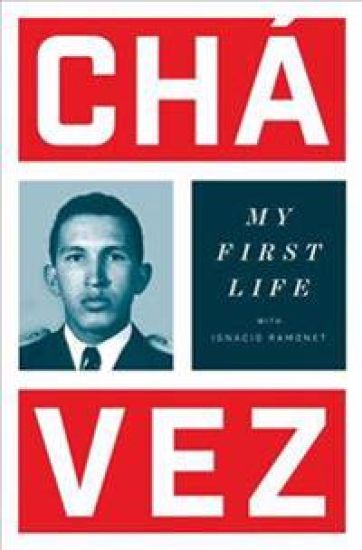
My First Life

My First Life

Ignacio Ramonet; Hugo Chávez

Verso Books
2016
sidottu
Hugo Chávez, military officer turned left-wing revolutionary, was one of the most important Latin American leaders of the twenty-first century. This book tells the story of his life up to his election as president in 1998. Throughout this riveting and historically important account of his early years, Chávez's energy and charisma shine through. As a young man, he awakens gradually to the reality of his country-where huge inequalities persist and the majority of citizens live in indescribable poverty-and decides to act. He gives a fascinating description of growing up in Barinas, his years in the Military Academy, his long-planned military conspiracy-the most significant in the history of Venezuela and perhaps of Latin America-which led to his unsuccessful coup attempt of 1992, and eventually to his popular electoral victory in 1998. His collaborator on this book is Ignacio Ramonet, the famous French journalist (and editor for many years of Le Monde diplomatique), who undertook a similar task with Fidel Castro (Fidel Castro: My Life).
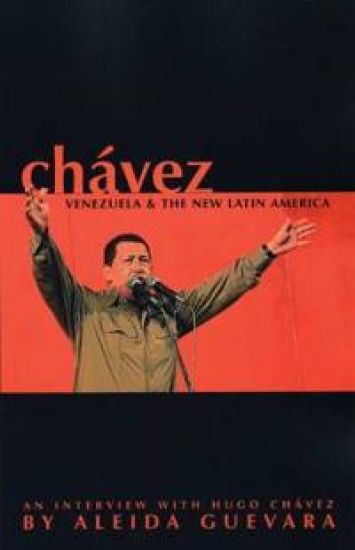
Chavez

Chavez

Hugo Chavez; Aleida Guevara

Ocean Press
2006
nidottu
Is President Chavez the new Fidel Castro? Is Venezuela the new Cuba? Elected by an overwhelming popular mandate in 1998, Hugo Chavez is now one of Latin America's most controversial political figures. In this exclusive interview, Chavez expresses a fiercely nationalist vision for Venezuela and a commitment to a united Latin America. He discusses the significance of the military coup against his government in April 2002, Venezuela's new democratic constitution and assesses his relations with the United States and Cuba." Soviet power has collapsed but that does not mean that neoliberal capitalism has to be the model followed by the peoples of the West & This world cannot be run by a universal police force that seeks to control everything." -President Hugo Chavez
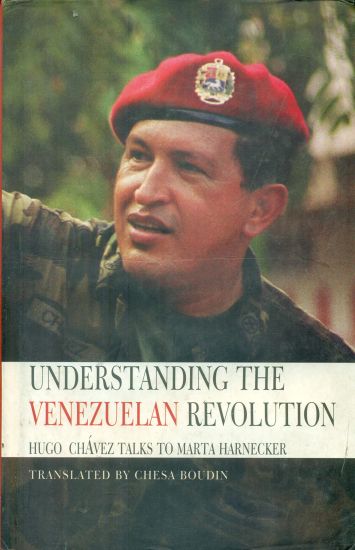
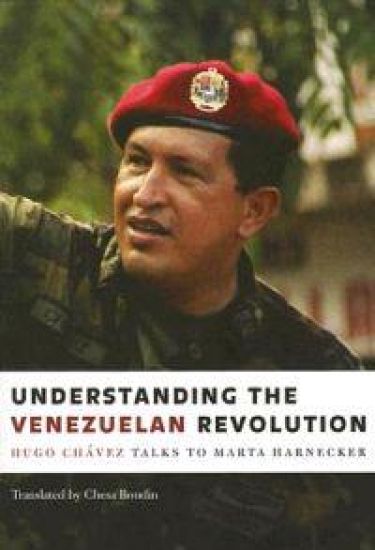
Understanding the Venezuelan Revolution

Understanding the Venezuelan Revolution

Hugo Chavez; Marta Harnecker

MONTHLY REVIEW PRESS,U.S.
2005
sidottu
Marta Harnecker's interviews with Hugo Chavez began soon after one of the most dramatic moments of Chavez's presidency--the failed coup of April 2002, which ended with Chavez restored to power by a massive popular movement of protest and resistance. In the aftermath of the failed coup, Chavez talks to Harnecker about the formation of his political ideas, his aspirations for Venezuela, its domestic and international policies, problems of political organization, relations with social movements in other countries, and more, constantly relating these to concrete events and to strategies for change. The exchange between Harnecker and Chavez--sometimes reflective, sometimes anecdotal, always characterized by their passionate commitment to the struggles of the oppressed--brings to light the process of thought and action behind the public pronouncements and policies of state. The interviews are supplemented by extracts from Chavez's most recent pronouncements on the ongoing transformation in Venezuela and Latin America, an analysis by Harnecker of the role of the military, and a chronology. Chavez has become a symbol of defiance of U. S. imperialism throughout Latin America. His importance for the future of the region makes this book essential reading.
Understanding the Venezualan Revolution

Understanding the Venezualan Revolution

Hugo Chavez

Monthly Review Press,U.S.
2005
nidottu

Halvin toimitettuna 26,40 €

Marta Harnecker's interviews with Hugo Chavez began soon after one of the most dramatic moments of Chavez's presidency--the failed coup of April 2002, which ended with Chavez restored to power by a massive popular movement of protest and resistance. In the aftermath of the failed coup, Chavez talks to Harnecker about the formation of his political ideas, his aspirations for Venezuela, its domestic and international policies, problems of political organization, relations with social movements in other countries, and more, constantly relating these to concrete events and to strategies for change. The exchange between Harnecker and Chavez--sometimes reflective, sometimes anecdotal, always characterized by their passionate commitment to the struggles of the oppressed--brings to light the process of thought and action behind the public pronouncements and policies of state. The interviews are supplemented by extracts from Chavez's most recent pronouncements on the ongoing transformation in Venezuela and Latin America, an analysis by Harnecker of the role of the military, and a chronology. Chavez has become a symbol of defiance of U. S. imperialism throughout Latin America. His importance for the future of the region makes this book essential reading.