
Kirjailija
Hugo Grotius
Kirjat ja teokset yhdessä paikassa: 134 kirjaa, julkaisuja vuosilta 1919–2026, suosituimpiin kuuluu Des Hugo Grotius drei Bücher über das Recht des Krieges und Friedens. Vertaile teosten hintoja ja tarkista saatavuus suomalaisista kirjakaupoista.
134 kirjaa
Kirjojen julkaisuvuodet: 1919–2026.
Hugenis Grotii De Jure Belli Ac Pacis Libri Tres, In Quibus Jus Natur? Gentium, Item Juris Publici Pr?cipua Explicantur
Hugo Grotius
Saraswati Press
2012
pokkari
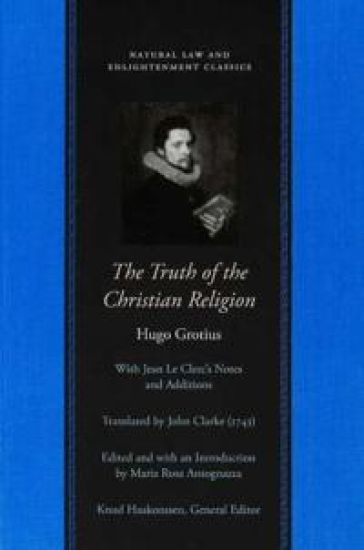
Grotius's "The Truth of the Christian Religion" was first published in Leiden in 1627 in Latin. Written in a plain and direct language for his countrymen, this short work aimed to show those who would encounter pagans, Muslims, and Jews that the Christian religion was the true revealed religion. In addition to "fortifying" the beliefs of his fellow Christians, the treatise intended to convince non-Christians of "the reasonableness of believing and embracing the Christian Religion above any other." Editor Maria Rosa Antognazza suggests that "Grotius claimed the superiority of Christian doctrine and morality and their perfect conformity with the teaching of the most enlightened reason, and at the same time he advocated tolerance for all positive religions. . . . Grotius rejected the use of any kind of violence, proclaiming that the weapons appointed for the soldiers of Christ are . . . proper to the Spirit.' . . . Moreover, in an era of bloody and violent confrontations amongst the different Christian confessions, Grotius raised a forceful appeal 'to mutual agreement'. All Christians should remember that they 'were baptised into the same Name', that of Jesus Christ, and that 'therefore there ought to be no Sects or Divisions amongst them'.
Grotius's "The Truth of the Christian Religion" was first published in Leiden in 1627 in Latin. Written in a plain and direct language for his countrymen, this short work aimed to show those who would encounter pagans, Muslims, and Jews that the Christian religion was the true revealed religion. In addition to "fortifying" the beliefs of his fellow Christians, the treatise intended to convince non-Christians of "the reasonableness of believing and embracing the Christian Religion above any other." Editor Maria Rosa Antognazza suggests that "Grotius claimed the superiority of Christian doctrine and morality and their perfect conformity with the teaching of the most enlightened reason, and at the same time he advocated tolerance for all positive religions... Grotius rejected the use of any kind of violence, proclaiming that 'the weapons appointed for the soldiers of Christ are... proper to the Spirit.'... Moreover, in an era of bloody and violent confrontations amongst the different Christian confessions, Grotius raised a forceful appeal 'to mutual agreement'. All Christians should remember that they 'were baptised into the same Name', that of Jesus Christ, and that 'therefore there ought to be no Sects or Divisions amongst them'.
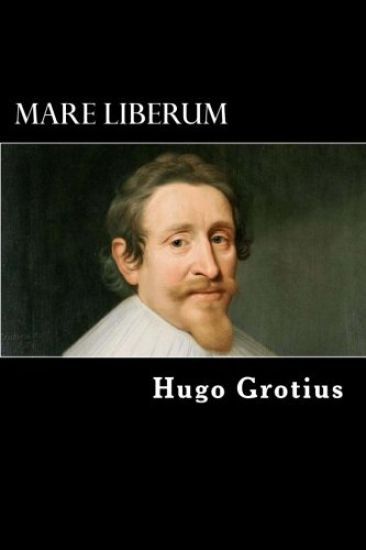
"Mare Liberum" is a book (originally written in Latin) on international law written by the Dutch jurist and philosopher Hugo Grotius. In Mare Liberum, Grotius formulated the new principle that the sea was international territory and all nations were free to use it for seafaring trade. The disputation was directed towards the Portuguese Mare Clausum policy and their claim of monopoly on the East Indian Trade. Grotius wrote the treatise while counsel to the Dutch East India Company over the seizure of the Portuguese carrack "Santa Catarina". Hugo Grotius (10 April 1583 - 28 August 1645), was a jurist in the Dutch Republic. With Francisco de Vitoria and Alberico Gentili he laid the foundations for international law, based on natural law. He was also a philosopher, theologian, Christian apologist, playwright, and poet.
Traité de la Vérité de la Religion Chrétienne (Nouv. Éd.) (Éd.1728)
Hugo Grotius
Hachette Livre - BNF
2012
pokkari
Le Droit de la Guerre Et de la Paix. Tome 2 (Éd.1724)
Hugo Grotius
Hachette Livre - BNF
2012
pokkari
Le Droit de la Guerre Et de la Paix. Tome 1 (Éd.1724)
Hugo Grotius
Hachette Livre - BNF
2012
pokkari
Dissertation de Grotius Sur La Liberté Des Mers (Éd.1845)
Hugo Grotius
Hachette Livre - BNF
2012
pokkari
Prolegomena to the Law of War and Peace
Hugo Grotius; Oskar Piest
Literary Licensing, LLC
2011
nidottu
Prolegomena to the Law of War and Peace
Hugo Grotius; Oskar Piest
Literary Licensing, LLC
2011
sidottu
Prolegomena To The Law Of War And Peace is a philosophical and legal treatise written by the Dutch scholar Hugo Grotius in 1625. The book is considered one of the most important works on international law and is often referred to as the ""foundational text"" of modern international law. In the book, Grotius argues that there are certain universal laws that govern the conduct of nations and individuals during times of war and peace. He examines the nature of war, the right to self-defense, and the principles of just war theory. He also explores the concept of sovereignty, the role of treaties and international agreements, and the importance of diplomacy in resolving conflicts between nations. Throughout the book, Grotius draws on a range of sources, including classical philosophy, biblical teachings, and the writings of contemporary scholars. He presents his arguments in a clear and concise manner, using logical reasoning and historical examples to support his claims. Prolegomena To The Law Of War And Peace has had a profound impact on the development of international law and has been widely studied and debated by legal scholars and policymakers. It remains a seminal work in the field of international relations and continues to influence the way we think about war, peace, and the role of law in regulating international affairs. Introduction By Edward Dumbauld. The Library Of Liberal Arts, No. 65. This scarce antiquarian book is a facsimile reprint of the old original and may contain some imperfections such as library marks and notations. Because we believe this work is culturally important, we have made it available as part of our commitment for protecting, preserving, and promoting the world's literature in affordable, high quality, modern editions, that are true to their original work.
Christ's Passion, a Tragedie [In Five Acts, in Verse], with Annotations. [Translated by G. Sandys.]
Hugo Grotius
British Library, Historical Print Editions
2011
pokkari
The Whole Duty of a Christian, Both in Faith and Practice
Hugo Grotius
Gale Ecco, Print Editions
2010
pokkari
H. Grotius of the rights of war and peace, in three volumes; ... Together with the author's own notes. Done into English ... Volume 2 of 3
Hugo Grotius
Gale Ecco, Print Editions
2010
pokkari
H. Grotius of the Rights of War and Peace, in Three Volumes; ... Together with the Author's Own Notes. Done Into English ... Volume 3 of 3
Hugo Grotius
Gale Ecco, Print Editions
2010
pokkari
H. Grotius of the Rights of War and Peace, in Three Volumes; ... Together with the Author's Own Notes. Done Into English ... Volume 1 of 3
Hugo Grotius
Gale Ecco, Print Editions
2010
pokkari