Kirjojen hintavertailu – 12 903 725 kirjaa ja 27 kauppaa

Kirjailija

Hugo Méndez

Kirjat ja teokset yhdessä paikassa: 4 kirjaa, julkaisuja vuosilta 2022–2025, suosituimpiin kuuluu The Epistles of John. Vertaile teosten hintoja ja tarkista saatavuus suomalaisista kirjakaupoista.

Nimi esiintyy myös muodoissa: Hugo Mendez

4 kirjaa

Kirjojen julkaisuvuodet: 2022–2025.

The Epistles of John

The Epistles of John

Hugo Mendez

Cambridge University Press
2025
sidottu

Halvin toimitettuna 119,60 €

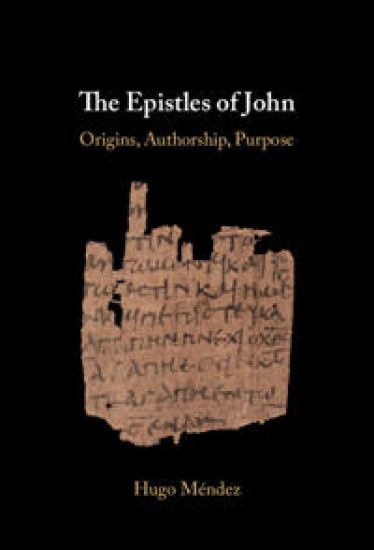
For centuries, Christians believed that the biblical letters of 1, 2, and 3 John were penned by a disciple of Jesus. Today, scholars speculate that the three are artifacts of a lost 'Johannine Community.' In this groundbreaking study, however, Hugo Méndez challenges both paradigms, meticulously laying out the evidence that the Epistles are, instead, a series of falsely authored works. The texts position themselves as works by a single author. In reality, they were penned by three different writers in a chain of imitation, creative adaptation, and invention. Through incisive, close readings of the Epistles, Méndez clarifies their meaning and purpose, demystifying their most challenging sections. And by placing these works in dialogue with Greco-Roman pseudo-historical writing, he uncovers surprising links between Classical and early Christian literature. Bold, comprehensive, and deeply original, this book dismantles older scholarly views while proposing new and exciting approaches to these enigmatic texts.
The Gospel of John

The Gospel of John

Hugo Méndez

OXFORD UNIVERSITY PRESS INC
2025
sidottu

Halvin toimitettuna 32,50 €

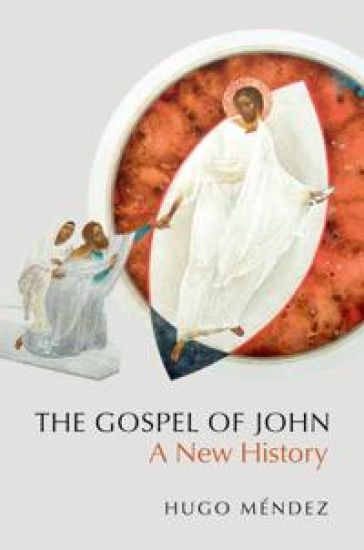
The biblical Gospel of John casts itself as a memoir of “the disciple whom Jesus loved”--a mysterious figure who allegedly watched Jesus die on the cross and stepped into his empty tomb. But in this groundbreaking study, Hugo Méndez argues that the text is something else: a gospel written by a single disguised author that pioneered an entire library of falsely authored works in its wake. The author of John believed that Jesus was a divine being who came to earth to transform humans into divine beings. To encourage others to embrace this startling vision, that author composed a Gospel rich with invented materials—one in which Jesus communicates the author's views through so many cryptic dialogues and symbolic gestures meant for readers to decipher. And to make this revisionary portrait of Jesus plausible, the author disguised his identity, attributing his Gospel to an invented, shadowy disciple gifted with supernatural insight and able to retrieve lost memories of Jesus. In this respect, the Gospel of John is comparable to the so-called apocryphal gospels produced in the second century--works such as the Gospel of Thomas and the Gospel of Judas. Critically, Méndez also argues that the invention of this eyewitness was not a self-contained event, but the genesis of a new and vibrant literary tradition. As the enigmatic disciple of the Gospel was folded into the same collective memory as Peter and Paul, his identity became a viable mask for other authors with different motivations. And in time, many such writers--among them, the authors of 1 John, 2 John, 3 John, Revelation, the Apocryphon of John, and the Epistula Apostolorum—co-opted this invented eyewitness, repurposing him for new agendas and weaving countless new afterlives for him. The Gospel of John: A New History traces this arc, showing how a single act of disguised authorship inspired a rich literary tradition and dramatically shaped twenty centuries of Christian culture.
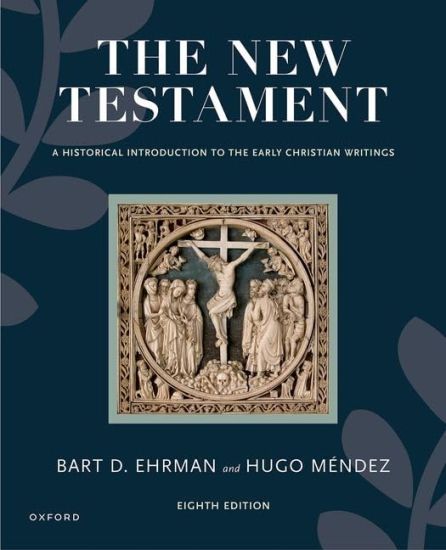
The New Testament

The New Testament

Bart D. Ehrman; Hugo Méndez

OXFORD UNIVERSITY PRESS INC
2025
nidottu

Halvin toimitettuna 98,20 €

Featuring vibrant full color throughout, the eighth edition of Bart D. Ehrman's highly successful introduction approaches the New Testament from a consistently historical and comparative perspective, emphasizing the rich diversity of the earliest Christian literature. New to this edition, Hugo Méndez has brought fresh perspectives to the text. Distinctive to this study is The New Testament's unique focus on the historical, literary, and religious milieux of the Greco-Roman world, including early Judaism. As part of its historical orientation, the book also discusses other Christian writings that were roughly contemporary with the New Testament, such as the Gospel of Thomas, the Apocalypse of Peter, and the letters of Ignatius.
The Cult of Stephen in Jerusalem

The Cult of Stephen in Jerusalem

Hugo Méndez

Oxford University Press
2022
sidottu
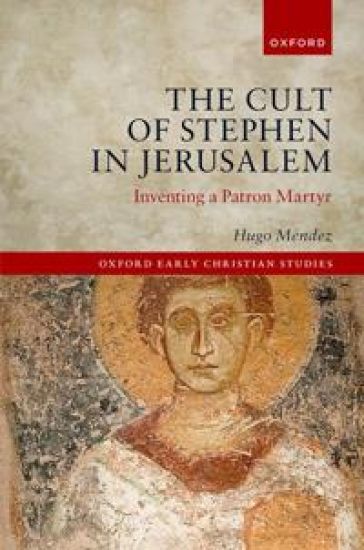
As the site of only a small and obscure Christian population between 135 and 313 CE, Jerusalem witnessed few instances of anti-Christian persecution. This fact became a source of embarrassment to the city in late antiquity—a period when martyr traditions, relics, and shrines were closely intertwined with local prestige. At that time, the city had every incentive to stretch the fame of its few, apostolic martyrs as far as possible-especially the fame of the biblical St. Stephen, the figure traditionally regarded as the first Christian martyr (Acts 6-8). What the church lacked in the quantity of its martyrs, it believed it could compensate for in an exclusive, local claim to the figure widely hailed as the "Protomartyr", "firstborn of the martyrs", and "chief of confessors" in contemporary sources. This book traces the rise of the cult of Stephen in Jerusalem, exploring such historical episodes as the fabrication of his relics, the construction of a grand basilica in his honour, and the multiplication of the saint's feast days. It argues that local church authorities promoted devotion to Stephen in the fifth century in a conscious attempt to position him as a patron saint for Jerusalem—that is, a symbolic embodiment of the city's Christian identity and power.