Kirjojen hintavertailu – 12 903 725 kirjaa ja 27 kauppaa

Kirjailija

Hugo Strandberg

Kirjat ja teokset yhdessä paikassa: 9 kirjaa, julkaisuja vuosilta 2006–2022, suosituimpiin kuuluu Filosofins didaktik : filosofiska betraktelser om att lära sig tänka. Vertaile teosten hintoja ja tarkista saatavuus suomalaisista kirjakaupoista.

9 kirjaa

Kirjojen julkaisuvuodet: 2006–2022.

Filosofins didaktik : filosofiska betraktelser om att lära sig tänka

Filosofins didaktik : filosofiska betraktelser om att lära sig tänka

Birgit Schaffar; Lars Hertzberg; Hannu Juuso; Kristian Klockars; Camilla Kronqvist; Carita Lagerspetz; Olli Lagerspetz; Yrsa Neuman; Rita Nordströn-Lytz; Thomas Nyman; Hugo Strandberg; Lena Sågfors; Tuukka Tomperi; Göran Torrkullla; Bertel Wahlström

Bokförlaget Thales
2013
nidottu
En antologi med texter som diskuterar de särskilda svårigheterna och möjligheterna med att undervisa i filosofi.
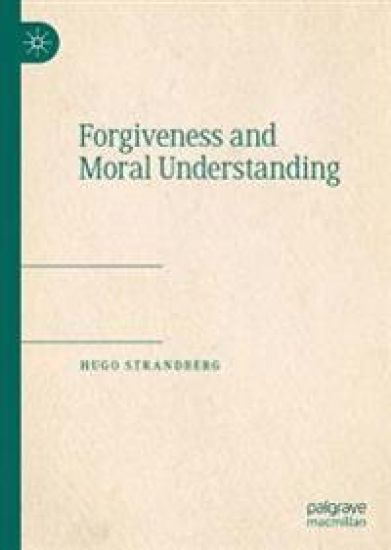
Forgiveness and Moral Understanding

Forgiveness and Moral Understanding

Hugo Strandberg

Springer Nature Switzerland AG
2022
nidottu
This book sets out to deepen our moral understanding by thinking about forgiveness: what does it mean for our understanding of morality that there is such a thing as forgiveness? Forgiveness is a challenge to moral philosophy, for forgiveness challenges us: it calls me to understand my relations to others, and thereby myself, in a new way. Without arguing for or against forgiveness, the present study tries to describe these challenges. These challenges concern both forgiving and asking for forgiveness. The latter is especially important in this context: what does the need to be forgiven mean? In the light of such questions, central issues in the philosophy of forgiveness are critically discussed, about the reasons and conditions for forgiveness, but mostly the focus is on new questions, about the relation of forgiveness to plurality, virtue, death, the processes of moral change and development, and the possibility of feeling at home in the world.
Forgiveness and Moral Understanding

Forgiveness and Moral Understanding

Hugo Strandberg

Springer Nature Switzerland AG
2021
sidottu
This book sets out to deepen our moral understanding by thinking about forgiveness: what does it mean for our understanding of morality that there is such a thing as forgiveness? Forgiveness is a challenge to moral philosophy, for forgiveness challenges us: it calls me to understand my relations to others, and thereby myself, in a new way. Without arguing for or against forgiveness, the present study tries to describe these challenges. These challenges concern both forgiving and asking for forgiveness. The latter is especially important in this context: what does the need to be forgiven mean? In the light of such questions, central issues in the philosophy of forgiveness are critically discussed, about the reasons and conditions for forgiveness, but mostly the focus is on new questions, about the relation of forgiveness to plurality, virtue, death, the processes of moral change and development, and the possibility of feeling at home in the world.
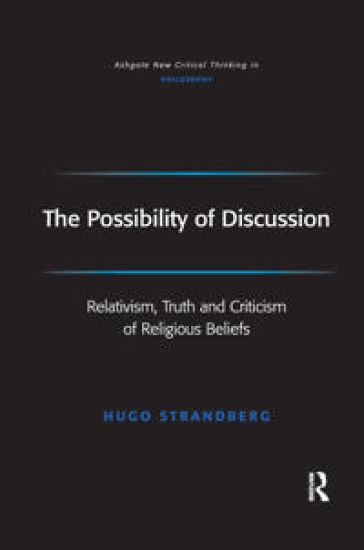
The Possibility of Discussion

The Possibility of Discussion

Hugo Strandberg

Routledge
2016
nidottu
Answering the question 'How is fruitful discussion possible?', this book addresses the central philosophical issue of how reason shall be understood and how it is limited. This study argues that the understanding of discussion according to which it necessarily starts from putative universal norms and rules for argumentation is problematic, among other reasons since such rules are unfruitful in contexts where there are vast disagreements such as religion. Inspired by Wittgensteinian ideas, Strandberg develops instead a new way of understanding discussion, truth and rationality which escapes these problems, and shows how this solution can be used to answer the accusation against Wittgensteinian philosophy for being conservative and resulting in fideism.
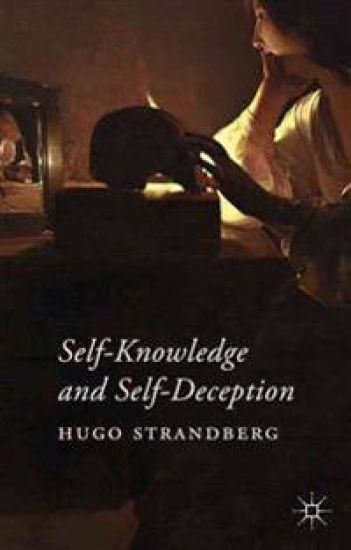
Self-Knowledge and Self-Deception

Self-Knowledge and Self-Deception

Hugo Strandberg

Palgrave Macmillan
2015
sidottu
The aim of this book is to acquire a better understanding of the question 'who am I?' By means of the concepts of self-knowledge and self-deception questions about the self are studied. The light in which its topic is seen is the light of love, the light in which other people really become visible and so oneself in one's relation to them.
Love of a God of Love

Love of a God of Love

Hugo Strandberg

Bloomsbury Academic USA
2013
nidottu
Traditionally, religious belief has in the philosophy of religion been understood along more orless epistemological lines. Love of a God of Love develops another understanding of belief, where the moralconcept of love is central. In this context, what isdistinctive about the concept of love is that it is both the "what" and the "how" of belief: forthe one who loves a God of love, the concept of love characterizes both the content side andthe act side of the belief. In that respect, this understanding of religious belief makes itpossible to avoid certain formalist difficulties, arising when the "what" and the "how" ofbelief are sharply distinguished.
Love of a God of Love

Love of a God of Love

Hugo Strandberg

Continuum Publishing Corporation
2011
sidottu
Traditionally, religious belief has in the philosophy of religion been understood along more or less epistemological lines. Love of a God of Love develops another understanding of belief, where the moral concept of love is central. In this context, what is distinctive about the concept of love is that it is both the "what" and the "how" of belief: for the one who loves a God of love, the concept of love characterizes both the content side and the act side of the belief. In that respect, this understanding of religious belief makes it possible to avoid certain formalist difficulties, arising when the "what" and the "how" of belief are sharply distinguished.
Escaping My Responsibility

Escaping My Responsibility

Hugo Strandberg

Peter Lang AG
2009
sidottu
What is morality? This is the question this book is dealing with. The aim of the study is to show the distorting character of many common pictures of what morality is, pictures found inside and outside of philosophy. The central idea of the book is that the distorting character of these pictures is that they make it possible for me to escape my moral responsibility. Focusing on responsibility and our attempts to shut our eyes to it, questions such as the following are discussed: Is there a moral reality? Is it possible to show someone else what is good and bad? What is the relation between morality and religion? Are there moral truths? What can philosophically be said about the meaning of life?
The Possibility of Discussion

The Possibility of Discussion

Hugo Strandberg

Ashgate Publishing Limited
2006
sidottu
Answering the question 'How is fruitful discussion possible?', this book addresses the central philosophical issue of how reason shall be understood and how it is limited. This study argues that the understanding of discussion according to which it necessarily starts from putative universal norms and rules for argumentation is problematic, among other reasons since such rules are unfruitful in contexts where there are vast disagreements such as religion. Inspired by Wittgensteinian ideas, Strandberg develops instead a new way of understanding discussion, truth and rationality which escapes these problems, and shows how this solution can be used to answer the accusation against Wittgensteinian philosophy for being conservative and resulting in fideism.