Kirjojen hintavertailu – 12 859 826 kirjaa ja 27 kauppaa

Kirjailija

Huiyun Feng

Kirjat ja teokset yhdessä paikassa: 12 kirjaa, julkaisuja vuosilta 2007–2025, suosituimpiin kuuluu Contesting Revisionism. Vertaile teosten hintoja ja tarkista saatavuus suomalaisista kirjakaupoista.

12 kirjaa

Kirjojen julkaisuvuodet: 2007–2025.

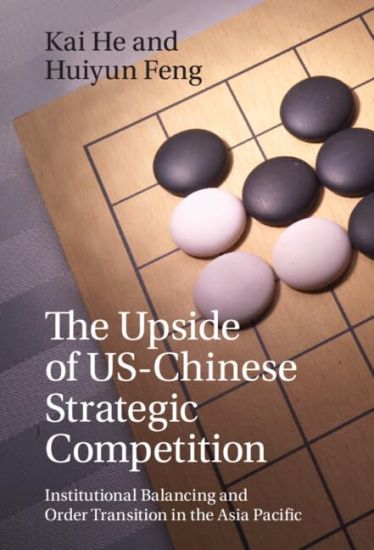
The Upside of US-Chinese Strategic Competition

The Upside of US-Chinese Strategic Competition

Kai He; Huiyun Feng

Cambridge University Press
2025
pokkari
US–Chinese strategic competition is a defining factor in world politics. The prevailing narrative on US–China relations predicts inevitable conflicts between these two giants, potentially leading to a self-fulfilling prophecy. While fully acknowledging the inherent dangers of potential wars or military conflicts between the two powers, this book shows that competition is not necessarily detrimental. By systematically examining US–China institutional balancing across security, economic and political domains, particularly in the aftermath of the 2008 global financial crisis, this book highlights three positive externalities or unintended consequences: the revitalisation of regional institutions to address emerging challenges, unexpected collaborations between great powers (the US and China) and regional actors, and the provision of public goods by both nations. The book argues that constructive and institutionalised competition between the US and China, if managed with strategic foresight and restraint, could inadvertently lead to positive outcomes – institutional peace – in the Asia-Pacific region.
The Upside of US-Chinese Strategic Competition

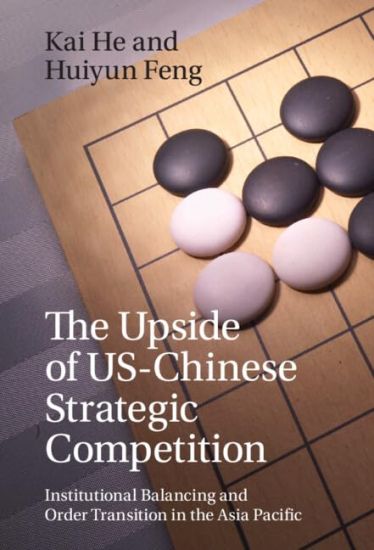
The Upside of US-Chinese Strategic Competition

Kai He; Huiyun Feng

Cambridge University Press
2025
sidottu
US–Chinese strategic competition is a defining factor in world politics. The prevailing narrative on US–China relations predicts inevitable conflicts between these two giants, potentially leading to a self-fulfilling prophecy. While fully acknowledging the inherent dangers of potential wars or military conflicts between the two powers, this book shows that competition is not necessarily detrimental. By systematically examining US–China institutional balancing across security, economic and political domains, particularly in the aftermath of the 2008 global financial crisis, this book highlights three positive externalities or unintended consequences: the revitalisation of regional institutions to address emerging challenges, unexpected collaborations between great powers (the US and China) and regional actors, and the provision of public goods by both nations. The book argues that constructive and institutionalised competition between the US and China, if managed with strategic foresight and restraint, could inadvertently lead to positive outcomes – institutional peace – in the Asia-Pacific region.
After Hedging

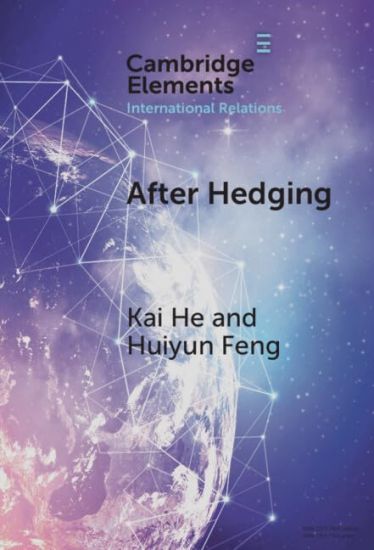
After Hedging

Kai He; Huiyun Feng

Cambridge University Press
2023
sidottu
The strategic rivalry between the United States and China has heightened since COVID-19. Secondary states face increasing difficulties maintaining a 'hedging' strategy between the United States and China. This Element introduces a preference-for-change model to explain the policy variations of states during the order transition. It suggests that policymakers will perceive a potential change in the international order through a cost–benefit prism. The interplays between the perceived costs and the perception of benefits from the order transition will shape states' policy choices among four strategic options: (1) hedging to bet on uncertainties; (2) bandwagoning with rising powers to support changes; (3) balancing against rising powers to resist changes; and (4) buck-passing to ignore changes. Four case studies (Australia, New Zealand, Singapore, and Thailand) are conducted to explore the policy choices of regional powers during the international order transition. This title is also available as Open Access on Cambridge Core.
After Hedging

After Hedging

Kai He; Huiyun Feng

Cambridge University Press
2023
pokkari
The strategic rivalry between the United States and China has heightened since COVID-19. Secondary states face increasing difficulties maintaining a 'hedging' strategy between the United States and China. This Element introduces a preference-for-change model to explain the policy variations of states during the order transition. It suggests that policymakers will perceive a potential change in the international order through a cost–benefit prism. The interplays between the perceived costs and the perception of benefits from the order transition will shape states' policy choices among four strategic options: (1) hedging to bet on uncertainties; (2) bandwagoning with rising powers to support changes; (3) balancing against rising powers to resist changes; and (4) buck-passing to ignore changes. Four case studies (Australia, New Zealand, Singapore, and Thailand) are conducted to explore the policy choices of regional powers during the international order transition. This title is also available as Open Access on Cambridge Core.
Contesting Revisionism

Contesting Revisionism

Steve Chan; Huiyun Feng; Kai He; Weixing Hu

Oxford University Press Inc
2021
nidottu
How can we know a country, such as the United States or China, is revisionist, that is, whether it intends to upset the international order? What motivates states to act the way they do? Contesting Revisionism focuses on a particular kind of motivation inclining a state to challenge the existing norms, rules, and institutions of international order: revisionism. The authors offer a critique of the existing discourse on revisionism and investigate the origin and evolution of the foreign policy orientations of revisionist states in the past. Furthermore, they introduce an ensemble of indicators to discern and compare the extent of revisionist tendencies on the part of contemporary China and the United States. Questioning the facile assumption that past episodes will repeat in the future, they argue that "hard" revisionism relying on war and conquest is less viable and likely in today's world. Instead, "soft" revisionism seeking to promote institutional change is more relevant and likely. Focusing on contemporary Sino-American relations, they conclude that much of the current discourse based on power transition theory is problematic. A dominant power is not inevitably committed to the defense of international order, nor does a rising power always have a revisionist agenda to challenge this order. The transformation of international order does not necessarily require a power transition between China and the US., nor does a possible power transition necessarily augur war. After developing the concept of revisionism both theoretically and empirically, they conclude with a series of policy recommendations for enhancing international stability and diminishing tension in Sino-American relations.
Contesting Revisionism

Contesting Revisionism

Steve Chan; Huiyun Feng; Kai He; Weixing Hu

Oxford University Press Inc
2021
sidottu
How can we know a country, such as the United States or China, is revisionist, that is, whether it intends to upset the international order? What motivates states to act the way they do? Contesting Revisionism focuses on a particular kind of motivation inclining a state to challenge the existing norms, rules, and institutions of international order: revisionism. The authors offer a critique of the existing discourse on revisionism and investigate the origin and evolution of the foreign policy orientations of revisionist states in the past. Furthermore, they introduce an ensemble of indicators to discern and compare the extent of revisionist tendencies on the part of contemporary China and the United States. Questioning the facile assumption that past episodes will repeat in the future, they argue that "hard" revisionism relying on war and conquest is less viable and likely in today's world. Instead, "soft" revisionism seeking to promote institutional change is more relevant and likely. Focusing on contemporary Sino-American relations, they conclude that much of the current discourse based on power transition theory is problematic. A dominant power is not inevitably committed to the defense of international order, nor does a rising power always have a revisionist agenda to challenge this order. The transformation of international order does not necessarily require a power transition between China and the US., nor does a possible power transition necessarily augur war. After developing the concept of revisionism both theoretically and empirically, they conclude with a series of policy recommendations for enhancing international stability and diminishing tension in Sino-American relations.
China’s Challenges and International Order Transition

China’s Challenges and International Order Transition

Huiyun Feng; Kai He

The University of Michigan Press
2020
sidottu
China’s Challenges and International Order Transition introduces an integrated conceptual framework of “international order” categorized by three levels (power, rules, and norms) and three issue-areas (security, political, and economic). Each contributor engages one or more of these analytical dimensions to examine two questions: (1) Has China already challenged this dimension of international order? (2) How will China challenge this dimension of international order in the future? The contested views and perspectives in this volume suggest it is too simple to assume an inevitable conflict between China and the outside world. With different strategies to challenge or reform the many dimensions of international order, China’s role is not a one-way street. It is an interactive process in which the world may change China as much as China may change the world. The aim of the book is to broaden the debate beyond the “Thucydides Trap” perspective currently popular in the West. Rather than offering a single argument, this volume offers a platform for scholars, especially Chinese scholars vs. Western scholars, to exchange and debate their different views and perspectives on China and the potential transition of international order.
How China Sees the World

How China Sees the World

Huiyun Feng; Kai He; Xiaojun Li

Springer Verlag, Singapore
2019
nidottu
This book intends to make sense of how Chinese leaders perceive China’s rise in the world through the eyes of China’s international relations (IR) scholars. Drawing on a unique, four-year opinion survey of these scholars at the annual conference of the Chinese Community of Political Science and International Studies (CCPSIS) in Beijing from 2014–2017, the authors examine Chinese IR scholars’ perceptions of and views on key issues related to China’s power, its relationship with the United States and other major countries, and China’s position in the international system and track their changes over time. Furthermore, the authors complement the surveys with a textual analysis of the academic publications in China’s top five IR journals. By comparing and contrasting the opinion surveys and textual analyses, this book sheds new light on how Chinese IR scholars view the world as well as how they might influence China’s foreign policy.
Prospect Theory and Foreign Policy Analysis in the Asia Pacific
Why does North Korea behave erratically in pursuing its nuclear weapons program? Why did the United States prefer bilateral alliances to multilateral ones in Asia after World War II? Why did China become "nice"—no more military coercion—in dealing with the pro-independence Taiwan President Chen Shuibian after 2000? Why did China compromise in the negotiation of the Chunxiao gas exploration in 2008 while Japan became provocative later in the Sino-Japanese disputes in the East China Sea? North Korea’s nuclear behavior, U. S. alliance strategy, China’s Taiwan policy, and Sino-Japanese territorial disputes are all important examples of seemingly irrational foreign policy decisions that have determined regional stability and Asian security. By examining major events in Asian security, this book investigates why and how leaders make risky and seemingly irrational decisions in international politics. The authors take the innovative step of integrating the neoclassical realist framework in political science and prospect theory in psychology. Their analysis suggests that political leaders are more likely to take risky actions when their vital interests and political legitimacy are seriously threatened. For each case, the authors first discuss the weaknesses of some of the prevailing arguments, mainly from rationalist and constructivist theorizing, and then offer an alternative explanation based on their political legitimacy-prospect theory model. This pioneering book tests and expands prospect theory to the study of Asian security and challenges traditional, expected-utility-based, rationalist theories of foreign policy behavior.
Chinese Strategic Culture and Foreign Policy Decision-Making
Examining the major academic and policy debates over China’s rise and related policy issues, this book looks into the motivations and intentions of a rising China. Most of the scholarly works on China’s rise approach the question at a structural level by looking at the international system and the systemic impact on China’s foreign policy. Traditional Realist theorists define China as a revisionist power eager to address wrongs done to them in history, whilst some cultural and historical analyses attest that China’s strategic culture has been offensive despite its weak material capability. Huiyun Feng’s path-breaking contribution to the debate tests these rival hypotheses by examining systematically the beliefs of contemporary Chinese leaders and their strategic interactions with other states since 1949 when the communist regime came to power. The focus is on tracing the historical roots of Chinese strategic culture and its links to the decision-making of six key Chinese leaders via their belief systems. Chinese Strategic Culture will be of interest to students of Chinese politics, foreign policy, strategic theory and international relations in general.