Kirjailija
Humphrey Carpenter
Kirjat ja teokset yhdessä paikassa: 32 kirjaa, julkaisuja vuosilta 1985–2026, suosituimpiin kuuluu J. R. R. Tolkien. Vertaile teosten hintoja ja tarkista saatavuus suomalaisista kirjakaupoista.
32 kirjaa
Kirjojen julkaisuvuodet: 1985–2026.
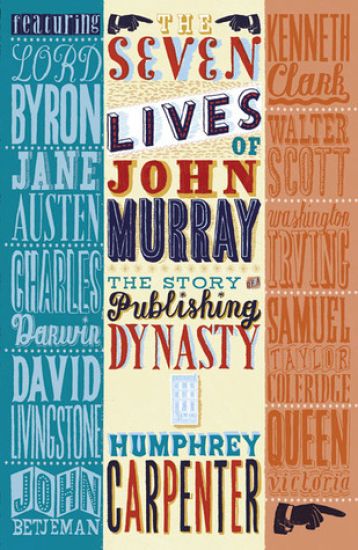
From the burning of Byron's memoirs, Jane Austen's clipped businesslike manner, and the lucrative controversy caused by the publication of Darwin's Origin of Species, through to the discovery of the new young poet John Betjeman, the name John Murray has for more than two hundred years been synonymous with challenging, intelligent and progressive publishing. From its birth in 1768, when the first John Murray of Edinburgh came down to London, each of its seven leaders has made his own contribution to the dissemination of literature and the understanding of the world. One became Byron's publisher and confidante; another began the revolutionary series of Murray handbooks which transformed world travel in the early years of the railways; a third broke controversial new ground with the publication of Queen Victoria's letters. So the tradition progressed to the end of the twentieth century, and a list of literary giants including Patrick Leigh Fermor, Osbert Lancaster, Francoise Sagan and Poet Laureate, John Betjeman. Written in Carpenter's rollicking and iconoclastic style, it is an affectionate and vibrant account of the longest-surviving publishing house in the world.
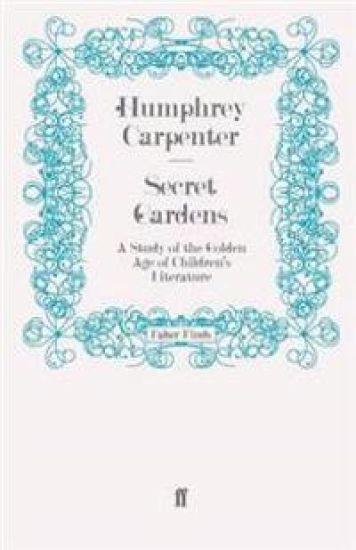
Covering the period from the publication of Alice's Adventures in Wonderland to Winnie-the-Pooh, Humphrey Carpenter examines the lives and writings of Lewis Carroll, Kenneth Grahame, George Macdonald, Louisa May Alcott, Frances Hodgson Burnett, A. A. Milne and others whose works make up the Golden Age of children's literature. Both a collective biography and a work of criticism, Secret Gardens forces us to reconsider childhood classics in a new light. 'Secret Gardens permits us to see in a fresh light the interaction between cultural history and literature, and to realize that ... it wasn't mere misfits who withdrew into the writing of children's books, but rather the sort of misfits who reflected the prevailing dissatisfactions of the age.' New York Times Book Review
Kingsley Amis, John Osborne, John Braine, Colin Wilson, John Wain - five names instantly redolent of the 1950s and the Angry Young Men phenomenon. However, as Humphrey Carpenter explores with relish, the suggestion that these and other writers, tagged in the same way, formed a homogeneous cadre of rebellion is false and is much more the product of media myth-making than anything else. Indeed, the Angry Young Men could hardly have been a more diverse group, sundered by ability, achievement, beliefs and outlook. This was the sort of book Humphrey Carpenter excelled at, with The Inklings, Secret Gardens, Geniuses Together, The Brideshead Generation and The Angry Young Men almost making the category of group literary biography his own. This was his last in the idiom and probably the funniest.
In Humphrey Carpenter's own words, 'This is the story of the longest-ever literary party, which went on in Montparnasse, on the Left Bank, throughout the 1920s.''This book', to continue to quote Carpenter himself, 'is chiefly a collage of Left-Bank expatriate life as it was experienced by the Hemingway generation - "The Lost Generation", as Gertrude Stein named it in a famous remark to Hemingway.'There are brief portraits of Gertrude Stein, Natalie Clifford Barney and Sylvia Beach, who moved to Paris before the First World War and provided vital introductions for the exiles of the 1920s. The main narrative, however, concerns the years 1921 to 1928 because these saw the arrival and departure of Hemingway and most of his Paris associates.'He is a compelling guide, catching the kind of idiosyncratic detail or incident that holds the readers' attention and maintains a cracking pace. Anyone wanting an introduction to the constellation of talent that made the Left Bank in Paris during the Twenties a second Greenwich Village would find this a useful and inspiring book.' Times Educational Supplement
'[The Brideshead Generation] has both style and substance, and is above all an enjoyable companion. It has a wildly amusing cast, here controlled by a skilful director.' Evening Standard'Jovial and entertaining, full of the sort of stories that your friends will tell you if you don't read it before them.' Independent'Carpenter has read widely and has collected an enormous fund of entertaining stories and facts.' Sunday Telegraph'Hauntingly sad and wonderfully funny and by far the best thing Humphrey Carpenter has done.' Fiona MacCarthy, The Times
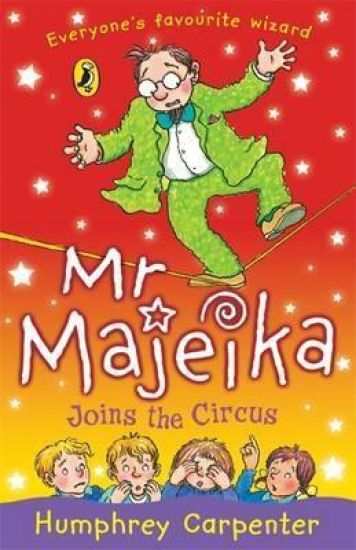
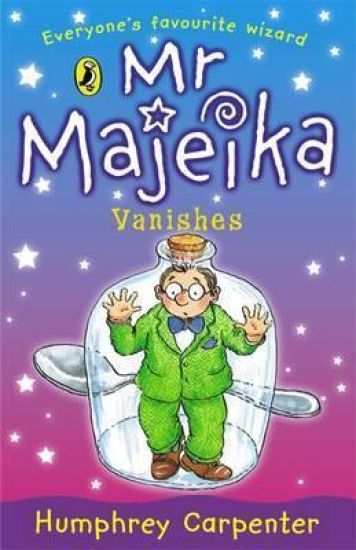
When Class Three and Mr Majeika go to the circus, it's definitely not as fun as they imagined. Everyone's a bit old, creaky and rubbish really! So when Mr Majeika casts a small spell to help the performers with their circus show, it's no surprise that Billy Balance, the slack rope walker, kidnaps Mr Majeika so that Mr Majeika can magically help him everytime! Things get worse whilst Mr majeika is trapped when Wilhelmina Worlock takes the opportunity to turn Class Three's classroom into a circus and the children spend all afternoon running away from lions and alligators! But Mr Majeika's magic saves the day, Class Three and the circus end up on the news and once again Mr Potter, the headmaster, misses it all!
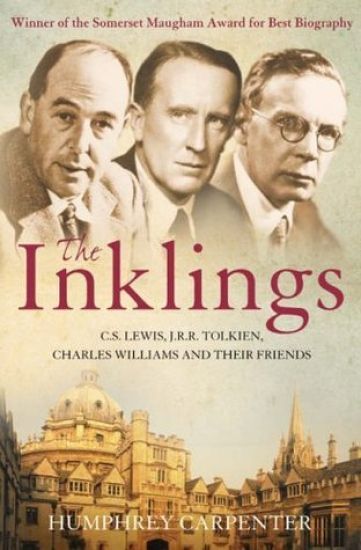
Critically acclaimed, award-winning biography of CS Lewis, JRR Tolkien and the brilliant group of writers to come out of Oxford during the Second World War.
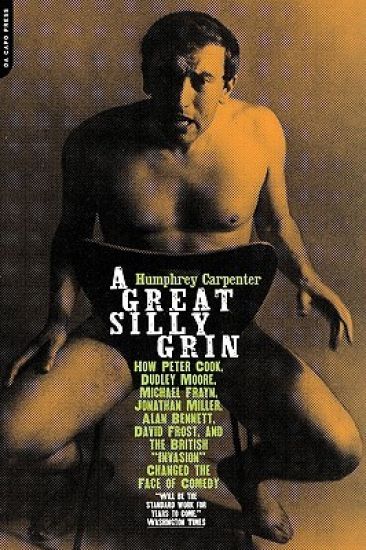
A vibrant history of the British satire explosion of the early 1960s and its lasting influence on comedy.. A Great, Silly Grin opens at the 1960 Edinburgh Festival, where a staggeringly inspired satirical revue called Beyond the Fringe startled a public steeped in the polite, bland banality of the 1950s. From there it is a short trip to the coffee bars of London, where the appearance of a scruffy yellow pamphlet calling itself Private Eye overturned the way Britons looked at their world. The apotheosis of the satire boom, and the progenitor of so many American comedy acts, was the groundbreaking BBC television program "That Was the Week That Was," which combined elements of sketch comedy and evening-news broadcast to produce something essential, hilarious, and, on occasion, scandalous. Humphrey Carpenter's history of this tumultuous and exciting era introduces us not only to the people involved in its creation--Peter Cook, Dudley Moore, Michael Frayn, Jonathan Miller, Alan Bennett, and David Frost--but also their routines and sketches.
More amazing adventures with Mr Majeika, the ex-wizard, turned teacher, and his class at St Barty's School. This time there's a trip down a magic river, a battle to save St Barty's from the wrecking ball, and work experience for Class Three.
Oxford Companion to Children's Literature
Humphrey Carpenter; Prichard Mari
Oxford University Press
1999
nidottu
The indispensable reference book for anyone concerned with children's books. Over 900 biographical entries deal with authors, illustrators, printers, publishers, educationalists, and others who have influenced the development of children's literature. The range of literature covered includes traditional narrative materials such as legends as romances; fairy tales; chapbooks; genres such as school stories, adventure stories, doll stories, and science fiction; ABC and other learning books; children's magazines, comics, and story papers; picture books; teenage novels; children's hymns; and children's stories on radio television and film. Other entries include: concise plot summaries, from familiar favourites like The Secret Garden to less well-known works such as My Friend Mr Leaky by the eminent scientist J. B. S. Haldane; characters, Andy Pandy to Tiger Tim, Captain Nemo to Shere Khan and Winnie-the-Pooh; literary and historical background, Puritans and penny dreadfuls, libraries and reviewers, racism and sexism; mythical and legendary creatures, trolls, dragons, witches, giants, dwarfs, and goblins; national surveys, including the USA, Germany, France, Italy, Denmark, Iceland, Canada, Australia, and India. Written both to entertain and instruct, The Oxford Companion to Children's Literature is a reference work no one interested in the world of children's books should be without.
Class 3 are sure that something is very wrong when Mr Majeika leaves school without saying goodbye. When they find a message from him saying he's been arrested by the Silly Crime Squad, they are determined to rescue him. To do this they must outwit Hamish Bigmore and Mr Majeika's old enemy, Wilhelmina Worlock. They succeed and Wilhelmina is punished with a 'spell' on earth as a Supply Teacher!
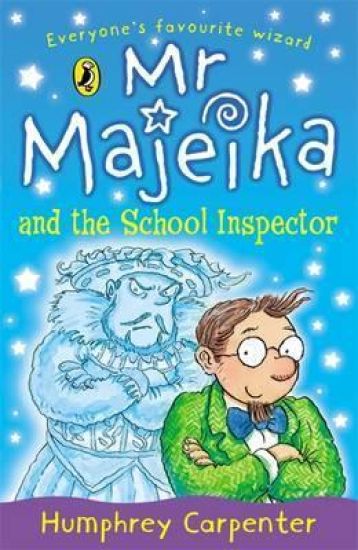
'Use of magic by teacher strictly forbidden.'Poor Mr Majeika goes to the bottom of the class when the school inspector comes to call. Things don't get any easier when Mr Majeika turns himself into a lobster by mistake. Class Three somehow has to get Wilhemina Worlock to undo the spell...