Kirjojen hintavertailu – 12 859 819 kirjaa ja 27 kauppaa

Kirjailija

Huseyn Aliyev

Kirjat ja teokset yhdessä paikassa: 5 kirjaa, julkaisuja vuosilta 2015–2025, suosituimpiin kuuluu How Socio-Cultural Codes Shaped Violent Mobilization and Pro-Insurgent Support in the Chechen Wars. Vertaile teosten hintoja ja tarkista saatavuus suomalaisista kirjakaupoista.

5 kirjaa

Kirjojen julkaisuvuodet: 2015–2025.

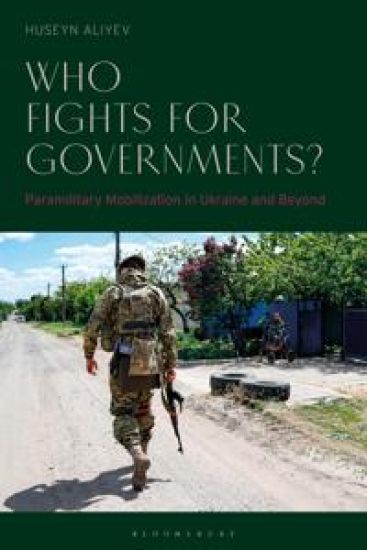
Who Fights for Governments?

Who Fights for Governments?

Huseyn Aliyev

BLOOMSBURY PUBLISHING PLC
2025
sidottu
Exploring why, when and under which circumstances individuals decide to take up arms mobilizing for pro-government militias, Huseyn Aliyev draws on insights from long-standing ethnographic fieldwork among former and active members of Ukraine’s pro-government volunteer battalions, and an original database of militias’ obituaries, to offer this complex and in-depth explanation of the phenomenon of pro-government mobilization. Revealing the patterns and dynamics of individual mobilization into pro-government militias, this study is critical to understanding how the Ukrainian nation succeeded in repelling Russian aggression both in 2014-15 and in 2022, but also essential to explaining how and why hundreds of pro-government militias emerge in the context of armed conflicts in different parts of the world.
How Socio-Cultural Codes Shaped Violent Mobilization and Pro-Insurgent Support in the Chechen Wars

How Socio-Cultural Codes Shaped Violent Mobilization and Pro-Insurgent Support in the Chechen Wars

Emil Aslan Souleimanov; Huseyn Aliyev

Springer International Publishing AG
2018
nidottu
This book argues that the existing scholarship on asymmetric conflict has so far failed to take into account the role of socio-cultural disparities among belligerents. In order to remedy this deficiency, this study conceptualizes socio-cultural asymmetry under the term of asymmetry of values. It proposes that socio-cultural values which are based upon the codes of retaliation, silence, and hospitality – values which are intrinsic to honor cultures, yet absent from modern institutionalized cultures – may significantly affect violent mobilization and pro-insurgent support in that they facilitate recruitment into and support for insurgent groups, while denying such support to incumbent forces. Utilizing Russia's counterinsurgency campaigns in the First and Second Chechnya Wars as an empirical case study, this study explains how asymmetry of values can have an effect on the dynamics of contemporary irregular wars.
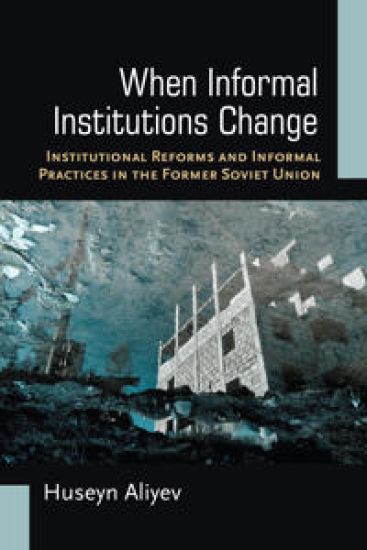
When Informal Institutions Change

When Informal Institutions Change

Huseyn Aliyev

The University of Michigan Press
2017
sidottu
Huseyn Aliyev examines how, when, and under which conditions democratic institutional reforms affect informal institutions in hybrid regimes, or countries transitioning to democracy. He analyzes the impact of institutional changes on the use of informal practices and what happens when democratic reforms succeed. Does informality disappear, or do elites and populations continue relying on informal structures? When Informal Institutions Change engages with a growing body of literature on informal practices and institutions in political science, economics, sociology, and beyond. Aliyev proposes expanding the analysis of the impact of institutional reforms on informal institutions beyond disciplinary boundaries, and combines theoretical insights from comparative politics with economic and social theories on informal relations. In addition, Aliyev offers insights that are relevant to democratization, institutionalism, and human geography. Detailed case studies of three transitional post-Soviet regimes—Georgia, Moldova, and Ukraine—illustrate the contentious relationship between democratic institutional reforms and informality in the broader post-Soviet context. Aliyev shows that in order for institutional reform to succeed in strengthening, democratizing, and formalizing institutions, it is important to approach informal practices and institutions as instrumental for its effectiveness. These findings have implications not only for hybrid regimes, but also for other post-Soviet or post-communist countries.
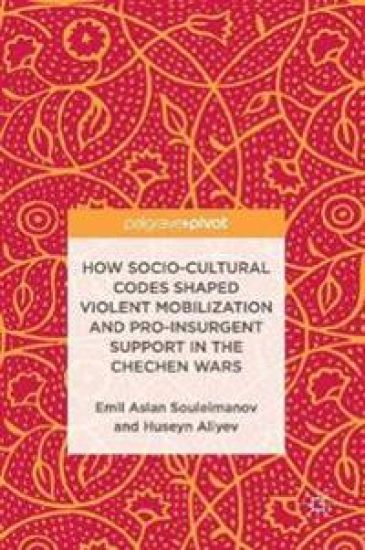
How Socio-Cultural Codes Shaped Violent Mobilization and Pro-Insurgent Support in the Chechen Wars

How Socio-Cultural Codes Shaped Violent Mobilization and Pro-Insurgent Support in the Chechen Wars

Emil Aslan Souleimanov; Huseyn Aliyev

Springer International Publishing AG
2017
sidottu
This book argues that the existing scholarship on asymmetric conflict has so far failed to take into account the role of socio-cultural disparities among belligerents. In order to remedy this deficiency, this study conceptualizes socio-cultural asymmetry under the term of asymmetry of values. It proposes that socio-cultural values which are based upon the codes of retaliation, silence, and hospitality – values which are intrinsic to honor cultures, yet absent from modern institutionalized cultures – may significantly affect violent mobilization and pro-insurgent support in that they facilitate recruitment into and support for insurgent groups, while denying such support to incumbent forces. Utilizing Russia's counterinsurgency campaigns in the First and Second Chechnya Wars as an empirical case study, this study explains how asymmetry of values can have an effect on the dynamics of contemporary irregular wars.
Post-Communist Civil Society and the Soviet Legacy
This book argues that the weakness of civil society in the post-Soviet Caucasus is a result not only of post-communist political and economic problems, but also of the effects of historical legacies. These influence both formal and informal civil societies and weaken the countries' ability to facilitate democratisation.