Kirjailija
Hutchins Hapgood
Kirjat ja teokset yhdessä paikassa: 34 kirjaa, julkaisuja vuosilta 1967–2026, suosituimpiin kuuluu The Spirit of Labor. Vertaile teosten hintoja ja tarkista saatavuus suomalaisista kirjakaupoista.
34 kirjaa
Kirjojen julkaisuvuodet: 1967–2026.


"An Anarchist Woman" offers a compelling glimpse into the world of early 20th-century American anarchism through the lens of a single life. Hutchins Hapgood vividly portrays the experiences and perspectives of a woman deeply involved in radical social and political movements. This biographical work explores themes of anarchism, socialism, and feminism, providing valuable insights into the ideals and struggles of activists during a pivotal era. A significant contribution to the study of American social history, "An Anarchist Woman" illuminates the challenges faced by those advocating for radical change. This historical account sheds light on the complexities of anarchist thought and its intersection with other progressive ideologies. Delve into the personal journey of a woman dedicated to fighting for her beliefs and understand the social forces that shaped her activism. A must-read for anyone interested in political activism, biography, and the history of anarchism in the United States. This work has been selected by scholars as being culturally important, and is part of the knowledge base of civilization as we know it. This work is in the public domain in the United States of America, and possibly other nations. Within the United States, you may freely copy and distribute this work, as no entity (individual or corporate) has a copyright on the body of the work. Scholars believe, and we concur, that this work is important enough to be preserved, reproduced, and made generally available to the public. We appreciate your support of the preservation process, and thank you for being an important part of keeping this knowledge alive and relevant.

Reproduction of the original: An Anarchist Woman by Hutchins Hapgood

Hutchins Hapgood (May 21, 1869, Chicago - November 19, 1944, Provincetown, MA) was an American journalist, author and anarchist. Hapgood grew up in Alton, IL, where his father was a wealthy manufacturer of farming equipment. After a year at the University of Michigan, he transferred to Harvard University, where he took a B. A. in 1892 and earned his Masters in 1897. Two of the intervening years were spent studying sociology and philosophy at the universities of Berlin and Freiburg, Germany. At first, he became a teacher of English composition at Harvard and the University of Chicago, but was eventually inspired by his older brother, Norman to pursue a career in journalism. He obtained his first employment with the New York Commercial Advertiser (later known as the New York Globe). His mentor there was Lincoln Steffens, the muckraking reporter. On June 22, 1899, he married Neith Boyce, Steffens' assistant and a journalist in her own right. In 1904, when the Advertiser was revamped as the Globe, he went back to Chicago for a time and became the drama critic for the Chicago Evening Post. Returning to New York, he spent much of his career as an editorial writer for the New York Evening Post, the Press, and the Globe. Following the deaths of his father in 1917 and his eldest son Boyce (in the 1918 flu epidemic), Hapgood's career began to decline. A few years later, general disillusionment over the decadence of the post-war world led him to retire. Hapgood died on November 19, 1944, in Provincetown, and was buried in the family plot in East Cemetery, Petersham, Massachusetts.
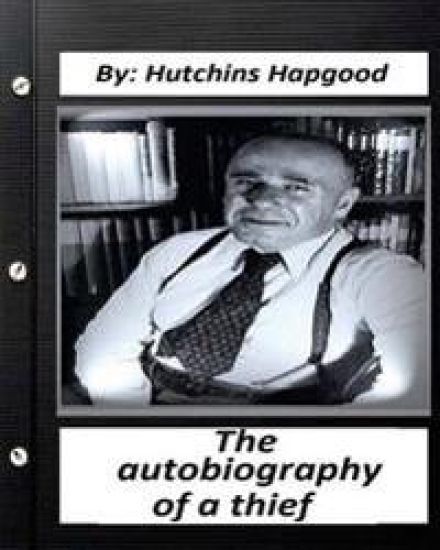
Autobiography of a Thief. By: Hutchins Hapgood (Classics SPECIAL)
Hutchins Hapgood
Createspace Independent Publishing Platform
2016
nidottu
The Autobiography of a Thief
Hutchins Hapgood
Createspace Independent Publishing Platform
2015
nidottu
Thank you for checking out this book by Theophania Publishing. We appreciate your business and look forward to serving you soon. We have thousands of titles available, and we invite you to search for us by name, contact us via our website, or download our most recent catalogues. I met the ex-pickpocket and burglar whose autobiography follows soon after his release from a third term in the penitentiary. For several weeks I was not particularly interested in him. He was full of a desire to publish in the newspapers an expos of conditions obtaining in two of our state institutions, his motive seeming partly revenge and partly a very genuine feeling that he had come in contact with a systematic crime against humanity. But as I continued to see more of him, and learned much about his life, my interest grew; for I soon perceived that he not only had led a typical thief's life, but was also a man of more than common natural intelligence, with a gift of vigorous expression. With little schooling he had yet educated himself, mainly by means of the prison libraries, until he had a good and 10]individually expressed acquaintance with many of the English classics, and with some of the masterpieces of philosophy. That this ex-convict, when a boy on the East Side of New York City, should have taken to the "graft" seemed to me, as he talked about it, the most natural thing in the world. His parents were honest, but ignorant and poor. One of his brothers, a normal and honorable man, is a truck driver with a large family; and his relatives and honest friends in general belong to the most modest class of working people. The swell among them is another brother, who is a policeman; but Jim, the ex-convict, is by far the cleverest and most intelligent of the lot. I have often seen him and his family together, on Saturday nights, when the clan gathers in the truckman's house for a good time, and he is the life of the occasion, and admired by the others. Jim was an unusually energetic and ambitious boy, but the respectable people he knew did not appeal to his imagination. As he played on the 11]street, other boys pointed out to him the swell thief at the corner saloon, and told him tales of big robberies and exciting adventures, and the prizes of life seemed to him to lie along the path of crime. There was no one to teach him what constitutes real success, and he went in for crime with energy and enthusiasm.
Paul Jones: The Riverside Biographical Series Volume 12
Hutchins Hapgood
Createspace Independent Publishing Platform
2013
nidottu


The Provincetown Plays
George Cram (EDT) Cook; Frank (EDT) Shay; Hutchins Hapgood
Kessinger Pub
2007
sidottu
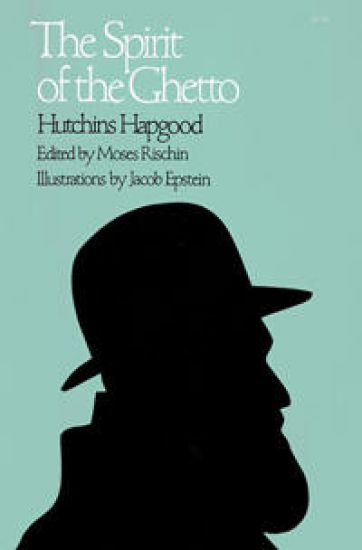
First published in 1902, and illustrated by Jacob Epstein, this evocation of the spiritual and cultural life of Yiddish New York remains fresh and relevant, and an invaluable commentary on one aspect of the formation of modern America. To an extent unequaled by any outsider before him, Hutchins Hapgood, a descendant of generations of New England Yankees, succeeded in penetrating the inner life of an American immigrant community. Hapgood did not set out to reform and cleanse the ghetto. His aim was to understand and interpret it, to find and know its poets, scholars, dramatists, actors, and artists, as well as its merchants and businessmen. He presents real people, individually identified and described, working out their destiny as part of a vital Jewish world. The sensibility and intentions of this book, as the editor points out, “anticipated a period of unexampled American artistic and intellectual gusto and creativity.” Moses Rischin’s discerning and affectionate introduction places Hapgood’s neglected classic squarely in the mainstream of American cultural development.