Kirjojen hintavertailu – 12 859 819 kirjaa ja 27 kauppaa

Kirjailija

Huw Price

Kirjat ja teokset yhdessä paikassa: 6 kirjaa, julkaisuja vuosilta 1996–2013, suosituimpiin kuuluu Time's Arrow and Archimedes' Point. Vertaile teosten hintoja ja tarkista saatavuus suomalaisista kirjakaupoista.

6 kirjaa

Kirjojen julkaisuvuodet: 1996–2013.

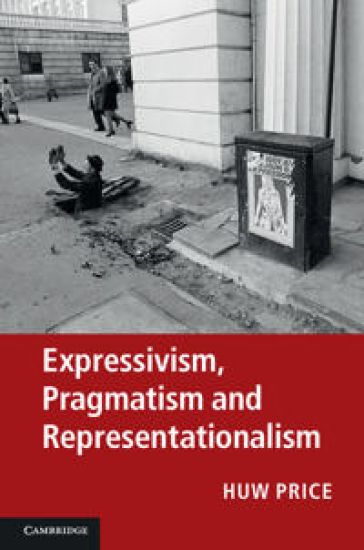
Expressivism, Pragmatism and Representationalism

Expressivism, Pragmatism and Representationalism

Huw Price; Simon Blackburn; Robert Brandom; Paul Horwich; Michael Williams

Cambridge University Press
2013
sidottu
Pragmatists have traditionally been enemies of representationalism but friends of naturalism, when naturalism is understood to pertain to human subjects, in the sense of Hume and Nietzsche. In this volume Huw Price presents his distinctive version of this traditional combination, as delivered in his René Descartes Lectures at Tilburg University in 2008. Price contrasts his view with other contemporary forms of philosophical naturalism, comparing it with other pragmatist and neo-pragmatist views such as those of Robert Brandom and Simon Blackburn. Linking their different 'expressivist' programmes, Price argues for a radical global expressivism that combines key elements from both. With Paul Horwich and Michael Williams, Brandom and Blackburn respond to Price in new essays. Price replies in the closing essay, emphasising links between his views and those of Wilfrid Sellars. The volume will be of great interest to advanced students of philosophy of language and metaphysics.
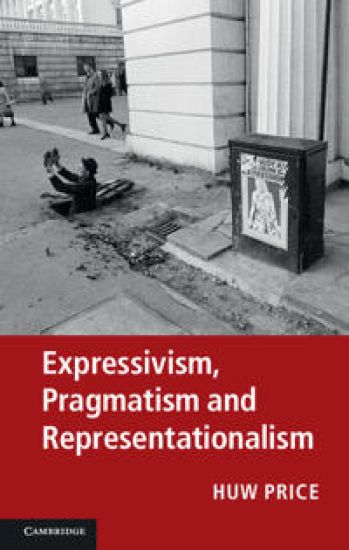
Expressivism, Pragmatism and Representationalism

Expressivism, Pragmatism and Representationalism

Huw Price; Simon Blackburn; Robert Brandom; Paul Horwich; Michael Williams

Cambridge University Press
2013
pokkari
Pragmatists have traditionally been enemies of representationalism but friends of naturalism, when naturalism is understood to pertain to human subjects, in the sense of Hume and Nietzsche. In this volume Huw Price presents his distinctive version of this traditional combination, as delivered in his René Descartes Lectures at Tilburg University in 2008. Price contrasts his view with other contemporary forms of philosophical naturalism, comparing it with other pragmatist and neo-pragmatist views such as those of Robert Brandom and Simon Blackburn. Linking their different 'expressivist' programmes, Price argues for a radical global expressivism that combines key elements from both. With Paul Horwich and Michael Williams, Brandom and Blackburn respond to Price in new essays. Price replies in the closing essay, emphasising links between his views and those of Wilfrid Sellars. The volume will be of great interest to advanced students of philosophy of language and metaphysics.
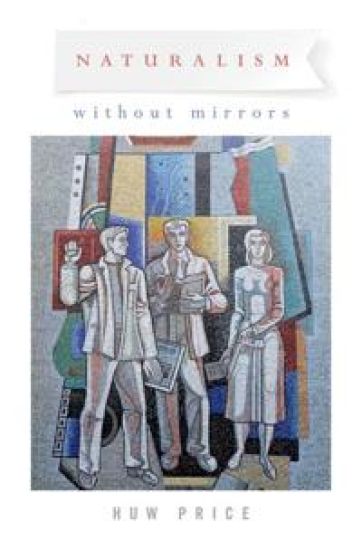
Naturalism Without Mirrors

Naturalism Without Mirrors

Huw Price

Oxford University Press Inc
2011
sidottu
This volume brings together fourteen major essays on truth, naturalism, expressivism and representationalism, by one of contemporary philosophy's most challenging thinkers. Huw Price weaves together Quinean minimalism about truth, Carnapian deflationism about metaphysics, Wittgensteinian pluralism about the functions of declarative language, and Rortyian skepticism about representation to craft a powerful and sustained critique of contemporary naturalistic metaphysics. In its place, he offers us not nonnaturalistic metaphysics, or philosophical quietism, but a new positive program for philosophy, cast from a pragmatist mold. This collection will be essential reading for anyone interested naturalism, pragmatism, truth, expressivism, pluralism and representationalism, or in deep questions about the direction and foundations of contemporary philosophy. It will be especially important to practitioners of analytic metaphysics, if they wish to confront the presuppositions of their own discipline. Price recommends a modest explanatory naturalism, in the sense of Hume: naturalism about own linguistic behavior, regarded as a behavior of natural creatures in a natural environment. He shows how this viewpoint privileges use and function over truth and reference, and expression over representation, as useful theoretical categories for the core philosophical project; and thereby undermines the semantic presuppositions of contemporary analytic metaphysics. At the same time, it offers an attractive resolution of the so-called "placement problems", that so preoccupy metaphysical naturalists--a global expressivism, with affinities both to the more local expressivism of writers such as Blackburn and Gibbard, and to Brandom's global inferentialism.
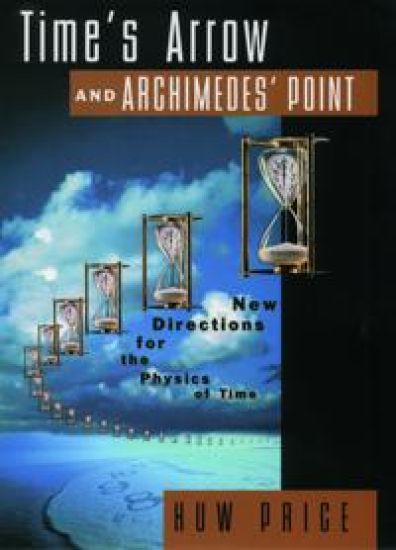
Time's Arrow and Archimedes' Point

Time's Arrow and Archimedes' Point

Huw Price

Oxford University Press Inc
1997
nidottu
`splendidly provocative ... enjoy it as a feast for the imagination.' John Gribbin, Sunday Times Why is the future so different from the past? Why does the past affect the future and not the other way round? The universe began with the Big Bang - will it end with a 'Big Crunch'? This exciting book presents an innovative and controversial view of time and contemporary physics. Price urges physicists, philosophers, and anyone who has ever pondered the paradoxes of time to look at the world from a fresh perspective and he throws fascinating new light on some of the great mysteries of the universe. `a significant contribution, remarkable for its scope ... written with great clarity and conviction.' Ilya Prigogine, THES `a useful addition to the literature on time, particularly as it reveals the influence of modern science on the way a philosopher thinks.' Peter Coveney, New Scientist `the author has done physicists a great service in laying out so clearly and critically the nature of the various time-asymmetry problems of physics.' John Barrow, Nature `a thoughtful (and thought-provoking) analysis of the time-asymmetry problem of physics which is in many ways deeper and more illuminating than accounts to be found elsewhere.' Roger Penrose `Huw Price is one of a handful of philosophers with a thorough grasp of the notorious arrow of time problem ... Price applies critical reasoning and penetrating insight to the current theories of physics and cosmology that have a bearing on this problem. Among the many ideas discussed here is the controversial claim that time's arrow would reverse in a recontracting universe.' Paul Davies
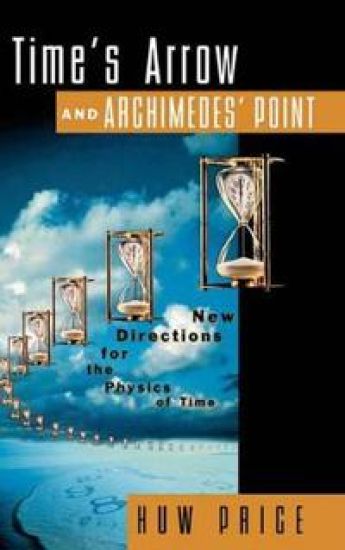
Time's Arrow and Archimedes' Point

Time's Arrow and Archimedes' Point

Huw Price

Oxford University Press Inc
1996
sidottu
The arrow of time and the meaning of quantum mechanics are two of the great mysteries of modern physics. This important book - written for non-specialist readers, as well as physicists and philosophers - throws a fascinating new light on both issues, and connects them in a wholly original way. In considering attempts to understand the arrow of time in physics, Huw Price shows that for over a century physicists have fallen repeatedly for the same trap: treating the past and future in different ways. To overcome this natural tendency, we need to imagine a point outside time - an Archimedean viewpoint, as Price calls it - from which to think about the arrow of time in an unbiased way. Taking this Archimedean viewpoint, Price asks why we assume that the past affects the future but not vice versa, and argues that causation is much more symmetric in microphysics: to a limited extent, the future does affect the past. Thus he avoids the usual paradoxes of quantum mechanics, without succumbing to the rival paradoxes of causal loops and time travel.