Kirjojen hintavertailu – 12 903 725 kirjaa ja 27 kauppaa

Kirjailija

Hyun-hoon Lee

Kirjat ja teokset yhdessä paikassa: 5 kirjaa, julkaisuja vuosilta 2002–2025, suosituimpiin kuuluu The Fourth Way: Navigating Global Challenges For A Sustainable Future. Vertaile teosten hintoja ja tarkista saatavuus suomalaisista kirjakaupoista.

5 kirjaa

Kirjojen julkaisuvuodet: 2002–2025.

The Fourth Way: Navigating Global Challenges For A Sustainable Future

The Fourth Way: Navigating Global Challenges For A Sustainable Future

Hyun-hoon Lee

WORLD SCIENTIFIC PUBLISHING CO PTE LTD
2025
sidottu
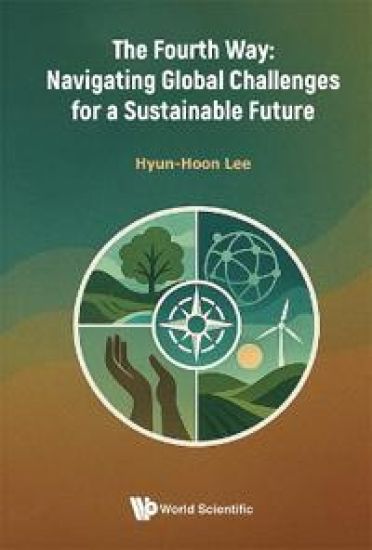
This book, The Fourth Way: Navigating Global Challenges for a Sustainable Future, explores the defining challenges that confront humanity in the 21st century: the rise of the digital society, unprecedented population aging, intensifying social polarization, and the escalating climate crisis. Referred to collectively as the 'four new normals,' these intertwined forces pose systemic risks that current sustainable development frameworks have proven inadequate to address. The book aims to propose a bold and integrative response—what the author calls the Fourth Way. Grounded in both Eastern and Western philosophical and religious traditions, this alternative framework seeks to transcend the limitations of neoliberalism, authoritarian socialism, the Third Way, and Degrowth ideologies. Instead, it envisions a pathway toward Sustainable True Development, built on the dual pillars of inclusive true growth and green true growth. By rethinking the goals and ethics of development in the digital age, the book calls for a transformation in how humanity relates to itself, to technology, and to the planet. It offers a multidisciplinary synthesis that bridges economic theory, environmental stewardship, and spiritual reflection, ultimately advocating a humane and ecologically grounded model of progress. This work is for scholars, policymakers, and all who seek a principled and future-oriented alternative in the face of global uncertainty.
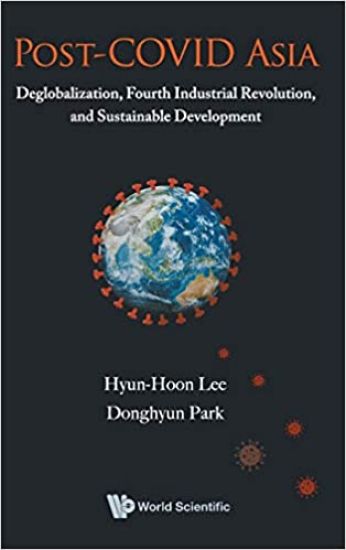
Post-covid Asia: Deglobalization, Fourth Industrial Revolution, And Sustainable Development

Post-covid Asia: Deglobalization, Fourth Industrial Revolution, And Sustainable Development

Hyun-hoon Lee; Donghyun Park

World Scientific Publishing Co Pte Ltd
2020
nidottu
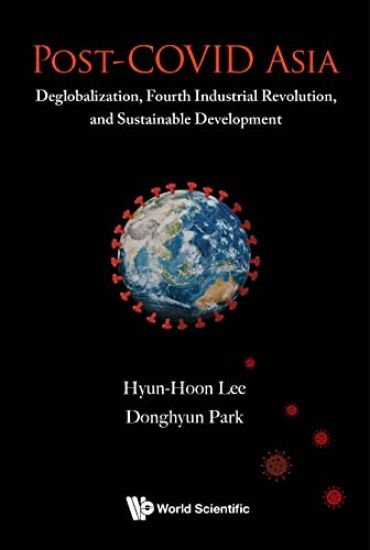
Coronavirus disease (COVID-19) has been an unprecedented, once-in-a-century gamechanger for the world. The central focus of Post-COVID Asia is the new world that will emerge after the coronavirus. In particular, this book explores how deglobalization will proceed in the post-COVID world and what kind of impact deglobalization will have on Asian economies. After all, in the last few decades, Asia has leveraged globalization to become the world's fastest-growing, most dynamic region. Therefore, an urgent challenge facing Asian economies is to figure out how to survive and thrive when the globalization which served them so well is giving way to deglobalization. Opportunities have emerged for Asian economies amid the winding down of the third wave of globalization. In fact, the next wave of globalization is already beginning to take shape, in tandem with the Fourth Industrial Revolution, which is full of exciting new technologies. This book offers insights that would help governments, companies and people in Asia to ride the next wave of globalization to power their prosperity.
Post-covid Asia: Deglobalization, Fourth Industrial Revolution, And Sustainable Development

Post-covid Asia: Deglobalization, Fourth Industrial Revolution, And Sustainable Development

Hyun-hoon Lee; Donghyun Park

World Scientific Publishing Co Pte Ltd
2020
sidottu
Coronavirus disease (COVID-19) has been an unprecedented, once-in-a-century gamechanger for the world. The central focus of Post-COVID Asia is the new world that will emerge after the coronavirus. In particular, this book explores how deglobalization will proceed in the post-COVID world and what kind of impact deglobalization will have on Asian economies. After all, in the last few decades, Asia has leveraged globalization to become the world's fastest-growing, most dynamic region. Therefore, an urgent challenge facing Asian economies is to figure out how to survive and thrive when the globalization which served them so well is giving way to deglobalization. Opportunities have emerged for Asian economies amid the winding down of the third wave of globalization. In fact, the next wave of globalization is already beginning to take shape, in tandem with the Fourth Industrial Revolution, which is full of exciting new technologies. This book offers insights that would help governments, companies and people in Asia to ride the next wave of globalization to power their prosperity.
Korea's Economic Miracle

Korea's Economic Miracle

C. Harvie; Hyun-Hoon Lee

Palgrave Macmillan
2003
nidottu
Korea, one of the original 'Tiger Economies', experiences a traumatic and largely unanticipated economic crisis in 1997-98 from which the country is still recovering. Despite having achieved spectacular economic advances from the early 1960s, the crisis laid bare numerous structural, economic and policy weaknesses. Charles Harvie and Hyun-Hoon Lee chronicle and analyze the key factors behind Korea's economic miracle from 1962-1989 and the causes that contributed to the economic downturn and ensuing crisis of 1997-98. Is the Korean economy still fading or is its revival underway? As the country undertakes a series of recovery measures, the authors consider the importance of the ongoing restructuring efforts in the corporate and banking sectors, the development of the 'new economy; and the potential economic advantages to be derived from reunification with the North.
Korea's Economic Miracle

Korea's Economic Miracle

C. Harvie; Hyun-Hoon Lee

Palgrave Macmillan
2002
sidottu
Korea, one of the original 'Tiger Economies', experiences a traumatic and largely unanticipated economic crisis in 1997-98 from which the country is still recovering. Despite having achieved spectacular economic advances from the early 1960s, the crisis laid bare numerous structural, economic and policy weaknesses. Charles Harvie and Hyun-Hoon Lee chronicle and analyze the key factors behind Korea's economic miracle from 1962-1989 and the causes that contributed to the economic downturn and ensuing crisis of 1997-98. Is the Korean economy still fading or is its revival underway? As the country undertakes a series of recovery measures, the authors consider the importance of the ongoing restructuring efforts in the corporate and banking sectors, the development of the 'new economy; and the potential economic advantages to be derived from reunification with the North.