

Kirjailija
I. Goldberg
Kirjat ja teokset yhdessä paikassa: 6 kirjaa, julkaisuja vuosilta 1995–2024, suosituimpiin kuuluu Functional Foods: Designer Foods Pharmafoods and Nutraceuticals. Vertaile teosten hintoja ja tarkista saatavuus suomalaisista kirjakaupoista.
Nimi esiintyy myös muodoissa: I Goldberg
6 kirjaa
Kirjojen julkaisuvuodet: 1995–2024.
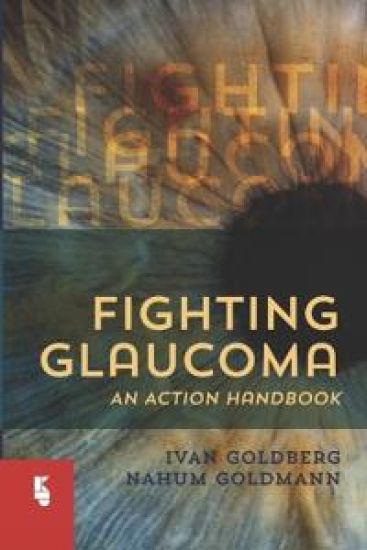
The long term challenges faced by people with glaucoma are numerous and important. With such a diagnosis, you have to balance many life demands, of which eye treatments are essential but by no means alone. After all, you are not living to treat glaucoma: you are living a full life into which the treatment of your condition is an intrusion. Several books written for patients describe what glaucoma is, how it is being treated, and the state of glaucoma research. We are unaware of a book on how to live with the glaucomas, covering practical challenges frequently faced by those with glaucoma, who wish to minimize risk of visual disability or even blindness. This handbook has been written by an unlikely combination of a physician and a patient. Ivan Goldberg is a world recognized expert in glaucoma treatment. Nahum Goldmann is an experienced high-tech executive, university professor and information scientist. What united us in writing this book is a desire to help people with glaucoma in a practical way. Treatment of any chronic and serious medical condition is likely to be affected by many other factors, such as money, the wellbeing of your family, your general health, other calls on your time, fitness and lifestyle, housing, your work commitments, and perhaps supporting family members, to name just a few. You could use this handbook as an everyday reference or as a guide to your glaucoma treatment. We hope you will find it worthwhile to formulate better the reasons for your actions and for your sometimes complicated choices. We try to address specific issues and anxieties that people with glaucoma might face daily, whether large or small. We aim to guide newly diagnosed individuals, their family and friends, on 'what is best to do' - and 'why'. This handbook's focus is on the step by step actions that you, as well as supporting relatives and friends, can take to improve your current situation and outlook. We try to guide you where to find additional help to understand better your condition and your prospects. We hope health professionals who help people with glaucoma also find this book useful. A digital version of this handbook could be read using computerized gadgets for visually impaired. It could also be computer-translated on the fly to various other languages and without cost, thus reaching the worldwide majority of glaucoma patients who do not read English. To those who would like to learn more about background science and numerous illustrations, we recommend a companion book by one of our co authors, Glaucoma: How to save your sight , by I. Goldberg and R. Susanna Jr. (Kugler Publications, 2015).

"Accuse not Nature! She has done her part; Do Thou but Thine!" Milton, Paradise Lost 1667 The concept that nature imparted to foods a health-giving and curative function is not new. Herbal teas and remedies have been used for centuries and continue in use in many parts of the world today. In modern society, we have turned to drugs to treat, miti gate, or prevent diseases. However, since the discovery of nutrients and our increasing analytical capabilities at the molecular level, we are beginning to become more knowledgeable of the biochemical structure-function relationship of the myriad of chemicals that occur naturally in foods and their effect on the human body. The holistic approach to medicine and diet that began in the 1970s has now seen a renewal as we realize that certain foods, because of the presence of specific biochemicals, can have a positive impact on an individual's health, physical well-being, and mental state. In fact, because of the negative image of drugs, and the grey area of s- xi Foreword xii plements, the use of foods that are "functional" is becoming a growth area for the food industry. In Japan this concept has led to one of the largest growing markets, where they have defined "functional foods" as regular foods derived only from naturally occurring in gredients. The Japanese further require that the functional foods be consumed as part of the diet and not in supplement form (i. e.

Cell motility is an important component of many basic physiologic and pathologic processes. Understanding mechanisms of cell motility is therefore essential to the development of new research and clinical approaches in biomedical research. In the early phases of embryogenesis, prepreogrammed morpho- genetic movement determines normal development. The migration of the neural crest cells, for example, is responsible for the establishment of almost the entire peripheral nervous system, the proper positioning of the epinephrine-secreting cells in the adrenal gland and the deposition of pigment cells in the skin (Newgreen and Erikson, 1986). Any distur- bance or deviation from this complex migration pattern results in serious malformations. The embryonic cells are stimulated to migrate by internal signals as well as by signals from adjacent cells. Various stimulatory and inhibitory mechanisms are likely to operate during this dynamic process. However, once morphogenesis is achieved, most so- matic cells tend to remain stationary, and the motile phenotype is dormant. Under certain physiologic and pathologic conditions, however, cells re-express their motile phenotype and migrate. In wound healing and angiogenesis cell migration and proper three-dimensional positioning is critical. Endothelial cell migration following luminal injury is another homeostatic mechanism which helps prevent vascular lesions (Reidy and Silver, 1985; Sholley et aI., 1977; Wong and Gottlieb, 1988). In pathological conditions such as atherosclerosis, smooth muscle cell migration through the internal elastic lamina to the luminal surface may be the initial event leading to the development of the atherosclerotic plaque (Goldberg, 1982).

Functional Foods: Designer Foods, Pharmafoods, Nutraceuticals
I. Goldberg
Springer-Verlag New York Inc.
2010
nidottu

Functional Foods: Designer Foods Pharmafoods and Nutraceuticals
Israel Goldberg; I. Goldberg
Aspen Publishers
1995
sidottu
Foreword: Theodore P. Labuza.- Preface: Israel Goldberg.- Contributors.- I. Introduction.- Chapter1. Introduction.- II. Health Attributes of Functional Foods.- Chapter2. Reducing the risk of cardiovascular disease.- Chapter3. Reducing the risk of cancer.- Chapter4. Functional foods in the control of obesity.- Chapter5. Nutrient control of immune function.- Chapter6. Dietary factors modulating the rate of aging.- Chapter7. Mood and performance foods.- Chapter8. Medical foods.- III. Health Functionality of Food Components.- Chapter9. Dietary fiber.- Chapter10. Special physiological functions of newly developed oligosaccharides.- Chapter11. Sugar alcohols.- Chapter12. Amino acids, peptides and proteins.- Chapter13. Vitamins for optimal health.- Chapter14. Lactic acid bacteria as promoters of human health.- Chapter15. Nutrition of macrominerals and trace elements.- Chapter16. Fatty acids.- Chapter17. Phytochemicals and antioxidants.- IV. Market and Competition.- Chapter18. Functional foods in Japan.- Chapter19. The development of the functional food business in the United States and Europe.- Chapter20. The potential role of functional foods in medicine and public health.- Chapter21. The role of marketing communication in the introduction of functional foods to the consumer.- Chapter22. The food industry's role in functional foods.- V. Consumer's Viewpoint.- Chapter23. Consumers' view on functional foods.- VI. Future Prospects.- Chapter24. Future prospects for functional foods.