Kirjailija
I. Howard Marshall
Kirjat ja teokset yhdessä paikassa: 27 kirjaa, julkaisuja vuosilta 1959–2022, suosituimpiin kuuluu Gospel of Luke. Vertaile teosten hintoja ja tarkista saatavuus suomalaisista kirjakaupoista.
Nimi esiintyy myös muodoissa: I Howard Marshall
27 kirjaa
Kirjojen julkaisuvuodet: 1959–2022.
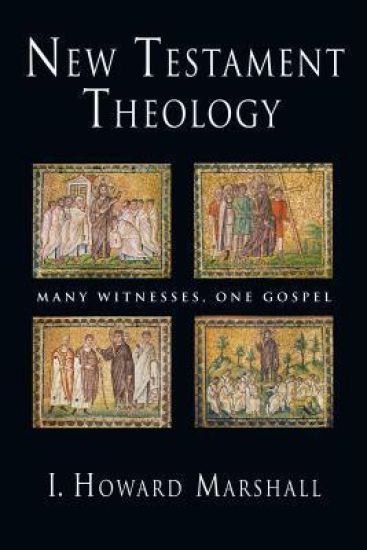
La Teolog a del Nuevo Testamento de Marshall se distingue por su organizaci n del material y su enfoque misionero como se desprende del subt tulo: "muchos testigos, un solo evangelio", siendo de la peculiar visi n de Marshall de que: «toda la teolog a del Nuevo Testamento es una teolog a misionera . El enfoque de la obra es netamente evang lico, pero con una talla acad mica que la convierte en lectura obligada a n para los m s liberales que no pasa por alto las m s recientes propuestas en los estudios paulinos ni el escabroso tema de la autor a de sus ep stolas. Pero lo m s valioso de la Teolog a del Nuevo Testamento de Marshall en relaci n con otras teolog as, es su utilidad para el predicador. Adem s de la habitual y consabida reflexi n teol gica, aporta tambi n un fondo muy valioso de ideas para la exposici n de la Palabra. Theology of the New TestamentMarshall's Theology of the New Testament is distinguished by its organization of the content and its missionary approach as is evident from the subtitle: "many witnesses, one gospel", being of Marshall's peculiar view that: "all New Testament theology is a missionary theology". Evangelical, but with a scholarly stature that makes it a must-read even for the most liberal that does not overlook the most recent proposals in Pauline studies, nor does it overlook the difficult subject of the authorship of his epistles, but it does so from such a balanced perspective that it is admirable. But the most valuable aspect of Marshall's Theology of the New Testament in relation to other theologies is its usefulness for the preacher. In addition to the usual and usual theological reflection, it also provides a very valuable fund of ideas for the exposition of the Word.
Written by scholars with extensive experience teaching in colleges and universities, the Exploring the Bible series has for decades equipped students to study Scripture for themselves. Exploring the New Testament, Volume Two provides an accessible introduction to the Letters and Revelation. It's filled with classroom-friendly features such as discussion questions, charts, theological summary sidebars, essay questions, and further reading lists. This volume introduces students toJewish and Greco-Roman backgroundPaul's life, mission, and theologythe structure and major themes of each bookissues of authorship, date, and settingmethods in reading and interpreting the Letters and Revelationthe intersection of New Testament criticism with contemporary issues of faih and cultureNow in its third edition, this popular textbook has been updated and revised to take account of the latest advances in scholarly findings and research methods, including new sections onthe theological links between Jesus and Paulthe way New Testament authors read the Hebrew Scripturesthe contribution of archaeology to New Testament studiesupdated bibliographies highlighting the most important and influential works published in the last decadeExploring the New Testament, Volume Two offers a thorough overview of the Letters and Revelation that will give students a stronger understanding and a solid foundation for ongoing study.
An ECPA Gold Medallion winner"New Testament theology is essentially missionary theology," writes I. Howard Marshall. Founded on a sure-footed mastery of the data and constructed with clear thinking lucidly expressed, this long-anticipated New Testament theology offers the insights born of a distinguished career of study, reflection, teaching and writing on the New Testament. Marshall's New Testament Theology will speak clearly to a broad audience of students and nonspecialists. But even on the most familiar ground, where informed readers might lower their expectations of learning something new, Marshall offers deft insights that sharpen understanding of the message of the New Testament. Here is a New Testament theology that does not succumb to the fashion of settling for an irreconcilable diversity of New Testament voices but argues that "a synthetic New Testament theology" is a real possibility. Beginning with the Gospels and Acts, proceeding to each of Paul's letters, focusing then on the Johannine literature and finally looking at Hebrews and the remaining general epistles, Marshall repeatedly stops to assess the view. And gradually he builds up a composite synthesis of the unified theological voice of the New Testament. On the way toward this synthesis, Marshall highlights clearly the theological voices of the individual New Testament books. Thus, his New Testament theology serves also as a sort of introduction to the New Testament books, making it double as an attractive complement to book-by-book introductions to the New Testament. Here is a New Testament theology that will not only guide students and delight teachers but also reward expositors with a lavish fund of insights for preaching.
The Kingship-Cross Interplay in the Gospel of John
Mavis M Leung; I Howard Marshall
Wipf Stock Publishers
2011
sidottu
A Christianity Today Critics' Choice Award winnerAs a young church in a hostile environment, Peter's first readers found in his letter encouragement, not just for facing suffering, but for living responsibly in the world as faithful disciples of Jesus Christ. Christians today will also find in Peter's letter a wealth of practical counsel on how to conduct themselves in family and social life, as well as in relation to a society that makes it tough to follow Jesus Christ. In this invigorating volume from one of today's leading evangelical scholars, readers will find an introduction that discusses the letter's form, authorship, destination and primary theological themes, followed by a passage-by-passage commentary that always seeks to answer the question of what the text means for us today as well as what it meant for its original hearers. Students, pastors, Bible teachers and everyone who wants to understand Peter's message for the church will benefit from this excellent resource.
The Heresy of Orthodoxy
Andreas J. Köstenberger; Michael J. Kruger; I. Howard Marshall
Crossway Books
2010
pokkari
Beginning with Walter Bauer in 1934, the denial of clear orthodoxy in early Christianity has shaped and largely defined modern New Testament criticism, recently given new life through the work of spokesmen like Bart Ehrman. Spreading from academia into mainstream media, the suggestion that diversity of doctrine in the early church led to many competing orthodoxies is indicative of today's postmodern relativism. Authors Köstenberger and Kruger engage Ehrman and others in this polemic against a dogged adherence to popular ideals of diversity. Köstenberger and Kruger's accessible and careful scholarship not only counters the "Bauer Thesis" using its own terms, but also engages overlooked evidence from the New Testament. Their conclusions are drawn from analysis of the evidence of unity in the New Testament, the formation and closing of the canon, and the methodology and integrity of the recording and distribution of religious texts within the early church.
This is a very controversial subject which disturbs many people. οIf you do get disturbed it will be because of the emotion usually surrounding the subject of ""eternal security."" οIf you get upset it will NOT be caused by the manner in which Dr. Marshall has presented the subject. It is the contention of the author that there is biblical truth in both the Calvinistic and the Arminian position concerning this volatile subject, and that each camp should candidly recognize the value of the other's positions. John Wesley once wrote, ""The truth of the Gospel is within a hairsbreadth of Calvinism."" Quite a concession for the chief spokesman of Arminianism Dr. I. Howard Marshall echoes the contention of Wesley, and then goes even beyond it. ""The full Arminian position is as much open to error as is extreme Calvinism. My aim is to reach beyond the Calvinist-Arminian controversy to a position which is biblical.""
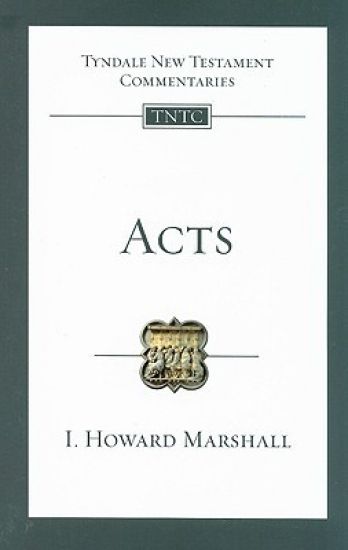
In the book of Acts the story of Jesus begun in the Gospel of Luke broadens into the story of the Holy Spirit, guiding the fledgling church to proclaim the saving reality of Jesus. While attentive to Luke's roles as a literary artist and theologian, I. Howard Marshall focuses primarily on Luke's role as a historian. He provides the reader with an accurate, balanced and holistic picture of the church's monumental first years as it sought to fulfill Christ's mandate to preach the gospel to the ends of the earth. The original, unrevised text of this volume has been completely retypeset and printed in a larger, more attractive format with the new cover design for the series. The Tyndale New Testament Commentaries have long been a trusted resource for Bible study. Written by some of the world's most distinguished evangelical scholars, these twenty volumes offer clear, reliable and relevant explanations of every book in the New Testament. The Tyndale volumes are designed to help readers understand what the Bible actually says and what it means. The introduction to each volume gives a concise but thorough description of the authorship, date and historical background of the biblical book under consideration. The commentary itself examines the text section by section, drawing out its main themes. It also comments on individual verses and deals with problems of interpretation. The aim throughout is to get at the true meaning of the Bible and to make its message plain to readers today.
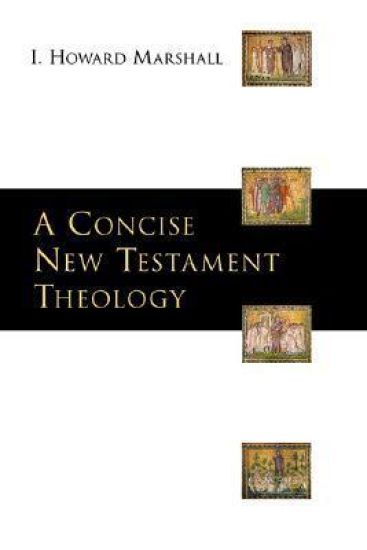
A Concise New Testament Theology is an abridgment of I. Howard Marshall's celebrated and award-winning New Testament Theology: Many Witnesses, One Gospel. This condensed version packages for students and laypeople the luminous considered conclusions and insights of one of the most respected evangelical New Testament scholars of our day. It is the perfect entrance into New Testament theology, and its author-by-author approach will also make it an attractive supplement for courses in New Testament survey or introduction.
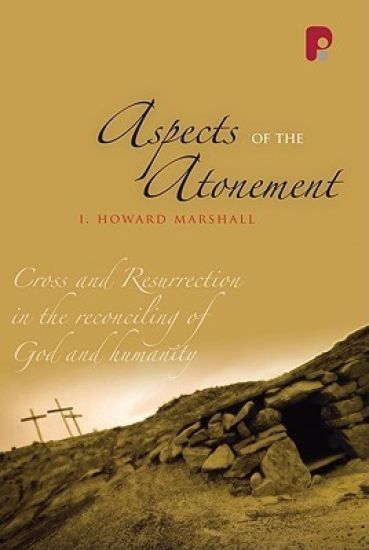
The Christian understanding of the meaning of the death of Jesus Christ and its relationship to the salvation of sinful humanity is currently the subject of intense debate and criticism. The papers covering this important area are expanded versions of the 2006 series of Chuen King Lectures given in the Chinese University of Hong Kong. In the first two chapters Howard Marshall discusses the nature of the human plight in relation to the judgment of God and then offers a nuanced defence of the doctrine of the substitutionary death of Jesus Christ for sinners. The third chapter examines the place of the resurrection of Christ as an integral part of the process whereby sinners are put in the right with God. In the final chapter argues that in our communication of the gospel today the New Testament concept of reconciliation may be the most comprehensive and apt expression of the lasting significance of the death of Christ.
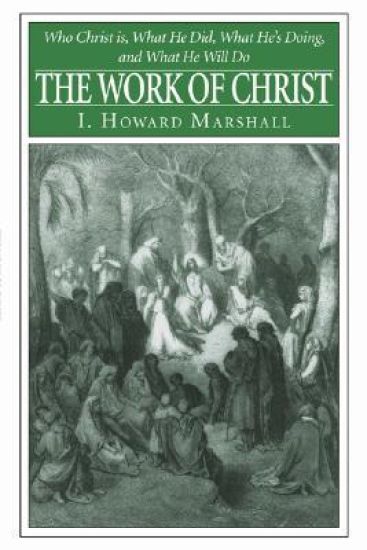
Christianity is Christ--not just creed, dogma, religion, or ethic, though it may contain elements of all these. Who Christ is, what He did, and does, and why, and what He yet will do--or in more technical terms, the Person and Work of Christ--these are the stuff of Christianity. And since the work of Christ covers more than His Death--His Incarnation, Life, Teaching, Works, Example, Priesthood and Sacrifice--so Dr. Marshall surveys the whole New Testament and summarizes for us the teaching of its various writers as they develop their central theme.
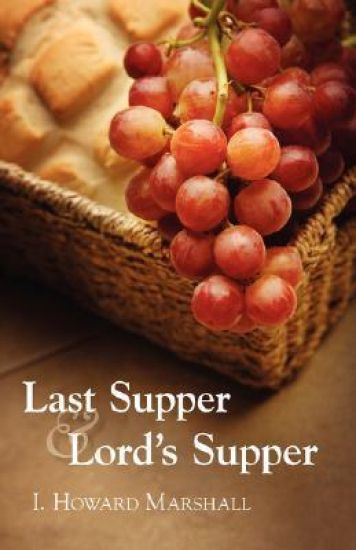
- ". . . The Lord's Supper should be celebrated frequently in the church, and there is good reason for doing so on each Lord's Day." - "The Lord's Supper today should be open to all who wish to feed on Christ and profess faith in him." - "The New Testament envisages the use of one loaf and a common cup. It would be good to maintain this symbolism today." These are but three of several provocative conclusions reached by the distinguished theologian I. Howard Marshall in this easy-to-understand and comprehensive survey of the New Testament accounts of the Lord's supper. This book explores the nature of other sacred meals in the ancient world, principally Jewish; the relationship to one or other of the biblical accounts themselves; the nature of the meal celebrated by the early church; the significance of the Last Supper as demonstrated by Jesus; and then as demonstrated by the early church. Understanding the supper as a Passover meal, Marshall shows the meal's orientation towards the death, resurrection and second coming of Jesus and its centrality to the life of the church. In doing so, he draws out a number of principles important for the Christian community today. I. Howard Marshall is Professor of New Testament and the University of Aberdeen. He has written numerous books including Biblical Inspiration and I Believe in the Historical Jesus.
Apart from the apostle Paul, Luke is arguably the most influential force in the canon of the New Testament. His Gospel and Acts occupy almost a third of the New Testament. Marshall provides us with a lucid guide to Luke's theology of salvation as it is unfurled in Gospel narrative, but always with an eye on its ongoing development in his companion work, the Acts.
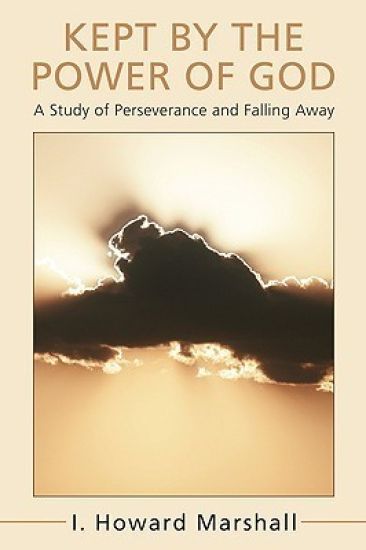
A classic study on whether salvation can be lost. In this classic study (published originally in 1969 and republished with a new substantive now), Marshall looks at a key theological issue in the New Testament, the perseverance of believers. In a setting of persecution, the question of perseverance is one that arises often in the NT texts, and it is an important pastoral issue still today. But it is also extremely useful as a lens through which to view the NT understanding of salvation, election, judgment, and many other interconnected ideas. In short, it is a vital test case, or maybe better put, it is essential data for a robust NT doctrine of God and of salvation. Marshall digs in to the relevant NT texts by first investigating the OT and Jewish background concerning perseverance. He then moves through the various corpora in the NT: the Synoptics, Acts, Paul, Pastorals (may or may not be by Paul, but treated separately from though with an eye toward the undisputed Pauline corpus), Hebrews, the Catholics, and the Johannine literature. This systematic study is largely exegetical, as Marshall works carefully with the individual texts on their own before summing up each author's perspective.
The nature of the authority of the Bible is crucial. In this outstanding study, the author first considers various theories of the nature of inspiration. This leads to a consideration of the 'entire trustworthiness' of the Bible, the inerrancy debate, and the place of biblical criticism. From determining the original meaning of the text, Professor Marshall turns to the Bible's contemporary significance and meaning before finally presenting the authority of Scripture for today. 'The Bible is precious to the Christian believer, not because it is regarded as some kind of magical oracle but because here one hears and receives the message of a gracious God who, having revealed himself supremely in this Son Jesus Christ, continues to reveal himself and through the pages of Scripture'
Applying scriptural insight to contemporary issues is one of the most important, yet most difficult, tasks that the church faces. The Bible, though written long ago, can speak authoritatively to contemporary ethical, doctrinal, and practical issues. Respected author I. Howard Marshall offers guidance for this perennial task in Beyond the Bible. Using a "principled approach," Marshall moves from Scripture itself to contemporary understanding and application of Scripture. He examines how principles can be established from Scripture, whether explicitly or implicitly, and explores how the continuing development of insight can provide us with guidelines for the ongoing task of developing and applying Christian theology. Responses from Kevin Vanhoozer and Stanley Porter are included. Students and scholars of the Bible and theology will be interested in this latest work from I. Howard Marshall, and it offers an accessible approach to a perennial topic of concern that pastors, church leaders, and interested laity will appreciate. Beyond the Bible is the first book of the Acadia Studies in Bible and Theology series. Produced in partnership with Acadia Divinity College in Wolfville, Nova Scotia, this series gathers leading authorities to succinctly assess the major issues faced by the twenty-first century church and present their findings in a way that is rewarding to scholars yet accessible to students, pastors and laity. Readers will gain a fresh understanding of important issues that will enable them to take part meaningfully in discussion and debate. Series editors are Craig A. Evans and Lee Martin McDonald. Forthcoming series volumes will include contributions from J. D. G. Dunn, John J. Collins, and Craig Evans.
For over one hundred years, the International Critical Commentary series has held a special place among works on the Bible. It has sought to bring together all the relevant aids to exegesis GCo linguistic and textual no less than archaeological, historical, literary and theologicalGCowith a level of comprehension and quality of scholarship unmatched by any other series. No attempt has been made to secure a uniform theological or critical approach to the biblical text: contributors have been invited for their scholarly distinction, not for their adherence to any one school of thought. The first paperback editions to be published cover the heart of the New Testament, providing a wealth of information and research in accessible and attractive format.
Worship is of immense concern in the church and ironically the source of controversy and dispute. Can we get behind the question of what style of worship we should engage in to understand the bedrock foundation for God's people--honoring him as he desires? Is the dissatisfaction with worship voiced by so many perhaps a result of our having wandered from biblical teaching on the subject? Through careful exegesis in both Old and New Testaments, David Peterson unveils the total life-orientation of worship that is found in Scripture. Rather than determining for ourselves how we should worship, we, his people, are called to engage with God on the terms he proposes and in the way he alone makes possible. This book calls for a radical rethinking of the meaning and practice of worship, especially by those responsible for leading congregations. Here is the starting place for recovering the richness of biblical worship.
A Concordance to the Greek Testament
Alfred Shenington Geden; I. Howard Marshall
T. T.Clark Ltd
2002
sidottu
The original edition of this concordance, published in 1897, was primarily based on the Greek text of Westcott and Hort but gave all the variants in the edition of Tischendorf and in the Greek text underlying the Revised Version of the English Bible. This sixth edition retains all the features of earlier ones, but it is primarily based on the Greek text in the Greek New Testament (fourth edition), which is identical with that in "Novum Testamentum Graece" (27th edition). It incorporates the main marginal readings in the former of these texts, and references to the variants in the older editions are preserved, so that the student has to hand every reading which by even a remote probability might be regarded as forming part of the true text of the New Testament. The supplement incorporating the prepositions has been included in the main text of the concordance. Where the same word occurs twice in the same verse, these occurrences are now printed on separate lines and individually verse-numbered so that it is easier to count the number of occurrences of any given word. Special new Greek fonts have been created to enable greater clarity in the printing.