Kirjailija
I. Zangwill
Kirjat ja teokset yhdessä paikassa: 17 kirjaa, julkaisuja vuosilta 2015–2024, suosituimpiin kuuluu The Master. Vertaile teosten hintoja ja tarkista saatavuus suomalaisista kirjakaupoista.
Nimi esiintyy myös muodoissa: I Zangwill
17 kirjaa
Kirjojen julkaisuvuodet: 2015–2024.
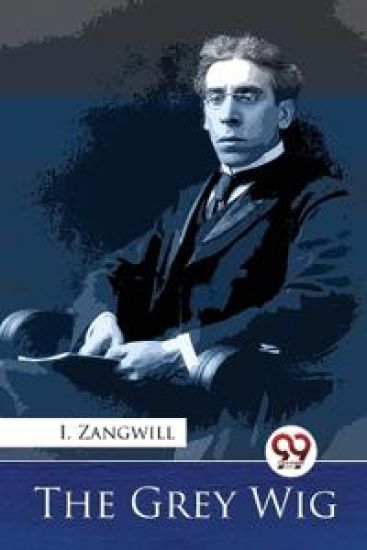
The Grey Wig is a novel written by I. Zangwill. The story revolves around characters including Madame D pine and Madame Vali re who were tenants at the H tel des Tourterelles in Paris. Practically it was two old maids whose boots turned pointed toes towards each other in the dark cranny of the fusty corridor of the sky floor. Madame la Propri taire and Madame D pine were neighbors at the H tel des Tourterelles in Paris. But they never spoke to each other, for they disliked each other so much it was impossible to bear to look at each other. For years, their most cherished dream had been to gracefully don a grey wig. But how could a helpless elderly woman possibly save enough money for a new wig? Cry for the moon or some artificial teeth, if you must. Unless the lottery, that is. Both of them were made to blush by Madame la Propri taire. The old ladies' hired pillows were saturated with tears of embarrassment and pain. Madame D pine had learned to wear her wig with vengeful endurance over time, whereas Madame Vali re had learned to wear hers with a serene resignation.
The book "" Dreamers of the Ghetto, has been considered important throughout the human history, and so that this work is never forgotten we have made efforts in its preservation by republishing this book in a modern format for present and future generations. This whole book has been reformatted, retyped and designed. These books are not made of scanned copies and hence the text is clear and readable.
Israel Zangwill (1864-1926) was an English humourist and writer. Zangwill wrote the influential book Children of the Ghetto: A Study of a Peculiar People (1892). The use of the metaphorical phrase "melting pot" to describe American absorption of immigrants was popularized by his play The Melting Pot, a hit in the United States in 1908. He also wrote mystery works, such as The Big Bow Mystery and social satire such as The King of Schnorrers. Dreamers of the Ghetto presents a series of historic scenes ranging from the times of Shabbethai Zebi and Spinoza to those of Lassalle and Disraeli. Includes an introduction by Karl Wurf.
Children of the Ghetto; A Study of a Peculiar People, is many of the old classic books which have been considered important throughout the human history. They are now extremely scarce and very expensive antique. So that this work is never forgotten we republish these books in high quality, using the original text and artwork so that they can be preserved for the present and future generations. This whole book has been reformatted, retyped and designed. These books are not made of scanned copies of their original work and hence the text is clear and readable.

The Big Bow Mystery. By: I. Zangwill / Novel: Israel Zangwill (21 January 1864 - 1 August 1926) was a British author at the forefront of cultur
I. Zangwill
Createspace Independent Publishing Platform
2018
nidottu
Israel Zangwill (21 January 1864 - 1 August 1926) was a British author at the forefront of cultural Zionism during the 19th century, and was a close associate of Theodor Herzl. He later rejected the search for a Jewish homeland and became the prime thinker behind the territorial movement. Early life and education: Zangwill was born in London on 21 January 1864, in a family of Jewish immigrants from the Russian Empire. His father, Moses Zangwill, was from what is now Latvia, and his mother, Ellen Hannah Marks Zangwill, was from what is now Poland. He dedicated his life to championing the cause of people he considered oppressed, becoming involved with topics such as Jewish emancipation, Jewish assimilation, territorialism, Zionism, and women's suffrage. His brother was novelist Louis Zangwill. Zangwill received his early schooling in Plymouth and Bristol. When he was nine years old, Zangwill was enrolled in the Jews' Free School in Spitalfields in east London, a school for Jewish immigrant children. The school offered a strict course of both secular and religious studies while supplying clothing, food, and health care for the scholars; presently one of its four houses is named Zangwill in his honour. At this school he excelled and even taught part-time, eventually becoming a full-fledged teacher. While teaching, he studied for his degree from the University of London, earning a BA with triple honours in 1884. Writings: He had already written a tale entitled The Premier and the Painter in collaboration with Louis Cowen, when he resigned his position as a teacher owing to differences with the school managers and ventured into journalism. He initiated and edited Ariel, The London Puck, and did miscellaneous work for the London press. Zangwill's work earned him the nickname "the Dickens of the Ghetto". He wrote a very influential novel Children of the Ghetto: A Study of a Peculiar People (1892). The use of the metaphorical phrase "melting pot" to describe American absorption of immigrants was popularised by Zangwill's play The Melting Pot, 4] a success in the United States in 1909-10. When The Melting Pot opened in Washington D. C. on 5 October 1909, former President Theodore Roosevelt leaned over the edge of his box and shouted, "That's a great play, Mr. Zangwill, that's a great play." In 1912 Zangwill received a letter from Roosevelt in which Roosevelt wrote of the Melting Pot "That particular play I shall always count among the very strong and real influences upon my thought and my life." The protagonist of the play, David, emigrates to America after the Kishinev pogrom in which his entire family is killed. He writes a great symphony named "The Crucible" expressing his hope for a world in which all ethnicity has melted away, and becomes enamored of a beautiful Russian Christian immigrant named Vera. The dramatic climax of the play is the moment when David meets Vera's father, who turns out to be the Russian officer responsible for the annihilation of David's family. Vera's father admits guilt, the symphony is performed to accolades, David and Vera live happily ever after, or, at least, agree to wed and kiss as the curtain falls. "Melting Pot celebrated America's capacity to absorb and grow from the contributions of its immigrants." Zangwill was writing as "a Jew who no longer wanted to be a Jew. His real hope was for a world in which the entire lexicon of racial and religious difference is thrown away." Zangwill wrote many other plays, including, on Broadway, Children of the Ghetto (1899), a dramatisation of his own novel, directed by James A. Herne and starring Blanche Bates, Ada Dwyer, and Wilton Lackaye; Merely Mary Ann (1903) and Nurse Marjorie (1906), both of which were directed by Charles Cartwright and starred Eleanor Robson. Liebler & Co. produced all three plays as well as The Melting Pot.....

The celibates' club; being the united stories of The Bachelors' Club and The Old Maids' Club.: By: I. Zangwill, Illustrated By: George (Wylie) Hutchin
George Hutchinson; I. Zangwill
Createspace Independent Publishing Platform
2018
nidottu
George Wylie Hutchinson (1852-1942) was a painter and leading illustrator in Britain and was from Great Village, Nova Scotia, Canada. He illustrated the works of Arthur Conan Doyle, Rudyard Kipling, Hall Caine, Robert Louis Stevenson and Israel Zangwill. His paintings inspired the poem "Large Bad Picture" and "Poem," both by Elizabeth Bishop, his great grand niece. Hutchinson was a contributor to and subject of the novel The Master (1895) by Israel Zangwill, with whom he was a close friend. Hutchinson left Nova Scotia at age 14, as a cabin boy. He studied painting in London at the Royal Academy (1880-1885) and later painted portraits and created illustrations and cartoons for numerous publications such as the Illustrated London News. At the age of 44, he returned to Nova Scotia for a year in 1896 and taught painting. By the 1910s and 1920s, Hutchinson appears to have been living in retirement in Clacton-on-Sea, Essex............................... Israel Zangwill (21 January 1864 - 1 August 1926) was a British author at the forefront of cultural Zionism during the 19th century, and was a close associate of Theodor Herzl. He later rejected the search for a Jewish homeland and became the prime thinker behind the territorial movement. Early life and education: Zangwill was born in London on 21 January 1864, in a family of Jewish immigrants from the Russian Empire. His father, Moses Zangwill, was from what is now Latvia, and his mother, Ellen Hannah Marks Zangwill, was from what is now Poland. He dedicated his life to championing the cause of people he considered oppressed, becoming involved with topics such as Jewish emancipation, Jewish assimilation, territorialism, Zionism, and women's suffrage. His brother was novelist Louis Zangwill. Zangwill received his early schooling in Plymouth and Bristol. When he was nine years old, Zangwill was enrolled in the Jews' Free School in Spitalfields in east London, a school for Jewish immigrant children. The school offered a strict course of both secular and religious studies while supplying clothing, food, and health care for the scholars; presently one of its four houses is named Zangwill in his honour. At this school he excelled and even taught part-time, eventually becoming a full-fledged teacher. While teaching, he studied for his degree from the University of London, earning a BA with triple honours in 1884. Writings: He had already written a tale entitled The Premier and the Painter in collaboration with Louis Cowen, when he resigned his position as a teacher owing to differences with the school managers and ventured into journalism. He initiated and edited Ariel, The London Puck, and did miscellaneous work for the London press. Zangwill's work earned him the nickname "the Dickens of the Ghetto." He wrote a very influential novel Children of the Ghetto: A Study of a Peculiar People (1892). The use of the metaphorical phrase "melting pot" to describe American absorption of immigrants was popularised by Zangwill's play The Melting Pot, 4] a success in the United States in 1909-10. When The Melting Pot opened in Washington D. C. on 5 October 1909, former President Theodore Roosevelt leaned over the edge of his box and shouted, "That's a great play, Mr. Zangwill, that's a great play." In 1912 Zangwill received a letter from Roosevelt in which Roosevelt wrote of the Melting Pot "That particular play I shall always count among the very strong and real influences upon my thought and my life..."....................
Children of the ghetto: a study of a peculiar people. By: I. Zangwill: Israel Zangwill (21 January 1864 - 1 August 1926) was a British author
I. Zangwill
Createspace Independent Publishing Platform
2018
nidottu
In its first appearance in 1892, Israel Zangwill's Children of the Ghetto created a sensation in both England and America, becoming the first Anglo-Jewish bestseller and establishing Zangwill as the literary voice of Anglo-Jewry. A novel set in late nineteenth-century London, Children of the Ghetto gave an inside look into an immigrant community that was almost as mysterious to the more established middle-class Jews of Britain as to the non-Jewish population, providing a compelling analysis of a generation caught between the ghetto and modern British life. This volume brings back to print the 1895 edition of Children of the Ghetto, the latest American version known to have been corrected by the author. Meri-Jane Rochelson places the novel in proper context by providing a biographical, historical, and critical introduction; a bibliography of primary and secondary sources; and notes on the text, making this ground-breaking novel accessible to a new generation of readers, both Jewish and non-Jewish alike. .......................... Israel Zangwill (21 January 1864 - 1 August 1926) was a British author at the forefront of cultural Zionism during the 19th century, and was a close associate of Theodor Herzl. He later rejected the search for a Jewish homeland and became the prime thinker behind the territorial movement. Early life and education: Zangwill was born in London on 21 January 1864, in a family of Jewish immigrants from the Russian Empire. His father, Moses Zangwill, was from what is now Latvia, and his mother, Ellen Hannah Marks Zangwill, was from what is now Poland. He dedicated his life to championing the cause of people he considered oppressed, becoming involved with topics such as Jewish emancipation, Jewish assimilation, territorialism, Zionism, and women's suffrage. His brother was novelist Louis Zangwill. 1] Zangwill received his early schooling in Plymouth and Bristol. When he was nine years old, Zangwill was enrolled in the Jews' Free School in Spitalfields in east London, a school for Jewish immigrant children. The school offered a strict course of both secular and religious studies while supplying clothing, food, and health care for the scholars; presently one of its four houses is named Zangwill in his honour. At this school he excelled and even taught part-time, eventually becoming a full-fledged teacher. While teaching, he studied for his degree from the University of London, earning a BA with triple honours in 1884. Writings: He had already written a tale entitled The Premier and the Painter in collaboration with Louis Cowen, when he resigned his position as a teacher owing to differences with the school managers and ventured into journalism. He initiated and edited Ariel, The London Puck, and did miscellaneous work for the London press. Zangwill's work earned him the nickname "the Dickens of the Ghetto". He wrote a very influential novel Children of the Ghetto: A Study of a Peculiar People (1892). The use of the metaphorical phrase "melting pot" to describe American absorption of immigrants was popularised by Zangwill's play The Melting Pot, 4] a success in the United States in 1909-10. When The Melting Pot opened in Washington D. C. on 5 October 1909, former President Theodore Roosevelt leaned over the edge of his box and shouted, "That's a great play, Mr. Zangwill, that's a great play." In 1912 Zangwill received a letter from Roosevelt in which Roosevelt wrote of the Melting Pot "That particular play I shall always count among the very strong and real influences upon my thought and my life."....
The grey wig; stories and novelettes (1903). By: I. Zangwill: Israel Zangwill (21 January 1864 - 1 August 1926) was a British author at the forefront
I. Zangwill
Createspace Independent Publishing Platform
2018
nidottu
Israel Zangwill (21 January 1864 - 1 August 1926) was a British author at the forefront of cultural Zionism during the 19th century, and was a close associate of Theodor Herzl. He later rejected the search for a Jewish homeland and became the prime thinker behind the territorial movement. Early life and education: Zangwill was born in London on 21 January 1864, in a family of Jewish immigrants from the Russian Empire. His father, Moses Zangwill, was from what is now Latvia, and his mother, Ellen Hannah Marks Zangwill, was from what is now Poland. He dedicated his life to championing the cause of people he considered oppressed, becoming involved with topics such as Jewish emancipation, Jewish assimilation, territorialism, Zionism, and women's suffrage. His brother was novelist Louis Zangwill. Zangwill received his early schooling in Plymouth and Bristol. When he was nine years old, Zangwill was enrolled in the Jews' Free School in Spitalfields in east London, a school for Jewish immigrant children. The school offered a strict course of both secular and religious studies while supplying clothing, food, and health care for the scholars; presently one of its four houses is named Zangwill in his honour. At this school he excelled and even taught part-time, eventually becoming a full-fledged teacher. While teaching, he studied for his degree from the University of London, earning a BA with triple honours in 1884. Writings: He had already written a tale entitled The Premier and the Painter in collaboration with Louis Cowen, when he resigned his position as a teacher owing to differences with the school managers and ventured into journalism. He initiated and edited Ariel, The London Puck, and did miscellaneous work for the London press. Zangwill's work earned him the nickname "the Dickens of the Ghetto". He wrote a very influential novel Children of the Ghetto: A Study of a Peculiar People (1892). The use of the metaphorical phrase "melting pot" to describe American absorption of immigrants was popularised by Zangwill's play The Melting Pot, 4] a success in the United States in 1909-10. When The Melting Pot opened in Washington D. C. on 5 October 1909, former President Theodore Roosevelt leaned over the edge of his box and shouted, "That's a great play, Mr. Zangwill, that's a great play." In 1912 Zangwill received a letter from Roosevelt in which Roosevelt wrote of the Melting Pot "That particular play I shall always count among the very strong and real influences upon my thought and my life." The protagonist of the play, David, emigrates to America after the Kishinev pogrom in which his entire family is killed. He writes a great symphony named "The Crucible" expressing his hope for a world in which all ethnicity has melted away, and becomes enamored of a beautiful Russian Christian immigrant named Vera. The dramatic climax of the play is the moment when David meets Vera's father, who turns out to be the Russian officer responsible for the annihilation of David's family. Vera's father admits guilt, the symphony is performed to accolades, David and Vera live happily ever after, or, at least, agree to wed and kiss as the curtain falls. "Melting Pot celebrated America's capacity to absorb and grow from the contributions of its immigrants." Zangwill was writing as "a Jew who no longer wanted to be a Jew. His real hope was for a world in which the entire lexicon of racial and religious difference is thrown away." Zangwill wrote many other plays, including, on Broadway, Children of the Ghetto (1899), a dramatisation of his own novel, directed by James A. Herne and starring Blanche Bates, Ada Dwyer, and Wilton Lackaye; Merely Mary Ann (1903) and Nurse Marjorie (1906), both of which were directed by Charles Cartwright and starred Eleanor Robson. Liebler & Co. produced all three plays as well as The Melting Pot.....

Dreamers of the Ghetto (1898). By: I. Zangwill: Israel Zangwill (21 January 1864 - 1 August 1926) was a British author at the forefront of cultural Zi
I. Zangwill
Createspace Independent Publishing Platform
2018
nidottu
Israel Zangwill (21 January 1864 - 1 August 1926) was a British author at the forefront of cultural Zionism during the 19th century, and was a close associate of Theodor Herzl. He later rejected the search for a Jewish homeland and became the prime thinker behind the territorial movement. Early life and education: Zangwill was born in London on 21 January 1864, in a family of Jewish immigrants from the Russian Empire. His father, Moses Zangwill, was from what is now Latvia, and his mother, Ellen Hannah Marks Zangwill, was from what is now Poland. He dedicated his life to championing the cause of people he considered oppressed, becoming involved with topics such as Jewish emancipation, Jewish assimilation, territorialism, Zionism, and women's suffrage. His brother was novelist Louis Zangwill. Zangwill received his early schooling in Plymouth and Bristol. When he was nine years old, Zangwill was enrolled in the Jews' Free School in Spitalfields in east London, a school for Jewish immigrant children. The school offered a strict course of both secular and religious studies while supplying clothing, food, and health care for the scholars; presently one of its four houses is named Zangwill in his honour. At this school he excelled and even taught part-time, eventually becoming a full-fledged teacher. While teaching, he studied for his degree from the University of London, earning a BA with triple honours in 1884. Writings: He had already written a tale entitled The Premier and the Painter in collaboration with Louis Cowen, when he resigned his position as a teacher owing to differences with the school managers and ventured into journalism. He initiated and edited Ariel, The London Puck, and did miscellaneous work for the London press. Zangwill's work earned him the nickname "the Dickens of the Ghetto". He wrote a very influential novel Children of the Ghetto: A Study of a Peculiar People (1892). The use of the metaphorical phrase "melting pot" to describe American absorption of immigrants was popularised by Zangwill's play The Melting Pot, 4] a success in the United States in 1909-10. When The Melting Pot opened in Washington D. C. on 5 October 1909, former President Theodore Roosevelt leaned over the edge of his box and shouted, "That's a great play, Mr. Zangwill, that's a great play." In 1912 Zangwill received a letter from Roosevelt in which Roosevelt wrote of the Melting Pot "That particular play I shall always count among the very strong and real influences upon my thought and my life." The protagonist of the play, David, emigrates to America after the Kishinev pogrom in which his entire family is killed. He writes a great symphony named "The Crucible" expressing his hope for a world in which all ethnicity has melted away, and becomes enamored of a beautiful Russian Christian immigrant named Vera. The dramatic climax of the play is the moment when David meets Vera's father, who turns out to be the Russian officer responsible for the annihilation of David's family. Vera's father admits guilt, the symphony is performed to accolades, David and Vera live happily ever after, or, at least, agree to wed and kiss as the curtain falls. "Melting Pot celebrated America's capacity to absorb and grow from the contributions of its immigrants." Zangwill was writing as "a Jew who no longer wanted to be a Jew. His real hope was for a world in which the entire lexicon of racial and religious difference is thrown away." Zangwill wrote many other plays, including, on Broadway, Children of the Ghetto (1899), a dramatisation of his own novel, directed by James A. Herne and starring Blanche Bates, Ada Dwyer, and Wilton Lackaye; Merely Mary Ann (1903) and Nurse Marjorie (1906), both of which were directed by Charles Cartwright and starred Eleanor Robson. Liebler & Co. produced all three plays as well as The Melting Pot.....
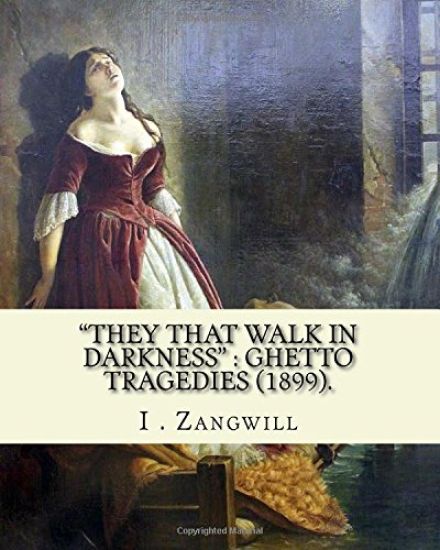
"They that walk in darkness": ghetto tragedies (1899).: By: I . Zangwill, Illustrated By: Louis Loeb (November 7, 1866 - July 12, 1909) was a Jewish
Louis Loeb; I. Zangwill
Createspace Independent Publishing Platform
2018
nidottu
Louis Loeb (November 7, 186 - July 12, 1909) was a Jewish illustrator in the United States. In his time, he was one of the best known in his field. He was also a draftsman, a painter, and a lithographer. Biography edit] Born in Cuyahoga County, Ohio to Alexander Loeb, a dry goods merchant, Louis Loeb worked at a Cleveland lithography firm from age 14 onwards, 2] later taking evening classes in sketching at the Cleveland Art Club. 2] 4] In 1885, he worked at a lithography firm in New York City, with his evenings spent at the Art Students League. In 1889 he went to Paris to study, under Lefebvre, Constant, and G r me, giving up lithography. After three years he returned to New York, where in 1893 he started work for The Century Magazine as an illustrator. For the next few years, up until 1900, he was to travel to and from Europe, both for study and in the course of his work for The Century. During the remainder of his life, he stayed in the U. S., dying in Canterbury, New Hampshire................ Israel Zangwill (21 January 1864 - 1 August 1926) was a British author at the forefront of cultural Zionism during the 19th century, and was a close associate of Theodor Herzl. He later rejected the search for a Jewish homeland and became the prime thinker behind the territorial movement. Early life and education: Zangwill was born in London on 21 January 1864, in a family of Jewish immigrants from the Russian Empire. His father, Moses Zangwill, was from what is now Latvia, and his mother, Ellen Hannah Marks Zangwill, was from what is now Poland. He dedicated his life to championing the cause of people he considered oppressed, becoming involved with topics such as Jewish emancipation, Jewish assimilation, territorialism, Zionism, and women's suffrage. His brother was novelist Louis Zangwill. Zangwill received his early schooling in Plymouth and Bristol. When he was nine years old, Zangwill was enrolled in the Jews' Free School in Spitalfields in east London, a school for Jewish immigrant children. The school offered a strict course of both secular and religious studies while supplying clothing, food, and health care for the scholars; presently one of its four houses is named Zangwill in his honour. At this school he excelled and even taught part-time, eventually becoming a full-fledged teacher. While teaching, he studied for his degree from the University of London, earning a BA with triple honours in 1884. Writings: He had already written a tale entitled The Premier and the Painter in collaboration with Louis Cowen, when he resigned his position as a teacher owing to differences with the school managers and ventured into journalism. He initiated and edited Ariel, The London Puck, and did miscellaneous work for the London press. Zangwill's work earned him the nickname "the Dickens of the Ghetto." He wrote a very influential novel Children of the Ghetto: A Study of a Peculiar People (1892). The use of the metaphorical phrase "melting pot" to describe American absorption of immigrants was popularised by Zangwill's play The Melting Pot, 4] a success in the United States in 1909-10. When The Melting Pot opened in Washington D. C. on 5 October 1909, former President Theodore Roosevelt leaned over the edge of his box and shouted, "That's a great play, Mr. Zangwill, that's a great play." In 1912 Zangwill received a letter from Roosevelt in which Roosevelt wrote of the Melting Pot "That particular play I shall always count among the very strong and real influences upon my thought and my life...".........................

The master: a novel (1895). By: I. Zangwill: Novel (Illustrated).
I. Zangwill
Createspace Independent Publishing Platform
2018
nidottu
Israel Zangwill (21 January 1864 - 1 August 1926) was a British author at the forefront of cultural Zionism during the 19th century, and was a close associate of Theodor Herzl. He later rejected the search for a Jewish homeland and became the prime thinker behind the territorial movement. Early life and education: Zangwill was born in London on 21 January 1864, in a family of Jewish immigrants from the Russian Empire. His father, Moses Zangwill, was from what is now Latvia, and his mother, Ellen Hannah Marks Zangwill, was from what is now Poland. He dedicated his life to championing the cause of people he considered oppressed, becoming involved with topics such as Jewish emancipation, Jewish assimilation, territorialism, Zionism, and women's suffrage. His brother was novelist Louis Zangwill. Zangwill received his early schooling in Plymouth and Bristol. When he was nine years old, Zangwill was enrolled in the Jews' Free School in Spitalfields in east London, a school for Jewish immigrant children. The school offered a strict course of both secular and religious studies while supplying clothing, food, and health care for the scholars; presently one of its four houses is named Zangwill in his honour. At this school he excelled and even taught part-time, eventually becoming a full-fledged teacher. While teaching, he studied for his degree from the University of London, earning a BA with triple honours in 1884. Writings: He had already written a tale entitled The Premier and the Painter in collaboration with Louis Cowen, when he resigned his position as a teacher owing to differences with the school managers and ventured into journalism. He initiated and edited Ariel, The London Puck, and did miscellaneous work for the London press. Zangwill's work earned him the nickname "the Dickens of the Ghetto". He wrote a very influential novel Children of the Ghetto: A Study of a Peculiar People (1892). The use of the metaphorical phrase "melting pot" to describe American absorption of immigrants was popularised by Zangwill's play The Melting Pot, 4] a success in the United States in 1909-10. When The Melting Pot opened in Washington D. C. on 5 October 1909, former President Theodore Roosevelt leaned over the edge of his box and shouted, "That's a great play, Mr. Zangwill, that's a great play." In 1912 Zangwill received a letter from Roosevelt in which Roosevelt wrote of the Melting Pot "That particular play I shall always count among the very strong and real influences upon my thought and my life." The protagonist of the play, David, emigrates to America after the Kishinev pogrom in which his entire family is killed. He writes a great symphony named "The Crucible" expressing his hope for a world in which all ethnicity has melted away, and becomes enamored of a beautiful Russian Christian immigrant named Vera. The dramatic climax of the play is the moment when David meets Vera's father, who turns out to be the Russian officer responsible for the annihilation of David's family. Vera's father admits guilt, the symphony is performed to accolades, David and Vera live happily ever after, or, at least, agree to wed and kiss as the curtain falls. "Melting Pot celebrated America's capacity to absorb and grow from the contributions of its immigrants." Zangwill was writing as "a Jew who no longer wanted to be a Jew. His real hope was for a world in which the entire lexicon of racial and religious difference is thrown away." Zangwill wrote many other plays, including, on Broadway, Children of the Ghetto (1899), a dramatisation of his own novel, directed by James A. Herne and starring Blanche Bates, Ada Dwyer, and Wilton Lackaye; Merely Mary Ann (1903) and Nurse Marjorie (1906), both of which were directed by Charles Cartwright and starred Eleanor Robson. Liebler & Co. produced all three plays as well as The Melting Pot.