Kirjailija
Iain McLean
Kirjat ja teokset yhdessä paikassa: 18 kirjaa, julkaisuja vuosilta 1987–2024, suosituimpiin kuuluu What's Wrong with the British Constitution?. Vertaile teosten hintoja ja tarkista saatavuus suomalaisista kirjakaupoista.
18 kirjaa
Kirjojen julkaisuvuodet: 1987–2024.
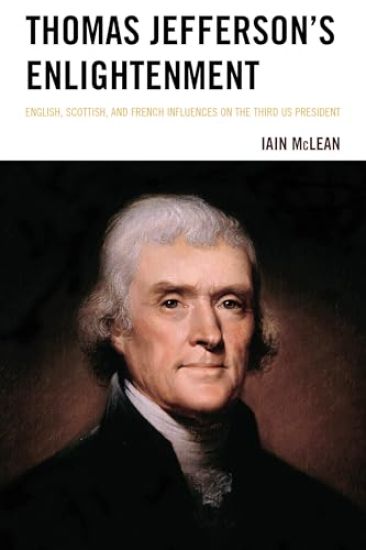
Thomas Jefferson’s Enlightenment: English, Scottish and French Influences on the Third US President retraces Jefferson’s intellectual history. His education in rural Virginia exposed him first to the Latin and Greek classics, then to the political and legal thought of opposition (‘country’) Whigs from 18th-century England. From his college days, he started to absorb the quite distinct views of the Scottish Enlightenment then the five years he spent in Paris (1784-1789), mostly as American Minister to France, broadened his horizons even more. An enthusiastic amateur scientist, he studied the latest science and liberal politics of his French circle, the most important being the Marquis de Condorcet, whose revolutionary ‘social mathematics’ was 200 years ahead of its time. The English, Scottish and French perspectives Jefferson was exposed to shaped his thinking in many ways on his return to the US, influencing his own promotion of science as president of the American Philosophical Society and agricultural improver. It shaped his unique views on religion and ethics, up to his very last published letter. However, it failed to eradicate his great blind spot in regard to slavery as the only enslaved people he freed were from his own family.
The Way the Money Goes
Christopher Hood; Maia King; Iain McLean; Barbara Maria Piotrowska
Oxford University Press
2023
sidottu
The Way the Money Goes traces out what happened to the UK's fiscal constitution - the framework for planning and controlling public spending - under three different governments (Conservative, Labour, Conservative/Liberal Democrat) from the early 1990s to the mid-2010s. The book tells the story of what happened under each government and combines narrative with vignettes that range from the funding of a new Treasury building to efforts to 'crowdsource' ideas for spending cuts. It also includes chapters devoted to different domains of spending control, namely capital spending, spending by subnational governments, running cost expenditure, fiscal forecasting, and the development of new accounting metrics. This book is based on over 120 in-depth interviews of civil servants and ministers who were involved in public spending over the period, as well as documents from the same timeframe. It explores how and why, despite much talk of change and reform in everything from parliamentary procedure to bureaucratic processes, many of the underlying features of the UK's fiscal constitution persisted, including arrangements for formula-funding of the different countries within the union designed as a temporary stopgap in the transition to devolution. To put UK developments into perspective, the book includes a discussion of how the UK system was rated in reports from international bodies over the period, which suggests that in such exercises the more 'political' parts of the fiscal constitution were rated differently from the more 'technocratic' parts. Given several volcanic-type political eruptions in the UK over recent years, the book concludes by exploring some different possible scenarios for the future of its fiscal constitution in the light of those and other possible eruptions to come.
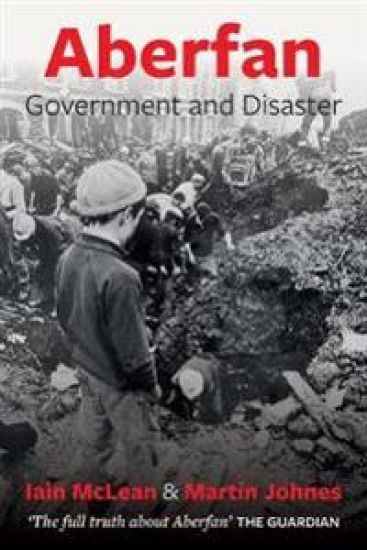
On 21 October 1966, 116 children and 28 adults died when a mountainside coal tip collapsed, engulfing homes and part of a school in the village of Aberfan below. It is a moment that will be forever etched in the memories of many people in Wales and beyond. Aberfan - Government & Disaster is widely recognised as the definitive study of the disaster. Following meticulous research of public records - kept confidential by the UK Government’s 30-year rule - the authors, in this revised second edition, explain how and why the disaster happened and why nobody was held responsible. Iain McLean and Martin Johnes reveal how the National Coal Board, civil servants, and government ministers, who should have protected the public interest, and specifically the interests of the people of Aberfan, failed to do so. The authors also consider what has been learned or ignored from Aberfan such as the understanding of psychological trauma and the law concerning ‘corporate manslaughter’. Aberfan - Government & Disaster is the revised and updated second edition of Iain McLean and Martin Johnes’ acclaimed study published in 2000, which now solely focuses on Aberfan.
The Concise Oxford Dictionary of Politics and International Relations
Garrett W. Brown; Iain McLean; Alistair McMillan
Oxford University Press
2018
nidottu
This bestselling dictionary contains over 1,700 entries on all aspects of politics and international relations. Written by a leading team of political scientists, it embraces the multi-disciplinary spectrum of political theory including political thinkers, history, institutions, theories, and schools of thought, as well as notable current affairs that have shaped attitudes to politics. Fully updated for its fourth edition, the dictionary has had its coverage of international relations heavily revised and expanded, reflected in its title change, and it includes a wealth of new material in areas such as international institutions, peace building, human security, security studies, global governance, and open economy politics. It also incorporates recommended web links that can be accessed via a regularly checked and updated companion website, ensuring that the links remain relevant. The dictionary is international in its coverage and will prove invaluable to students and academics studying politics and related disciplines, as well as politicians, journalists, and the general reader seeking clarification of political terms.
Trading With The A-Line shows anyone in Australia who is of working age, approaching retirement or already retired and looking to increase their financial wealth and improve their lifestyle how to trade shares using a low risk strategy that yields high returns. This book is for anyone who has the aptitude to set aside 30 minutes each weekday and follow a defined set of simple rules.
Scotland faces its biggest choice since the 1707 union - should Scotland be an independent country? The Yes and No campaigns are well under way but with the vote looming closer the information available to the public is still limited. The Scottish people will have to make their own judgments, and so they need to have the issues explained as clearly as possible without spin or bias. What will happen after the referendum? How will Westminster and the rest of the UK respond? What happens if the vote is 'No'? Is it even clear what independence will mean? What about the oil? What will the currency be? What will happen to the Old Age Pension pot if the UK splits? Scotland's Choices, now fully revised for the critical last few months before the referendum, tells you everything you need to know before you place your vote. Written by one former civil servant, one academic and one think-tanker - one a resident Scot, one a Scot living in England and one an Englishman - the authors clearly explain the issues you may not have considered and detail how each of the options would be put into place after the referendum.
What does it mean to be legally married today? From English teenagers eloping to Gretna Green to tie the knot without their parent's permission, to whether a wife can own property, it's clear that marriage law is different depending on where and when you're living. Now, the main debate centres on whether the law should be changed so that same-sex couples can marry. The Scottish and UK governments, plus a number of US states, are to legislate to allow same-sex marriage, prompting both celebration and outrage. Some argue against it on religious or cultural grounds; others support it on grounds of equality and human rights; still others disagree with the institute of marriage altogether. But amongst all the assumptions, there are few facts, and the debates about same-sex marriage in the UK and the US are taking place in an informational vacuum filled with emotion and rhetoric. Legally Married combines insights from history and law from the UK and Scotland with international examples of how marriage law has developed. Peterson and McLean show how many assumptions about marriage are contestable on a number of grounds, separate fact from fiction and explain the claims in terms of their historical context. It discusses the current debates about same-sex marriage in the UK Parliament and the US Supreme Court. It traces the development of marriage law in the UK, looking at the differences between Scotland and the rest of the UK. It compares UK marriage law to other countries, including the US, Ireland, South Africa and Canada. It explains the different theories of marriage that lead to conflicting views of what marriage law should be. It looks at the policy considerations critical to same-sex marriage, including religious freedom and travel between nations.
What does it really mean to be legally married? The answer seems to vary depending on the cultures, religions and laws of different countries. From English teenagers eloping to Gretna Green to tie the knot without their parents' permission, to whether a wife can own property, it's clear that marriage law is different depending on where you live and when. Now, the main debate centres on whether the law should be changed so that same-sex couples can marry. The Scottish and UK governments, plus a number of US states, are to legislate to allow same-sex marriage, prompting both celebration and outrage. But amongst all the assumptions, there are few facts, and the debates about same-sex marriage in the UK and the US are taking place in an informational vacuum filled with emotion and rhetoric. 'Legally Married' combines insights from history and law from the UK and Scotland with international examples of how marriage law has developed. Scot Peterson and Iain McLean show how many assumptions about marriage are contestable on a number of grounds, separate fact from fiction and explain the claims made on both sides of the argument over same-sex marriage in terms of their historical context.
In this provocative new study, Iain McLean argues that the traditional story of the British constitution does not make sense. It purports to be both positive and normative: that is, to describe both how people actually behave and how they ought to behave. In fact, it fails to do either; it is not a correct description and it has no persuasive force. The book goes on to offer a reasoned alternative. The position that still dominates the field of constitutional law is that of parliamentary sovereignty (or supremacy). According to this view, the supreme lawgiver in the United Kingdom is Parliament. Some writers in this tradition go on to insist that Parliament in turn derives its authority from the people, because the people elect Parliament. An obvious problem with this view is that Parliament, to a lawyer, comprises three houses: monarch, Lords, and Commons. The people elect only one of those three houses. This book aims to show, contrary to the prevailing view, that the UK exists by virtue of a constitutional contract between two previously independent states. Professor McLean argues that the work of the influential constitutional theorist A. V. Dicey has little to offer those who really want to understand the nature of the constitution. Instead, greater understanding can be gleaned from considering the 'veto plays' and 'credible threats' available to politicians since 1707. He suggests that the idea that the people are sovereign dates back to the 17th century (maybe the 14th in Scotland), but has gone underground in English constitutional writing. He goes on to show that devolution and the UK's relationship with the rest of Europe have taken the UK along a constitutionalist road since 1972, and perhaps since 1920. He concludes that no intellectually defensible case can be made for retaining an unelected house of Parliament, an unelected head of state, or an established church. The book will be essential reading for political scientists, constitutional lawyers, historians, and politicians alike.
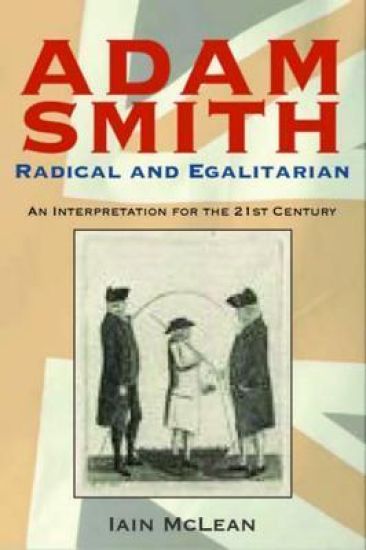
Foreword by the Rt. Hon. Gordon Brown, Chancellor of the Exchequer This book aims to show that Adam Smith (1723-90), the author of The Wealth of Nations, was not the promoter of ruthless laissez-faire capitalism that is still frequently depicted. Smith's "right-wing" reputation was sealed after his death when it was not safe to claim that an author may have influenced the French revolutionaries. But as the author, also, of The Theory of Moral Sentiments, which he probably regarded as his more important book, Smith sought a non-religious grounding for morals, and found it in the principle of sympathy, which should lead an impartial spectator to understand others' problems. This book locates Smith in the Scottish Enlightenment; shows how the two books are perfectly consistent with one another; traces Smith's influence in France and the United States; and draws out the lessons that Adam Smith can teach policy makers in the 21st Century. Although Smith was not a religious man, he was a very acute sociologist of religion. The book accordingly explains the Scottish religious context of Smith's time, which was, as it remains, very different to the English religious context. The whole book is shot through with Iain McLean's love for the Edinburgh of his birth, and for the Scottish Enlightenment. It begins and ends with poems by Smith's great admirer Robert Burns.
This is the first survey of Unionism, the ideology of most of the rulers of the United Kingdom for the last 300 years. Because it was taken so much for granted, it has never been properly studied. Now that we stand in the twilight of Unionism, it is possible to see it as it casts its long shadow over British and imperial history since 1707. The book looks at all the crucial moments in the history of Unionism. In 1707, the parliaments and (more important) executives of England and Scotland were united. During the 18th century, although not immediately after 1707, that union blossomed and brought benefits to both parties. It facilitated the first and second British Empires. The Union of Great Britain and Ireland in 1800-01 was formally similar but behaviourally quite different. It was probably doomed from the start when George III refused to accept Catholic Emancipation. Nevertheless, no leading British politician heeded the Irish clamour for Home Rule until Gladstone in 1886. That cataclysmic year has determined the shape of British and Irish politics ever since. Having refused to concede Irish Home Rule through the heyday of primordial Unionism from 1886 to 1920, British politicians had to accept Irish independence in 1921, whereupon primordial Unionism fell apart except in Northern Ireland. Twentieth-century Unionism has been instrumental - valuing the Union for its consequences, not because it was intrinsically good. As Unionism was inextricably tied up with the British Empire, it nevertheless remained as a strong but unexamined theme until the end of Empire. The unionist parties (Conservative and Labour) responded to the upsurge of Scottish and Welsh nationalism, and of violence in Northern Ireland, in the light of their mostly unexamined unionism in the 1960s. With the departure from politics of the last Unionists (Enoch Powell and John Major), British politics is now subtly but profoundly different.
International Trade and Political Institutions
Fiona McGillivay; Iain McLean; Robert Pahre; Cheryl Schonhardt-Bailey
Edward Elgar Publishing Ltd
2001
sidottu
It is a widely held view that politics plays an important role in determining international trade policy. Defining precisely why, and how, politics matters is more difficult. Despite the benefits of trade, few nations have wholeheartedly adopted free trade policies, and when they do so it is by managing trade through international institutions and multi- or bilateral trade treaties. International Trade and Political Institutions broadens the public choice theory of trade politics to allow for the study of ideas and institutions within a longer time horizon. The authors use theoretically rigorous historical analysis of international political economy and four important case studies to help untangle the role of ideology, institutions and interests. This illuminating book connects the fields of economics, political economy and history to shed new light on trade theory. Scholars of political science and economy, economics and history will all find this book fascinating and worthwhile reading.
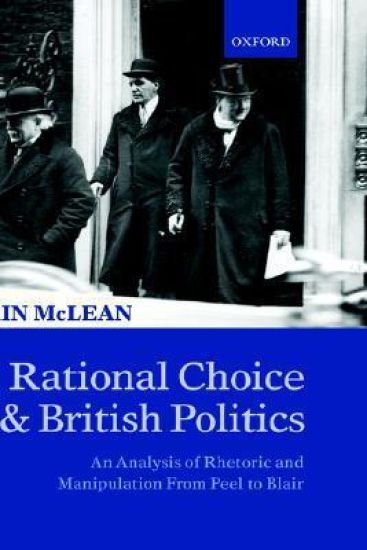
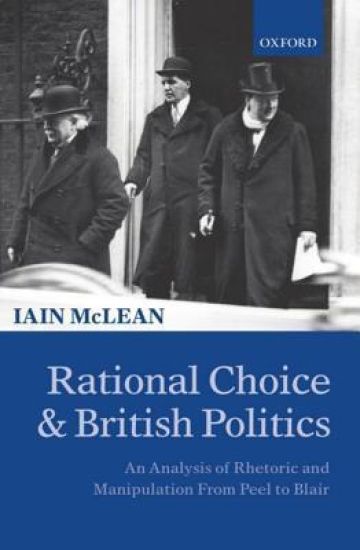
This engaging and original study, by one of Britain's leading scholars of rational choice theory, explores the course of British parliamentary politics over the last 150 years. McLean marries an appealing combination of social science and analytical narrative history to the great turning points in British politics - the Repeal of the Corn Law; the Victorian crisis of the Liberal and Conservative Parties; the Irish Question and Lloyd George's solution to it; the New Liberal origins of the welfare state; the politics of race and empire under Chamberlain and Powell; and the politics of 'there is no alternative' under Margaret Thatcher.
In this accessible new book, Iain McLean explores the impact of information technology on democracy. Combining democratic theory, social choice theory and description of new technology at work in Europe and the USA, McLean explores democracy as it is and as it could be. The author begins in ancient Athens and moves through Pliny, Rousseau, Madison and J S Mill to modern representatives and direct democracy. Introducing the theory of social choice, he argues that democracy is about procedures, not results, and sets out some criteria for fair aggregation of individuals' preferences to society's. Exploring the impact of new technology on these procedures, McLean shows how it can save time, and increase accuracy and accessibility, but also how it can lead to manipulation and come up against Arrow's, Gibbards' and McKelvey's impossibility theorems. In conclusion, McLean asks whether new technology widens or narrows our democratic horizons, and points to the technical and logical boundaries of democracy. Democracy and New Technology will be of great interest to students and researchers in politics, sociology, and media and communications studies. It is one of very few books to explain social choice theory in totally non-technical language and to explore what it means for democracy.
The 1968 Nobel Prize for Economics was awarded to one of the founders of public choice theory, James Buchanan, yet many people have only the vaguest idea what public choice is. The book offers and unusually clear and accessible introduction to an important subject. McLean examines the workings of public choice from two related perspectives - collective action and the aggregation of individual preferences into social consensus. The book highlights the paradox at the heart of collective action- that self-interest in the public domain is frequently counterproductive. National defense and clean air are things we all benefit from - they are public goods - but we tend to resist contributing to them. The first part of this book examines how government choice in such areas is shaped, and by whom- political entrepreneurs, bureaucrats, interest groups and ordinary citizens. McLean uses the idea of a public market in which politicians sell what they hope voters will buy, and further considers how and when people (and animals) co-operate to produce public goods even without government coercion. In the second part of the book the author examines the consequences of combining individual preferences, arguing that there is no straightforward way of adding them up to form a 'social ordering' and assesing the implications of this both for electoral reform and for the status of 'the will of the people'.