Kirjojen hintavertailu – 12 859 827 kirjaa ja 27 kauppaa

Kirjailija

Ian Bradley

Kirjat ja teokset yhdessä paikassa: 50 kirjaa, julkaisuja vuosilta 1992–2026, suosituimpiin kuuluu The Complete Annotated Gilbert & Sullivan. Vertaile teosten hintoja ja tarkista saatavuus suomalaisista kirjakaupoista.

50 kirjaa

Kirjojen julkaisuvuodet: 1992–2026.

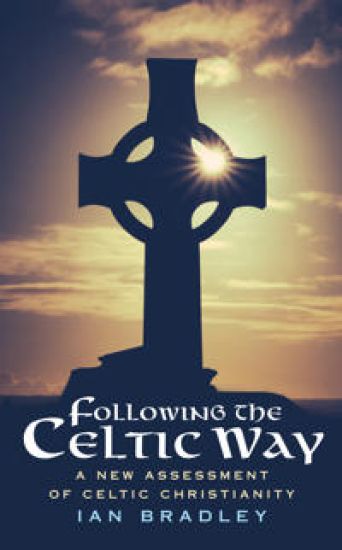
Following The Celtic Way

Following The Celtic Way

Ian Bradley

Darton,Longman Todd Ltd
2018
nidottu
A quarter-century after writing the acclaimed The Celtic Way, Ian Bradley, one of the foremost experts on the spiritual beliefs and practices of the indigenous Christian communities in the British Isles in the early Middle Ages, revisits the original sources and makes a substantial reappraisal of Celtic spirituality. Following the Celtic Way challenges many of the myths and romanticised portrayals of Celtic Christianity and shows evidence of the harder edge and demanding austerity of the lives and spirituality of believers from this time. This book sits among the most insightful and up-to-date introductions to this distinctive and evocative expression of faith, and draws out its themes that are most relevant to us today. It also offers practical spiritual guidance on how to follow the Celtic Way in the contemporary world.
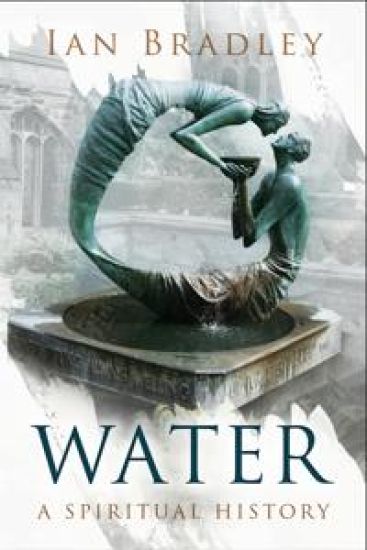
Water: A Spiritual History

Water: A Spiritual History

Ian Bradley

Bloomsbury Continuum
2017
pokkari
Water has long been associated with the magical, the mysterious and the divine. From sacred springs to holy wells, and from hydropathic cures and temperance reform to the modern spa, Ian Bradley explores how water's creative, health-giving and restorative powers have been conceived, worshipped and marketed in an essentially spiritual way. In pre-Christian times, springs and rivers were seen as the dwelling places of deities with magical life-giving and curative powers, associated especially with the feminine and with ritual cleansing and rebirth. With the coming of Christianity, water was incorporated into Christian ritual and tradition through baptism and the cult of holy wells. From the 16th century onwards, the benefits of water came to be seen more in terms of therapeutic healing than the miraculous. Through the development of drinking and bathing cures, spas and hydrotherapy, a more scientific but still essentially spiritual understanding of the curative properties of water was developed. By the eighteenth century, spas and watering places had acquired their own enchanted and mysterious qualities, in many ways taking the place of medieval pilgrim shrines. Now, a new, more hedonistic kind of pilgrim comes to modern spas to experience a potent post-modern elixir of self-oriented well-being.
Matrices and Society

Matrices and Society

Ian Bradley; Ronald L. Meek

Princeton University Press
2016
sidottu
Matrices offer some of the most powerful techniques in modem mathematics. In the social sciences they provide fresh insights into an astonishing variety of topics. Dominance matrices can show how power struggles in offices or committees develop; Markov chains predict how fast news or gossip will spread in a village; permutation matrices illuminate kinship structures in tribal societies. All these invaluable techniques and many more are explained clearly and simply in this wide-ranging book. Originally published in 1986. The Princeton Legacy Library uses the latest print-on-demand technology to again make available previously out-of-print books from the distinguished backlist of Princeton University Press. These editions preserve the original texts of these important books while presenting them in durable paperback and hardcover editions. The goal of the Princeton Legacy Library is to vastly increase access to the rich scholarly heritage found in the thousands of books published by Princeton University Press since its founding in 1905.
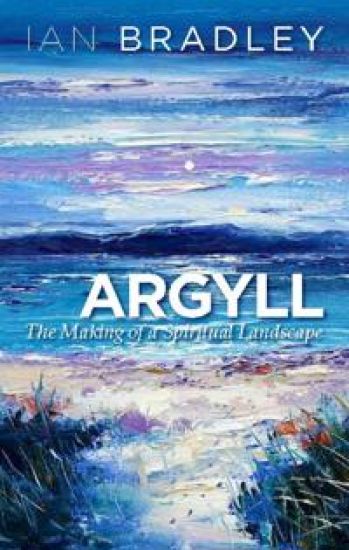
Argyll

Argyll

Ian Bradley

Saint Andrew Press
2015
nidottu
Argyll is the beautiful, wild and inspirational home of Celtic Christianity. It is the spiritual heartland of Scotland and, some would say, of the whole United Kingdom. Until now, no-one has sought to uncover the reasons why the spiritual landscape of Argyll is so distinctively unique, rich and varied. Why is it characterised by a more gentle, liberal, mystical and liturgical Christian culture than the harsher Calvinist evangelism of the neighbouring Highlands and the Western Isles? Why has it produced such a disproportionately large amount of beautiful devotional material? This joyful book, with a cover image by popular artist JoLoMo, is impressionistic and accessible but always of the highest scholarly standards. It reveals the dominant themes and figures in Argyll’s spiritual landscape. Ian Bradley’s love of Argyll shines through as he takes both a geographical and biographical approach and looks at the interplay of landscape and Christian belief through such figures as Columba, Carswell, sundry Campbells, George Matheson, George MacLeod and others. Drawing on extensive original research and interviews with a wide variety of people, including many Church of Scotland ministers and lay people, this is an enthralling and fascinating read for all who are interested in Scottish history and identity, Celtic Christianity and Scotland’s spiritual heritage.
Matrices and Society

Matrices and Society

Ian Bradley; Ronald L. Meek

Princeton University Press
2014
pokkari
Matrices offer some of the most powerful techniques in modem mathematics. In the social sciences they provide fresh insights into an astonishing variety of topics. Dominance matrices can show how power struggles in offices or committees develop; Markov chains predict how fast news or gossip will spread in a village; permutation matrices illuminate kinship structures in tribal societies. All these invaluable techniques and many more are explained clearly and simply in this wide-ranging book. Originally published in 1986. The Princeton Legacy Library uses the latest print-on-demand technology to again make available previously out-of-print books from the distinguished backlist of Princeton University Press. These editions preserve the original texts of these important books while presenting them in durable paperback and hardcover editions. The goal of the Princeton Legacy Library is to vastly increase access to the rich scholarly heritage found in the thousands of books published by Princeton University Press since its founding in 1905.
Lost Chords and Christian Soldiers
Arthur Sullivan is best known as W. S. Gilbert's collaborator in the Savoy Operas, However, Sullivan was far from being simply a composer of light operettas. At the height of his fame and popularity in late Victorian Britain, Sullivan was regarded as the nation's leading composer of sacred oratorios on a par with Mendelssohn and Brahms. Yet despite his contemporary popularity and enduring legacy, little attention has been given to Sullivan's sacred work. The last twenty years have seen a considerable revival of interest in and critical appreciation for this aspect of Sullivan's work. Lost Chords and Christian Soldiers provides the first detailed, comprehensive, critical study and review of Sullivan's church and sacred music. As well as exploring issues of repertoire and ecclesiology involved in these and other formative influences and experiences, consideration will be given to how far Sullivan's own personal beliefs and faith influenced his settings of sacred texts and the extent to which his own spiritual and theological leaning are expressed in his choice of material and style of setting. Sullivan's motivation in setting religious texts will be probed and comparison will be made with the motivation, output and approach of his closest contemporaries in this field, most notably Stainer.
The Optimists

The Optimists

Ian Bradley

Faber Faber
2010
nidottu
Ian Bradley's The Optimists was first published in 1980, when the values of Victorian Liberalism were enjoying something of a renaissance - as they are today. Politicians of different parties were once again expounding the Gladstonian principles of public economy, self-help, European unity and home rule for the constituent parts of the United Kingdom. This book examines the nature and development of these ideas. It traces their origins in the Romantic movement, the industrial revolution and the general European Liberal awakening of the mid-nineteenth century and charts their collapse in the face of the predominance of class attitudes and the increasingly bitter clash of capital and labour at the end of the century. During its heyday, from the mid-1850s to the mid-1880s, Liberalism attracted many eminent Victorians, including leading literary figures like Anthony Trollope, George Meredith and William Makepeace Thackeray, as well as philosophers like John Stuart Mill, Lord Acton, Richard Cobden, John Bright, T. H. Green, and, of course, W. E. Gladstone. Using a mass of evidence, from novels, unpublished letters and autobiographical writings as well as from contemporary speeches and biographies, Ian Bradley has built up a picture of the complex and often conflicting forces which made men espouse the Gladstonian creed. He isolates the different strands in the Victorian Liberal Movement, the thrust and competitiveness of up-and-coming merchants and manufacturers, the love of liberty felt by rationalists and romantics alike, and the stern imperatives of the Nonconformist Conscience. He concludes that for all their differences and inconsistencies, Victorian Liberals were bound together by an all-pervasive sense of optimism and a fundamental faith in the goodness of man and the reality of progress.
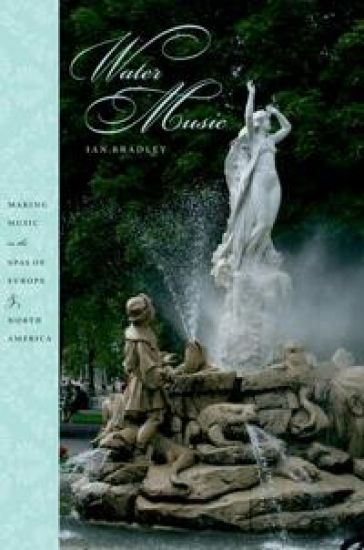
Water Music

Water Music

Ian Bradley

Oxford University Press Inc
2010
sidottu
Many of the most famous composers in classical music spent considerable periods in spa towns, whether taking in the waters, or searching for patrons among the rich and influential clientele who frequented these pioneer resorts, or soaking up the relaxing and decadent ambience of these enchanted and magical places. At Baden bei Wein, Mozart wrote his Ave Verum Corpus, and Beethoven sketched out his Ninth Symphony. Johannes Brahms spent 17 summers in Baden-Baden, where he stayed in his own specially-built composing cavern and consorted with Clara Schumann. Berlioz came to conduct in Baden-Baden for nine seasons, writing his last major work, Beatrice and Benedict, for the town's casino manager. Chopin, Liszt, and Dvorak were each regular visitors to Carlsbad and Marienbad. And it was in Carlsbad that Beethoven met Goethe. Concerts, recitals, and resident orchestras have themselves played a major role in the therapeutic regimes and the social and cultural life of European and North American watering places since the late eighteenth century. To this day, these spa towns continue to host major music festivals of the highest caliber, drawing musicians and loyal audiences on both local and international levels. This book explores the music making that went on in the spas and watering places in Europe and the United States during their heyday between the early- eighteenth and the mid-twentieth centuries. Music was a hugely important part of the experience of taking a spa cure. Bands played during the early morning and late afternoon while people took the waters and bathed. Spa orchestras and ensembles entertained those gathering socially or resting in assembly rooms, pump rooms and in gardens and parks. In the evenings spa guests enjoyed concerts, visits to the theatre, balls, dances and gambling sessions at the casino, at all of which music played a major role. Expert author Ian Bradley draws on original archival material and the diaries and letters of composers. His book ranges chronologically and geographically, beginning with Bath and Baden near Vienna, which both flourished in the eighteenth century, continuing through Baden-Baden, the Bohemian spas and Bad Ischl in the nineteenth century and on to Buxton and Saratoga Springs which saw their glory days in the early twentieth century. A concluding chapter brings the subject up to date with a review of the musical activities taking place in spa towns today and of the music that accompanies treatments in modern spas, now so ubiquitous and so important and growing a feature in the booming world of leisure, tourism, health and well-being.

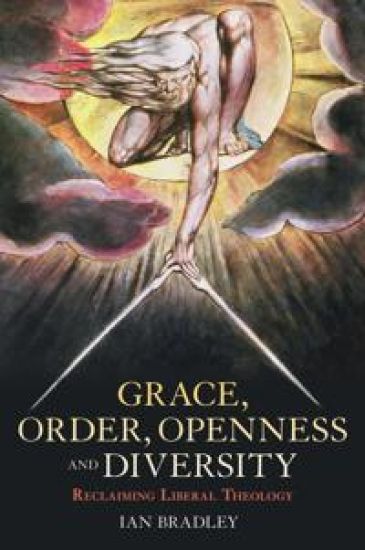
Grace, Order, Openness and Diversity

Grace, Order, Openness and Diversity

Ian Bradley

T. T.Clark Ltd
2010
nidottu
In this highly accessible, passionately argued and scholarly book, Ian Bradley presents fundamentalism, born a hundred years ago in the United States of America, as the great twentieth-century heresy and aberration. He identifies and seeks to reclaim for the twenty first century a liberal theological tradition existing in Christianity, Islam, Judaism and the other major world faiths. This liberal heart is found in their scriptures and was often to the fore in their foundational stages but has more recently been overlaid with conservative reaction, fundamentalism and fear. He defines this liberal theology in terms of the four values of grace, order, openness and diversity which he suggests can be read by Christians as key attributes of the three persons of the Trinity and of God in Trinity as a whole. This book counters the growing influence of narrow, exclusive judgemental religious conservatism with a powerful reassertion of the liberal gospel of God's grace, goodness and generosity.
Abide With Me

Abide With Me

Ian Bradley

Faber Faber
2010
nidottu
'Abide with me', 'The day thou gavest Lord is ended', 'All things bright and beautiful': a century and more after they were written Victorian hymns like these have an enduring popularity. This book examines the Victorian hymn from a literary, theological and cultural point of view. It traces its contemporary impact and its continuing influence in churches, public popularity, parody and literary references. In a way that has not been done before, Ian Bradley traces the importance of hymns in Victorian novels, explores the extraordinary political and social ramifications of Victorian hymnody, and assesses the literary and musical importance of the genre. Written in a lively and anecdotal style, this book punctures some of the myths about Victorian hymns, showing that the themes of doubt, humility and political and social radicalism surface just as much as those of triumphalism, imperialism and conservatism. 'Ian Bradley tells his story lucidly, from the disappearance of the chaotic and cheerful gallery musicians so beloved of Thomas Hardy, to the gospel songs of Dwight Moody and Ira Sankey. He moves easily between the novelist, the theologian and the musician. He introduces the story with a striking analogy: hymns played much the same role in Victorian culture that soap operas do among us today . . . it is a good curtain-raiser for a serious, indeed learned, but never humourless book.' Lord Runcie, Daily Telegraph'I was so gripped by this book that I could not put it down. Here is invaluable resource material dealing with a period of hymnody which has never before been researched in such depth. In this eminently readable survey, we are left in no doubt as to the merits or otherwise of nineteenth-century hymnody.' Dr Lionel Dakers, formerly Director of the Royal School of Music.
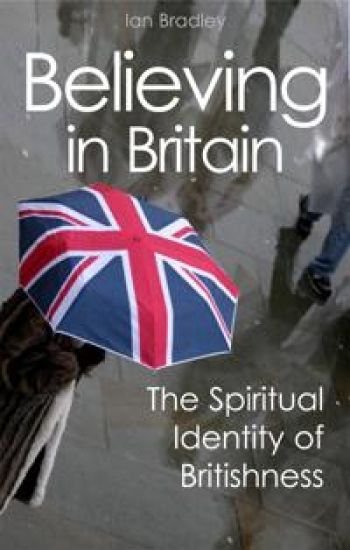
Believing in Britain

Believing in Britain

Ian Bradley

Lion Books
2008
nidottu

Halvin toimitettuna 16,90 €

It is often claimed that Great Britain is one of the most secular nations on earth, but Ian Bradley argues that 'Britishness' (like the overlapping crosses on the 400-year-old Union flag) is best understood in religious terms. He maintains that the idea of 'being British' has special value as a broad church measure of spiritual and cultural inclusiveness - and as a positive alternative to fundamentalism, narrow nationalism and jingoism. The author explores various distinctive contributions to Britishness made over the centuries by the Celts, the Anglo-Saxons, the Scots, and the new black and Asian Britons. Looking to a new sense of British identity that combines myth, imagination and tradition with an open-minded respect for difference, Believing in Britain makes a thoughtful and challenging contribution to one of the most important discussions of our time.
Oh Joy! Oh Rapture!

Oh Joy! Oh Rapture!

Ian Bradley

Oxford University Press Inc
2007
nidottu
In Oh Joy! Oh Rapture! expert and enthusiast Ian Bradley explores the world of Gilbert and Sullivan over the last four and a half decades, looking at the way this "phenomenon" is passed from generation to generation. Taking as his starting point the expiry of copyright on the opera libretti at the end of 1961 and using fascinating hitherto unpublished archive material, Bradley reveals the extraordinary story of the last years of the old D'Oyly Carte Opera Company, the guardian of Savoy tradition for over a hundred years, and the troubled history of its successor. He explores the rich vein of parodies, spoofs, and spin-offs of the songs, as well as their influence on twentieth century lyricists and composers. He analyzes professional productions across the world, looks at the unique place of G&S in schools, colleges, and universities, and lovingly explores the culture of amateur performance. He also uncovers the largely male world of the obsessive fans, those collecting memorabilia, the myriad magazines, journals, websites, and festivals devoted to G&S, and the arcane interests of some of the faithful "inner brotherhood."
Enlightened Entrepreneurs

Enlightened Entrepreneurs

Ian Bradley

Lion Books
2007
nidottu
This is the story of 10 remarkable Victorian industrialists who came from relatively humble origins and rose through hard work, inventiveness and application to become among the richest and most influential men of their generation. The businesses they created are for the most part still thriving today and include such household names as Cadburys, Rowntrees, Colmans, Boots, Huntley & Palmers and Unilever. Deeply imbued with the values of Victorian Liberalism and of Nonconformity, they showed an active and practical concern for their employees, providing them with housing, health care, education, recreation and entertainment. They also founded charitable trusts such as The Old Vic Theatre and Royal Holloway College, and model communities such as Saltaire.
Believing in Britain

Believing in Britain

Ian Bradley

I.B. Tauris
2006
sidottu
Why is there such intense interest today in the idea of 'Britishness'? Does it really matter, and what is 'Britishness' anyway? Why does the notion of 'being British' seem to have most resonance amongst recent immigrant - especially Asian and Afro-Caribbean - communities? And why is that 'traditional' British values now seem to be most widely practised and cherished by newcomers, not by the dominant majority? This book answers these vital questions by making a unique contribution to the current debate about British identity. It investigates why Liverpool is the most British of UK cities, with a regional accent representing a medley of Welsh, Scots, Irish and English; how a small village off the M6 motorway is arguably Britain's spiritual heart; and what theme parks, airport shops and eating habits have to tell us about the contemporary national character. It is often claimed that Great Britain is one of the most secular nations on earth. But - controversially - Ian Bradley argues that Britishness is best envisaged as a series of overlapping identities which are at root religious. He views the 400 year-old Union Jack, with its overlaid crosses of three of the nation's four patron saints, as symbolising the United Kingdom's unparalleled combination of unity in diversity, the diversity of a society which now embodies Muslim, Jewish, Hindu, Buddhist and many other - including secular - traditions. He goes on to argue that 'Britishness' has special value as a broad church measure of spiritual and cultural inclusiveness - and as a positive alternative to fundamentalism, narrow nationalism and jingoism. The author explores in separate chapters the distinctive contributions to Britishness made over the centuries by the Celtic traditions of the Welsh and Irish, the Anglo-Saxon strain of tolerance and freedom associated with the English, the moral seriousness of the Scots, and the characteristics of exuberance, modesty and privacy introduced by new black and Asian Britons. Published to coincide with the three hundredth anniversary of the 1707 Act of Union, his book offers a number of radical proposals. These include re-designing the Union flag to incorporate a black cross on a gold background, to better reflect the hybridity of contemporary Britain, and replacing George, Andrew and Patrick with a new trinity of patron saints - Columba, Bridget and Edward the Confessor. Ian Bradley contends that a rejuvenated BBC, monarchy and Commonwealth all have a part to play in forging a new sense of British identity which combines myth, imagination and tradition with a broad, open-minded inclusivity and respect for difference. Believing in Britain makes a consistently thoughtful and challenging contribution to one of the most important discussions of our time.
The Call to Seriousness

The Call to Seriousness

Ian Bradley

Lion Books
2006
pokkari
"The Call to Seriousness" attempts to examine the nature and the extent of the impact which the Evangelicals made on English life in the first half of the 19th century. Two men dominated the Evanglical world during this period: William Wilberforce who was the central figure in that celebrated group of Evangelicals, the Clapham Sect; and Anthony Ashley Cooper, the Seventh Earl of Shaftesbury, remembered mainly for championing the cause of factory workers. The author argues that the influence of the Evangelicals was, on the whole, a positive one. The Evangelicals alone did not make the Victorians what they were. They did, however, play a considerable part in helping to establish the peculiar temper of the age. Above all, Evangelicalism was responsible for giving the Victorians their famous seriousness and high-mindedness.
Daily Telegraph Book of Hymns

Daily Telegraph Book of Hymns

Ian Bradley

Continuum International Publishing Group Ltd.
2006
nidottu
Here are the full original texts of 150 of the best loved hymns in the English language, from the time of the Early Church to the 20th century. Each is acompanied by a fascinatintg commentary, giving biographical details of the aurthgor, such as the Calvinist creator of Rocvk oif Ages who once calculated that the average human sins 2,522,880,000 times; notes on the circumstances in which the hymn was written; and variant versions including the First World War infantry adaptation of The Church's One Foundation. 150 hymns each prefaced by an urbanely written and agreeably subjective commentary with a wealth of anecdote and a few ribald parodies. This charming book shlould also bve reqwuirted reading for all responsible for choosing hymns in church, and recopmmended bedside reading for the eight million viewers of Songs of Praise. Ian Bradley writes with wit elegance and charm and is quite exceptionally knowledgeable about his subject. Bradley has enjoyed sining hymns for as long as he can remember . he attributes the orogin of this enthuisaiasm yto the happy combincvation of having a father who loved Salvation Army choruses and many year exposure to public school chapel worship.ong his other ewnthusiasm are spas, instituations of most kinds and all things Victorian.
Oh Joy! Oh Rapture!

Oh Joy! Oh Rapture!

Ian Bradley

Oxford University Press Inc
2005
sidottu
In Oh Joy! Oh Rapture! expert and enthusiast Ian Bradley explores the world of Gilbert and Sullivan over the last four and a half decades, looking at the way this "phenomenon" is passed from generation to generation. Taking as his starting point the expiry of copyright on the opera libretti at the end of 1961 and using fascinating hitherto unpublished archive material, Bradley reveals the extraordinary story of the last years of the old D'Oyly Carte Opera Company, the guardian of Savoy tradition for over a hundred years, and the troubled history of its successor. He explores the rich vein of parodies, spoofs, and spin-offs of the songs, as well as their influence on twentieth century lyricists and composers. He analyzes professional productions across the world, looks at the unique place of G&S in schools, colleges, and universities, and lovingly explores the culture of amateur performance. He also uncovers the largely male world of the obsessive fans, those collecting memorabilia, the myriad magazines, journals, websites, and festivals devoted to G&S, and the arcane interests of some of the faithful "inner brotherhood."