Kirjojen hintavertailu – 12 903 725 kirjaa ja 27 kauppaa
Kirjailija
Ian Bruce
Kirjat ja teokset yhdessä paikassa: 16 kirjaa, julkaisuja vuosilta 1997–2026, suosituimpiin kuuluu Theory and Concepts of English for Academic Purposes. Vertaile teosten hintoja ja tarkista saatavuus suomalaisista kirjakaupoista.
This book applies theory and research findings to the design of English for Academic Purposes courses. Drawing on approaches to researching academic communities, needs analysis and genre theory, a systematic approach to syllabus and curriculum development is proposed and used as the basis for detailed consideration of tasks and skills development.
Addressing the issue of fragmentation in academic English language research, this book takes a holistic approach to the areas of knowledge that converge within academic discourse and texts. The authors argue that this convergence integrates three knowledge areas of a disciplinary community: its social processes, epistemology, and discursive practices. Going beyond the narrower focus of much previous theory and research, the volume advocates an original and integrated approach to the multifaceted nature of the academic language and literacy practices of universities. The book is divided into two parts. Part 1 examines the context of contemporary universities and the broader influences that shape academic language use. Part 2 explores disciplinarity and the three dimensions that together shape academic language: social, epistemological, and discursive. The authors then present an innovative and integrated model of the three dimensions and use it to examine language from social science and STEM subjects. A concluding manifesto argues for an integrative, reflexive and ethical approach to researching academic language. This volume is of interest to anyone concerned with understanding, analysing, and teaching the academic language of universities as it is used for study or research publication purposes.
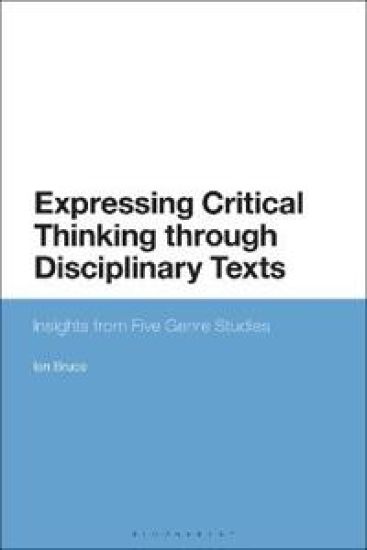
Exploring how critical thinking is expressed in writing, this book investigates the specific linguistic elements involved in this process. Ian Bruce takes a genre-based approach to compare the textual expression of critical thinking in samples of academic, professional and journalistic writing, using five studies to examine the similarities and differences in the elements deployed across different genres. Looking at phenomena such as the relations between propositions and words which express the writer’s personal attitude, content-organizing patterns, and the role of metaphor, this book highlights the most important contributory factors in the expression of critical thinking. Providing an in-depth exploration of how it is articulated through different types of specialist writing, this book provides a lens to both examine texts and to identify and practice this skill.
This work has been selected by scholars as being culturally important and is part of the knowledge base of civilization as we know it. This work is in the public domain in the United States of America, and possibly other nations. Within the United States, you may freely copy and distribute this work, as no entity (individual or corporate) has a copyright on the body of the work. Scholars believe, and we concur, that this work is important enough to be preserved, reproduced, and made generally available to the public. To ensure a quality reading experience, this work has been proofread and republished using a format that seamlessly blends the original graphical elements with text in an easy-to-read typeface. We appreciate your support of the preservation process, and thank you for being an important part of keeping this knowledge alive and relevant.
This work has been selected by scholars as being culturally important and is part of the knowledge base of civilization as we know it. This work is in the public domain in the United States of America, and possibly other nations. Within the United States, you may freely copy and distribute this work, as no entity (individual or corporate) has a copyright on the body of the work. Scholars believe, and we concur, that this work is important enough to be preserved, reproduced, and made generally available to the public. To ensure a quality reading experience, this work has been proofread and republished using a format that seamlessly blends the original graphical elements with text in an easy-to-read typeface. We appreciate your support of the preservation process, and thank you for being an important part of keeping this knowledge alive and relevant.
Exploring how critical thinking is expressed in writing, this book investigates the specific linguistic elements involved in this process. Ian Bruce takes a genre-based approach to compare the textual expression of critical thinking in samples of academic, professional and journalistic writing, using five studies to examine the similarities and differences in the elements deployed across different genres. Looking at phenomena such as the relations between propositions and words which express the writer’s personal attitude, content-organizing patterns, and the role of metaphor, this book highlights the most important contributory factors in the expression of critical thinking. Providing an in-depth exploration of how it is articulated through different types of specialist writing, this book provides a lens to both examine texts and to identify and practice this skill.
This book contextualizes the field of English for Academic Purposes (EAP), with a particular focus on the professional and academic identity and role of the EAP practitioner. The authors examine previously neglected areas such as the socio-economic, academic and employment contexts within which EAP practitioners function. In doing so, they develop a better understanding of the roles, expectations and constraints that arise from these contexts, which in turn shape professional practice and the identity of the practitioner. As EAP is emerging as an academic discipline with a growing body of published research, this book will appeal to trainee and established practitioners, along with researchers and students of linguistics and education.
This book contextualizes the field of English for Academic Purposes (EAP), with a particular focus on the professional and academic identity and role of the EAP practitioner. The authors examine previously neglected areas such as the socio-economic, academic and employment contexts within which EAP practitioners function. In doing so, they develop a better understanding of the roles, expectations and constraints that arise from these contexts, which in turn shape professional practice and the identity of the practitioner. As EAP is emerging as an academic discipline with a growing body of published research, this book will appeal to trainee and established practitioners, along with researchers and students of linguistics and education.
This book applies theory and research findings to the design of English for Academic Purposes courses. Drawing on approaches to researching academic communities, needs analysis and genre theory, a systematic approach to syllabus and curriculum development is proposed and used as the basis for detailed consideration of tasks and skills development.
Ian Bruce proposes a new model of genre-based approaches to academic writing, and analyses the ways in which this can be implemented in pedagogy and curriculum design. The focus of this book is the use of genre-based approaches to teaching academic writing. Genre-based courses enable second language learners to integrate their linguistic, organisational and contextual knowledge in a variety of different tasks. The book reviews pedagogical approaches to genre through English for Specific Purposes and Systemic Functional Linguistics to present a synthesis of the current research being undertaken in the field. From this theoretical base, Ian Bruce proposes a new model of genre-based approaches to academic writing, and analyses the ways in which this can be implemented in pedagogy and curriculum design. "Academic Writing and Genre" is a cutting-edge monograph which will be essential reading for researchers in applied linguistics.
The focus of this book is the use of genre-based approaches to teaching academic writing. Genre-based courses enable second language learners to integrate their linguistic, organisational and contextual knowledge in a variety of different tasks. The book reviews pedagogical approaches to genre through English for Specific Purposes and Systemic Functional Linguistics to present a synthesis of the current research being undertaken in the field. From this theoretical base, Ian Bruce proposes a new model of genre-based approaches to academic writing, and analyses the ways in which this can be implemented in pedagogy and curriculum design. "Academic Writing and Genre" is a cutting-edge monograph which will be essential reading for researchers in applied linguistics.
Everyone has dreams of success but few of us really know how to go about realising them. We usually focus on what people have achieved rather than how they have lived each day to achieve it. Ian Bruce makes it simple, but doesn't promise it will be easy. He leads the reader through a process of self-discovery and empowerment that he guarantees will work for everyone - no matter what their goal. This has to be one of the most profoundly sensible books on the subject of personal fulfilment ever written. 'Ask yourself - did Richard Branson spend five hours every evening watching soap operas and action videos'?
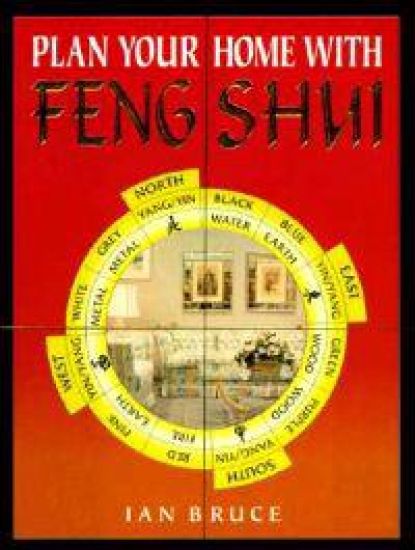
Ian Bruce has written this book with the aim of helping the amateur grasp the concepts of this ancient Chinese ideology. It includes an introduction about the philosophy of Feng Shui and explains terms such as Ch'i in easy to understand language. Each room of a house is given its own chapter and includes ideas for creating ideal living space. It is fully illustrated throughout and includes colour pictures to help you make the most of your home.