
Kirjailija
Ian D. Clark
Kirjat ja teokset yhdessä paikassa: 25 kirjaa, julkaisuja vuosilta 1997–2026, suosituimpiin kuuluu Ella Fitzgerald in Australia - a History. Vertaile teosten hintoja ja tarkista saatavuus suomalaisista kirjakaupoista.
Nimi esiintyy myös muodoissa: Ian D Clark
25 kirjaa
Kirjojen julkaisuvuodet: 1997–2026.
Scars in the Landscape Aboriginal massacres and killings in south-western Victoria, 1833 - 1851
Ian D. Clark
Independently Published
2026
Nidottu
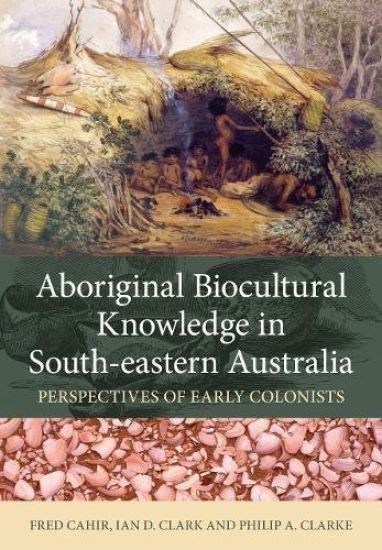
Aboriginal Biocultural Knowledge in South-eastern Australia
Fred Cahir; Ian D. Clark; Philip A. Clarke
CSIRO Publishing
2018
nidottu
Provides an insight into the environmental knowledge of Indigenous Australians. Indigenous Australians have long understood sustainable hunting and harvesting, seasonal changes in flora and fauna, predator–prey relationships and imbalances, and seasonal fire management. Yet the extent of their knowledge and expertise has been largely unknown and underappreciated by non-Aboriginal colonists, especially in the south-east of Australia where Aboriginal culture was severely fractured. Aboriginal Biocultural Knowledge in South-eastern Australia is the first book to examine historical records from early colonists who interacted with south-eastern Australian Aboriginal communities and documented their understanding of the environment, natural resources such as water and plant and animal foods, medicine and other aspects of their material world. This book provides a compelling case for the importance of understanding Indigenous knowledge, to inform discussions around climate change, biodiversity, resource management, health and education. It will be a valuable reference for natural resource management agencies, academics in Indigenous studies and anyone interested in Aboriginal culture and knowledge.
'We are all of one blood' - A History of the Djabwurrung Aboriginal People of Western Victoria, 1836-1901: Vol. 1. A History of the Djabwurrung, 1836-
Ian D. Clark
Createspace Independent Publishing Platform
2016
nidottu
This is volume one of the three-volume history of the Djabwurrung Aboriginal people of Western Victoria, 1836-1901. It reconstructs the history of the Djabwurrung Aboriginal people the Ararat, Stawell, and Hamilton districts from 1836 - when they first encountered European intruders on their lands - to the Federation of Australia in 1901. There are two realities that confront this study and they are the 'fact of conquest' - the fact that the Djabwurrung people were subjected to economic, political, and cultural domination as a consequence of colonization; and the fact of their near-ethnocide - their almost total annihilation over space and time. Chapter two provides a detailed understanding of the Djabwurrung - where and how they lived, and how they were economically and politically organized. The chapter concludes by discussing the extent of the knowledge the Djabwurrung may have had of Europeans prior to the pastoral invasion of their land in 1838. Chapter three seeks to understand the European invasion by asking who the invaders were, and what was their motivation and mode of occupation, and what they may have known of the Djabwurrung. The nature of the articulation of a hunting and gathering mode of production and the squatter capitalist mode of production is the central focus of Chapter four. Chapter five reconstructs the experience of the Djabwurrung for the remaining years of the 1840s, and considers attempts by the state through the Port Phillip Aboriginal Protectorate to protect and resocialize the Djabwurrung. The 1850s are the focus of Chapter six. The gold rushes represent a second wave of dispossession. Essentially the chapter seeks to understand Djabwurrung relationships with European colonial society, particularly in the light of the demand for their labour with the increased labour costs and labour shortage caused by the gold rushes. Chapter seven is concerned with the 1860s, a decade I have described as producing a third wave of dispossession when the remnant Djabwurrung people were reduced to the status of 'things', and were often treated as objects of amusement, pity, and censure. Many Djabwurrung left their homelands during this period and went to government stations and Christian missions - although a few elderly Djabwurrung were allowed to remain on their natal lands. Chapter eight is concerned with the 1870s, and examines the various reports from the three honorary correspondents who had the most to do with the Djabwurrung - Charles Gray at Nareeb Nareeb; Peter Learmonth at Hamilton; and Andrew Porteous at Carngham; it examines Djabwurrung deaths and inquests and marriages in the 1870s; ongoing alcohol abuse; and particular episodes in the lives of individuals. The focus of chapter nine is the final two decades of the nineteenth century from 1881 until 1901 and considers Djabwurrung deaths and marriages in this period; the assault of Sambo by three youths at Dunkeld and his subsequent death in Hamilton is examined; Thomas Ware's wish to die in his own country; developments in the life of Tokas Johnson; the participation of the Djabwurrung in community events and sporting carnivals; and examines the 1886 Act which redefined 'Aboriginality' and had fundamental ramifications for the Aboriginal people of Victoria. The chapter concludes with demographic considerations and examines the last known fluent speakers of the Djabwurrung language. Population-wise this period represents the nadir for the Djabwurrung, their near-ethnocide, when population fell below 60. In the conclusion to this chapter I consider some of the cultural imperatives that shaped the response of the Djabwurrung to their circumstances; such as wanting to die in their own country; resistance to forced removal and relocation; the quest to return to homelands; and the need to ensure a continuous association with land.