Kirjailija
Ian D. Rotherham
Kirjat ja teokset yhdessä paikassa: 32 kirjaa, julkaisuja vuosilta 2011–2027, suosituimpiin kuuluu B&W Working & Walking Vol1. Vertaile teosten hintoja ja tarkista saatavuus suomalaisista kirjakaupoista.
Nimi esiintyy myös muodoissa: Ian D Rotherham
32 kirjaa
Kirjojen julkaisuvuodet: 2011–2027.
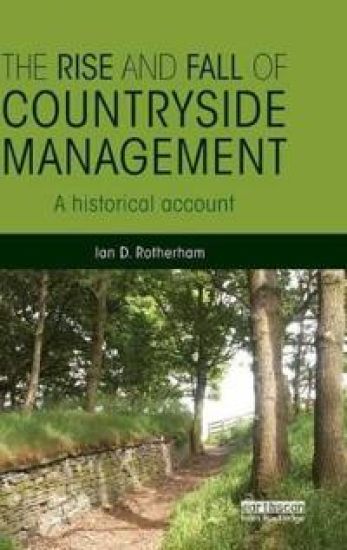
For at least half a century since the emergence of Country Parks and Forest Parks, countryside services have provided leisure, tourism, conservation, restoration and regeneration across Britain. Yet these services are currently being decimated as public services are sacrificed to the new era of austerity. The role and importance of countryside management have been barely documented, and the consequences and ramifications of cuts to these services are overlooked and misunderstood. This volume rigorously examines the issues surrounding countryside management in Britain. The author brings together the results of stakeholder workshops and interviews, and in-depth individual case studies, as well as a major study for the Countryside Agency which assessed and evaluated every countryside service provision in England. A full and extensive literature review traces the ideas of countryside management back to their origins, and the author considers the wider relationships and ramifications with countryside and ranger provisions around the world, including North America and Europe. The book provides a critical overview of the history and importance of countryside management, detailing the achievements of a largely forgotten sector and highlighting its pivotal yet often underappreciated role in the wellbeing of people and communities. It serves as a challenge to students, planners, politicians, conservationists, environmentalists, and land managers, in a diversity of disciplines that work with or have interests in countryside, leisure and tourism, community issues, education, and nature conservation.
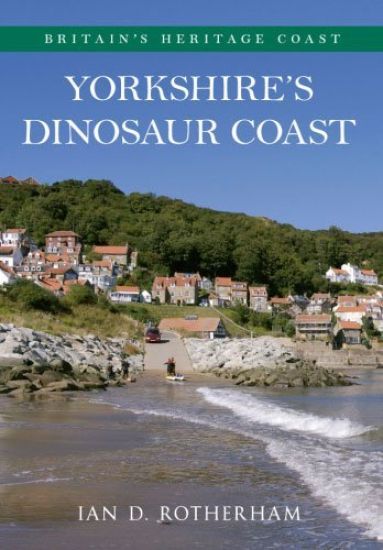
North Yorkshire boasts some of the most stunning countryside and amazing seaside anywhere in England, and its history is equally dramatic. Whitby Museum holds evidence of the great sea creatures that formerly populated this region millions of years ago. The soft shale rocks reveal and release fossils of remarkable sealife from small ammonites to giant plesiosaurs. This is truly the ‘Dinosaur Coast’. From the southern areas around Filey to the far north of our story at Saltburn-by-the-Sea, each area has its own tales to tell. Within these pages, we take a journey in words and full-colour pictures along Yorkshire’s Dinosaur Coast. Discover the twentieth-century seaside resorts of Filey and Scarborough and the secret cliffs of Robin Hood’s Bay. Visit the home of Dracula, the fishing villages of Staithes and Runswick Bay, and stand on the pier at Saltburn to watch the great ships that still service the area’s industry. Wildlife, history, heritage and landscape combine to make the northern coastline of Yorkshire a fascinating place to visit. This is Yorkshire at its best.
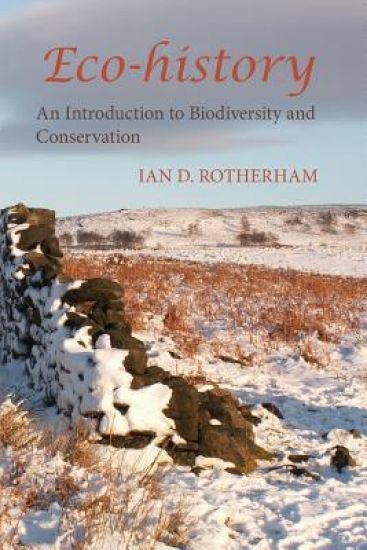
AN ACCESSIBLE INTRODUCTION TO BIODIVERSITY, CONSERVATION AND THE ECO-CULTURAL NATURE OF LANDSCAPES Key issues are addressed in short, focused chapters, supported by a detailed thousand-year timeline based on the British Isles. Rotherham is convinced that to conserve wildlife or ecology, and to heal the wounds of human impacts, we must understand our own history and how, over countless centuries, we have forged today's ecologies from our impacts on, and utilisation of, nature. He argues that the interlinked concepts of biodiversity, nature conservation and of sustainability are too often mixed with notions of 'wilderness' and 'nature' and 'naturalness'. Much of the biodiversity that we hope to conserve is the result of long-term interactions between people and nature. It is a 'cultural ecology', the product of the environment, history and tradition. Recognising that the landscapes around us are 'eco-cultural' not 'natural' is, Rotherham suggests, the key to understanding contemporary biodiversity and major challenges for ideas of future conservation and sustainability. The book introduces the background to humanity's interactions with Nature and the forces at work in shaping today's world. It is essential reading for anyone wishing to understand the nature of the global environmental crisis and how we got here. In particular, it will be a stimulating guide to students and teachers or lecturers from sixth form and college to university. It will also appeal to the ordinary wildlife enthusiast wishing understand the past, and to gain insight into what might be in store for the future.
The End of Tradition
Ian D Rotherham; Christine Handley (Eds); Mauro Agnoletti
Wildtrack Publishing Limited
2014
pokkari
The threats from global cultural change and abandonment of traditional landscape management increased in the last half of the twentieth century and ten years into the twenty-first century show no signs of slowing down. Their impacts on global biodiversity and on people disconnected from their traditional landscapes pose real and serious economic and social problems which need to be addressed now. The End of Tradition conference held in Sheffield, UK, was organised by Ian D. Rotherham and colleagues. It addressed the fundamental issues of whether we can conserve the biodiversity of wonderful and iconic landscapes and reconnect people to their natural environment. And, if we can, how can we do so and make them relevant for the twenty-first century. The book is in two parts: Part 1. A History of Commons and Commons Management and Part 2. Commons: Current Management and Problems.
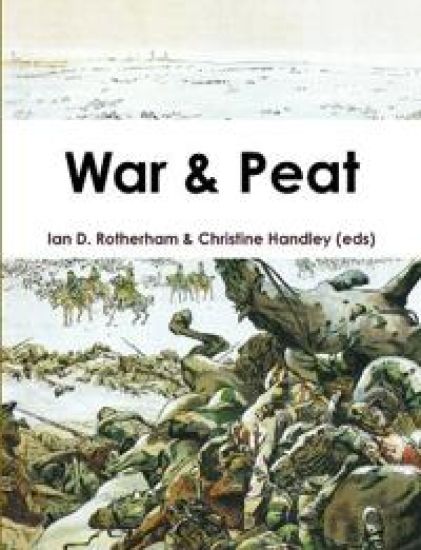
War & Peat - The remarkable impacts of conflicts on peatlands and of peatlands on conflicts - a military heritage of moors, heaths, bogs and fens. As we approach the centenary of the Great War (WW1), matters of landscape, terrain, resources and strategies become increasingly topical and relevant. The relationships of people and landscapes, of economies and conflicts, and ecology and history, are complex and multi-faceted. For peatlands, including bogs, fens, moors, and heaths, the interactions of people and nature in relation to history and conflicts, are both significant and surprising. The themes of this book were addressed at a major international conference in 2013, and the expanded papers are presented here as chapters. The conference and book are mostly focused on temperate environments, but the interactions of peatlands and conflicts are more global and wetlands have been hugely influential in tropical conflicts to
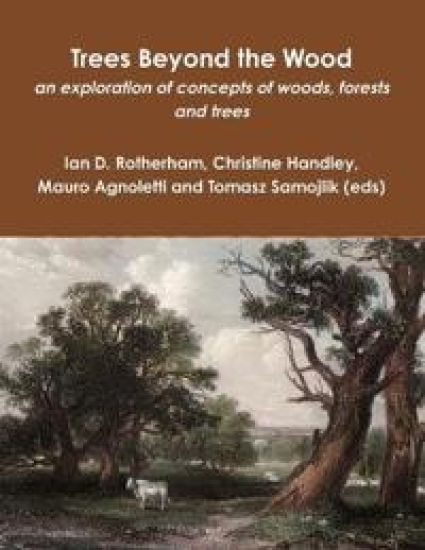
Trees Beyond the Wood (colour)
Ian D Rotherham; Christine Handley; Mauro Agnoletti
wildtrack publishing
2013
pokkari
Trees Beyond the Wood was written for a conference organised to celebrate twenty years of work since the first major conference on the theme of ancient trees and woodlands held in Sheffield, UK. It was held almost ten years after the landmark 2003 Working and Walking in the Footsteps of Ghosts event which started to raise issues and challenge assumptions about what is 'ancient' or 'natural' and what is meant by the terms 'wood' or 'woodland'. Since then on-going work in a range of disciplines across ecology, biology, landscape history, archaeology, forestry and nature conservation has continued the process of research and evaluation across the subject area. The collection of papers by contributors from across Europe reflects this broad range of interests and disciplines.
Shadow and Ghost Woodlands Survey Guide
Ian D Rotherham; Christine Handley
wildtrack publishing
2013
pokkari
This short survey guide is an introduction to investigating landscapes, looking for shadow and ghost woodlands. These are often 'lost woods', which do not appear on maps as woodlands, or even have names can be indicators of former land-use over hundreds of years. The guide results from many years investigating wooded landscapes and has developed specifically from a project begun in 2009 by Professor Ian Rotherham and colleagues. In 2012, the project received funding from the Peak District National Park's Sustainable Development Fund to involve volunteers in investigating the local landscape in the eastern Peak District. A version of the survey guide was produced for local volunteers. This publication brings the work together and illustrates wider issues and applications using some of the information from the project to date. There is still much more to do and other areas to investigate. The authors hope that this publication will act as both a guide and catalyst for further work.
The loss of the great fenlands of eastern England is the greatest single removal of ecology in our history. So thorough was the process that most visitors to the regions, or even people living there, have little idea of what has gone. For many, the Fenlands are the vast expansive flatlands of intensive farming, the ‘breadbaskets’ of Britain. Lost are the vast flocks of wetland birds that filled the evening skies in winter, the frozen wetlands and the fen skaters of the winter, and the abundant black terns or breeding wading birds of the summer months. However, pause a while off main roads and consider place names and road names: Fenny Lane, The Withies, Commonside, Reed Holme, Fen Common, Turbary Lane, Wildmore, Adventurers’ Fen, Wicken Fen, and more; they tell a story of a landscape now gone but once hugely important. The Fens bred revolution and civil war and paid the penalty. They nurtured religious non-conformism with global impact. After 1066, the Saxons withheld the Normans’ onslaught, and in the 1970s, unting’s Beavers took action against twentieth-century invaders. The fenscapes, neither water nor land but something in-between, breed independence and, if necessary, dissention. This story is of politically and economically driven ecological catastrophe and loss. So much has gone, but we do not even know fully what was there before. With global environmental change, and especially climate change, fenlands once again have major roles in our sustainable futures.
Wild by Design & Ploughing On...
Ian D Rotherham; Christine Handley (Eds )
wildtrack publishing
2012
pokkari
The Wild by Design seminar was aimed at all those involved in the conservation of sites and landscapes. It was intended to address critical issues of landscape management and landscape change including how agricultural, urban and post-industrial landscapes change and evolve. It considered the impacts of agricultural diversification and extensification, as well as proposals for the release of upland areas from pastoral grazing management. The Ploughing on Regardless seminar took place in October 2003. It considered the impacts of cultivation on our natural and historic environments, how they have and are being assessed and how damage can be mitigated. It raised issues of the ways in which Environmental Impact Assessment (EIA) can protect uncultivated land from improvement. Speakers and participants at both events included landscape professionals, archaeologists, ecologists, earth scientists, planners, conservationists and workers in education.
(1) Dynamic Landscape Restoration
Ian D Rotherham; Christine Handley (Eds )
wildtrack publishing
2012
pokkari
The collected papers from the Dynamic Landscape Restoration seminar is aimed at all those involved in the conservation and restoration of sites and landscapes, be they degraded post-industrial environments, damaged historic parklands, urban greenspace or agricultural areas. Speakers and participants at the event included landscape professionals, archaeologists, ecologists, earth scientists, planners, conservationists and those in education.
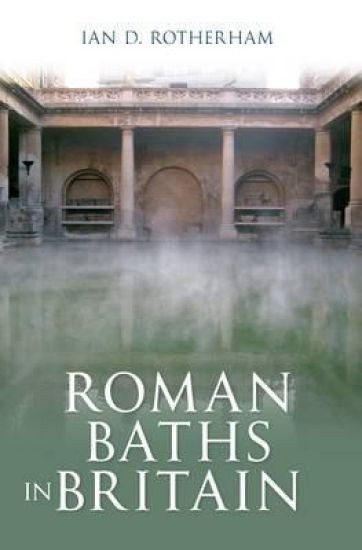
Bathing was central to Roman society. It was the pinnacle of sophisticated leisure and of cleanliness. After the collapse of the Roman Empire, even the most highranking people in European society were distinctly grubby and smelly! It would be thousands of years before anything approaching the same level of technology and importance developed anywhere in Europe. Yet Roman baths and bathing culture influenced the spas and baths that grew out of the medieval period. Today, where significant structures remain, as in Leicester city centre, Caerleon in Wales, and especially in Bath, they are once again great visitor attractions. Bath, with its restored bathhouses, is perhaps the most famous and boasts the most intact Roman system remaining in Europe. This book explores the importance of water and cleanliness to the Romans, as well as the role of the baths in Roman life and the engineering behind them. Rotherham also explains the fate of the baths since the decline of the Roman Empire. Finally, we find out what the Roman traditions and constructions have left for us today and where we can go to find out more about the way of life and the unique and fascinating history of baths and bathing.
Animal, Man & Treescapes (b/w)
Ian D Rotherham; Christine Handley (Eds )
wildtrack publishing
2011
pokkari
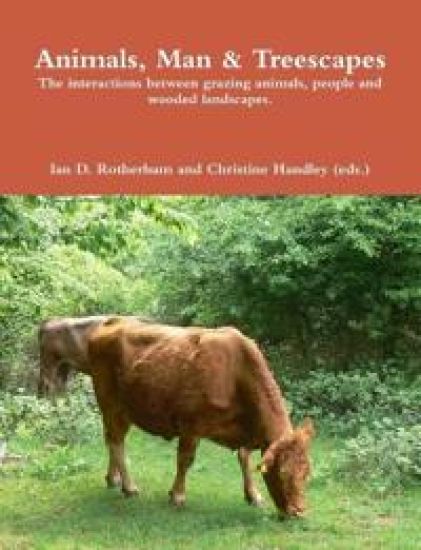
This book has been published as part of a major conference held in Sheffield UK, on the theme of 'Animals, Man and Treescapes' which looked at the interactions between grazing animals, humans and wooded landscapes. It linked community projects and educational outputs throughout the UK, across Europe and beyond. The event promoted landscape ecology conservation through local, national and international initiatives.