Kirjojen hintavertailu – 12 903 725 kirjaa ja 27 kauppaa

Kirjailija

Ian Hacking

Kirjat ja teokset yhdessä paikassa: 21 kirjaa, julkaisuja vuosilta 1975–2023, suosituimpiin kuuluu Philosophy and Animal Life. Vertaile teosten hintoja ja tarkista saatavuus suomalaisista kirjakaupoista.

21 kirjaa

Kirjojen julkaisuvuodet: 1975–2023.

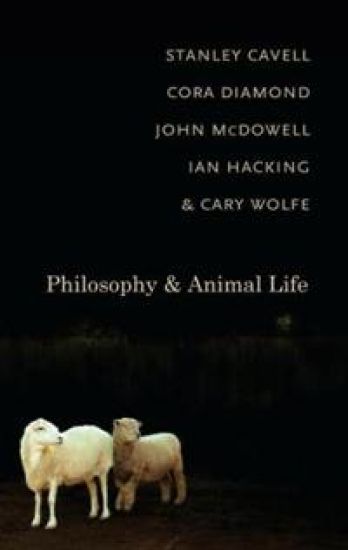
Philosophy and Animal Life

Philosophy and Animal Life

Stanley Cavell; Cora Diamond; John McDowell; Ian Hacking; Cary Wolfe

Columbia University Press
2009
pokkari
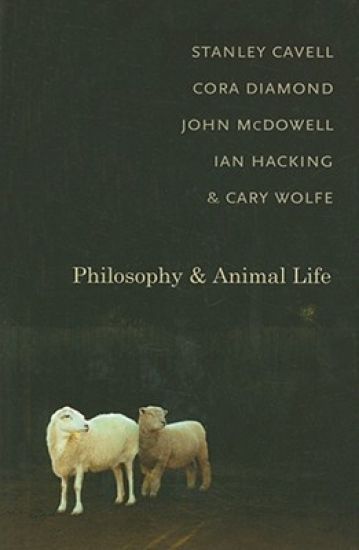
Philosophy and Animal Life offers a new way of thinking about animal rights, our obligation to animals, and the nature of philosophy itself. Cora Diamond begins with "The Difficulty of Reality and the Difficulty of Philosophy," in which she accuses analytical philosophy of evading, or deflecting, the responsibility of human beings toward nonhuman animals. Diamond then explores the animal question as it is bound up with the more general problem of philosophical skepticism. Focusing specifically on J. M. Coetzee's The Lives of Animals, she considers the failure of language to capture the vulnerability of humans and animals. Stanley Cavell responds to Diamond's argument with his own close reading of Coetzee's work, connecting the human-animal relation to further themes of morality and philosophy. John McDowell follows with a critique of both Diamond and Cavell, and Ian Hacking explains why Cora Diamond's essay is so deeply perturbing and, paradoxically for a philosopher, he favors poetry over philosophy as a way of overcoming some of her difficulties. Cary Wolfe's introduction situates these arguments within the broader context of contemporary continental philosophy and theory, particularly Jacques Derrida's work on deconstruction and the question of the animal. Philosophy and Animal Life is a crucial collection for those interested in animal rights, ethics, and the development of philosophical inquiry. It also offers a unique exploration of the role of ethics in Coetzee's fiction.
Philosophy and Animal Life

Philosophy and Animal Life

Stanley Cavell; Cora Diamond; John McDowell; Ian Hacking; Cary Wolfe

Columbia University Press
2008
sidottu
Philosophy and Animal Life offers a new way of thinking about animal rights, our obligation to animals, and the nature of philosophy itself. Cora Diamond begins with "The Difficulty of Reality and the Difficulty of Philosophy," in which she accuses analytical philosophy of evading, or deflecting, the responsibility of human beings toward nonhuman animals. Diamond then explores the animal question as it is bound up with the more general problem of philosophical skepticism. Focusing specifically on J. M. Coetzee's The Lives of Animals, she considers the failure of language to capture the vulnerability of humans and animals. Stanley Cavell responds to Diamond's argument with his own close reading of Coetzee's work, connecting the human-animal relation to further themes of morality and philosophy. John McDowell follows with a critique of both Diamond and Cavell, and Ian Hacking explains why Cora Diamond's essay is so deeply perturbing and, paradoxically for a philosopher, he favors poetry over philosophy as a way of overcoming some of her difficulties. Cary Wolfe's introduction situates these arguments within the broader context of contemporary continental philosophy and theory, particularly Jacques Derrida's work on deconstruction and the question of the animal. Philosophy and Animal Life is a crucial collection for those interested in animal rights, ethics, and the development of philosophical inquiry. It also offers a unique exploration of the role of ethics in Coetzee's fiction.
Against Method: Najafizadeh.org Series in Philosophy and History of Science in Persian (Persian Edition)
Against Method Paul Feyerabend and Ian Hacking, 2010, 4th EditionNajafizadeh.org in Philosophy and History of Science in Persian, Volume XIVLatest Titles: 1. Niels Bohr: The Philosophical Writings, Volume 1, Atomic Theory and the Description of Nature2. Max Born: Natural Philosophy of Cause and Chance
Logic of Statistical Inference

Logic of Statistical Inference

Ian Hacking

Cambridge University Press
2016
sidottu
One of Ian Hacking's earliest publications, this book showcases his early ideas on the central concepts and questions surrounding statistical reasoning. He explores the basic principles of statistical reasoning and tests them, both at a philosophical level and in terms of their practical consequences for statisticians. Presented in a fresh twenty-first-century series livery, and including a specially commissioned preface written by Jan-Willem Romeijn, illuminating its enduring importance and relevance to philosophical enquiry, Hacking's influential and original work has been revived for a new generation of readers.
Logic of Statistical Inference

Logic of Statistical Inference

Ian Hacking

Cambridge University Press
2016
pokkari
One of Ian Hacking's earliest publications, this book showcases his early ideas on the central concepts and questions surrounding statistical reasoning. He explores the basic principles of statistical reasoning and tests them, both at a philosophical level and in terms of their practical consequences for statisticians. Presented in a fresh twenty-first-century series livery, and including a specially commissioned preface written by Jan-Willem Romeijn, illuminating its enduring importance and relevance to philosophical enquiry, Hacking's influential and original work has been revived for a new generation of readers.
Why Is There Philosophy of Mathematics At All?

Why Is There Philosophy of Mathematics At All?

Ian Hacking

Cambridge University Press
2014
sidottu
This truly philosophical book takes us back to fundamentals - the sheer experience of proof, and the enigmatic relation of mathematics to nature. It asks unexpected questions, such as 'what makes mathematics mathematics?', 'where did proof come from and how did it evolve?', and 'how did the distinction between pure and applied mathematics come into being?' In a wide-ranging discussion that is both immersed in the past and unusually attuned to the competing philosophical ideas of contemporary mathematicians, it shows that proof and other forms of mathematical exploration continue to be living, evolving practices - responsive to new technologies, yet embedded in permanent (and astonishing) facts about human beings. It distinguishes several distinct types of application of mathematics, and shows how each leads to a different philosophical conundrum. Here is a remarkable body of new philosophical thinking about proofs, applications, and other mathematical activities.
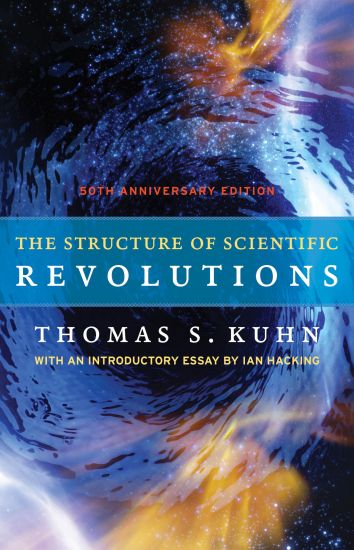
The Structure of Scientific Revolutions

The Structure of Scientific Revolutions

Thomas S. Kuhn; Ian Hacking

University of Chicago Press
2012
nidottu

Halvin toimitettuna 20,70 €

A good book may have the power to change the way we see the world, but a great book actually becomes part of our daily consciousness, pervading our thinking to the point that we take it for granted, and we forget how provocative and challenging its ideas once were-and still are. "The Structure of Scientific Revolutions" is that kind of book. When it was first published in 1962, it was a landmark event in the history and philosophy of science. And fifty years later, it still has many lessons to teach. With "The Structure of Scientific Revolutions", Kuhn challenged long-standing linear notions of scientific progress, arguing that transformative ideas don't arise from the day-to-day, gradual process of experimentation and data accumulation, but that revolutions in science, those breakthrough moments that disrupt accepted thinking and offer unanticipated ideas, occur outside of "normal science," as he called it. Though Kuhn was writing when physics ruled the sciences, his ideas on how scientific revolutions bring order to the anomalies that amass over time in research experiments are still instructive in our biotech age. This new edition of Kuhn's essential work in the history of science includes an insightful introductory essay by Ian Hacking that clarifies terms popularized by Kuhn, including paradigm and incommensurability, and applies Kuhn's ideas to the science of today. Usefully keyed to the separate sections of the book, Hacking's essay provides important background information as well as a contemporary context. Newly designed, with an expanded index, this edition will be eagerly welcomed by the next generation of readers seeking to understand the history of our perspectives on science.
The Structure of Scientific Revolutions – 50th Anniversary Edition

The Structure of Scientific Revolutions – 50th Anniversary Edition

Thomas S. Kuhn; Ian Hacking

University of Chicago Press
2012
sidottu

Halvin toimitettuna 54,70 €

A good book may have the power to change the way we see the world, but a great book actually becomes part of our daily consciousness, pervading our thinking to the point that we take it for granted, and we forget how provocative and challenging its ideas once were - and still are. "The Structure of Scientific Revolutions" is that kind of book. When it was first published in 1962, it was a landmark event in the history and philosophy of science. And fifty years later, it still has many lessons to teach. With "The Structure of Scientific Revolutions", Kuhn challenged long-standing linear notions of scientific progress, arguing that transformative ideas don't arise from the day-to-day, gradual process of experimentation and data accumulation, but that revolutions in science, those breakthrough moments that disrupt accepted thinking and offer unanticipated ideas, occur outside of "normal science," as he called it. Though Kuhn was writing when physics ruled the sciences, his ideas on how scientific revolutions bring order to the anomalies that amass over time in research experiments are still instructive in our biotech age. This new edition of Kuhn's essential work in the history of science includes an insightful introductory essay by Ian Hacking that clarifies terms popularized by Kuhn, including paradigm and incommensurability, and applies Kuhn's ideas to the science of today. Usefully keyed to the separate sections of the book, Hacking's essay provides important background information as well as a contemporary context. Newly designed, with an expanded index, this edition will be eagerly welcomed by the next generation of readers seeking to understand the history of our perspectives on science.
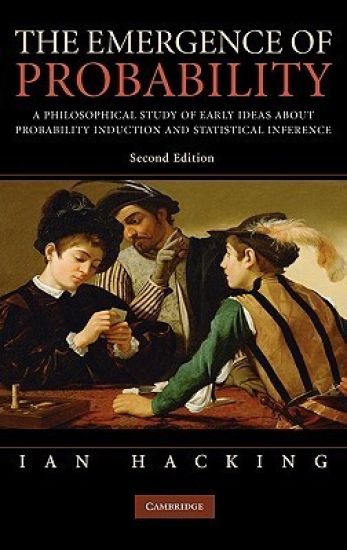
The Emergence of Probability

The Emergence of Probability

Ian Hacking

Cambridge University Press
2006
sidottu
Historical records show that there was no real concept of probability in Europe before the mid-seventeenth century, although the use of dice and other randomizing objects was commonplace. Ian Hacking presents a philosophical critique of early ideas about probability, induction, and statistical inference and the growth of this new family of ideas in the fifteenth, sixteenth, and seventeenth centuries. Hacking invokes a wide intellectual framework involving the growth of science, economics, and the theology of the period. He argues that the transformations that made it possible for probability concepts to emerge have constrained all subsequent development of probability theory and determine the space within which philosophical debate on the subject is still conducted. First published in 1975, this edition includes an introduction that contextualizes his book in light of developing philosophical trends. Ian Hacking is the winner of the Holberg International Memorial Prize 2009.
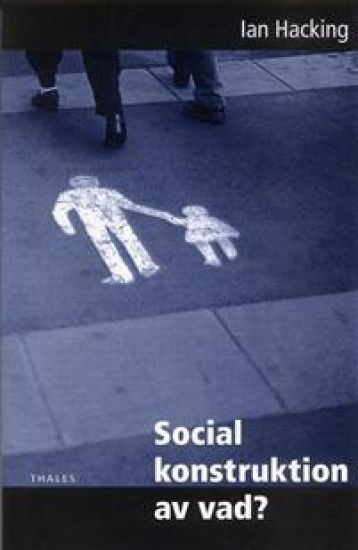
Social konstruktion av vad?

Social konstruktion av vad?

Ian Hacking

Bokförlaget Thales
2005
nidottu
Social konstruktion eller oberoende verklighet? Frågan har dominerat den metodologiska debatten, framförallt inom samhällsvetenskaperna, under de senaste decennierna. Men vad är social konstruktion och exakt vad är det som tänks vara socialt konstruerat? Ian Hacking benar upp de teroretiska problemen utifrån intressanta och konkreta exempel, och ger samtidigt en historisk bakgrund till debatten om sociala konstruktioner. Skarpsinnigt och engagerande diskuterar han frågor om hur verklighet och klassifikation samspelar, till exempel i synen på övergrepp mot barn, på manligt och kvinnligt, och på olika former av galenskap. Ian Hacking föddes 1936 i Vancouver, British Columbia, Kanada. Han är professor i filosofi vid Torontos universitet, knuten till Institute for the History and Philosophy of Science and Technology, och även professor vid Collège de France. Ian Hacking är författare till en rad uppmärksammade böcker, av vilka flera kommit att bli klassiker inom sina områden. Ian Hacking är den mest intellektuellt nyfikne och uppslagsrike av nu verksamma vetenskapsfilosofer. Hackings bok utgör ett beundransvärt exempel på både hänsynslösa avslöjanden och ett tankedigert och självständigt filosoferande en ovanlig kombination av sunt förnuft och teknisk briljans. RICHARD RORTY, The Atlantic Monthly
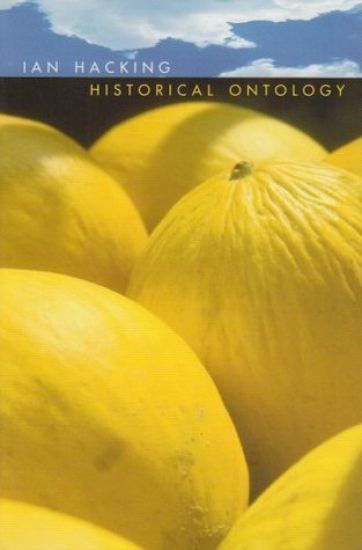
Historical Ontology

Historical Ontology

Ian Hacking

Harvard University Press
2004
nidottu

Halvin toimitettuna 37,20 €

With the unusual clarity, distinctive and engaging style, and penetrating insight that have drawn such a wide range of readers to his work, Ian Hacking here offers his reflections on the philosophical uses of history. The focus of this volume, which collects both recent and now-classic essays, is the historical emergence of concepts and objects, through new uses of words and sentences in specific settings, and new patterns or styles of reasoning within those sentences. In its lucid and thoroughgoing look at the historical dimension of concepts, the book is at once a systematic formulation of Hacking’s approach and its relation to other types of intellectual history, and a valuable contribution to philosophical understanding. Hacking opens the volume with an extended meditation on the philosophical significance of history. The importance of Michel Foucault—for the development of this theme, and for Hacking’s own work in intellectual history—emerges in the following chapters, which place Hacking’s classic essays on Foucault within the wider context of general reflections on historical methodology. Against this background, Hacking then develops ideas about how language, styles of reasoning, and “psychological” phenomena figure in the articulation of concepts—and in the very prospect of doing philosophy as historical ontology.
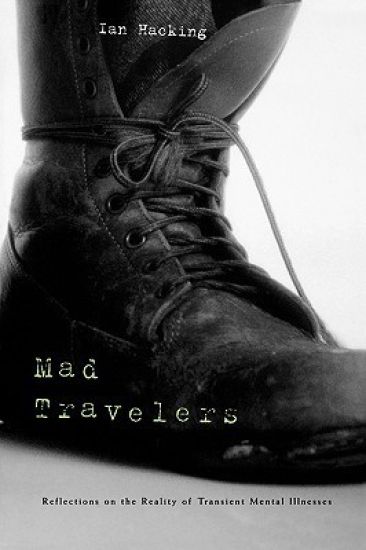
Mad Travelers: Reflections on the Reality of Transient Mental Illnesses

Mad Travelers: Reflections on the Reality of Transient Mental Illnesses

Ian Hacking

HARVARD UNIVERSITY PRESS
2002
nidottu

Halvin toimitettuna 36,60 €

Ian Hacking tells the fascinating tale of Albert Dadas, a native of France's Bordeaux region and the first diagnosed mad traveler. Dadas suffered from a strange compulsion that led him to travel obsessively, often without identification, not knowing who he was or why he traveled. Using the records of Philippe Tissi , Dadas's physician, Hacking attempts to make sense of this strange epidemic. In telling this tale, Hacking raises probing questions about the nature of mental disorders, the cultural repercussions of their diagnosis, and the relevance of this century-old case study for today's overanalyzed society.
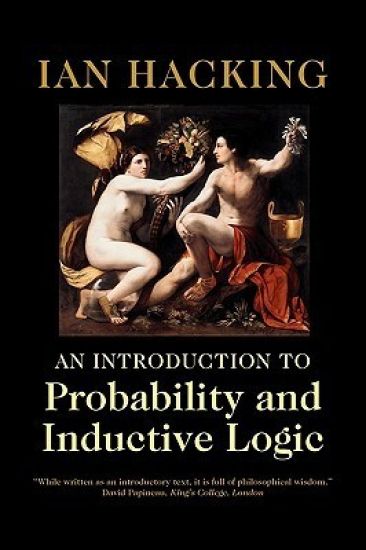
An Introduction to Probability and Inductive Logic

An Introduction to Probability and Inductive Logic

Ian Hacking

Cambridge University Press
2001
sidottu
This is an introductory 2001 textbook on probability and induction written by one of the world's foremost philosophers of science. The book has been designed to offer maximal accessibility to the widest range of students (not only those majoring in philosophy) and assumes no formal training in elementary symbolic logic. It offers a comprehensive course covering all basic definitions of induction and probability, and considers such topics as decision theory, Bayesianism, frequency ideas, and the philosophical problem of induction. The key features of this book are a lively and vigorous prose style; lucid and systematic organization and presentation of ideas; many practical applications; a rich supply of exercises drawing on examples from such fields as psychology, ecology, economics, bioethics, engineering, and political science; numerous brief historical accounts of how fundamental ideas of probability and induction developed; and a full bibliography of further reading.
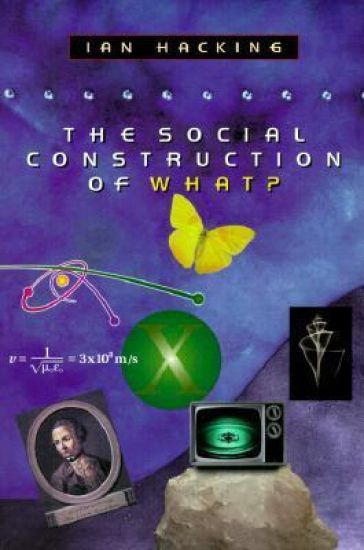
The Social Construction of What?

The Social Construction of What?

Ian Hacking

Harvard University Press
2000
nidottu

Halvin toimitettuna 37,50 €

Lost in the raging debate over the validity of social construction is the question of what, precisely, is being constructed. Facts, gender, quarks, reality? Is it a person? An object? An idea? A theory? Each entails a different notion of social construction, Ian Hacking reminds us. His book explores an array of examples to reveal the deep issues underlying contentious accounts of reality. Especially troublesome in this dispute is the status of the natural sciences, and this is where Hacking finds some of his most telling cases, from the conflict between biological and social approaches to mental illness to vying accounts of current research in sedimentary geology. He looks at the issue of child abuse—very much a reality, though the idea of child abuse is a social product. He also cautiously examines the ways in which advanced research on new weapons influences not the content but the form of science. In conclusion, Hacking comments on the “culture wars” in anthropology, in particular a spat between leading ethnographers over Hawaii and Captain Cook. Written with generosity and gentle wit by one of our most distinguished philosophers of science, this wise book brings a much needed measure of clarity to current arguments about the nature of knowledge.
Mad Travelers

Mad Travelers

Ian Hacking

University of Virginia Press
1998
sidottu
An occasional employee of a local gas company, Albert Dadas suffered from a strange compulsion that led him to travel obsessively, often without identification, not knowing who he was or why he travelled. He became notorious for his extraordinary expeditions to such far-reaching spots as Algeria, Moscow and Constantinople. Medical reports of Dadas set off at the time a small epidemic of compulsive mad voyagers, the epicentre of which was Bordeaux, but which soon spread throughout France to Italy, Germany and Russia. Today we are similarly besieged by mental illnesses of the moment, such as chronic fatigue syndrome and attention deficit hyperactivity disorder. The debate rages about which of these conditions are affectations or cultural artefacts and which are ""real"". In ""Mad Travellers"", Ian Hacking uses the Dadas case to weigh the legitimacy of cultural influences versus physical symptoms in the diagnosis of psychiatric disorders. He argues that psychological symptoms find stable homes at a given place and time, in ""ecological niches"" where transient illnesses flourish. Using the records of Dadas's physician, Philippe Tissie, Hacking attempts to make sense of this strange epidemic. While telling his fascinating tale, he raises probing questions about the nature of mental disorders, the cultural repercussions of their diagnosis and the relevance of this century-old case study for today's overanalyzed society.
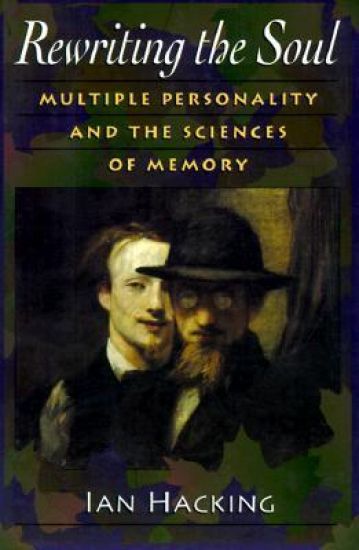
Rewriting the Soul

Rewriting the Soul

Ian Hacking

Princeton University Press
1998
pokkari

Halvin toimitettuna 62,60 €

Twenty-five years ago one could list by name the tiny number of multiple personalities recorded in the history of Western medicine, but today hundreds of people receive treatment for dissociative disorders in every sizable town in North America. Clinicians, backed by a grassroots movement of patients and therapists, find child sexual abuse to be the primary cause of the illness, while critics accuse the "MPD" community of fostering false memories of childhood trauma. Here the distinguished philosopher Ian Hacking uses the MPD epidemic and its links with the contemporary concept of child abuse to scrutinize today's moral and political climate, especially our power struggles about memory and our efforts to cope with psychological injuries. What is it like to suffer from multiple personality? Most diagnosed patients are women: why does gender matter? How does defining an illness affect the behavior of those who suffer from it? And, more generally, how do systems of knowledge about kinds of people interact with the people who are known about? Answering these and similar questions, Hacking explores the development of the modern multiple personality movement. He then turns to a fascinating series of historical vignettes about an earlier wave of multiples, people who were diagnosed as new ways of thinking about memory emerged, particularly in France, toward the end of the nineteenth century. Fervently occupied with the study of hypnotism, hysteria, sleepwalking, and fugue, scientists of this period aimed to take the soul away from the religious sphere. What better way to do this than to make memory a surrogate for the soul and then subject it to empirical investigation? Made possible by these nineteenth-century developments, the current outbreak of dissociative disorders is embedded in new political settings. Rewriting the Soul concludes with a powerful analysis linking historical and contemporary material in a fresh contribution to the archaeology of knowledge. As Foucault once identified a politics that centers on the body and another that classifies and organizes the human population, Hacking has now provided a masterful description of the politics of memory : the scientizing of the soul and the wounds it can receive.
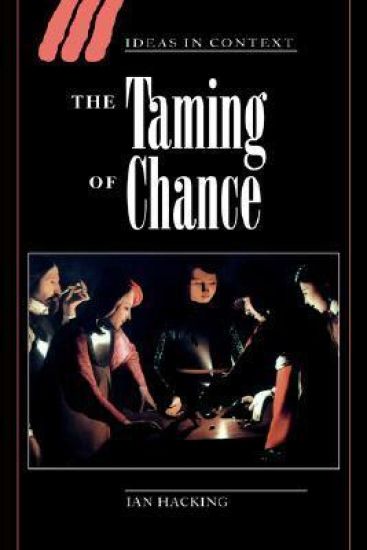
The Taming of Chance

The Taming of Chance

Ian Hacking

Cambridge University Press
1990
sidottu
In this important new study Ian Hacking continues the enquiry into the origins and development of certain characteristic modes of contemporary thought undertaken in such previous works as the best-selling The Emergence of Probability. Professor Hacking shows how by the late nineteenth century it became possible to think of statistical patterns as explanatory in themselves, and to regard the world as not necessarily deterministic in character. In the same period the idea of human nature was displaced by a model of normal people with laws of dispersion. These two parallel transformations fed into each other, so that chance made the world seem less capricious: it was legitimated because it brought order out of chaos. Professor Hacking argues that these developments have led to a new style of scientific reasoning gaining its hold upon us. The greater the level of indeterminism in our conception of the world and of people, the more we expect control and intervention in our lives, and the less we expect freedom. Combining detailed scientific historical research with characteristic philosophic breadth and verve, The Taming of Chance brings out the relations between philosophy, the physical sciences, mathematics and the development of social institutions, and provides a unique and authoritative analysis of the ‘probabilisation’ of the western world.
Logic of Statistical Inference

Logic of Statistical Inference

Ian Hacking

Cambridge University Press
1976
pokkari
This book is a philosophical study of the basic principles of statistical reasoning. Professor Hacking has sought to discover the simple principles which underlie modern work in mathematical statistics and to test them, both at a philosophical level and in terms of their practical consequences fort statisticians. The ideas of modern logic are used to analyse these principles, and results are presented without the use of unfamiliar symbolism. It begins with a philosophical analysis of a few central concepts and then, using an elementary system of logic, develops most of the standard statistical theory. the analysis provides answers to many disputed questions about how to test statistical hypotheses and about how to estimate quantities in the light of statistical data. One product of the analysis is a sound and consistent rationale for R. A. Fisher's controversial concept of 'fiducial probability'.