Kirjojen hintavertailu – 12 859 819 kirjaa ja 27 kauppaa

Kirjailija

Ian Jack

Kirjat ja teokset yhdessä paikassa: 39 kirjaa, julkaisuja vuosilta 1984–2015, suosituimpiin kuuluu The Country Formerly Known as Great Britain. Vertaile teosten hintoja ja tarkista saatavuus suomalaisista kirjakaupoista.

39 kirjaa

Kirjojen julkaisuvuodet: 1984–2015.

Granta 78

Granta 78

Ian Jack

Granta Books
2002
nidottu
A fiction special, introducing two new authors. Gary Shteyngart is not yet 30. His story, "Several Anecdotes About My Wife", is a funny and scurrilous account of a young Russian immigrant's disastrous marriage to a native New Yorker. Jon McGregor works as washer-up in a Nottingham restaurant. His story "Jonas" is a lyrical and disturbing account of a mysterious death in the Anglian fens. This edition also includes new short stories by Rachel Cusk, Edmund White and Jonathan Ley. Other features include: Arthur Miller remembers his life at the Chelsea Hotel, with Brendan Behan and Dylan Thomas; Rory Stewart among the dervishes in Pakistan; Aleksander Hemon's return to Sarajevo; and a photographic essay by Deirdra O'Callaghan on the lost souls of Camden Town.

Granta 76

Granta 76

Ian Jack

Granta Books
2002
nidottu
Granta Magazine publishes the best of fiction, memoir, reportage and photography, only using work that has never been published before. Contributions include: Nik Cohn on "Bounce in New Orleans"; "Dr Feelgood" by Hugo Williams; Ian Jack on Kathleen Ferrier; and "Frank Sinatra" by Richard Williams.
Granta 75

Granta 75

Ian Jack

Granta Books
2001
nidottu
'I was approached by a courteous young man who handed me a visiting card engraved with his name, Joseph, and his profession: Senior Officers' Pimp.' Norman Lewis embarks on his career as a British spy in Arabia 'Why yes, what a pleasure to meet you.' He shook my hand. 'Refresh my memory. Do I owe you something?' Michael Mewshaw at last runs into his hero: Anthony Burgess 'Conversation was daunting. He seemed to have made up his brilliant mind about every possible topic, and condensed his conclusions into unanswerable aphorisms.' Richard Murphy meets W. H. Auden - and also Theodore Roethke and J. R. Ackerley PLUS New fiction from Anne Enright, Jackie Kay, Adam Mars-Jones, John McGahern and Paul Therous; in the operating theatre, Paul Broks explores the uncertain life of the brain; and the hidden world of seaports in photographs by Alex Majoli and words by James Hamilton-Paterson.
Granta 74

Granta 74

Ian Jack

Granta Books
2001
nidottu
Granta magazine publishes the best of fiction, memoir, reportage and photography, Every issue of Granta is in print and many issues - such as 'Travel', 'Dirty Realism', 'The Family', 'India' and 'Unbelievable' - are classics. Granta only publishes work that has never been published anywhere before. So anyone reading us would have discovered (among others) Bill Bryson, Hanif Kureishi, Louis de Bernieres, Arundhati Roy and Zadie Smith - long before anyone else. Every issue of Granta is special. That's why it's published four times a year - to keep it that way.
Granta 73

Granta 73

Ian Jack

Granta Books
2001
nidottu
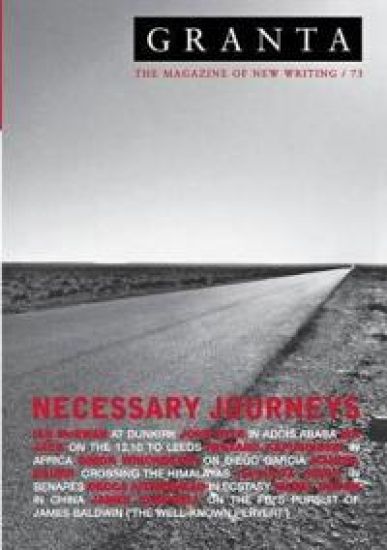
Some travel is vital to the traveller. Sometimes you need to get home or get away. Sometimes this is far from easy. Compelling stories about journeys which needed to be made. You might call it necessary travel writing.
Granta 72

Granta 72

Ian Jack

Granta Books
2000
nidottu
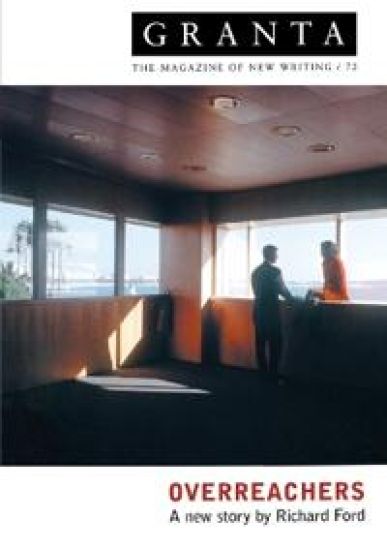
New fiction from Matt Condon. Panos Karnezis, and Olga Tokarczuk with a story on the hiden lives of hotel rooms, the first translation of Poland's most acclaimed young novelists.
Granta 69

Granta 69

Ian Jack

Granta Books
2000
nidottu
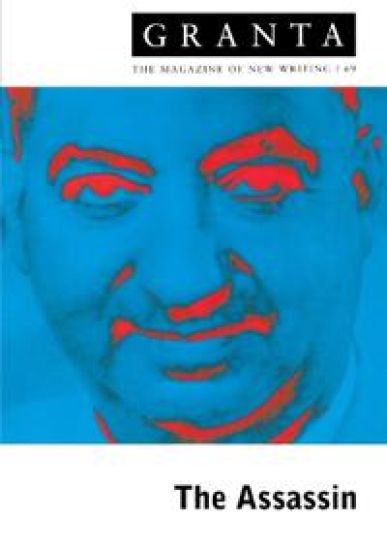
In 1966, the South African premier, Hendrik Verwoerd was stabbed to death in the South African parliament. Who was the killer and what was his motives? A political enemy of the system? A madman?
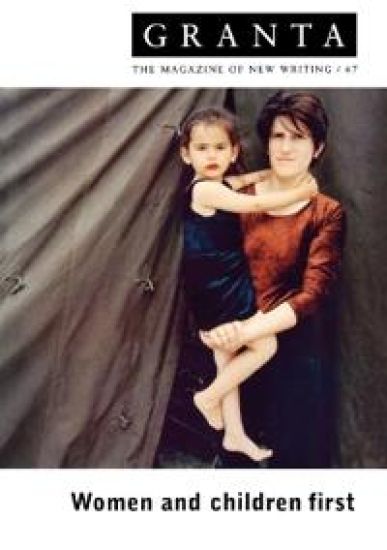
Granta 67

Granta 67

Ian Jack

Granta Books
1999
nidottu
This issue reflects a variety of the extreme individual experience provided by the 20th century. James Hamilton-Paterson recounts his rape by five men in the Libyan desert; Joy Williams decides that her dog should die; Marlon Brando reveals the stupidities of celebrity to Studs Terkel; Andrew Brown describes the death of God in the Church of England; Francis Spufford stands among the ice at Captain Scott's grave to pay his respects to a vanished idea of heroism; and Ian Jack, travelling through the Titanic phenomenon, finds the last resting place of Leonardo DiCaprio. Also included is writing from J. M. Coetzee, Edward Said and Edmund White.
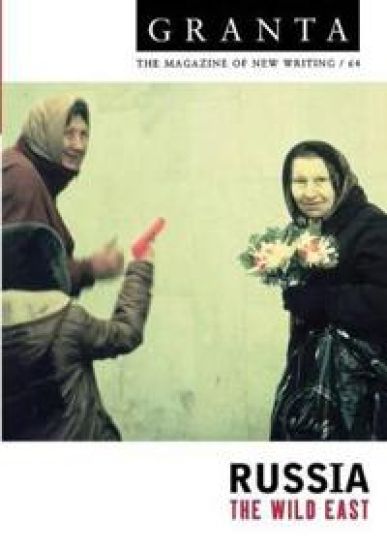
Granta 64

Granta 64

Ian Jack

Granta Books
1998
nidottu
This issue on Russia explores how an old country is finding new ways to think and write. As well as fiction by Russian writers, there is a report on a visit to the once unvisitable Siberia, interviews with the survivors of Stalin's gulag, and a discussion of the place of vodka in Russian culture.
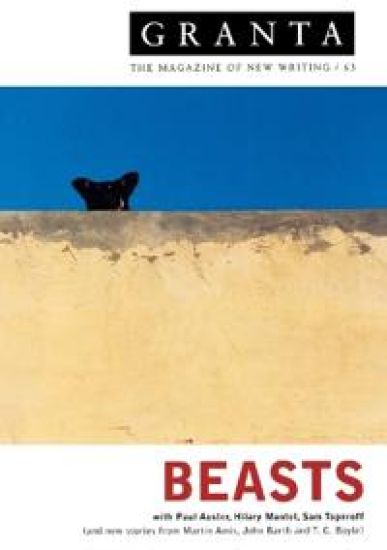
Granta 63

Granta 63

Ian Jack

Granta Books
1998
nidottu
THE SCENE OF THE CRIME: Genocide is a word that has haunted this century, but its definition is contentious and our memory of it selective. A photographic essay by Simon Norfolk introduced by Michael Ignatieff. BEASTS: what they make of us, and how they shape us. Including Paul Auster living a dog's life; Hilary Mantel on a mongrel breed; Sam Toperoff as a tarantula ('Why would we poison anything we weren't going to eat?') NEW FICTION: from John Barth, T. C. Boyle, Jackie Kay, and Martin Amis ('Love without words. A caveman could do it. And it sounded like something that Picasso or Beckett might have pulled off. But Sir Rodney Peel?') MY FROZEN FATHER: a memory of South Africa by Deborah Levy PUNISHMENT: witnessed in the USA and in Pakistan by Joyce Carol Oates and Anwar Iqbal ('Although I had been writing against public flogging ever since it began, I wanted to watch it.')
Granta 62

Granta 62

Ian Jack

Granta Books
1998
nidottu
In this edition of the Granta magazine, Richard Lloyd Parry reports on the savage civil war taking place in Indonesia and Nicholas Shakespeare writes on Martha Gelhorn and why she hated her husband, Ernest Hemingway.
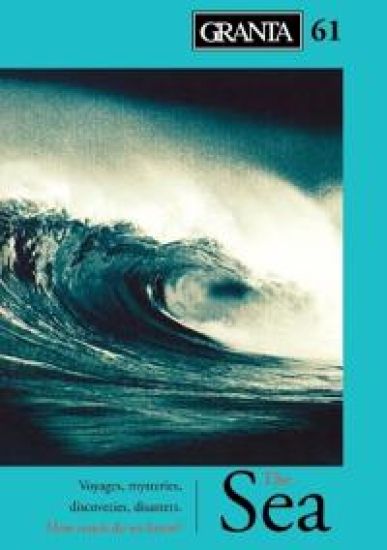
Granta 61

Granta 61

Ian Jack

Granta Books
1998
nidottu
We came from the sea, and we would be nothing without it. Without the sea, no clouds, no rain, no rivers, no life. Seven-tenths of the world's surface is sea. We play at its edges, we put down nets and feed from it, we send cargo across its ruffling surface. And yet it remains the wildest, strangest and least-known part of the planet: a puzzle. Science knows more about the surface of the moon than it does about the ocean floor (somewhere between ten million and a hundred million unclassified species live there; science has still to find out). We do not quite know how the sea works. Is it rising? Warming? How much pollution can it take? How many of its island states will disappear? The sea is the natural arena for adventure, mystery and catastrophe (the Odyssey, Moby-Dick, the Titanic, El Niño). But air has replaced water as the transporting element of the twentieth century, and the sea has been retreating in the imaginations of the West. For too long we have turned out backs to it.
Granta

Granta

Ian Jack

Granta Books
1997
nidottu
Over the past two decades India has produced a dazzling variety of new writing in English. 'India Calling' showcases some of this talent, Amit Chaudhuri and Arundhati Roy, alongside contributions from long celebrated writers such as R. K. Narayan, V. S. Naipaul, Nirad Chaudhuri and Ved Mehta.
The Poet and his Audience

The Poet and his Audience

Ian Jack

Cambridge University Press
1984
pokkari
How far, and in what respects, is a poet's work influenced by the kind of audience for which he writes? The question is crucial to our understanding of how great poems came to be written, yet it has rarely been addressed in a systematic study. In this fascinating and illuminating book Ian Jack has chosen six major poets - Dryden, Pope, Byron, Shelley, Tennyson, and Yeats - and has traced the career of each to discover the nature and the extent of their readers' influence on their poetry. He shows that poets living in different periods and different cultural milieux addressed themselves to very differently constituted audiences (though all tended to have a close circle of highly sensitive friends on whom they could first test their work in private), and indicates how their need to adapt to the prevailing conditions shaped the nature of their poetry.