Kirjailija
Ian Johnston
Kirjat ja teokset yhdessä paikassa: 17 kirjaa, julkaisuja vuosilta 1996–2024, suosituimpiin kuuluu Ships for all Nations. Vertaile teosten hintoja ja tarkista saatavuus suomalaisista kirjakaupoista.
Nimi esiintyy myös muodoissa: Ian Johnston)
17 kirjaa
Kirjojen julkaisuvuodet: 1996–2024.
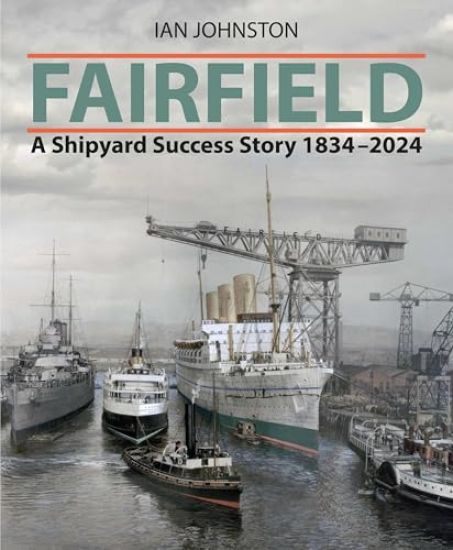
One of the great names in British industrial history, the Fairfield Shipbuilding & Engineering Co Ltd, Govan, Glasgow, was always associated with innovation – particularly the development of the compound steam engine which brought great fuel efficiency to deep sea transportation and led to the ubiquitous triple expansion steam engine. Through the design and construction of record-breaking Atlantic liners and their machinery for the Guion and Cunard companies, by the late nineteenth century Fairfield had become the most important shipyard and marine engine works in the world. Admiralty contracts for all classes of warship followed, notably during the world wars and as a lifeline during the depression of the 1920s and early 1930s. However, the Fairfield yard was probably best known for building magnificently appointed intermediate liners, among them a series of Empress liners for Canadian Pacific. From the late 1950s onwards as shipbuilding in Britain began a steady decline, Fairfield, one of the most modern yards in Europe with a large order book, hit the headlines this time not for the launch or completion of a ship but by declaring insolvency in 1965. The next 35 years, much of it under state ownership, were characterised by various name changes and campaigns to keep the yard open. With its traditional market for 'high class' tonnage gone and no longer designated a warship yard, new commercial markets had to be found. When this struggle for survival seemed to be all but over and the virtual elimination of the commercial shipbuilding industry in Britain now complete, BAE Systems acquired the yard in 2000 bringing with it stability and continuity. A major warship-builder once more, the former Fairfield yard has been heavily involved in the Type 45 destroyer programme, the production of major blocks for the Queen Elizabeth class aircraft carriers, the five River class Offshore Patrol Vessels and currently with the Type 26 frigate programme. With the skyline of Glasgow soon to be transformed once BAE Systems completes its next-generation ship construction hall, capable of building two Type 26 frigates side by side under cover, the future looks bright for the last of the great Clyde shipyards.
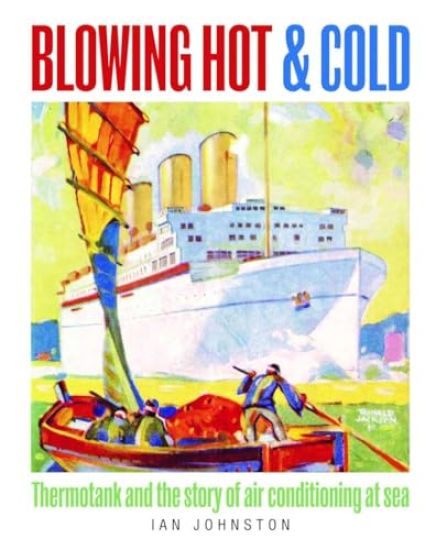
Air-conditioning is one of those universal modern conveniences whose origins are entirely unknown to the general public. Online sources credit the first commercial system to the American Willis Carrier in 1902 – but this is not true. The first workable machine was patented four years earlier by Alexander Stewart, a Scottish marine engineer, who called his invention the Thermotank. It offered a massive improvement in comfort for passengers and was rapidly adopted by the shipping industry, eventually equipping many of the greatest liners of their day like _Lusitania_ and _Mauretania_. From these beginnings Alexander and his brothers William and Frederick Stewart built an immensely successful engineering firm with subsidiaries in America, Africa, Australia and Europe. Based on Clydeside, its fortunes were always closely linked to the shipbuilding industry, but with the slump at the end of the First World War the company was forced to look to other markets. At this point Alexander came up with a second world-beating invention, which he called the Punkah Louvre – the swivelling nozzle most familiar today as the source of ventilation in airliners. This made it easier to apply the Thermotank system to other forms of transport and even buildings, greatly expanding its sales potential. Still largely a family concern, the business remained innovative and competitive until the 1960s, when the decline in British shipbuilding and the beginnings of globalisation led to amalgamation, restructuring and eventually the demise of the Thermotank name. In the process, most of the company records were dispersed or lost so this book is a particularly valuable testimony to a great British – specifically, Scottish – success story. Although almost unknown today, Thermotank was a business that changed the world.
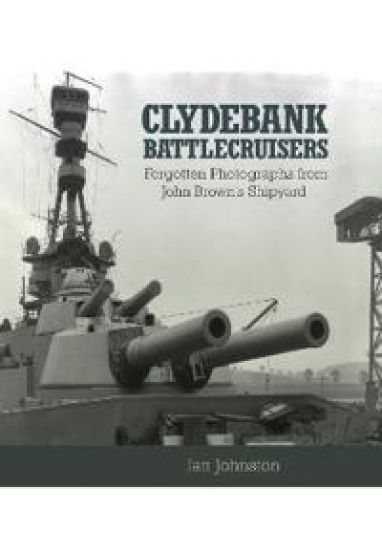
Between 1906 and 1920 the Clydebank shipyard of John Brown & Sons built five battlecruisers, each one bigger than the last, culminating in the mighty Hood, the largest warship of her day. If Tiger is regarded as a modification of the Lion class design, this represents every step in the evolution of these charismatic, and controversial, ships. Like most shipyards of the time, Clydebank employed professional photographers to record the whole process of construction, using large-plate cameras that produced pictures of stunning clarity and detail; but unlike most shipyard photography, Clydebank's collection has survived, although very few of the images have ever been published. For this book some two hundred of the most telling of these were carefully selected, and scanned to the highest standards, depicting in unprecedented detail every aspect of the building and fitting out of Inflexible, Australia, Tiger, Repulse and Hood. Probably more has been written about battlecruisers than any other warship type, and as modelmaking subjects they have a devoted following, so any new book has to make a real contribution. This pictorial collection, with its lengthy and informative captions, and an authoritative introduction by Ian Johnston, offers ship modellers and enthusiasts a wealth of visual information simply unobtainable elsewhere. 'Clydebank Battlecruisers' has to be on of the outstanding publications of the year, and anyone with an interest in the major ships of the grand Fleet or shipbuilding on the Clyde will want to own it.' Warship 2012
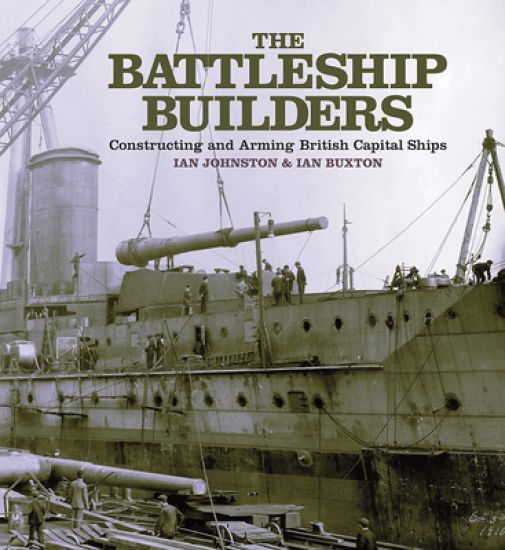
The launch in 1906 of HMS _Dreadnought_, the worlds first all-big-gun battleship, rendered all existing battle fleets obsolete, but at the same time it wiped out the Royal Navy's numerical advantage, so expensively maintained for decades. Already locked in an arms race with Germany, Britain urgently needed to build an entirely new battle fleet of these larger, more complex and more costly vessels. In this she succeeded spectacularly: in little over a decade fifty such ships were completed, almost exactly double what Germany achieved. It was only made possible by the country's vast industrial nexus of shipbuilders, engine manufacturers, armament firms and specialist armour producers, whose contribution to the creation of the Grand Fleet is too often ignored. This heroic achievement, and how it was done, is the central theme of this book. It charts the rise of the large industrial conglomerates that were key to this success, looks at their reaction to fast-moving technical changes, and analyses the politics of funding this vast national effort, both before and during the Great War. It also attempts to assess the true cost and value of the Grand Fleet in terms of the resources consumed. And finally, it describes the effects of the post-war recession, industrial contraction, and the very different conditions that influenced the last generation of British battleships built before and during the Second World War.
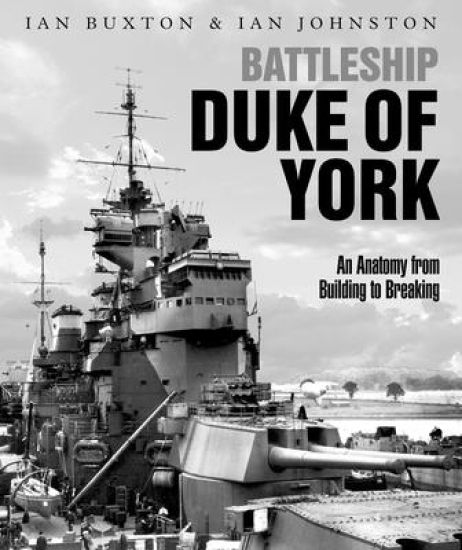
Unlike the United States, which has preserved a number of battleships as museums or memorials, not a single British dreadnought survives in the country that invented them. This book is an ambitious attempt to achieve the next best thing - a level of documentation in plans, photographs and words that portrays every aspect of the ship, albeit in two dimensions. Although the ship was chosen primarily because of the wealth of source material, _Duke of York_ enjoyed a distinguished wartime career that included sinking the German battleship _Scharnhorst_ in 1943 and serving as the flagship of the British Pacific Fleet in 1945, so is a fitting subject for such in-depth treatment. The core of the book is the reproduction in full colour of a complete set of as-fitted plans of the ship, including many details and close-ups. These are complemented by an unusually thorough set drawn after the ship's major refit in March 1945, showing all the modifications undertaken to prepare the ship for service alongside the US Navy in the Pacific. Photographic coverage begins with the stunning views taken by the builder's professional cameraman during every stage of construction, and concludes with an illustrated chronology of the breaking up. This last is included not just for completeness but because photos of the ship at various stages of demolition demonstrate many aspects of the interior structure, compartments and their fittings that are otherwise invisible. While the emphasis may be primarily visual, the accompanying narrative and captions display the expertise and in-depth knowledge of the authors, making the text as enlightening as the illustration. The result is a uniquely comprehensive portrait of a great ship in all its complexity, and a book that no warship enthusiast will want to miss.
The Excellence in Literature Handbook for Writers is a unique one-stop reference for how to write essays, as well as a guide for punctuation, style, and usage.
The Metamorphosis
Ian Johnston; Franz Kafka
Createspace Independent Publishing Platform
2016
nidottu
The Metamorphosis (German: Die Verwandlung, also sometimes translated as The Transformation) is a novella by Franz Kafka, first published in 1915. It has been called one of the seminal works of fiction of the 20th century and is studied in colleges and universities across the Western world. The story begins with a traveling salesman, Gregor Samsa, waking to find himself transformed (metamorphosed) into a large, monstrous insect-like creature. The cause of Gregor's transformation is never revealed, and Kafka himself never gave an explanation. The rest of Kafka's novella deals with Gregor's attempts to adjust to his new condition as he deals with being burdensome to his parents and sister, who are repelled by the horrible, verminous creature Gregor has become. This edition translated and placed into the public domain by Ian Johnston. Each RADLEY CLASSIC is a meticulously restored, luxurious and faithful reproduction of a classic book; produced with elegant text layout, clarity of presentation, and stylistic features that make reading a true pleasure. Special attention is given to legible fonts and adequate letter sizing, correct line length for readability, generous margins and triple lead (lavish line separation); plus we do not allow any mistakes/changes/ additions to creep into the original author's words. Visit RADLEY BOOKS at www.radleybooks.com to see more classic book titles in this series.
The Metamorphosis
Ian Johnston); Franz Kafka
Createspace Independent Publishing Platform
2016
nidottu
The Clydebank shipyard built some of the most famous vessels in maritime history. Its heritage boasts of great transatlantic liners like Lusitania, Queen Mary, and QE2, as well as iconic warships like the battlecruiser Hood, and Britain's last battleship, HMS Vanguard. Beginning as J & G Thomson in 1847, the business acquired its more famous persona when Sheffield-based steelmaker John Brown & Co took over in 1899. As a result, the yard became known for turning out first-class products, both naval and mercantile.
How does one help undergraduate students learn quickly how to produce effectively organized, persuasive, well-reasoned essays? This book offers a straightforward, systematic introduction to some of the key elements of the construction of arguments in essay form. The emphasis here is on practical advice that will prove immediately useful to students-recommended procedures are emphasized, and detailed examples of academic and student writing are provided throughout. The book introduces the basics of argumentation before moving on to the structure and organization of essays. Planning and outlining the essay, writing strong thesis statements, organizing coherent paragraphs, and writing effective introductions and conclusions are among the subjects discussed. A separate section concisely explores issues specific to essays about literary works.
An album of stunning shipyard photos, most previously unpublished. Showcasing the work of a major shipbuilder during the Great War. A companion to the highly successful Clydebank Battlecruisers.
Most books concerned with physics and music take an approach that puts physical theory before application. Consequently, these works tend to dampen aesthetic fascination with preludes burdened by an overabundance of algebraic formulae. In Measured Tones: The Interplay of Physics and Music Third Edition, Ian Johnston a professor of astrophysics and a connoisseur of music, offers an informal historical approach that shows the evolution of both theory and application at the intersection of physics and music. Exceptionally accessible, insightful, and now updated to consider modern technology and recent advances, the new edition of this critically acclaimed and bestselling classic — Features a greater examination of psycho-acoustics and its role in the design of MP3s Includes expanded information on the gamelan and other Asian percussion instruments Introduces detailed discussions of binary notation, digitization, and electronic manipulation of music We believe that order exists, and we look for it. In that respect the aims of science and of music are identical—the desire to find harmony. And surely, without that very human desire, science would be a cold and sterile undertaking. With myriad illustrations and historical anecdotes, this volume will delight those student required to approach this topic from either a physics and music concentration, as well as anyone who is fascinated with concepts of harmony expressed in nature, as well as in the instruments and composition of human expression’s purest form. A complementary website provides sound files, further reading, and instructional support.
The Pseudotumor Cerebri Syndrome
Ian Johnston; Brian Owler; John Pickard
Cambridge University Press
2007
sidottu
The condition known most widely as pseudotumor cerebri syndrome is of diagnostic interest and clinical importance not just to neurosurgeons, but also to neurologists, ophthalmologists and headache specialists. Variously called idiopathic intracranial hypertension, benign intracranial hypertension, and other names over the century or so since it was first recognised, the authors argue for the grouping of all these conditions under the name of pseudotumor cerebri syndrome on the basis of a common underlying mechanism - an impairment of CSF absorption due to abnormalities at the CSF/venous interface. The book reviews the development of ideas around some of the more contentious issues and deals in depth with aetiology, investigative findings and strategies, treatment and outcome, and in the concluding chapter, considers the possibility of establishing an experimental model to facilitate analysis of the unresolved issues, and pointing the way to a more complete understanding of this controversial condition.
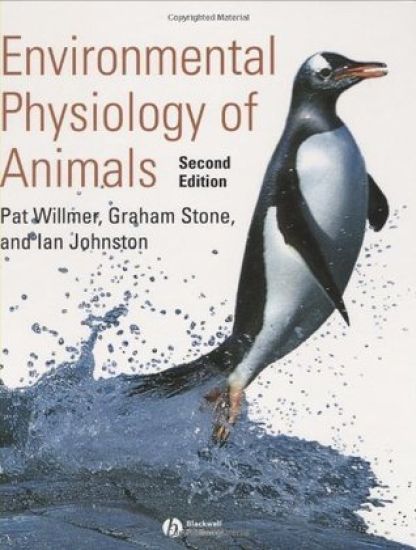
Environmental Physiology of Animals
Pat Willmer; Graham Stone; Ian Johnston
Wiley-Blackwell (an imprint of John Wiley Sons Ltd)
2004
sidottu
The new and updated edition of this accessible text provides a comprehensive overview of the comparative physiology of animals within an environmental context. Includes two brand new chapters on Nerves and Muscles and the Endocrine System. Discusses both comparative systems physiology and environmental physiology. Analyses and integrates problems and adaptations for each kind of environment: marine, seashore and estuary, freshwater, terrestrial and parasitic. Examines mechanisms and responses beyond physiology. Applies an evolutionary perspective to the analysis of environmental adaptation. Provides modern molecular biology insights into the mechanistic basis of adaptation, and takes the level of analysis beyond the cell to the membrane, enzyme and gene. Incorporates more varied material from a wide range of animal types, with less of a focus purely on terrestrial reptiles, birds and mammals and rather more about the spectacularly successful strategies of invertebrates. A companion site for this book with artwork for downloading is available at: www.blackwellpublishing.com/willmer/
A widely acclaimed biography of one of rock's most compelling, uncompromising and influential singer-songwriters, Ian Johnston's BAD SEED offers a superb overview of Nick Cave's career to date. Through Cave's fronting of the incendiary bands The Birthday Party and The Bad Seeds, producing music of unfettered expression and explosive intensity, to his creative collaborations outside of the rock industry in film and literature, BAD SEED illustrates a life lived in barely controlled chaos: and unravels the motivation and unique appeal of a reluctant icon whose songs, according to the Rolling Stones, possess "the authority of the most primal kind of myth."