Kirjojen hintavertailu – 12 859 827 kirjaa ja 27 kauppaa

Kirjailija

Ian Mabbett

Kirjat ja teokset yhdessä paikassa: 6 kirjaa, julkaisuja vuosilta 1995–2016, suosituimpiin kuuluu The Sociology of Early Buddhism. Vertaile teosten hintoja ja tarkista saatavuus suomalaisista kirjakaupoista.

6 kirjaa

Kirjojen julkaisuvuodet: 1995–2016.

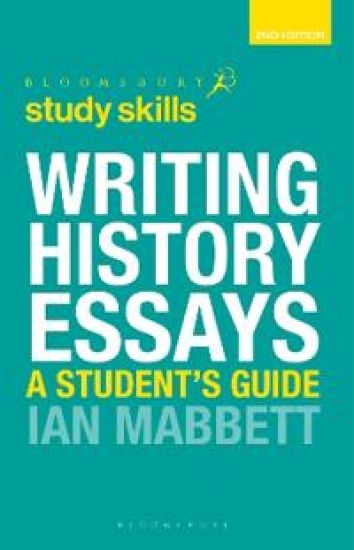
Writing History Essays

Writing History Essays

Ian Mabbett

Red Globe Press
2016
nidottu
To write history successfully, it is essential to understand the nuts and bolts of technique as well as the underlying principles which govern the whole process. Writing History Essays takes you step by step through the process of writing an assignment, breaking it down into a series of manageable tasks, including: - Selecting sources- Reading critically- Taking notes- Planning and drafting your essay- Referencing correctly and avoiding plagiarism. This book also takes you beyond the essay, with practical advice on writing book reviews, reports and dissertations, as well as guidance on sitting examinations. This new edition includes reflective questions at the end of each chapter and discussion of visual and web-based sources, making it an indispensable guide for history students.
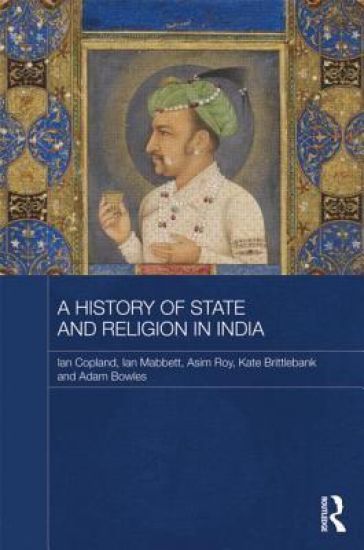
A History of State and Religion in India

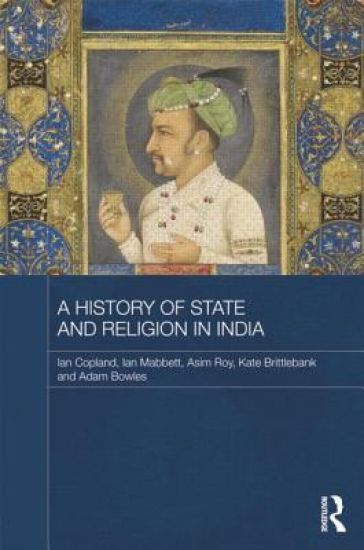
A History of State and Religion in India

Ian Copland; Ian Mabbett; Asim Roy; Kate Brittlebank; Adam Bowles

Routledge
2014
nidottu
Offering the first long-duration analysis of the relationship between the state and religion in South Asia, this book looks at the nature and origins of Indian secularism. It interrogates the proposition that communalism in India is wholly a product of colonial policy and modernisation, questions whether the Indian state has generally been a benign, or disruptive, influence on public religious life, and evaluates the claim that the region has spawned a culture of practical toleration. The book is structured around six key arenas of interaction between state and religion: cow worship and sacrifice, control of temples and shrines, religious festivals and processions, proselytising and conversion, communal riots, and religious teaching/doctrine and family law. It offers a challenging argument about the role of the state in religious life in a historical continuum, and identifies points of similarity and contrast between periods and regimes. The book makes a significant contribution to the literature on South Asian History and Religion.
A History of State and Religion in India

A History of State and Religion in India

Ian Copland; Ian Mabbett; Asim Roy; Kate Brittlebank; Adam Bowles

Routledge
2012
sidottu
Offering the first long-duration analysis of the relationship between the state and religion in South Asia, this book looks at the nature and origins of Indian secularism. It interrogates the proposition that communalism in India is wholly a product of colonial policy and modernisation, questions whether the Indian state has generally been a benign, or disruptive, influence on public religious life, and evaluates the claim that the region has spawned a culture of practical toleration. The book is structured around six key arenas of interaction between state and religion: cow worship and sacrifice, control of temples and shrines, religious festivals and processions, proselytising and conversion, communal riots, and religious teaching/doctrine and family law. It offers a challenging argument about the role of the state in religious life in a historical continuum, and identifies points of similarity and contrast between periods and regimes. The book makes a significant contribution to the literature on South Asian History and Religion.
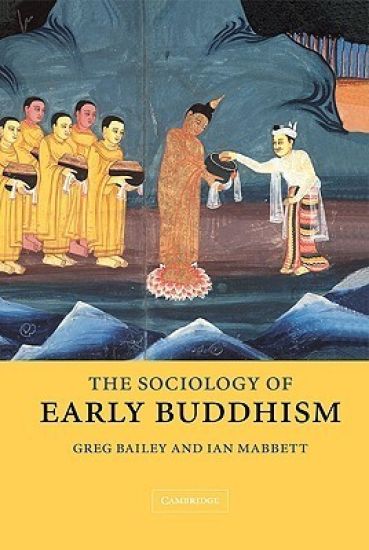
The Sociology of Early Buddhism

The Sociology of Early Buddhism

Bailey Greg; Ian Mabbett

Cambridge University Press
2006
pokkari
Early Buddhism flourished because it was able to take up the challenge represented by buoyant economic conditions and the need for cultural uniformity in the newly emergent states in north-eastern India from the fifth century BCE onwards. This book begins with the apparent inconsistency of Buddhism, a renunciant movement, surviving within a strong urban environment, and draws out the implications of this. In spite of the Buddhist ascetic imperative, the Buddha and other celebrated monks moved easily through various levels of society and fitted into the urban landscape they inhabited. The Sociology of Early Buddhism tells how and why the early monks were able to exploit the social and political conditions of mid-first millennium north-eastern India in such a way as to ensure the growth of Buddhism into a major world religion. Its readership lies both within Buddhist studies and more widely among historians, sociologists and anthropologists of religion.
The Sociology of Early Buddhism

The Sociology of Early Buddhism

Greg Bailey; Ian Mabbett

Cambridge University Press
2003
sidottu
Early Buddhism flourished because it was able to take up the challenge represented by buoyant economic conditions and the need for cultural uniformity in the newly emergent states in north-eastern India from the fifth century BCE onwards. This book begins with the apparent inconsistency of Buddhism, a renunciant movement, surviving within a strong urban environment, and draws out the implications of this. In spite of the Buddhist ascetic imperative, the Buddha and other celebrated monks moved easily through various levels of society and fitted into the urban landscape they inhabited. The Sociology of Early Buddhism tells how and why the early monks were able to exploit the social and political conditions of mid-first millennium north-eastern India in such a way as to ensure the growth of Buddhism into a major world religion. Its readership lies both within Buddhist studies and more widely among historians, sociologists and anthropologists of religion.
The Khmers

The Khmers

Ian Mabbett; David P. Chandler

Blackwell Publishers
1995
sidottu
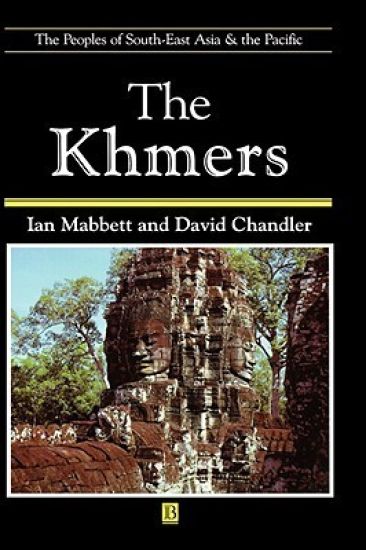
This is a history of the Khmers, the people who for thousands of years inhabited the wooded interior of Cambodia. One hundred and fifty years ago the representatives of imperial France were astonished to find half-buried within the jungle the still magnificent ruins of vast temples. Justly described as one of the wonders of the world, these were the remnants of the once great Angkor empire. Since then archaeologists and historians have attempted to piece together its history. This book presents the result of these endeavours in the first account of the history of Khmer civilization to be published for many years.