

Kirjojen hintavertailu – 12 903 725 kirjaa ja 27 kauppaa

Kirjailija

Ian Miller

Kirjat ja teokset yhdessä paikassa: 42 kirjaa, julkaisuja vuosilta 2002–2025, suosituimpiin kuuluu The Art of Ian Miller. Vertaile teosten hintoja ja tarkista saatavuus suomalaisista kirjakaupoista.

42 kirjaa

Kirjojen julkaisuvuodet: 2002–2025.

Piccadilly Place: Uncovering Manchester's Industrial Origins

Piccadilly Place: Uncovering Manchester's Industrial Origins

Ian Miller; Wild Chris; Richard Gregory

Oxford Archaeology North
2010
Nidottu
Piccadilly Place (centred on NGR SJ 8461 9590) lies immediately to the north-west of Piccadilly Railway Station, close to the heart of the modern city. In many ways, it is typical of other areas found within the centre of Manchester. Prior to the Industrial Revolution it lay on the outskirts of the town, only to be subsumed during rapid urban expansion in the late eighteenth and early nineteenth centuries. However, in other ways the history of Piccadilly Place is unique, particularly as the site was to play a significant part in the emergence of the industrial city. This booklet charts that development, and also summarises the history of the city and the textile industry, which was to have a fundamental infl uence on the development of both Piccadilly Place, and other parts of Manchester.
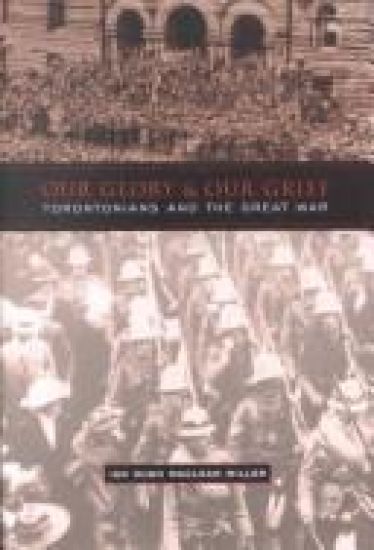
Our Glory and Our Grief

Our Glory and Our Grief

Ian Miller

University of Toronto Press
2002
sidottu
The citizens of Toronto were thousands of miles behind the front-lines, shielded by the expanse of the Atlantic Ocean. They were never shelled, they were not gassed, and they were never forced to rise from a trench and trust that fate would keep them safe as they walked across No Man's Land. Nevertheless, Torontonians experienced something called 'War.' Our Glory and Our Grief offers a fresh look at the First World War's effect on Canada's second largest city. What happened in Toronto? What did citizens know about the front? How were the enormous sacrifices of the war rationalized? Why did Torontonians continue to support it? Ian Miller challenges the conventional notion that Toronto's citizens were shielded from the grisly details and immense sacrifices of the war by censorship and propaganda. Miller's extensive research of newspaper and archival records results in a study of the war years from a number of historiographical perspectives - social, cultural, military, and labour - thus forming a narrative with far-reaching implications for the way the war years in Canada are understood. For example, Miller's discussion of women reveals that their lives were greatly altered by the war effort. They moved out of the private sphere of house and home and into the public domain of munitions factories and recruiting parades. They campaigned to raise funds for the war and supported the enlistment of their husbands and sons - in fact encouraged, cajoled, and finally demanded that men be conscripted for overseas service. By 1918, what it meant to be a 'modern' woman had been transformed. Contemporaries, argues Miller, knew far more about the nature of the Great War than has ever been acknowledged. The book's aim then, is not to explain the reactions of a public that was denied the opportunity to learn the reality of war. Rather, it is to try to understand why a population that was well informed about what awaited its young men in the trenches of Europe continued to mobilize its resources to achieve victory.