

Kirjailija
Ian Morris
Kirjat ja teokset yhdessä paikassa: 33 kirjaa, julkaisuja vuosilta 1899–2025, suosituimpiin kuuluu Por Que Manda Occidente... Por Ahora?. Vertaile teosten hintoja ja tarkista saatavuus suomalaisista kirjakaupoista.
33 kirjaa
Kirjojen julkaisuvuodet: 1899–2025.
In the last thirty years, there have been fierce debates over how civilizations develop and why the West became so powerful. The Measure of Civilization presents a brand-new way of investigating these questions and provides new tools for assessing the long-term growth of societies. Using a groundbreaking numerical index of social development that compares societies in different times and places, award-winning author Ian Morris sets forth a sweeping examination of Eastern and Western development across 15,000 years since the end of the last ice age. He offers surprising conclusions about when and why the West came to dominate the world and fresh perspectives for thinking about the twenty-first century. Adapting the United Nations' approach for measuring human development, Morris's index breaks social development into four traits--energy capture per capita, organization, information technology, and war-making capacity--and he uses archaeological, historical, and current government data to quantify patterns. Morris reveals that for 90 percent of the time since the last ice age, the world's most advanced region has been at the western end of Eurasia, but contrary to what many historians once believed, there were roughly 1,200 years--from about 550 to 1750 CE--when an East Asian region was more advanced. Only in the late eighteenth century CE, when northwest Europeans tapped into the energy trapped in fossil fuels, did the West leap ahead. Resolving some of the biggest debates in global history, The Measure of Civilization puts forth innovative tools for determining past, present, and future economic and social trends.
Homer's Iliad is one of the foundational texts of Western Civilization. The timelessness of its story, of men battling fate amidst the horrors of war, still stirs the imaginations of readers year after year. What is offered here is the first translation by someone who is both an eminent scholar and published poet. Based on his thorough familiarity with Homeric language, Powell's free verse translation preserves the clarity and simplicity of the original, while recreating the original feel and sound of the oral-formulaic style. By avoiding the stylistic formality of earlier translations, and the colloquial and sometimes exaggerated effects of recent attempts, he deftly captures and conveys the most essential truths of this vital text. Helpfully included in this edition are a detailed introduction, illustrations, maps, and notes. Modern and pleasing to the ear while accurately reflecting the meaning of the Greek, Powell steers a middle path between the most well-known translations and adds something unique to the canon.
In the last thirty years, there have been fierce debates over how civilizations develop and why the West became so powerful. The Measure of Civilization presents a brand-new way of investigating these questions and provides new tools for assessing the long-term growth of societies. Using a groundbreaking numerical index of social development that compares societies in different times and places, award-winning author Ian Morris sets forth a sweeping examination of Eastern and Western development across 15,000 years since the end of the last ice age. He offers surprising conclusions about when and why the West came to dominate the world and fresh perspectives for thinking about the twenty-first century. Adapting the United Nations' approach for measuring human development, Morris's index breaks social development into four traits--energy capture per capita, organization, information technology, and war-making capacity--and he uses archaeological, historical, and current government data to quantify patterns. Morris reveals that for 90 percent of the time since the last ice age, the world's most advanced region has been at the western end of Eurasia, but contrary to what many historians once believed, there were roughly 1,200 years--from about 550 to 1750 CE--when an East Asian region was more advanced. Only in the late eighteenth century CE, when northwest Europeans tapped into the energy trapped in fossil fuels, did the West leap ahead. Resolving some of the biggest debates in global history, The Measure of Civilization puts forth innovative tools for determining past, present, and future economic and social trends.
Why the West Rules--For Now: The Patterns of History, and What They Reveal about the Future
Ian Morris
Picador USA
2011
nidottu
Halvin toimitettuna 28,20 €
A New York Times Notable Book of the Year"A remarkable book . . . an important book--one that challenges, stimulates and entertains. Anyone who does not believe there are lessons to be learned from history should start right here."--The EconomistSometime around 1750, English entrepreneurs unleashed the astounding energies of steam and coal, and the world was forever changed. The emergence of factories, railroads, and gunboats propelled the West's rise to power in the nineteenth century, and the development of computers and nuclear weapons in the twentieth century secured its global supremacy. Now, at the beginning of the twenty-first century, many worry that the emerging economic power of China and India spells the end of the West as a superpower. In order to understand this possibility, we need to look back in time. Why has the West dominated the globe for the past two hundred years, and will its power last? Describing the patterns of human history, the archaeologist and historian Ian Morris offers surprising new answers to both questions. It is not, he reveals, differences of race or culture, or even the strivings of great individuals, that explain Western dominance. It is the effects of geography on the everyday efforts of ordinary people as they deal with crises of resources, disease, migration, and climate. As geography and human ingenuity continue to interact, the world will change in astonishing ways, transforming Western rule in the process. Deeply researched and brilliantly argued, Why the West Rules--for Now spans fifty thousand years of history and offers fresh insights on nearly every page. The book brings together the latest findings across disciplines--from ancient history to neuroscience--not only to explain why the West came to rule the world but also to predict what the future will bring in the next hundred years.
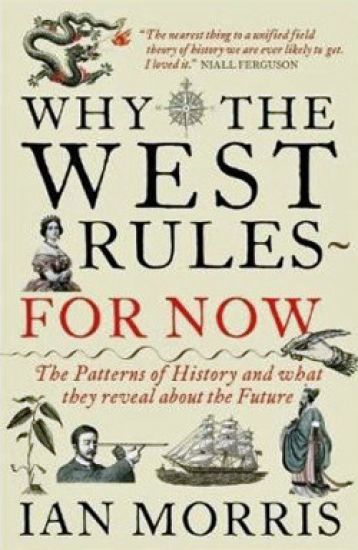
In the middle of the eighteenth century, British entrepreneurs unleashed the astounding energies of steam and coal and the world changed forever. Factories, railways and gunboats then propelled the West's rise to power, and computers and nuclear weapons in the twentieth century secured its global supremacy. Today, however, many worry that the emergence of China and India spell the end of the West as a superpower. How long will the power of the West last? In order to find out we need to know: why has the West been so dominant for the past two hundred years? With flair and authority, historian and achaeologist Ian Morris draws uniquely on 15,000 years of history to offer fresh insights on what the future will bring. Deeply researched and brilliantly argued, Why The West Rules - For Now is a gripping and truly original history of the world.
This volume is the first English-language survey of Homeric studies to appear for more than a generation, and the first such work to attempt to cover all fields comprehensively. Thirty leading scholars from Europe and America provide short, authoritative overviews of the state of knowledge and current controversies in the many specialist divisions in Homeric studies. The chapters pay equal attention to literary, mythological, linguistic, historical, and archaeological topics, ranging from such long-established problems as the "Homeric Question" to newer issues like the relevance of narratology and computer-assisted quantification. The collection, the third publication in Brill's handbook series, The Classical Tradition, will be valuable at every level of study - from the general student of literature to the Homeric specialist seeking a general understanding of the latest developments across the whole range of Homeric scholarship. Originally published in hardcover
Burial and Ancient Society: The Rise of the Greek City-State
Ian Morris
ACLS History E-Book Project
2008
nidottu
This study of the changing relationships between burial rituals and social structure in Early Iron Age Greece will be required reading for all archaeologists working with burial evidence, in whatever period. This book differs from many topical studies of state formation in that unique and particular developments are given as much weight as those factors which are common to all early states. The ancient literary evidence and the relevant historical and anthropological comparisons are extensively drawn on in an attempt to explain the transition to the city-state, a development which was to have decisive effects for the subsequent development of European society.
This book shows the reader how much archaeologists can learn from recent developments in cultural history.
Death-Ritual and Social Structure in Classical Antiquity
Ian Morris
Cambridge University Press
1992
pokkari
In this innovative book Dr Morris seeks to show the many ways in which the excavated remains of burials can and should be a major source of evidence for social historians of the ancient Graeco-Roman world. Burials have a far wider geographical and social range than the surviving literary texts, which were mainly written for a small elite. They provide us with unique insights into how Greeks and Romans constituted and interpreted their own communities. In particular, burials enable the historian to study social change. Ian Morris illustrates the great potential of the material in these respects with examples drawn from societies as diverse in time, space and political context as archaic Rhodes, classical Athens, early imperial Rome and the last days of the western Roman empire.
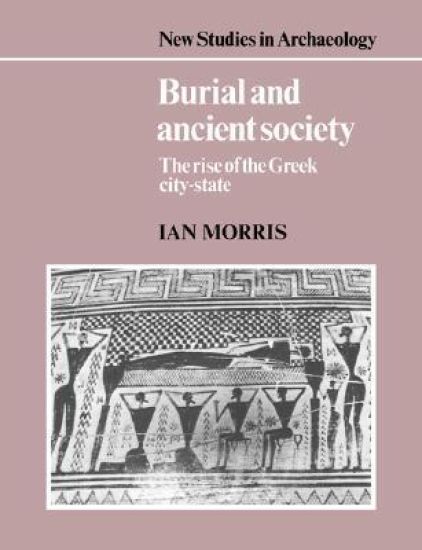
This study of the changing relationships between burial rituals and social structure in Early Iron Age Greece will be required reading for all archaeologists working with burial evidence, in whatever period. This book differs from many recent studies of state formation in that unique and particular developments are given as much weight as those factors which are common to all early states. The ancient literary evidence and more recent historical and anthropological comparisons are extensively drawn on in an attempt to explain the transition to the city-state, a development which was to have decisive effects for the subsequent development of European society.

Burial and Ancient Society: The Rise of the Greek City-State
Ian Morris
ACLS History E-Book Project
1899
sidottu
This study of the changing relationships between burial rituals and social structure in Early Iron Age Greece will be required reading for all archaeologists working with burial evidence, in whatever period. This book differs from many topical studies of state formation in that unique and particular developments are given as much weight as those factors which are common to all early states. The ancient literary evidence and the relevant historical and anthropological comparisons are extensively drawn on in an attempt to explain the transition to the city-state, a development which was to have decisive effects for the subsequent development of European society.