Kirjojen hintavertailu – 12 859 827 kirjaa ja 27 kauppaa

Kirjailija

Ian Parker

Kirjat ja teokset yhdessä paikassa: 44 kirjaa, julkaisuja vuosilta 1995–2026, suosituimpiin kuuluu Critical Marxism. Vertaile teosten hintoja ja tarkista saatavuus suomalaisista kirjakaupoista.

44 kirjaa

Kirjojen julkaisuvuodet: 1995–2026.

The Crisis in Modern Social Psychology (Psychology Revivals)
In the late 1960s a ‘crisis’ erupted in social psychology, with many social psychologists highly critical of the ‘old paradigm’, laboratory-experimental approach. Originally published in 1989 The Crisis in Modern Social Psychology was the first book to provide a clear account of the complex body of work that is critical of traditional social psychological approaches. Ian Parker insisted that the ‘crisis’ was not over, showing how attempts to improve social psychology had failed, and explaining why we need instead a political understanding of social interaction which links research with change. Modern social psychology reflects the impact of structuralist and post-structuralist conceptual crises in other academic disciplines, and Parker describes the work of Foucault and Derrida sympathetically and lucidly, making these important debates accessible to the student and discussing their influence. He assesses the responses from both mainstream social psychology and from avant-garde textual social psychology to the influx of these radical ideas, and discusses the promises and pitfalls of a post-modern view of social action.
Discourse Dynamics (Psychology Revivals)
What are discourses? Are discourses ‘real’, and what is real outside language? Originally published in 1992, Ian Parker provides one of the clearest and most systematic introductions to discourse research and the essential theoretical debates in the area. At the time it was one of the few texts to defend a realist position, discuss accounts of postmodernity and set out criteria for the identification of discourses. Discourse Dynamics is essential reading to anyone interested in project research and an understanding of the theoretical issues involved in discourse analysis. The book will also be of use to students other than those studying psychology. It addresses the concerns of all those looking at qualitative textual research in the human sciences and is still very much relevant today.
Psychology After the Unconscious
Ian Parker has been a leading light in the fields of critical and discursive psychology for over 25 years. The Psychology After Critique series brings together for the first time his most important papers. Each volume in the series has been prepared by Ian Parker and presents a newly written introduction and focused overview of a key topic area. Psychology After the Unconscious is the fifth volume in the series and addresses three central questions: Why is Freud’s concept of the unconscious important today? Does language itself play a role in the creation of the unconscious? How does Lacan radicalize Freud’s notion of the unconscious in relation to cultural research? The book provides a clear explanation of Freudian and Lacanian accounts of the unconscious. It also highlights their role in offering a new way of describing, understanding and working with the human subject in clinical settings and in cultural research. Part One shows how the unconscious is elaborated in Freud’s early case studies in Studies on Hysteria, while Part Two focuses on Lacan’s re-working of the unconscious and its relationship to language and culture in his influential public seminars. The book also provides access to key debates currently occurring in Freudian and Lacanian psychoanalysis, exploring both the clinical dimension and the consequences for psychological and cultural research. Psychology After the Unconscious is essential reading for students and researchers in psychology, psychosocial studies, sociology, social anthropology and cultural studies, and to psychoanalysts of different traditions engaged in academic research. It will also introduce key ideas and debates within critical psychology to undergraduates and postgraduate students across the social sciences.
Psychology After Discourse Analysis
Ian Parker has been a leading light in the fields of critical and discursive psychology for over 25 years. The Psychology After Critique series brings together for the first time his most important papers. Each volume in the series has been prepared by Ian Parker and presents a newly written introduction and focused overview of a key topic area. Psychology After Discourse Analysis is the third volume in the series and addresses three central questions: How did discourse analysis develop inside psychology? How does discursive psychology address concerns about the traditional ‘laboratory experiment’ paradigm in psychology? What is the future for discourse analysis? The book provides a clear account of the various forms of discourse analysis that have been used within psychology, and provides a review of their significance for a new generation of psychologists. The early chapters present a framework for understanding the origins of these various forms, as well as the differences between them. Emphasizing the gap between discursive psychology and mainstream psychology, Parker then explores relations between discourse analysis, psychoanalysis, social constructionism and the postmodern turn in the social sciences. The final chapters describe the limitations of discourse analysis and explore its flaws as a framework and as a practice, questioning its future within academia and in political and social contexts beyond psychology. Psychology After Discourse Analysis is essential reading for students and researchers in psychology, sociology, social anthropology and cultural studies, and for discourse analysts of different traditions. It will also introduce key ideas and debates within critical psychology to undergraduates and postgraduate students across the social sciences.
Psychology After Lacan

Psychology After Lacan

Ian Parker

Routledge
2014
nidottu
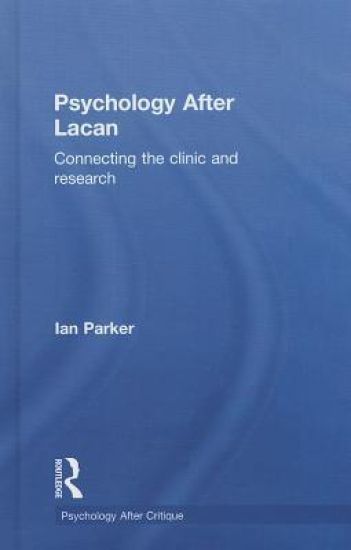
Ian Parker has been a leading light in the fields of critical and discursive psychology for over 25 years. The Psychology After Critique series brings together for the first time his most important papers. Each volume in the series has been prepared by Ian Parker and presents a newly written introduction and focused overview of a key topic area. Psychology After Lacan is the sixth volume in the series and addresses three central questions: Why is Lacanian psychoanalysis re-emerging in mainstream contemporary psychology? What is original in this account of the human subject? What implications does Lacanian psychoanalysis have for psychology? This book introduces Lacan’s influential ideas about clinical psychoanalysis and contemporary global culture to a new generation of psychologists. The chapters cover a number of key themes including conceptions of the human subject within psychology, the uses of psychoanalysis in qualitative research, different conceptions of ethics within psychology, and the impact of cyberspace on human subjectivity. The book also explores key debates currently occurring in Lacanian psychoanalysis, with discussion of culture, discourse, identification, sexuality and the challenge to mainstream notions of normality and abnormality. Psychology After Lacan is essential reading for students and researchers in psychology, psycho-social studies, sociology, social anthropology and cultural studies, and to psychoanalysts of different traditions engaged in academic research. It will also introduce key ideas and debates within critical psychology to undergraduates and postgraduate students across the social sciences.
Psychology After Lacan

Psychology After Lacan

Ian Parker

Routledge
2014
sidottu
Ian Parker has been a leading light in the fields of critical and discursive psychology for over 25 years. The Psychology After Critique series brings together for the first time his most important papers. Each volume in the series has been prepared by Ian Parker and presents a newly written introduction and focused overview of a key topic area. Psychology After Lacan is the sixth volume in the series and addresses three central questions: Why is Lacanian psychoanalysis re-emerging in mainstream contemporary psychology? What is original in this account of the human subject? What implications does Lacanian psychoanalysis have for psychology? This book introduces Lacan’s influential ideas about clinical psychoanalysis and contemporary global culture to a new generation of psychologists. The chapters cover a number of key themes including conceptions of the human subject within psychology, the uses of psychoanalysis in qualitative research, different conceptions of ethics within psychology, and the impact of cyberspace on human subjectivity. The book also explores key debates currently occurring in Lacanian psychoanalysis, with discussion of culture, discourse, identification, sexuality and the challenge to mainstream notions of normality and abnormality. Psychology After Lacan is essential reading for students and researchers in psychology, psycho-social studies, sociology, social anthropology and cultural studies, and to psychoanalysts of different traditions engaged in academic research. It will also introduce key ideas and debates within critical psychology to undergraduates and postgraduate students across the social sciences.
Psychology After the Crisis

Psychology After the Crisis

Ian Parker

Routledge
2014
sidottu
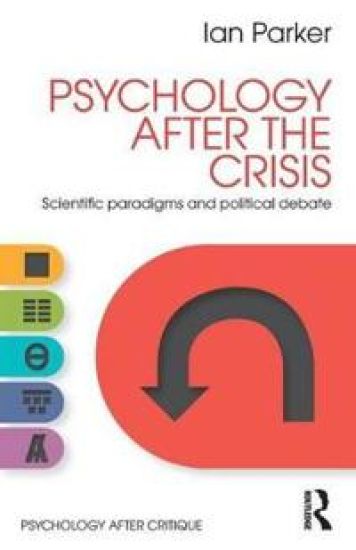
Ian Parker has been a leading light in the fields of critical and discursive psychology for over 25 years. The Psychology After Critique series brings together for the first time his most important papers. Each volume in the series has been prepared by Ian Parker, features a newly written introduction and presents a focused overview of a key topic area. Psychology After the Crisis is the first volume in the series and addresses three important questions:What was the crisis in psychology and why does it continue now? How did debates regarding the traditional ‘laboratory experiment’ paradigm in psychology set the scene for discourse analysis? Why are these paradigm debates now crucial for understanding contemporary critical psychology? The first two chapters of the book describe the way critical psychology emerged in Britain during the 1970s, and introduce four key theoretical resources: Marxism, Feminism, Post-Structuralism and Psychoanalysis. The chapters which follow consider in depth the critical role of Marxist thinking as an analytic framework within psychology. Subsequent chapters explore the application and limitations of critical psychology for crucial topics such as psychotherapy, counselling and climate change. A final chapter presents an interview which reviews the main strands within critical psychology, and provides an accessible introduction to the series as a whole. Psychology After the Crisis is essential reading for students and researchers in psychology, sociology, social anthropology and cultural studies, and for discourse analysts of different traditions. It will also introduce key ideas and debates in critical psychology for undergraduates and postgraduate students across the social sciences.
Psychology After the Crisis

Psychology After the Crisis

Ian Parker

Routledge
2014
nidottu
Ian Parker has been a leading light in the fields of critical and discursive psychology for over 25 years. The Psychology After Critique series brings together for the first time his most important papers. Each volume in the series has been prepared by Ian Parker, features a newly written introduction and presents a focused overview of a key topic area. Psychology After the Crisis is the first volume in the series and addresses three important questions:What was the crisis in psychology and why does it continue now? How did debates regarding the traditional ‘laboratory experiment’ paradigm in psychology set the scene for discourse analysis? Why are these paradigm debates now crucial for understanding contemporary critical psychology? The first two chapters of the book describe the way critical psychology emerged in Britain during the 1970s, and introduce four key theoretical resources: Marxism, Feminism, Post-Structuralism and Psychoanalysis. The chapters which follow consider in depth the critical role of Marxist thinking as an analytic framework within psychology. Subsequent chapters explore the application and limitations of critical psychology for crucial topics such as psychotherapy, counselling and climate change. A final chapter presents an interview which reviews the main strands within critical psychology, and provides an accessible introduction to the series as a whole. Psychology After the Crisis is essential reading for students and researchers in psychology, sociology, social anthropology and cultural studies, and for discourse analysts of different traditions. It will also introduce key ideas and debates in critical psychology for undergraduates and postgraduate students across the social sciences.
Psychology After Psychoanalysis
Ian Parker has been a leading light in the fields of critical and discursive psychology for over 25 years. The Psychology After Critique series brings together for the first time his most important papers. Each volume in the series has been prepared by Ian Parker and presents a newly written introduction and focused overview of a key topic area. Psychology After Psychoanalysis, the fourth volume in the series, is about the impact of psychoanalysis on critical debates in psychology. It addresses three central questions:Why is psychoanalysis re-emerging within psychology? How can psychoanalytic ideas inform psychosocial research? How does psychoanalysis explain the relation between the individual and society? International in scope, the book includes a clear account of psychoanalysis, and the different varieties of the approach that are at work inside and outside the discipline of psychology. It explores the status of psychoanalysis as a series of concepts and as a methodology, and shows how its clinical practice is crucial to the way that it operates now in an academic context. In doing so, the book sheds light on the arguments currently occurring inside psychoanalysis, with discussion of its relation to critical psychology, psychosocial research, the health professions, culture and social theory. Parker shows how psychoanalysis rests on a notion of ‘method’ that is very different from mainstream psychology, and unravels the implications of this difference. Early chapters examine the lines of debate between various psychoanalytical traditions, and show how critical psychology challenges the assumptions about human nature and subjectivity made in conventional psychoanalysis. Later chapters introduce the methodological device of ‘transference’ and explore how psychoanalysis may be utilized as a resource to review key questions of human culture. Psychology After Psychoanalysis is essential reading for students and researchers in psychology, psychosocial studies, sociology, social anthropology and cultural studies, and to psychoanalysts of different traditions engaged in academic research.
Psychology After Deconstruction
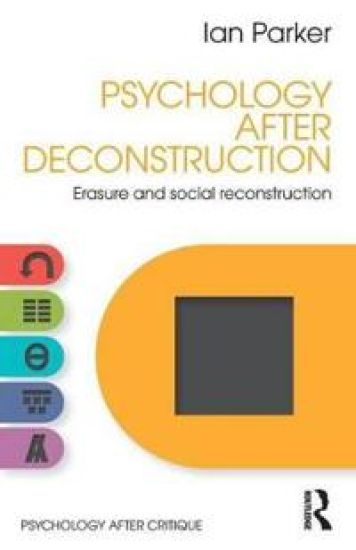
Ian Parker has been a leading light in the fields of critical and discursive psychology for over 25 years. The Psychology After Critique series brings together for the first time his most important papers. Each volume in the series has been prepared by Ian Parker, and presents a newly written introduction and focused overview of a key topic area. Psychology After Deconstruction is the second volume in the series and addresses three important questions:What is ‘deconstruction’ and how does it apply to psychology? How does deconstruction radicalize social constructionist approaches in psychology? What is the future for radical conceptual and empirical research? The book provides a clear account of deconstruction, and the different varieties of this approach at work inside and outside the discipline of psychology. In the opening chapters Parker describes the challenge to underlying assumptions of ‘neutrality’ or ‘objectivity’ within psychology that deconstruction poses, and its implications for three key concepts: humanism, interpretation and reflexivity. Subsequent chapters introduce several lines of debate, and discuss their relation to mainstream axioms such as ‘psychopathology’, ‘diagnosis’ and ‘psychotherapy’, and alternative approaches like qualitative research, humanistic psychology and discourse analysis. Together, the chapters in this book show how, via a process of ‘erasure’, deconstructive approaches question fundamental assumptions made about language and reality, the self and the social world. By demonstrating the application of deconstruction to different areas of psychology, it also seeks to provide a ‘social reconstruction’ of psychological research. Psychology After Deconstruction is essential reading for students and researchers in psychology, sociology, social anthropology and cultural studies, and for discourse analysts of different traditions. It will also introduce key ideas and debates within deconstruction to undergraduates and postgraduate students across the social sciences.
Discourse Dynamics (Psychology Revivals)
What are discourses? Are discourses ‘real’, and what is real outside language? In this book, originally published in 1992, Ian Parker provides one of the clearest and most systematic introductions to discourse research and the essential theoretical debates in the area. At the time it was one of the few texts to defend a realist position, discuss accounts of postmodernity and set out criteria for the identification of discourses. Discourse Dynamics is essential reading to anyone interested in project research and an understanding of the theoretical issues involved in discourse analysis. The book will also be of use to students other than those studying psychology. It addresses the concerns of all those looking at qualitative textual research in the human sciences and is still very much relevant today.
The Crisis in Modern Social Psychology (Psychology Revivals)
In the late 1960s a ‘crisis’ erupted in social psychology, with many social psychologists highly critical of the ‘old paradigm’, laboratory-experimental approach. Originally published in 1989, The Crisis in Modern Social Psychology was the first book to provide a clear account of the complex body of work that is critical of traditional social psychological approaches. Ian Parker insisted that the ‘crisis’ was not over, showing how attempts to improve social psychology had failed, and explaining why we need instead a political understanding of social interaction which links research with change. Modern social psychology reflects the impact of structuralist and post-structuralist conceptual crises in other academic disciplines, and Parker describes the work of Foucault and Derrida sympathetically and lucidly, making these important debates accessible to the student and discussing their influence. He assesses the responses from both mainstream social psychology and from avant-garde textual social psychology to the influx of these radical ideas, and discusses the promises and pitfalls of a post-modern view of social action.
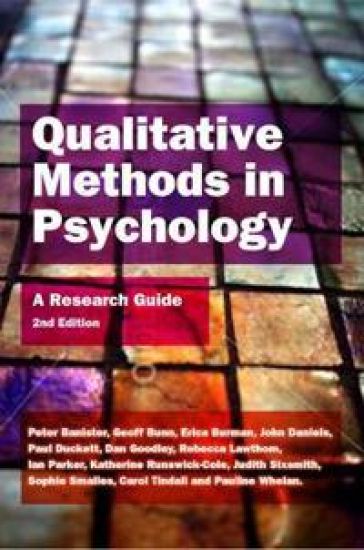
Qualitative Methods In Psychology: A Research Guide

Qualitative Methods In Psychology: A Research Guide

Peter Banister; Geoff Bunn; Erica Burman; John Daniels; Paul Duckett; Dan Goodley; Rebecca Lawthom; Ian Parker; Katherine Runswick-Cole; Judith Sixsmith; Sophie Smailes; Carol Tindall; Pauline Whelan

Open University Press
2011
nidottu
"This book provides an introduction to four widely used qualitative research methods, followed by a detailed discussion of a pluralistic approach to qualitative research¿makes exceellent use of questions both in order to help the reader gain clarity as well as to encourage reflexivity" The Psychologist, May 2012
Psychoanalytic Mythologies

Psychoanalytic Mythologies

Ian Parker

Anthem Press
2011
nidottu
‘Psychoanalytic Mythologies’ presents a collection of essays on the theme of what it is to be a human subject in a culture permeated by psychoanalytic imagery. The author’s attempt to disturb the strongly-held belief of those in thrall to psychoanalysis that it is universally true forms the recurrent motif that binds these essays together.
Lacanian Psychoanalysis

Lacanian Psychoanalysis

Ian Parker

Routledge
2010
nidottu
Jacques Lacan's impact upon the theory and practice of psychoanalysis worldwide cannot be underestimated. Lacanian Psychoanalysis looks at the current debates surrounding Lacanian practice and explores its place within historical, social and political contexts. The book argues that Lacan’s elaboration of psychoanalytic theory is grounded in clinical practice and needs to be defined in relation to the four main traditions: psychiatry, psychology, psychotherapy and spirituality. As such topics of discussion include: the intersection between psychoanalysis and social transformationa new way through deadlocks of current Lacanian debatea new approach to ‘clinical structures’ of neurosis, perversion and psychosis Lacanian Psychoanalysis draws on Lacan's work to shed light on issues relevant to current therapeutic practice and as such it will be of great interest to students, trainees and practitioners of psychoanalysis, psychotherapy, counselling and other domains of personal and social change.
Psychoanalytic Mythologies

Psychoanalytic Mythologies

Ian Parker

Anthem Press
2009
sidottu
‘Psychoanalytic Mythologies’ presents a collection of essays on the theme of what it is to be a human subject in a culture permeated by psychoanalytic imagery. The author’s attempt to disturb the strongly-held belief of those in thrall to psychoanalysis that it is universally true forms the recurrent motif that binds these essays together.