Kirjojen hintavertailu – 12 903 725 kirjaa ja 27 kauppaa

Kirjailija

Ian Robertson

Kirjat ja teokset yhdessä paikassa: 31 kirjaa, julkaisuja vuosilta 1996–2027, suosituimpiin kuuluu The Test of Everyday Attention UK TEA Maps A + B/C. Vertaile teosten hintoja ja tarkista saatavuus suomalaisista kirjakaupoista.

31 kirjaa

Kirjojen julkaisuvuodet: 1996–2027.

The Mind's Eye

The Mind's Eye

Ian Robertson

Bantam Books (Transworld Publishers a division of the Random House Group)
2011
pokkari
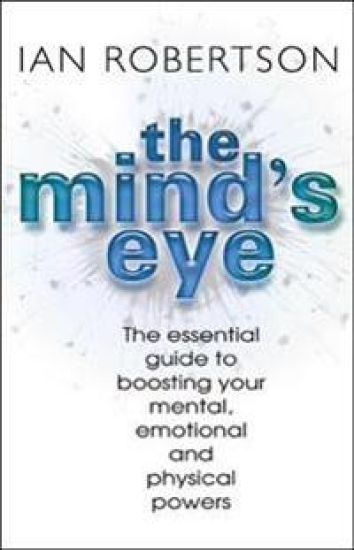
A picture is worth a thousand words, or so they say. Yet our world, our civilisation has grown up on a foundation of words - laws, constitutions, treaties, charters, creeds - words that have tamed and liberated in equal measure. Our education, from earliest childhood, emphasises the importance of words. We take the world before our eyes and define it in a verbal language, and in so doing we capture it, understand it, celebrate it. But there are costs. In our reliance on the cold efficency of language we have neglected the wordless ways of the brain. The uniquely complex human mind is capable of the most exquisite images and visions. But visualisation is not merely about sight and the imagined, it is about the way we interact with the world through our five senses. In THE MIND'S EYE Ian Robertson demonstrates how we are underutilising our brain's powers of visualisation. Taking the lessons of hard science, he explains how the brain works and how important visualisation can be. But more importantly, how we can all unleash the awesome power of our brains. Following simple exercises Ian Robertson describes how visualisation can:improve memory and learning power be the key to creative thinking and problem solvingoffer powerful ways of combating stressfight physical illness and painenrich musical and artistic experienceenhance sporting skill and strengthIn his trademark accessible and imaginative style, Ian Robertson brings to life the hidden workings of the brain, and teaches us all how we can best capitalise on our inate abilities. A must read for anyone interested in how the brain works, or unlocking our mind's full potential.
Mind Sculpture

Mind Sculpture

Ian Robertson

Bantam Books (Transworld Publishers a division of the Random House Group)
2010
pokkari
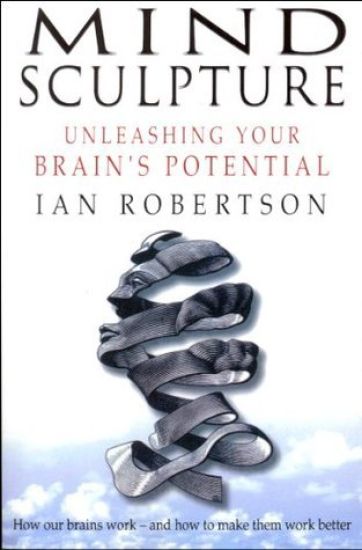
Listen. Can you hear an aircraft passing overhead? A dog barking? The twittering of birds? In straining to listen, you have just sent a surge of electrical activity through millions of brain cells. In choosing to do this with your mind, you have changed your brain - you have made brain cells fire, at the side of your head, above the right eye. By the time you've read this far, you will have changed your brain permanently. These words will leave a faint trace in the woven electricity of you. For 'you' exists in the trembling web of connected brain cells. This web is in flux, continually remoulded, sculpted by the restless energy of the world. That energy is transformed at your senses into the utterly unique weave of brain connections that is YOU. New research has demonstrated the way in which the brain is shaped by experience and sculpted by our interactions with the world around us. As one of the world's leading authorities on brain rehabilitation, Ian Robertson is uniquely placed to explore these ground-breaking discoveries, that free us from the currently fashionable genetically determinist view. Mind Sculpture is a singularly accessible and imaginative book which communicates the excitement and challenge of the most recent research, its consequences for how we understand the brain and how we perceive ourselves.
A Commanding Presence

A Commanding Presence

Ian Robertson

Spellmount Publishers Ltd
2008
sidottu
This new study details each battle and minor action in every campaign, from Vimeiro (August 1808) to Toulouse (April 1814), along with Wellington's sieges. The book is illustrated with numerous maps depicting the rugged terrain of the Iberian Peninsula, and accurate drawings. It makes required reading for a true understanding of warfare in the Napoleonic period.
Tyranny under the Mantle of St Peter

Tyranny under the Mantle of St Peter

Ian Robertson

Brepols N.V.
2003
sidottu
Pope Paul II (1464-1471) stands out amongst the later fifteenth-century popes by virtue of his high concept of princely sovereignty, and his vision of the papal temporal dominions as a genuinely co-ordinated territorial state, an enduring public entity. Inevitably he clashed with the Commune of Bologna, second city of the Papal State, over which he naturally aspired to more jurisdiction. The political vision of the Bolognese regime had a narrowly local focus which precluded the sacrifice of Bolognese independence in favour of integration into a wider territorial entity, and sprang from a view of government as rightfully the private preserve of a restricted oligarchic group, from the 1440s consolidated in the magistracy of the 'Sixteen Reformers of the Regime of Liberty'. Paul II regarded the regime of the Sixteen as a 'tyranny', and declared that he did not want such tyrannies flourishing 'under the mantle of Saint Peter'. Paul II's intervention in Bolognese affairs failed to open up the restricted circle of the Bolognese oligarchy or to curb Bologna's independence in the Papal State. It did nonetheless constitute a watershed in the evolution of the Bolognese regime. Through political miscalculation, it seems, Paul was led to institute a constitutional modification which gave the long-developing predominance of the Bentivoglio family an institutional basis and opened the way for it to become more overtly 'signorial', replacing one 'tyranny' with another. However, this aggravated a long-standing tension in the regime between collegiality and despotism, and paved the way for the eventual destruction of the Bentivoglio predominance and the incorporation of Bologna into the more co-ordinated Papal State of the sixteenth-century - a result more consonant with Paul II's aims. The clash between Paul II and Bologna is ultimately one between two opposed concepts of government and 'the state'.
Spatial Neglect

Spatial Neglect

Peter W. Halligan; Ian Robertson

Psychology Press Ltd
2000
nidottu
Spatial neglect is a profound clinical problem as well as intriguing scientific problem. In the last ten years, there has been an explosion of interest in this disorder, which as a result is no longer viewed as a single entity, but rather as a number of different disorders. This book is an attempt to bring the reader up to date with the latest advances in understanding neglect, at least insofar as this contributes to better clinical assessment, management and treatment. This is not a book for the specialist researcher in the neuropsychology of neglect and attention. Rather, it is a book aimed at clinicians - student and trained - from all disciplines involved in the assessment, management and treatment of neglect. The book begins with the description of four cases manifesting different types of unilateral neglect. The reader is introduced to different aspects of neglect through these patients. These distinctions include those between personal and extrapersonal neglect, motor versus sensory neglect and many others. The reader is also introduced to other phenomena that are closely related to neglect, including ansognosia and impaired sustained attention. The latest methodes of assessment of neglect are also described, as are methods of treatment, again with reference to the four introductory specimen cases.
Spatial Neglect

Spatial Neglect

Peter W. Halligan; Ian Robertson

Psychology Press Ltd
1999
sidottu
Spatial neglect is a profound clinical problem as well as intriguing scientific problem. In the last ten years, there has been an explosion of interest in this disorder, which as a result is no longer viewed as a single entity, but rather as a number of different disorders. This book is an attempt to bring the reader up to date with the latest advances in understanding neglect, at least insofar as this contributes to better clinical assessment, management and treatment. This is not a book for the specialist researcher in the neuropsychology of neglect and attention. Rather, it is a book aimed at clinicians - student and trained - from all disciplines involved in the assessment, management and treatment of neglect. The book begins with the description of four cases manifesting different types of unilateral neglect. The reader is introduced to different aspects of neglect through these patients. These distinctions include those between personal and extrapersonal neglect, motor versus sensory neglect and many others. The reader is also introduced to other phenomena that are closely related to neglect, including ansognosia and impaired sustained attention. The latest methodes of assessment of neglect are also described, as are methods of treatment, again with reference to the four introductory specimen cases.
Problem Drinking

Problem Drinking

Nick Heather; Ian Robertson

Oxford University Press
1997
nidottu
Problem Drinking aims to bridge the wide gap that exists between the modern, scientific account of the nature of alcohol problems, and the popular understanding of the subject. In particular, it presents detailed evidence and arguments against the commonly accepted view that 'alcoholism' is best regarded as a disease. Instead, it outlines an alternative approach to alcohol problems, based on the premise that they are best seen as examples of socially learned behaviour. In the third edition, the authors have brought the book up to date by covering the major developments that have taken place in recent years, in particular in the field of genetics. The book is also one of the first to discuss the results and recommendations of the 5 year long Project MATCH study, probably the most extensive alcohol study ever undertaken, the results of which are due to be published in 1997. The book provides a useful textbook for students undertaking courses in alcoholism, as part of psychology and psychiatry degrees, and provides practical advice for counsellors, social workers, and health promotion officers. Reviews of the 2nd edition '... a valuable and clearly written exposition of problem drinking...' British Journal of Psychiatry, 1990 'Certainly this book should provoke general practitioners to reassess their views about the problem and should be read by those people working in the field.' Family Practice, 1991
Let's Drink to your Health

Let's Drink to your Health

Nick Heather; Ian Robertson

BPS Blackwell
1996
nidottu
Designed for all those who, due to health or financial reasons, wish to cut down on their drinking. Useful advice to enable people to change their drinking patterns, a drinking diary and tips for drinking less are included.