Kirjojen hintavertailu – 12 859 818 kirjaa ja 27 kauppaa
Kirjailija
Ian Stewart
Kirjat ja teokset yhdessä paikassa: 119 kirjaa, julkaisuja vuosilta 1983–2027, suosituimpiin kuuluu Torry. Vertaile teosten hintoja ja tarkista saatavuus suomalaisista kirjakaupoista.
Opening another drawer in his Cabinet of Curiosities, renowned mathematics professor Ian Stewart presents a new medley of games, paradoxes, and riddles in Professor Stewart's Hoard of Mathematical Treasures . With wit and aplomb, Stewart mingles casual puzzles with grander forays into ancient and modern mathematical thought. Amongst a host of arcane and astonishing facts about every kind of number from irrational and imaginary to complex and cuneiform, we learn: - How to organize chaos - How matter balances anti-matter - How to turn a sphere inside out (without creasing it) - How to calculate pi by observing the stars - ...and why you can't comb a hairy ball. Along the way Stewart offers the reader tantalizing glimpses of the mathematics underlying life and the universe. Mind-stretching, enlightening, and endlessly amusing, Professor Stewart's Hoard of Mathematical Treasures will stimulate, delight, and enthrall.
From ancient Babylon to the last great unsolved problems, Ian Stewart brings us his definitive history of mathematics. In his famous straightforward style, Professor Stewart explains each major development - from the first number systems to chaos theory - and considers how each affected society and changed everyday life forever. Maintaining a personal touch, he introduces all of the outstanding mathematicians of history, from the key Babylonians, Greeks and Egyptians, via Newton and Descartes, to Fermat, Babbage and Godel, and demystifies maths' key concepts without recourse to complicated formulae. Written to provide a captivating historic narrative for the non-mathematician, Taming the Infinite: The Story of Mathematics is packed with fascinating nuggets and quirky asides, and contains 100 illustrations and diagrams to illuminate and aid understanding of a subject many dread, but which has made our world what it is today.
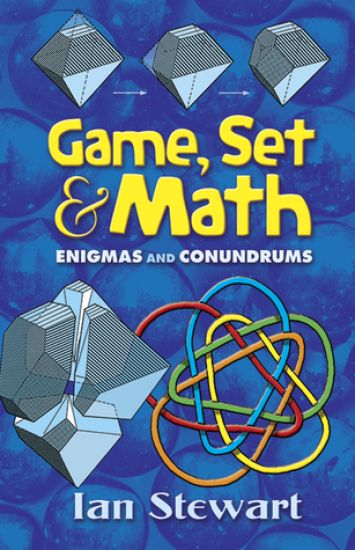
Knowing that the most exciting math is not taught in school, Professor Ian Stewart has spent years filling his cabinet with intriguing mathematical games, puzzles, stories, and factoids intended for the adventurous mind. This book reveals the most exhilarating oddities from Professor Stewart's legendary cabinet. Inside, you will find hidden gems of logic, geometry, and probability--like how to extract a cherry from a cocktail glass (harder than you think), a pop-up dodecahedron, and the real reason why you can't divide anything by zero. Scattered among these are keys to Fermat's last theorem, the Poincare conjecture, chaos theory, and the P=NP problem (you'll win a million dollars if you solve it). You never know what enigmas you'll find in the Stewart cabinet, but they're sure to be clever, mind-expanding, and delightfully fun.
A mathematical sightseeing tour of the natural world from the author of THE MAGICAL MAZEWhy do many flowers have five or eight petals, but very few six or seven? Why do snowflakes have sixfold symmetry? Why do tigers have stripes but leopards have spots? Mathematics is to nature as Sherlock Holmes is to evidence. Mathematics can look at a single snowflake and deduce the atomic geometry of its crystals; it can start with a violin string and uncover the existence of radio waves. And mathematics still has the power to open our eyes to new and unsuspected regularities - the secret structure of a cloud or the hidden rhythms of the weather. There are patterns in the world we are now seeing for the first time - patterns at the frontier of science, yet patterns so simple that anybody can see them once they know where to look.
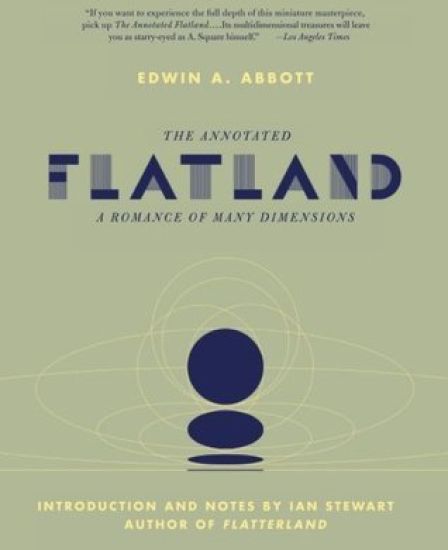
Flatland is a unique, delightful satire that has charmed readers for over a century. Published in 1884 by the English clergyman and headmaster Edwin A. Abbott, it is the fanciful tale of A. Square, a two-dimensional being who is whisked away by a mysterious visitor to The Land of Three Dimensions, an experience that forever alters his worldview. Like the original, Ian Stewart's commentary takes readers on a strange and wonderful journey. With clarity and wit, Stewart illuminates Abbott's numerous Victorian references and touches on such diverse topics as ancient Babylon, Karl Marx, Mary Shelley's Frankenstein , Mt. Everest, H. G. Wells, and phrenology. The Annotated Flatland makes fascinating connections between Flatland and Abbott's era, resulting in a classic to rival Abbott's own, and a book that will inspire and delight curious readers for generations to come.
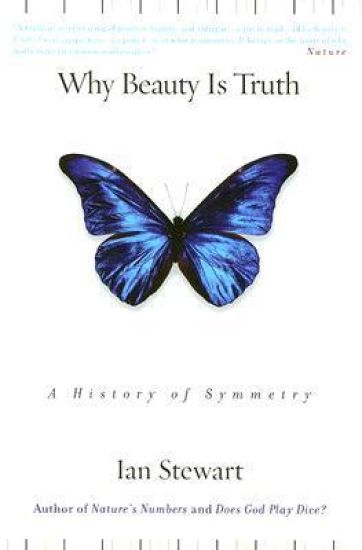
At the heart of relativity theory, quantum mechanics, string theory, and much of modern cosmology lies one concept: symmetry. In Why Beauty Is Truth , world-famous mathematician Ian Stewart narrates the history of the emergence of this remarkable area of study. Stewart introduces us to such characters as the Renaissance Italian genius, rogue, scholar, and gambler Girolamo Cardano, who stole the modern method of solving cubic equations and published it in the first important book on algebra, and the young revolutionary Evariste Galois, who refashioned the whole of mathematics and founded the field of group theory only to die in a pointless duel over a woman before his work was published. Stewart also explores the strange numerology of real mathematics, in which particular numbers have unique and unpredictable properties related to symmetry. He shows how Wilhelm Killing discovered Lie groups" with 14, 52, 78, 133, and 248 dimensions-groups whose very existence is a profound puzzle. Finally, Stewart describes the world beyond superstrings: the octonionic" symmetries that may explain the very existence of the universe.
Selecting a leader is a momentous and defining choice for a politicalparty. Leaders symbolize their party and are a primary factor inelection outcomes. While much is known about the selection of nationalparty leaders, less is known about the provincial selection process,particularly in the Maritimes. Breaking new ground, ConventionalChoices examines twenty-five different leadership elections inthree maritime provinces. The analysis draws on an extraordinarily richdata set spanning thirty-two years to explore the backgrounds,attitudes, and motivations of those who select party leaders. It is animpressive study that offers fresh insights into leadership selectionand Maritime party politics.
These pun-studded fables by a popular science writer make complicated mathematical concepts accessible and fun. Twelve essays take a playful approach to mathematics, investigating the topology of a warm blanket, the odds of beating a superior tennis player, and how to distinguish between fact and fallacy. 1991 edition.
Selecting a leader is a momentous and defining choice for a politicalparty. Leaders symbolize their party and are a primary factor inelection outcomes. While much is known about the selection of nationalparty leaders, less is known about the provincial selection process,particularly in the Maritimes. Breaking new ground, ConventionalChoices examines twenty-five different leadership elections inthree maritime provinces. The analysis draws on an extraordinarily richdata set spanning thirty-two years to explore the backgrounds,attitudes, and motivations of those who select party leaders. It is animpressive study that offers fresh insights into leadership selectionand Maritime party politics.
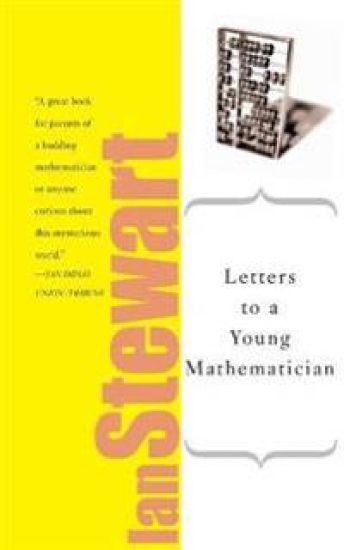
Mathematician Ian Stewart tells readers what he wishes he had known when he was a student. He takes up subjects ranging from the philosophical to the practical-what mathematics is and why it's worth doing, the relationship between logic and proof, the role of beauty in mathematical thinking, the future of mathematics, how to deal with the peculiarities of the mathematical community, and many others.
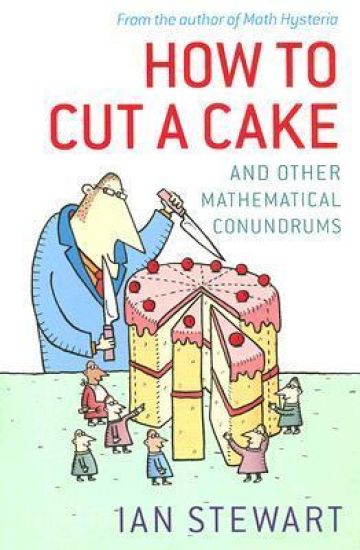
Welcome back to Ian Stewart's magical world of mathematics! This is a strange world of never-ending chess games, empires on the moon, furious fireflies, and, of course, disputes over how best to cut a cake. Each quirky tale presents a fascinating mathematical puzzle -- challenging, fun, and also introducing the reader to a significant mathematical problem in an engaging and witty way.
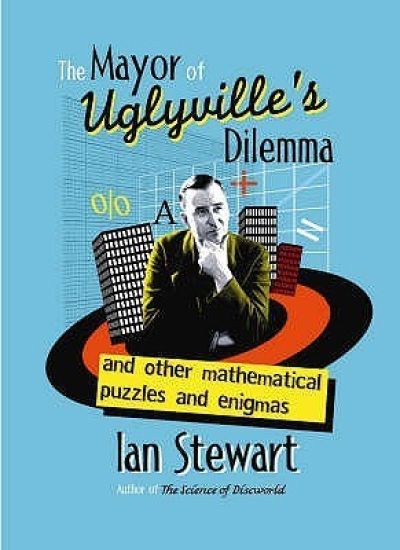
Inside this small (but perfectly formed) hardback there lurks some of the most devilishly difficult mathematical brainteasers human beings have yet devised. Woven into them are marvellously witty introductions to some of the key numerical mysteries and paradoxes. Along the way, we meet Klephtnose, the geometrical Pharoah, Stacey Ermine, the winner of the Turnip Prize, the members of Wackingham Cricket Club, the villagers of the town of Much Grumbling and the eponymous Mayor of Uglyville, each of whom present us with a mind-bending mathematical problem. But never fear. The answers are at the back of the book.
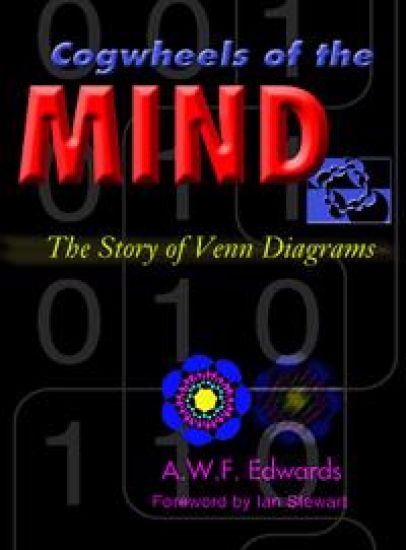
Used today in spheres of life as diverse as business strategy, creative writing, medicine, computer science, and theoretical physics, Venn diagrams possess fascinating properties. The basic Venn diagram is both elegantly simple-three overlapping circles that intersect to create eight distinct areas-and conceptually innovative. Devised by English logician John Venn (1834-1923) to visually represent complex logical propositions and algebraic statements, the diagrams drew the excited interest of both scholars and the general public. In Cogwheels of the Mind, statistician and geneticist A. W. F. Edwards provides an accessible and engaging history of the Venn diagram, its reception and evolution, and its presence in such objects and images as Christian iconography, tennis balls, and flags which provide a rich source of Venn diagrams for Edwards, including those of Switzerland, Poland, and Japan (all one-set Venn diagrams), Greenland (a two-set Venn diagram), and Maryland (a three-set device). Edwards begins with a sketch of Venn's life, his discovery of the three-circle design while developing a series of lectures on symbolic logic at Cambridge University, and the publication of his find in an 1880 paper, and, more influentially, his 1881 book, Symbolic Logic. Edwards discusses the rival diagrammatic scheme invented by Charles Dodgson, better known as Lewis Carroll, who also developed a board game based on his design. The author also recreates famous Venn diagrams from history, including Winston Churchill's of 1948 depicting the mutual interests of the British Empire, a united Europe, and the English-speaking world, with the United Kingdom located at the intersection. Edwards goes on to show how different shapes can be linked together to form artistically beautiful and mathematically important, multi-set Venn diagrams, including the author's own influential Adelaide variation. And he delineates the possibilities for expanding the analytic power of these diagrams far beyond those first appreciated by Venn. Edwards even tells readers how to draw complex Venn diagrams on a spherical surface to create "Vennis balls." For anyone interested in mathematics or its history, Cogwheels of the Mind is invaluable and compelling reading.
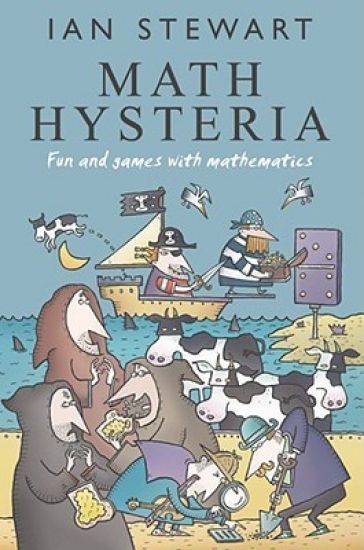
Welcome to Ian Stewart's strange and magical world of mathematics! In Math Hysteria, Professor Stewart presents us with a wealth of magical puzzles, each one spun around an amazing tale: Counting the Cattle of the Sun; The Great Drain Robbery; and Preposterous Piratical Predicaments; to name but a few. Along the way, we also meet many curious characters: in short, these stories are engaging, challenging, and lots of fun!
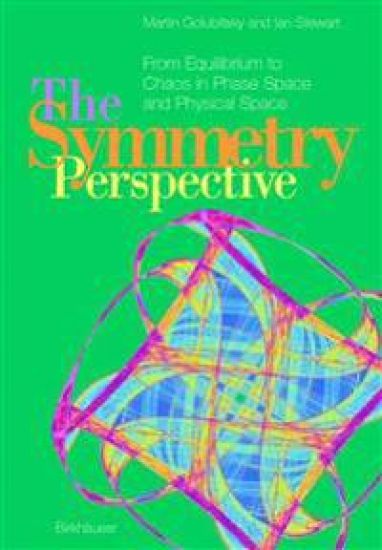
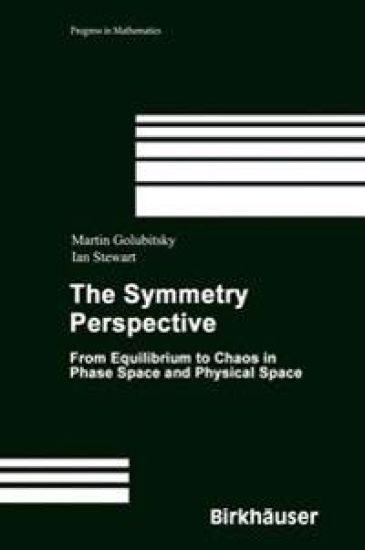
Pattern formation in physical systems is one of the major research frontiers of mathematics. A central theme of this book is that many instances of pattern formation can be understood within a single framework: symmetry. The book applies symmetry methods to increasingly complex kinds of dynamic behavior: equilibria, period-doubling, time-periodic states, homoclinic and heteroclinic orbits, and chaos. Examples are drawn from both ODEs and PDEs. In each case the type of dynamical behavior being studied is motivated through applications, drawn from a wide variety of scientific disciplines ranging from theoretical physics to evolutionary biology. An extensive bibliography is provided.
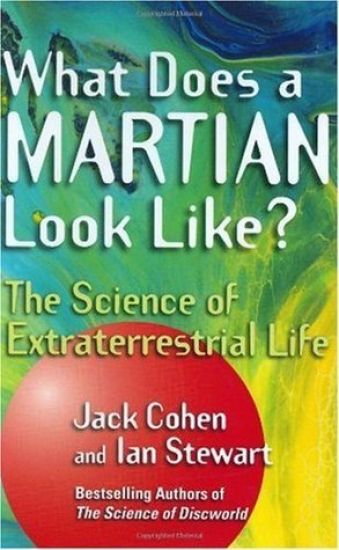
"A fascinating and useful handbook to both the science and science fiction of extraterrestrial life. Cohen and Stewart are amusing, opinionated, and expert guides. I found it a terrific and informative piece of work-nothing else like it "-Greg Bear"I loved it."-Larry Niven "Ever wonder about what aliens could be like? The world authority is Jack Cohen, a professional biologist who has thought long and hard about the vast realm of possibilities. This is an engaging, swiftly moving study of alien biology, a subject with bounds and constraints these authors plumb with verve and intelligence."-Gregory Benford"A celebration of life off Earth. A hearteningly optimistic book, giving a much-needed antidote to the pessimism of astrobiologists who maintain that we are alone in the universe-a stance based on a very narrow view of what could constitute life. A triumph of speculative nonfiction."-Dougal Dixon, author ofAfter Man: A Zoology of the Future
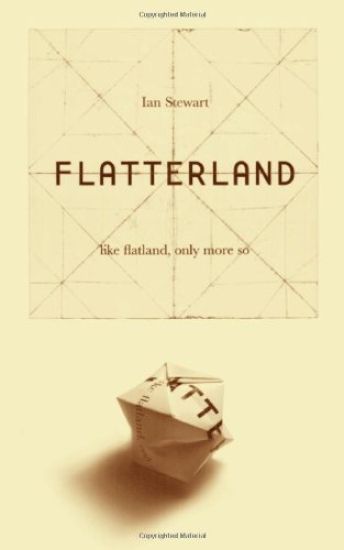
First there was Edwin A. Abbott's remarkable Flatland, published in 1884, and one of the all-time classics of popular mathematics. Now, from mathematician and accomplished science writer Ian Stewart, comes what Nature calls "a superb sequel." Through larger-than-life characters and an inspired story line, Flatterland explores our present understanding of the shape and origins of the universe, the nature of space, time, and matter, as well as modern geometries and their applications. The journey begins when our heroine, Victoria Line, comes upon her great-great-grandfather A. Square's diary, hidden in the attic. The writings help her to contact the Space Hopper, who tempts her away from her home and family in Flatland and becomes her guide and mentor through ten dimensions. In the tradition of Alice in Wonderland and The Phantom Toll Booth, this magnificent investigation into the nature of reality is destined to become a modern classic.
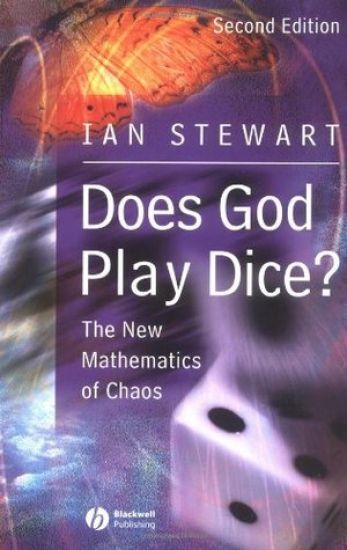
"You believe in a God who plays dice, and I in complete law and order", Albert Einstein. The science of chaos is forcing scientists to rethink Einstein's fundamental assumptions regarding the way the universe behaves. Chaos theory has already shown that simple systems, obeying precise laws, can nevertheless act in a random manner. Perhaps God plays dice within a cosmic game of complete law and order. "Does God Play Dice?" reveals a strange universe in which nothing may be as it seems. Familiar geometrical shapes such as circles and ellipses give way to infinitely complex structures known as fractals, the fluttering of a butterfly's wings can change the weather, and the gravitational attraction of a creature in a distant galaxy can change the fate of the solar system. This revised and updated edition includes three completely new chapters on the prediction and control of chaotic systems. It also incorporates new information regarding the solar system and an account of complexity theory. This text aims to make the complex mathematics of chaos accessible and entertaining.
Pattern formation in physical systems is one of the major research frontiers of mathematics. A central theme of this book is that many instances of pattern formation can be understood within a single framework: symmetry. The book applies symmetry methods to increasingly complex kinds of dynamic behavior: equilibria, period-doubling, time-periodic states, homoclinic and heteroclinic orbits, and chaos. Examples are drawn from both ODEs and PDEs. In each case the type of dynamical behavior being studied is motivated through applications, drawn from a wide variety of scientific disciplines ranging from theoretical physics to evolutionary biology. An extensive bibliography is provided.