Kirjojen hintavertailu – 12 859 828 kirjaa ja 27 kauppaa

Kirjailija

Ibn 'Arabi

Kirjat ja teokset yhdessä paikassa: 13 kirjaa, julkaisuja vuosilta 1981–2025, suosituimpiin kuuluu Der Übersetzer der Sehnsüchte. Vertaile teosten hintoja ja tarkista saatavuus suomalaisista kirjakaupoista.

Nimi esiintyy myös muodoissa: Ibn Arabi, Ibn Arabî

13 kirjaa

Kirjojen julkaisuvuodet: 1981–2025.

Le Traité de l'Unité

Le Traité de l'Unité

Ibn Arabî

Blurb
2025
pokkari
Ibn Arab est n en 1165 Murcie en Espagne. Descendant du l gendaire po te arabe Hatem at-Ta'i, la post rit le d signera comme le Shaykh al-Akbar (le plus grand des ma tres) et aussi le Shaykh Muhyi-ad-D n (le vivificateur de la religion). Sa vie toute enti re sera un t moignage. Il parcourra inlassablement l'Espagne, le Maghreb et l'Orient durant plus de trente ann es. Pri res, invocations, retraites spirituelles et compagnonnages se combineront avec la r daction de son oeuvre magistrale et incomparable. En 1223, il s' tablira Damas o il demeurera jusqu' sa mort en 1240. Le petit trait que nous voulons traduire est aussi souvent d sign par: L' p tre de la connaissance du Seigneur par la connaissance de soi-m me . Il est un des plus int ressants qui existent sur la question. Les manuscrits abondent, mais ils sont rarement exacts et pr sentent beaucoup de variations du texte primitif. Celui-ci est donc restituer, mais ce travail n'offre pas de grandes difficult s en la circonstance. La pens e dominante est tr s claire, de sorte que les diff rentes r dactions et les nombreuses fautes des copistes ne constituent aucun obstacle l'intelligence parfaite du texte. Yvan Agu li est aussi connu sous le nom de Shaykh Abd al-Hadi Aqhili suite sa conversion l'Islam. Sa m taphysique, empreinte d' sot risme islamique, tait influenc e par Ibn Arab . Il s'installe Paris dans les ann es 1890; il vivra galement au Caire et Colombo (Sri Lanka). Yvan Agu li est connu pour avoir initi le m taphysicien Ren Gu non au soufisme et veill son int r t pour l'Islam vers 1910.
Ringide kujundamine. puu ja neli lindu. rännakute tegelikuks tegemine
Ibn 'Arabi (1165-1240) sündis Hispaanias ning kujunes tolleaegse läänepoolse araabia kultuuri Suurimaks Opetajaks. Opetamise ning kirjatöö kõrval moodustas reisimine suure osa tema elust. Peale viibimist paljude valgustunud õpetajate juures Euroopas ning rännakuaastaid Egiptuses ja idapoolsetes suurlinnades lõppes tema elutee Damaskuses. Ibn 'Arabi arvukad teosed, mida on arvatud olevat rohkem kui 400, kajastavad islami teadusilma kõiki külgi, ulatudes religiooniseadustest metafüüsikani, vormilt biograafiatest ja filosoofilistest arutlustest luuleni. Traktaat "Ringide kujundamine" on heaks sissejuhatuseks autori mõttemaailma ja selles esitatakse selgesõnaliselt tema metafüüsika põhielemendid. "Puu ja neli lindu" koosneb kahest osast, milles esimeses kõneldakse inimese ideaali teokssaamisest, teises inimese üldisest dimensioonist, mida väljendatakse puu ja nelja linnu sümbolite abil. "Rännakute tulemuste avalikuks tegemises" näitab autor, et kõik olendid, kaasa arvatud ka jumalus (oma teatavais aspektides) osalevad universaalses rännakus, millel pole lõppu ei selles ega tulevases maailmas. Tekstide tõlkija ja kommenteerija Kalle Kasemaa on raamatule kirjutanud autorit ja tema mõistete maailma tutvustava põhjaliku saatesõna.
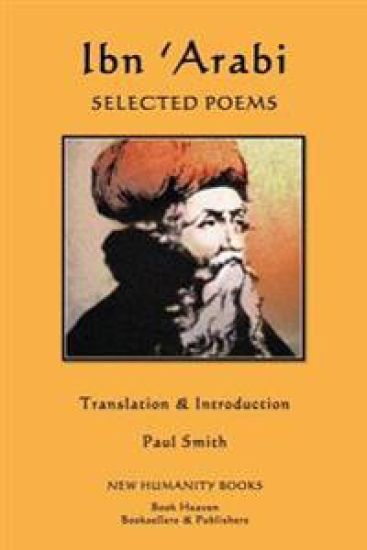
IBN 'ARABI 'Doctor Maximus' & 'The Great Master' SELECTED POEMS: (Large Print & Large Format Edition)
IBN 'ARABI 'Doctor Maximus' & 'The Great Master' Selected Poems (Large Print & Large Format Edition) Translation & Introduction Paul Smith In the West he is known as the Doctor Maximus and in the Islamic world as The Great Master. Born in Murcia in Spain in 1165 his family moved to Seville. At thirty-five he left for Mecca where he completed his most influential book of poems The Interpreter of Ardent Desires (Tarjuman al-Ashwaq) and began writing his masterpiece, the vast Meccan Revelations. In 1204 he began further travels. In 1223 he settled in Damascus where he lived the last seventeen years of his life, dying in 1240. His tomb there is still an important place of pilgrimage. A prolific writer, Ibn 'Arabi is generally known as the prime exponent of the idea later known as the 'Unity of Being'. His emphasis was on the true potential of the human being and the path to realizing that potential and becoming the Perfect or complete person. Hundreds of works are attributed to him including a large Divan of poems most of which have yet to be translated. Introduction... on his life and poetry, forms he composed in & Sufism in poetry, Selected Bibliography. The correct rhyme-structure has been kept as well as the beauty and meaning of this selection of his powerful, beautiful poems. Large Print (18pt) & Large Format (8" x 10") Edition. 198 pages. Paul Smith (b. 1945) is a poet, author and translator of many books of Sufi poets of the Persian, Arabic, Urdu, Turkish, Pashtu and other languages... including Hafiz, Sadi, Nizami, Rumi, 'Attar, Jigar, Sana'i, Jahan Khatun, Obeyd Zakani, Mu'in, Amir Khusrau, Nesimi, Kabir, Anvari, Ansari, Jami and many others, as well as his own poetry, fiction, plays, biographies, children's books and a dozen screenplays.
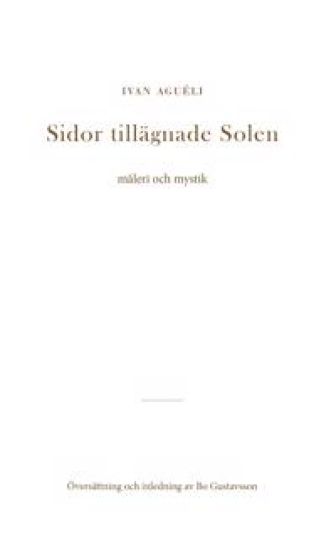
Sidor tillägnade Solen : måleri och mystik

Sidor tillägnade Solen : måleri och mystik

Ivan Aguéli; Ibn Arabi; Bo Gustavsson

Aprilvindens Förlag
2019
pokkari
Ivan Aguéli är ett världsnamn inom konsthistorien. För första gången utges i bokform ett urval av de essäer och översättningar som Ivan Aguéli publicerade i den franska tidskriften "La Gnose" 1910–11. Boken innehåller även "Traktaten om Enheten" av sufimästaren Ibn Arabi, ett verk från 1200-talet som betydde mycket för konstnären.
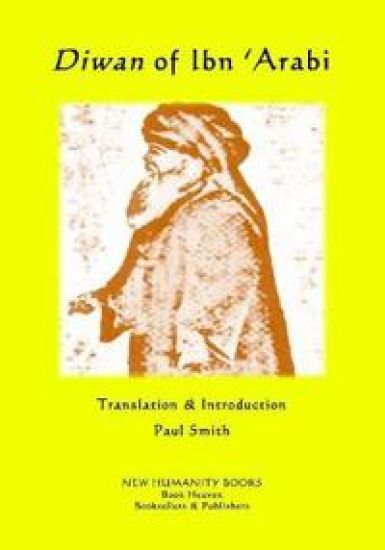
Diwan of Ibn 'Arabi

Diwan of Ibn 'Arabi

Ibn 'Arabi

Createspace Independent Publishing Platform
2018
pokkari
Diwan of Ibn 'Arabi Translation & Introduction Paul SmithI n the West he is known as the Doctor Maximus and in the Islamic world as The Great Master. Born in Murcia in Spain in 1165 his family moved to Seville. At thirty-five he left for Mecca where he completed his most influential book of poems The Interpreter of Ardent Desires (Tarjuman al-Ashwaq) and began writing his masterpiece, the vast Meccan Revelations. In 1204 he began further travels. In 1223 he settled in Damascus where he lived the last seventeen years of his life, dying in 1240. His tomb there is still an important place of pilgrimage. A prolific writer, Ibn 'Arabi is generally known as the prime exponent of the idea later known as the 'Unity of Being'. His emphasis was on the true potential of the human being and the path to realizing that potential and becoming the Perfect or complete person. Hundreds of works are attributed to him including a large Divan of poems most of which have yet to be translated. Introduction... on his life and poetry, forms he composed in & Sufism in poetry, Selected Bibliography. Appendix: The Tarjuman al-Ashwaq of Ibn 'Arabi, Translation of Poems & Commentary by Reynold A. Nicholson. The correct rhyme-structure has been kept as well as the beauty and meaning of this selection of his beautiful, mystical poems in the forms of qit'as, ghazals and a memorable qasida. Large Format Paperback 7" x 10" 260 pages. COMMENTS ON PAUL SMITH'S TRANSLATION OF HAFIZ'S 'DIVAN'." It is not a joke... the English version of ALL the ghazals of Hafiz is a great feat and of paramount importance. I am astonished.." Dr. Mir Mohammad Taghavi (Dr. of Literature) Tehran." Superb translations. 99% Hafiz 1% Paul Smith." Ali Akbar Shapurzman, translator of works in English into Persian and knower of Hafiz's Divan off by heart." Smith has probably put together the greatest collection of literary facts and history concerning Hafiz." Daniel Ladinsky (Penguin Books). Paul Smith (b. 1945) is a poet, author and translator of many books of Sufi poets of the Persian, Arabic, Urdu, Turkish, Pashtu and other languages... including Hafiz, Sadi, Nizami, Rumi, 'Attar, Sana'i, Jahan Khatun, Obeyd Zakani, Mu'in, Amir Khusrau, Nesimi, Kabir, Anvari, Ansari, Jami, Omar Khayyam, Rudaki, Yunus Emre, Mahsati, Lalla Ded, Abu Nuwas, Ibn al-Farid, Majnun, Iqbal, Ghalib, Baba Farid, Nazir Akbarabadi and many others, as well as his own poetry, fiction, plays, biographies, children's books and a dozen screenplays.www.newhumanitybooks.com
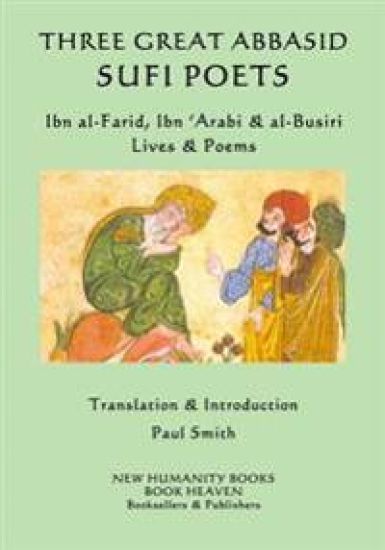
Three Great Abbasid Sufi Poets

Three Great Abbasid Sufi Poets

Ibn 'Arabi

Createspace Independent Publishing Platform
2015
pokkari

Halvin toimitettuna 32,10 €

THREE GREAT ABBASID SUFI POETS Ibn al-Farid, Ibn 'Arabi & al-Busiri Lives & Poems Translation & Introduction Paul Smith The Abbasid Caliphate that ruled the Islamic world was the golden age of Islamic culture. It ruled from 750 to 1258 AD, making it one of the longest and most influential of the Islamic dynasties. For most of its early history it was the largest empire in the world and this meant that it had contact with distant neighbours allowing it to adopt and synthesize ideas from all these cultures. All the arts and sciences flourished during these 500 years and in the art of poetry three poets stood out among the many great Sufi poets: these were Ibn al-Farid, Ibn 'Arabi and al-Busiri. Here is their lives & times and a large selection of their poetry in the correct beautiful rhyme-structures and meaning. Introduction on The Abbasid Caliphate; Poetry of the Period; Forms of Arabic Poetry of the Period; Sufis: Their Art & Use of Poetry; The Perfect Man, Pole or Perfect Master. Selected Bibliography. Large Format 7" x 10" Pages 327. COMMENTS ON PAUL SMITH'S TRANSLATION OF HAFEZ'S DIVAN"It is not a joke... the English version of ALL the ghazals of Hafez is a great feat and of paramount importance. I am astonished.." Dr. Mir Mohammad Taghavi (Dr. of Literature) Tehran." Superb translations. 99% Hafez 1% Paul Smith." Ali Akbar Shapurzman, translator of English to Persian and knower of Hafiz's Divan off by heart. "Smith has probably put together the greatest collection of literary facts and history concerning Hafez." Daniel Ladinsky (Penguin Books author). Paul Smith is a poet, author and translator of many books of Sufi poets of Persian, Arabic, Urdu, Turkish and other languages including Hafez, Sadi, Nizami, Rumi, 'Attar, Sana'i, Jahan Khatun, Obeyd Zakani, Mu'in ud-din Chishti, Amir Khusrau, Nesimi, Kabir, Anvari, Ansari, Jami, Khayyam, Hallaj, Rudaki, Yunus Emre Ghalib, Iqbal, Makhfi, Lalla Ded, Abu Nuwas, Ibn al-Farid, Rahman Baba, Nazir and many others, as well as his own poetry, fiction, plays, biographies, kids books and a dozen screenplays. New Humanity Books amazon.com/author/smithpa
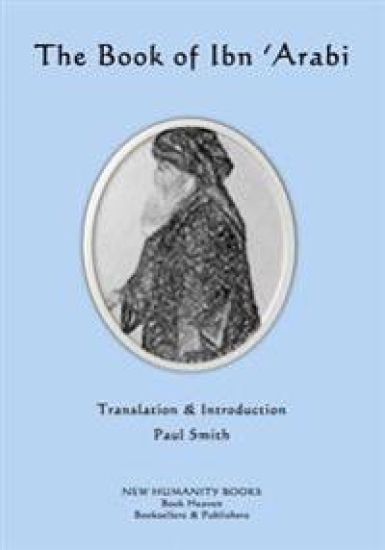
The Book of Ibn 'Arabi

The Book of Ibn 'Arabi

Ibn 'Arabi

Createspace Independent Publishing Platform
2015
pokkari

Halvin toimitettuna 29,00 €

THE BOOK OF IBN 'ARABI Translation & Introduction Paul Smith In the West he is known as the Doctor Maximus and in the Islamic world as The Great Master. Born in Murcia in Spain in 1165 his family moved to Seville. At thirty-five he left for Mecca where he completed his most influential book of poems The Interpreter of Ardent Desires (Tarjuman al-Ashwaq) and began writing his masterpiece, the vast Meccan Revelations. In 1204 he began further travels. In 1223 he settled in Damascus where he lived the last seventeen years of his life, dying in 1240. His tomb there is still an important place of pilgrimage. A prolific writer, Ibn 'Arabi is generally known as the prime exponent of the idea later known as the 'Unity of Being'. His emphasis was on the true potential of the human being and the path to realizing that potential and becoming the Perfect or complete person. Hundreds of works are attributed to him including a large Divan of poems most of which have yet to be translated. Introduction... on his life and poetry, forms he composed in & Sufism in poetry, Selected Bibliography. Appendix: The Tarjuman al-Ashwaq of Ibn 'Arabi, Translation of Poems & Commentary by Reynold A. Nicholson. The correct rhyme-structure has been kept as well as the beauty and meaning of this selection of his beautiful, mystical poems in the forms of qit'as, ghazals and a qasida. Large Format Paperback 7" x 10" 284 pages. COMMENTS ON PAUL SMITH'S TRANSLATION OF HAFIZ'S 'DIVAN'." It is not a joke... the English version of ALL the ghazals of Hafiz is a great feat and of paramount importance. I am astonished." Dr. Mir Mohammad Taghavi (Dr. of Literature) Tehran." Superb translations. 99% Hafiz 1% Paul Smith." Ali Akbar Shapurzman, translator of works in English into Persian and knower of Hafiz's Divan off by heart. "Smith has probably put together the greatest collection of literary facts and history concerning Hafiz." Daniel Ladinsky (Penguin Books). Paul Smith (b. 1945) is a poet, author and translator of many books of Sufi poets of the Persian, Arabic, Urdu, Turkish, Pashtu and other languages... including Hafiz, Sadi, Nizami, Rumi, 'Attar, Sana'i, Jahan Khatun, Obeyd Zakani, Mu'in, Amir Khusrau, Nesimi, Kabir, Anvari, Ansari, Jami, Omar Khayyam, Rudaki, Yunus Emre, Mahsati, Lalla Ded, Abu Nuwas, Ibn Farid, Majnun, Iqbal, Ghalib, Baba Farid, and many others, as well as his own poetry, fiction, plays, biographies, children's books and a dozen screenplays. New Humanity Books amazon.com/author/smithpa
Ibn 'Arabi

Ibn 'Arabi

Ibn 'Arabi

Createspace Independent Publishing Platform
2012
pokkari
IBN 'ARABI: SELECTED POEMS Translation & Introduction by Paul Smith In the West he is known as the Doctor Maximus and in the Islamic world as The Great Master. Born in Murcia in Spain in 1165 his family moved to Seville. At thirty-five he left for Mecca where he completed his most influential book of poems The Interpreter of Ardent Desires and began writing his masterpiece, the vast Meccan Revelations. In 1204 he began further travels. In 1223 he settled in Damascus where he lived the last seventeen years of his life, dying in 1240. His tomb there is still an important place of pilgrimage. A prolific writer, Ibn 'Arabi is generally known as the prime exponent of the idea later known as the 'Unity of Being'. His emphasis was on the true potential of the human being and the path to realizing that potential and becoming the Perfect or complete person. Hundreds of works are attributed to him including a large Divan of poems most of which have yet to be translated. Introduction... on his life and poetry, forms he composed in & Sufism in poetry, Selected Bibliography. The correct rhyme-structure has been kept as well as the beauty and meaning of this selection of his beautiful, mystical poems. 181 pages. COMMENTS ON PAUL SMITH'S TRANSLATION OF HAFIZ'S 'DIVAN'." It is not a joke... the English version of ALL the ghazals of Hafiz is a great feat and of paramount importance. I am astonished. If he comes to Iran I will kiss the fingertips that wrote such a masterpiece inspired by the Creator of all and I will lay down my head at his feet out of respect." Dr. Mir Mohammad Taghavi (Dr. of Literature) Tehran." Superb translations. 99% Hafiz 1% Paul Smith." Ali Akbar Shapurzman, translator of works in English into Persian and knower of Hafiz's Divan off by heart. "Smith has probably put together the greatest collection of literary facts and history concerning Hafiz." Daniel Ladinsky (Penguin Books). Paul Smith is a poet, author and translator of over 80 books of Sufi poets of the Persian, Arabic, Urdu, Turkish, Pashtu and other languages... including Hafiz, Sadi, Nizami, Rumi, 'Attar, Sana'i, Jahan Khatun, Obeyd Zakani, Mu'in, Amir Khusrau, Nesimi, Kabir, Anvari, Ansari, Jami, Omar Khayyam, Rudaki, Yunus Emre, Mahsati and many others, as well as his own poetry, fiction, plays, biographies, children's books and screenplays. Published by New Humanity Books amazon.com/author/smithpa
Contemplation of the Holy Mysteries

Contemplation of the Holy Mysteries

Ibn 'Arabi

Anqa Publishing
2009
nidottu
A major work of mystical literature, this account focuses on 14 visions in the form of dramatic conversations with the divine, interspersed with dazzling visionary episodes regarding the nature of existence, humans' relationship with reality, and the way to achieve true happiness. The introduction presents a resume of Ibn 'Arabi's life and examines in detail the style and symbolism of the contemplations. Presented for the first time in English, this work is a superb example of Ibn 'Arabi's inimitable style and deep perception.