Kirjojen hintavertailu – 12 903 724 kirjaa ja 27 kauppaa

Kirjailija

Ibrahim Dincer

Kirjat ja teokset yhdessä paikassa: 38 kirjaa, julkaisuja vuosilta 1997–2025, suosituimpiin kuuluu Thermal Energy Storage. Vertaile teosten hintoja ja tarkista saatavuus suomalaisista kirjakaupoista.

38 kirjaa

Kirjojen julkaisuvuodet: 1997–2025.

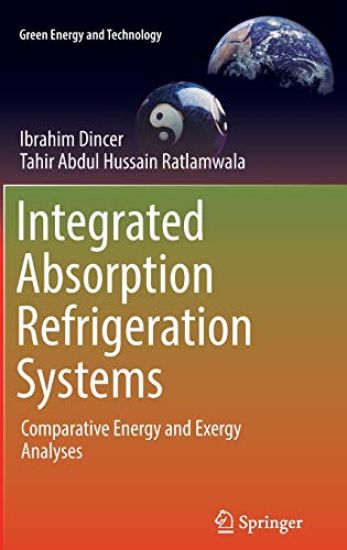
Integrated Absorption Refrigeration Systems

Integrated Absorption Refrigeration Systems

Ibrahim Dincer; Tahir Abdul Hussain Ratlamwala

Springer International Publishing AG
2018
nidottu
This book provides a detailed analysis of absorption refrigeration systems, covering single effect to multi-effect systems and their applications. Both the first and second laws of thermodynamics are discussed in relation to refrigeration systems to show how system performance differs from one law to another. Comparative energy and exergy analyses and assessments of single effect, double effect, triple effect and quadruple effect absorption refrigeration system are performed to illustrate the impact of an increase in the number of effects on system performance. In particular, the second law (exergy) formulation for absorption refrigeration systems, rarely discussed by other works, is covered in detail. Integrated Absorption Refrigeration Systems will help researchers, students and instructors in the formulation of energy and exergy efficiency equations for absorption refrigeration systems.
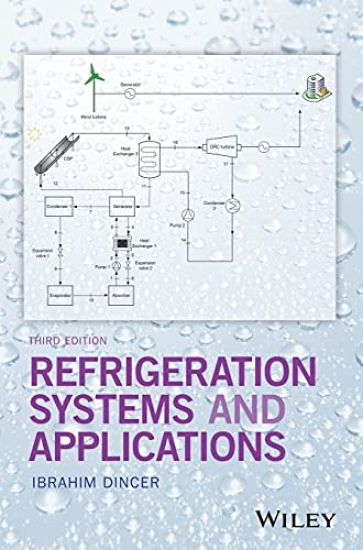
Refrigeration Systems and Applications

Refrigeration Systems and Applications

Ibrahim Dincer

Wiley-Blackwell
2017
sidottu
The definitive text/reference for students, researchers and practicing engineers This book provides comprehensive coverage on refrigeration systems and applications, ranging from the fundamental principles of thermodynamics to food cooling applications for a wide range of sectoral utilizations. Energy and exergy analyses as well as performance assessments through energy and exergy efficiencies and energetic and exergetic coefficients of performance are explored, and numerous analysis techniques, models, correlations and procedures are introduced with examples and case studies. There are specific sections allocated to environmental impact assessment and sustainable development studies. Also featured are discussions of important recent developments in the field, including those stemming from the author’s pioneering research. Refrigeration is a uniquely positioned multi-disciplinary field encompassing mechanical, chemical, industrial and food engineering, as well as chemistry. Its wide-ranging applications mean that the industry plays a key role in national and international economies. And it continues to be an area of active research, much of it focusing on making the technology as environmentally friendly and sustainable as possible without compromising cost efficiency and effectiveness. This substantially updated and revised edition of the classic text/reference now features two new chapters devoted to renewable-energy-based integrated refrigeration systems and environmental impact/sustainability assessment. All examples and chapter-end problems have been updated as have conversion factors and the thermophysical properties of an array of materials. Provides a solid foundation in the fundamental principles and the practical applications of refrigeration technologiesExamines fundamental aspects of thermodynamics, refrigerants, as well as energy and exergy analyses and energy and exergy based performance assessment criteria and approachesIntroduces environmental impact assessment methods and sustainability evaluation of refrigeration systems and applicationsCovers basic and advanced (and hence integrated) refrigeration cycles and systems, as well as a range of novel applicationsDiscusses crucial industrial, technical and operational problems, as well as new performance improvement techniques and tools for better design and analysisFeatures clear explanations, numerous chapter-end problems and worked-out examples Refrigeration Systems and Applications, Third Edition is an indispensable working resource for researchers and practitioners in the areas of Refrigeration and Air Conditioning. It is also an ideal textbook for graduate and senior undergraduate students in mechanical, chemical, biochemical, industrial and food engineering disciplines.

Thermal Management of Electric Vehicle Battery Systems

Thermal Management of Electric Vehicle Battery Systems

Ibrahim Dincer; Halil S. Hamut; Nader Javani

John Wiley Sons Inc
2017
sidottu
Thermal Management of Electric Vehicle Battery Systems provides a thorough examination of various conventional and cutting edge electric vehicle (EV) battery thermal management systems (including phase change material) that are currently used in the industry as well as being proposed for future EV batteries. It covers how to select the right thermal management design, configuration and parameters for the users’ battery chemistry, applications and operating conditions, and provides guidance on the setup, instrumentation and operation of their thermal management systems (TMS) in the most efficient and effective manner. This book provides the reader with the necessary information to develop a capable battery TMS that can keep the cells operating within the ideal operating temperature ranges and uniformities, while minimizing the associated energy consumption, cost and environmental impact. The procedures used are explained step-by-step, and generic and widely used parameters are utilized as much as possible to enable the reader to incorporate the conducted analyses to the systems they are working on. Also included are comprehensive thermodynamic modelling and analyses of TMSs as well as databanks of component costs and environmental impacts, which can be useful for providing new ideas on improving vehicle designs. Key features: Discusses traditional and cutting edge technologies as well as research directionsCovers thermal management systems and their selection for different vehicles and applicationsIncludes case studies and practical examples from the industryCovers thermodynamic analyses and assessment methods, including those based on energy and exergy, as well as exergoeconomic, exergoenvironmental and enviroeconomic techniquesAccompanied by a website hosting codes, models, and economic and environmental databases as well as various related information Thermal Management of Electric Vehicle Battery Systems is a unique book on electric vehicle thermal management systems for researchers and practitioners in industry, and is also a suitable textbook for senior-level undergraduate and graduate courses.
Clean Rail Transportation Options

Clean Rail Transportation Options

Ibrahim Dincer; Janette Hogerwaard; Calin Zamfirescu

Springer International Publishing AG
2016
nidottu
This book will assess and compare several options for ammonia co-fueling of diesel locomotives with integrated heat recovery, multigeneration (including on-board hydrogen fuel production from ammonia), and emission reduction subsystems from energy, exergy, and environmental perspectives. Economic considerations will be presented to compare the cost of the proposed systems for different scenarios such as carbon-tax rates, diesel fuel cost and ammonia cost. Fossil fuel consumption and the associated negative environmental impact of their combustion is a significant global concern that requires effective, practical, and sustainable solutions. From a Canadian perspective, the Transportation Sector contributes more than 25% of national greenhouse gas emissions due to fossil fuel combustion, largely due to road vehicles (cars, light and heavy duty trucks). This is a complex and critical challenge to address, particularly in urban areas with high population density. There is a need to develop alternative energy solutions for mass passenger and freight transportation systems that will reduce both the traffic-volume of road vehicles as well as the emissions from the mass transportation systems. The book will be helpful to students in senior-level undergraduate and graduate level courses related to energy, thermodynamics, thermal sciences, combustion, HVAC&R, etc. The quantitative comparative assessment of such alternative energy systems provided by this book will be useful for researchers and professionals interested sustainable development.
Integrated Absorption Refrigeration Systems

Integrated Absorption Refrigeration Systems

Ibrahim Dincer; Tahir Abdul Hussain Ratlamwala

Springer International Publishing AG
2016
sidottu
This book provides a detailed analysis of absorption refrigeration systems, covering single effect to multi-effect systems and their applications. Both the first and second laws of thermodynamics are discussed in relation to refrigeration systems to show how system performance differs from one law to another. Comparative energy and exergy analyses and assessments of single effect, double effect, triple effect and quadruple effect absorption refrigeration system are performed to illustrate the impact of an increase in the number of effects on system performance. In particular, the second law (exergy) formulation for absorption refrigeration systems, rarely discussed by other works, is covered in detail. Integrated Absorption Refrigeration Systems will help researchers, students and instructors in the formulation of energy and exergy efficiency equations for absorption refrigeration systems.
Sustainable Energy Systems and Applications

Sustainable Energy Systems and Applications

Ibrahim Dincer; Calin Zamfirescu

Springer-Verlag New York Inc.
2016
nidottu
The concept of sustainable development was first introduced by the Brundtland Commission almost 20 years ago and has received increased attention during the past decade. It is now an essential part of any energy activities. This is a research-based textbook which can be used by senior undergraduate students, graduate students, engineers, practitioners, scientists, researchers in the area of sustainable energy systems and aimed to address some key pillars: better efficiency, better cost effectiveness, better use of energy resources, better environment, better energy security, and better sustainable development. It also includes some cutting-edge topics, such hydrogen and fuel cells, renewable, clean combustion technologies, CO2 abatement technologies, and some potential tools (exergy, constructal theory, etc.) for design, analysis and performance improvement.
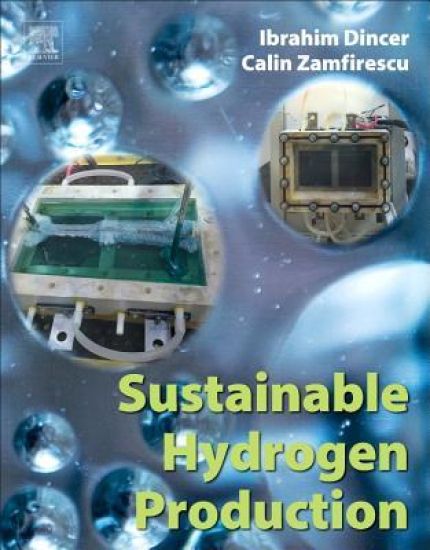
Sustainable Hydrogen Production

Sustainable Hydrogen Production

Ibrahim Dincer; Calin Zamfirescu

Elsevier Science Publishing Co Inc
2016
nidottu
Sustainable Hydrogen Production provides readers with an introduction to the processes and technologies used in major hydrogen production methods. This book serves as a unique source for information on advanced hydrogen generation systems and applications (including integrated systems, hybrid systems, and multigeneration systems with hydrogen production). Advanced and clean technologies are linked to environmental impact issues, and methods for sustainable development are thoroughly discussed. With Earth’s fast-growing populations, we face the challenge of rapidly rising energy needs. To balance these we must explore more sustainable methods of energy production. Hydrogen is one key sustainable method because of its versatility. It is a constituent of a large palette of essential materials, chemicals, and fuels. It is a source of power and a source of heat. Because of this versatility, the demand for hydrogen is sure to increase as we aim to explore more sustainable methods of energy. Furthermore, Sustainable Hydrogen Production provides methodologies, models, and analysis techniques to help achieve better use of resources, efficiency, cost-effectiveness, and sustainability. The book is intellectually rich and interesting as well as practical. The fundamental methods of hydrogen production are categorized based on type of energy source: electrical, thermal, photonic, and biochemical. Where appropriate, historical context is introduced. Thermodynamic concepts, illustrative examples, and case studies are used to solve concrete power engineering problems.
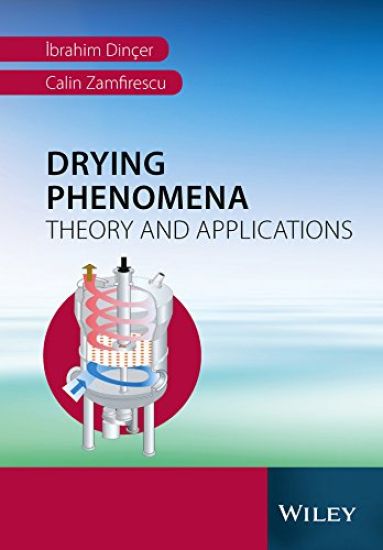
Drying Phenomena

Drying Phenomena

Ibrahim Dincer; Calin Zamfirescu

Wiley-Blackwell
2016
sidottu
Comprehensively covers conventional and novel drying systems and applications, while keeping a focus on the fundamentals of drying phenomena. Presents detailed thermodynamic and heat/mass transfer analyses in a reader-friendly and easy-to-follow approachIncludes case studies, illustrative examples and problemsPresents experimental and computational approachesIncludes comprehensive information identifying the roles of flow and heat transfer mechanisms on the drying phenomenaConsiders industrial applications, corresponding criterion, complications, prospects, etc. Discusses novel drying technologies, the corresponding research platforms and potential solutions
Clean Rail Transportation Options

Clean Rail Transportation Options

Ibrahim Dincer; Janette Hogerwaard; Calin Zamfirescu

Springer International Publishing AG
2015
sidottu
This book will assess and compare several options for ammonia co-fueling of diesel locomotives with integrated heat recovery, multigeneration (including on-board hydrogen fuel production from ammonia), and emission reduction subsystems from energy, exergy, and environmental perspectives. Economic considerations will be presented to compare the cost of the proposed systems for different scenarios such as carbon-tax rates, diesel fuel cost and ammonia cost. Fossil fuel consumption and the associated negative environmental impact of their combustion is a significant global concern that requires effective, practical, and sustainable solutions. From a Canadian perspective, the Transportation Sector contributes more than 25% of national greenhouse gas emissions due to fossil fuel combustion, largely due to road vehicles (cars, light and heavy duty trucks). This is a complex and critical challenge to address, particularly in urban areas with high population density. There is a need to develop alternative energy solutions for mass passenger and freight transportation systems that will reduce both the traffic-volume of road vehicles as well as the emissions from the mass transportation systems. The book will be helpful to students in senior-level undergraduate and graduate level courses related to energy, thermodynamics, thermal sciences, combustion, HVAC&R, etc. The quantitative comparative assessment of such alternative energy systems provided by this book will be useful for researchers and professionals interested sustainable development.
Hydrogen Production from Nuclear Energy

Hydrogen Production from Nuclear Energy

Greg F Naterer; Ibrahim Dincer; Calin Zamfirescu

Springer London Ltd
2015
nidottu
With the resurgence of nuclear power around the world, and the increasingly important role of hydrogen as a clean energy carrier, the utilization of nuclear energy for large-scale hydrogen production will have a key role in a sustainable energy future. Co-generation of both electricity and hydrogen from nuclear plants will become increasingly attractive. It enables load leveling together with renewable energy and storage of electricity in the form of hydrogen, when electricity prices and demand are lowest at off-peak hours of nuclear plants, such as overnight. Hydrogen Production from Nuclear Energy provides an overview of the latest developments and methods of nuclear based hydrogen production, including electrolysis and thermochemical cycles. Particular focus is given to thermochemical water splitting by the copper-chlorine and sulphur-based cycles. Cycle configurations, equipment design, modeling and implementation issues are presented and discussed. The book provides the reader with an overview of the key enabling technologies towards the design and industrialization of hydrogen plants that are co-located and linked with nuclear plants in the future. The book includes illustrations of technology developments, tables that summarize key features and results, overviews of recent advances and new methods of nuclear hydrogen production. The latest results from leading authorities in the fields will be presented, including efficiencies, costs, equipment design, and modeling.
Advanced Power Generation Systems

Advanced Power Generation Systems

Ibrahim Dincer; Calin Zamfirescu

Elsevier Science Publishing Co Inc
2014
sidottu

Halvin toimitettuna 138,60 €

Advanced Power Generation Systems examines the full range of advanced multiple output thermodynamic cycles that can enable more sustainable and efficient power production from traditional methods, as well as driving the significant gains available from renewable sources. These advanced cycles can harness the by-products of one power generation effort, such as electricity production, to simultaneously create additional energy outputs, such as heat or refrigeration. Gas turbine-based, and industrial waste heat recovery-based combined, cogeneration, and trigeneration cycles are considered in depth, along with Syngas combustion engines, hybrid SOFC/gas turbine engines, and other thermodynamically efficient and environmentally conscious generation technologies. The uses of solar power, biomass, hydrogen, and fuel cells in advanced power generation are considered, within both hybrid and dedicated systems. The detailed energy and exergy analysis of each type of system provided by globally recognized author Dr. Ibrahim Dincer will inform effective and efficient design choices, while emphasizing the pivotal role of new methodologies and models for performance assessment of existing systems. This unique resource gathers information from thermodynamics, fluid mechanics, heat transfer, and energy system design to provide a single-source guide to solving practical power engineering problems.
Solar Based Hydrogen Production Systems

Solar Based Hydrogen Production Systems

Ibrahim Dincer; Anand S. Joshi

Springer-Verlag New York Inc.
2013
nidottu
This book provides a comprehensive analysis of various solar based hydrogen production systems. The book covers first-law (energy based) and second-law (exergy based) efficiencies and provides a comprehensive understanding of their implications. It will help minimize the widespread misuse of efficiencies among students and researchers in energy field by using an intuitive and unified approach for defining efficiencies. The book gives a clear understanding of the sustainability and environmental impact analysis of the above systems. The book will be particularly useful for a clear understanding of second law (exergy) efficiencies for various systems. It may serve as a reference book to the researchers in energy field. The definitions and concepts developed in the book will be explained through illustrative examples.
Hydrogen Production from Nuclear Energy

Hydrogen Production from Nuclear Energy

Greg F Naterer; Ibrahim Dincer; Calin Zamfirescu

Springer London Ltd
2013
sidottu
With the resurgence of nuclear power around the world, and the increasingly important role of hydrogen as a clean energy carrier, the utilization of nuclear energy for large-scale hydrogen production will have a key role in a sustainable energy future. Co-generation of both electricity and hydrogen from nuclear plants will become increasingly attractive. It enables load leveling together with renewable energy and storage of electricity in the form of hydrogen, when electricity prices and demand are lowest at off-peak hours of nuclear plants, such as overnight. Hydrogen Production from Nuclear Energy provides an overview of the latest developments and methods of nuclear based hydrogen production, including electrolysis and thermochemical cycles. Particular focus is given to thermochemical water splitting by the copper-chlorine and sulphur-based cycles. Cycle configurations, equipment design, modeling and implementation issues are presented and discussed. The book provides the reader with an overview of the key enabling technologies towards the design and industrialization of hydrogen plants that are co-located and linked with nuclear plants in the future. The book includes illustrations of technology developments, tables that summarize key features and results, overviews of recent advances and new methods of nuclear hydrogen production. The latest results from leading authorities in the fields will be presented, including efficiencies, costs, equipment design, and modeling.
Efficiency Evaluation of Energy Systems

Efficiency Evaluation of Energy Systems

Mehmet Kanoglu; Yunus A. Çengel; Ibrahim DinCer

Springer-Verlag New York Inc.
2012
nidottu
Efficiency is one of the most frequently used terms in thermodynamics, and it indicates how well an energy conversion or process is accomplished. Efficiency is also one of the most frequently misused terms in thermodynamics and is often a source of misunderstanding. This is because efficiency is often used without being properly defined first. This book intends to provide a comprehensive evaluation of various efficiencies used for energy transfer and conversion systems including steady-flow energy devices (turbines, compressors, pumps, nozzles, heat exchangers, etc.), various power plants, cogeneration plants, and refrigeration systems. The book will cover first-law (energy based) and second-law (exergy based) efficiencies and provide a comprehensive understanding of their implications. It will help minimize the widespread misuse of efficiencies among students and researchers in energy field by using an intuitive and unified approach for defining efficiencies. The book will be particularly useful for a clear understanding of second law (exergy) efficiencies for various systems. It may serve as a reference book to the researchers in energy field. The definitions and concepts developed in the book will be explained through illustrative examples.
Porous and Complex Flow Structures in Modern Technologies

Porous and Complex Flow Structures in Modern Technologies

Adrian Bejan; Ibrahim Dincer; Sylvie Lorente; Antonio Miguel; Heitor Reis

Springer-Verlag New York Inc.
2011
nidottu
Porous and Complex Flow Structures in Modern Technologies represents a new approach to the field, considering the fundamentals of porous media in terms of the key roles played by these materials in modern technology. Intended as a text for advanced undergraduates and as a reference for practicing engineers, the book uses the physics of flows in porous materials to tie together a wide variety of important issues from such fields as biomedical engineering, energy conversion, civil engineering, electronics, chemical engineering, and environmental engineering. Thus, for example, flows of water and oil through porous ground play a central role in energy exploration and recovery (oil wells, geothermal fluids), energy conversion (effluents from refineries and power plants), and environmental engineering (leachates from waste repositories). Similarly, the demands of miniaturization in electronics and in biomedical applications are driving research into the flow of heat and fluids through small-scale porous media (heat exchangers, filters, gas exchangers). Filters, catalytic converters, the drying of stored grains, and a myriad of other applications involve flows through porous media. By providing a unified theoretical framework that includes not only the traditional homogeneous and isotropic media but also models in which the assumptions of representative elemental volumes or global thermal equilibrium fail, the book provides practicing engineers the tools they need to analyze complex situations that arise in practice. This volume includes examples, solved problems and an extensive glossary of symbols.
Sustainable Energy Systems and Applications

Sustainable Energy Systems and Applications

Ibrahim Dincer; Calin Zamfirescu

Springer-Verlag New York Inc.
2011
sidottu
The concept of sustainable development was first introduced by the Brundtland Commission almost 20 years ago and has received increased attention during the past decade. It is now an essential part of any energy activities. This is a research-based textbook which can be used by senior undergraduate students, graduate students, engineers, practitioners, scientists, researchers in the area of sustainable energy systems and aimed to address some key pillars: better efficiency, better cost effectiveness, better use of energy resources, better environment, better energy security, and better sustainable development. It also includes some cutting-edge topics, such hydrogen and fuel cells, renewable, clean combustion technologies, CO2 abatement technologies, and some potential tools (exergy, constructal theory, etc.) for design, analysis and performance improvement.
Porous and Complex Flow Structures in Modern Technologies

Porous and Complex Flow Structures in Modern Technologies

Adrian Bejan; Ibrahim Dincer; Sylvie Lorente; Antonio Miguel; Heitor Reis

Springer-Verlag New York Inc.
2004
sidottu
Porous and Complex Flow Structures in Modern Technologies represents a new approach to the field, considering the fundamentals of porous media in terms of the key roles played by these materials in modern technology. Intended as a text for advanced undergraduates and as a reference for practicing engineers, the book uses the physics of flows in porous materials to tie together a wide variety of important issues from such fields as biomedical engineering, energy conversion, civil engineering, electronics, chemical engineering, and environmental engineering. Thus, for example, flows of water and oil through porous ground play a central role in energy exploration and recovery (oil wells, geothermal fluids), energy conversion (effluents from refineries and power plants), and environmental engineering (leachates from waste repositories). Similarly, the demands of miniaturization in electronics and in biomedical applications are driving research into the flow of heat and fluids through small-scale porous media (heat exchangers, filters, gas exchangers). Filters, catalytic converters, the drying of stored grains, and a myriad of other applications involve flows through porous media. By providing a unified theoretical framework that includes not only the traditional homogeneous and isotropic media but also models in which the assumptions of representative elemental volumes or global thermal equilibrium fail, the book provides practicing engineers the tools they need to analyze complex situations that arise in practice. This volume includes examples, solved problems and an extensive glossary of symbols.