

Kirjailija
Ida Vitale
Kirjat ja teokset yhdessä paikassa: 11 kirjaa, julkaisuja vuosilta 2010–2026, suosituimpiin kuuluu Poemas de juventud 1943 1946. Vertaile teosten hintoja ja tarkista saatavuus suomalaisista kirjakaupoista.
11 kirjaa
Kirjojen julkaisuvuodet: 2010–2026.
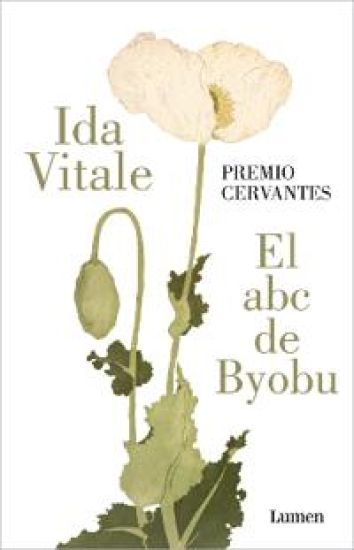
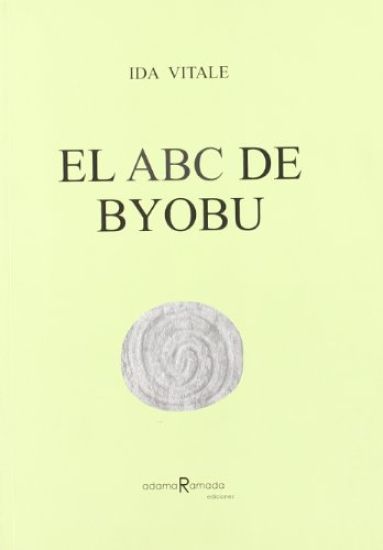
«Lo importante est debajo de las superficies, sospecha Byobu. Por eso escarba, escarba donde se le abra un espacio libre, donde pueda alcanzar un brazo de suelo sin rboles, sin casas, sin c scara. Hay una delicia en redescubrir lo cotidiano por medio del lenguaje rarificado de la l rica. Como si al nombrar lo com n con una precisi n extraordinaria surgieran no solo nuevos poemas, sino tambi n nuevos mundos. Como si se llevara a cabo un acto de magia verbal que transforma la realidad desde sus engranajes m s profundos. El abc de Byobu juega con la figura del biombo (que en japon s se relaciona con las ra ces de «pantalla y «viento ) para entrever reflexiones sobre lo m nimo y habitual, escritas desde la perspectiva de la palabra como umbral de posibilidades y como personaje de una conciencia original y l dica. A lo largo de treinta pasajes, Ida Vitale construye un universo ampl simo y c lido, en el que el lector tiene la oportunidad de transformarse en un animal ling stico y escapista que corra por estas p ginas de la mano de la poes a. ENGLISH DESCRIPTION "It's what's below the surface that's important, Byobu suspects, searching until she manages to find a clear stretch of land without trees, houses or preconceptions." There is a special kind of delight in rediscovering the mundane through the rarified language of poetry. As if naming the commonplace with extraordinary precision resulted not only in new poems, but also new worlds, in a kind of verbal magic with the power to transform the very workings of reality. The title of this book plays with the idea of byobu, the Japanese screens used as decorations or room dividers. In Japanese, the term derives from the words for "wall" and "wind." Vitale invokes it here in reflections on the trivial and habitual, stemming from the premise that words open a world of possibilities.
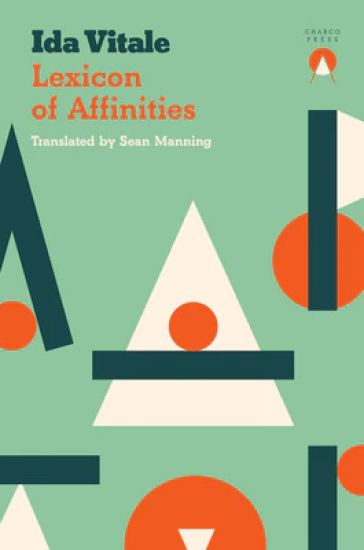
A prowl through words reveals the unstable character of the cosmos. With entries as varied as ‘elbow’, ‘Ophelia’, ‘progress’, the painter Giorgio Morandi, ‘chess’, ‘Eulalia’ (a friend of the author’s aunt), and ‘unicorn’, Ida Vitale constructs a dictionary of her long and passionately engaged artistic life. Taking the reader by the arm, she invites us to become her confidant, sharing her remarkable 20th century as a member of a storied generation of Latin American writers, of whom she is the last remaining alive. It’s a compendium of friendship, travel, reading, and the endless opportunities she found for 'the joyful possibility of creation.' Like every dictionary, Lexicon of Affinities seeks to impose order on chaos, even if in its exuberant, whimsical profusion it lays bare the unstable character of the cosmos.
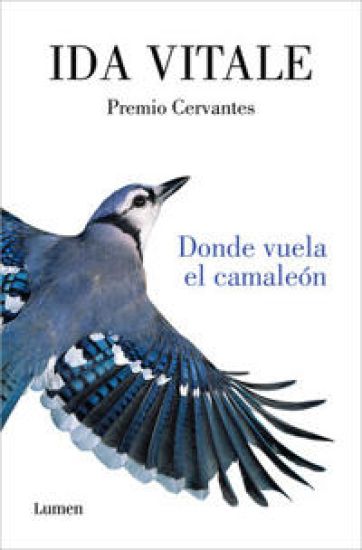
Una joya literaria in dita en Espa a, por una de las escritoras m s reconocidas de la literatura en espa ol, ganadora de los premios Cervantes, FIL Guadalajara y Reina Sof a «Es al mismo tiempo intelectual y popular, universal y personal, transparente y honda. Un referente fundamental para poetas de todas las generaciones y en todos los rincones del espa ol . -Acta del jurado del Premio Cervantes Publicado originalmente en 1996 e in dito en Espa a hasta el momento, este hermoso libro de Ida Vitale, situado a medio camino entre la prosa y la poes a, re ne cuentos, f bulas y alegor as que conforman una suerte de bestiario humano en el que la premio Cervantes uruguaya revisita algunos mitos cl sicos y da cabida a la fantas a de aliento borgiano. Con perfecci n formal, un inteligente manejo de la iron a y un magistral empleo de todas las posibilidades expresivas de nuestra lengua, la autora deslumbra una vez m s con estas historias inquietantes en torno a la belleza, el dolor, el misterio y la profunda cuesti n de la existencia. Donde vuela el camale n es, en definitiva, una peque a joya que amalgama no solo una po tica, sino una manera de ver la vida. ENGLISH DESCRIPTION Never before published in Spain, a literary gem by one of the most renowned writers in Spanish literature, recipient of the Cervantes, FIL Guadalajara, and Reina Sof a prizes. "It is at the same time intellectual and popular, universal and personal, clear and deep. An essential reference to poets of all generations, in every Spanish-speaking corner of the world." --Statement of the Cervantes Prize jury First published in 1996 and unpublished in Spain until now, this beautiful book by Ida Vitale, halfway between prose and poetry, has short stories, fables, and allegories composing a sort of human bestiary in which the Uruguayan author, awarded the Cervantes Prize, revisits some of the classic myths and gives room to fantasy with a Borgesian air. With formal perfection, a smart use of irony, and a masterful use of all expressive possibilities in the Spanish language, the author dazzles once again with these unsettling stories concerning beauty, pain, mystery, and the profound matter of existence. Where the Chameleon Flies definitely is a small gem that not only welds together a poetic work, but a way to look at life.
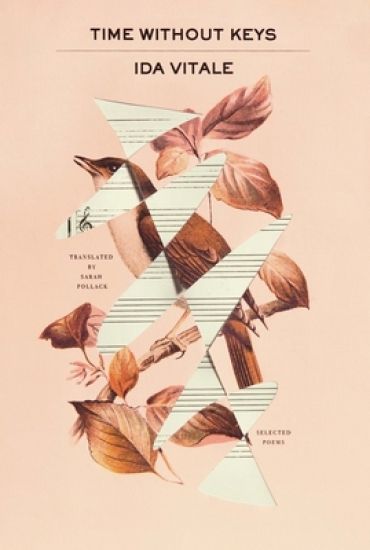
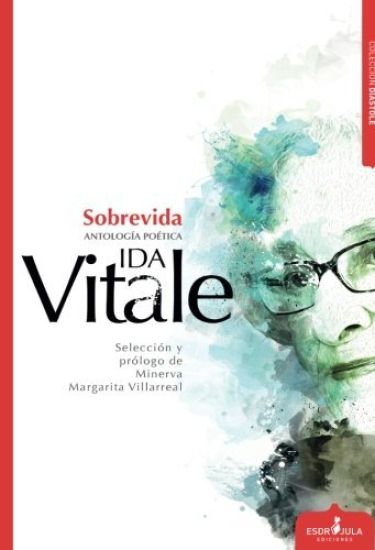
The celebrated writer Álvaro Mutis envied new readers of Ida Vitale’s poetry: “unexpected pleasures await them.” Time Without Keys: Selected Poems is the first volume of Vitale’s illustrious poetry to appear in the US. The selection spans seventy-five years and the wonders within abound—the skies over Montevideo, falconry, the saxifrage’s bloom, gratitude for the alphabet and summer—as do urgent questions about our relationship with the world. How does our perception of time shape history, as well as our social and political constructs? Vitale’s poetic and human vitality have made her a storied figure in the Spanish language and beyond; her writing revered for being classic and modern, precise and lucid, intellectually challenging and rich in tradition. This bilingual edition, presented in reverse chronological order, offers the reader both a wide range of Vitale’s most beloved poems, as well as a wealth of recent work. The translator Sarah Pollack, Vitale’s first translator into English, has written an informative afterword about Vitale’s life and work.
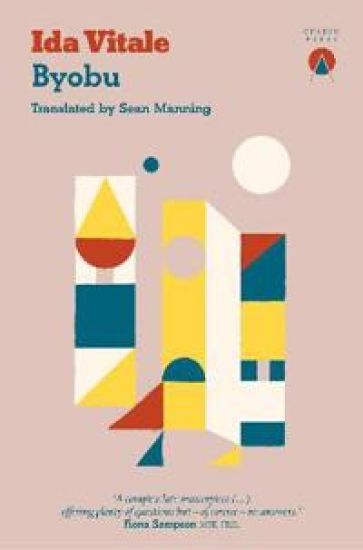
Byobu reveals a rich inner world, one driven by its meticulous attention to our rich outer one."a story’s existence, even if not well defined or well assigned, even if only in its formative stage, just barely latent, emits vague but urgent emanations." Byobu's every interaction trembles with possibility and faint menace. A crack in the walls of his house, marring it forever, means he must burn it down. A stoplight asks what the value of obedience is, what hopefulness it contains, and what insensible anarchy it defies. In brief episodes, aphorisms, and moments of spiritual turbulence and gentle scrutiny, reside a wealth of habits, worries, curiosities, pleasures, peculiarities, and efforts to understand. Representative of the modesty and complexity of Ida Vitale’s poetic universe, Byobu flushes the world with meaning and playfully offers another way of inhabiting the every day.
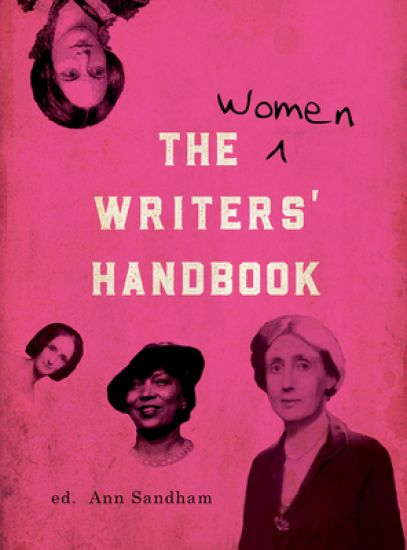
The Women Writers' Handbook
A.S. Byatt; Philippa Gregory; Jackie Kay; Madeleine Thien; Ida Vitale; Emma Woolf
Aurora Metro Books
2020
nidottu
To celebrate Aurora Metro's 30th anniversary as an independent publisher, 20% of profits will to go to the Virginia Woolf statue campaign in the UK. This is a revised edition of the publisher's inaugural publication in 1990, which won the Pandora Award from Women-in-Publishing. Inspirational in its original format, this new edition features poems, stories, essays and interviews with over 30 women writers, both emerging authors and luminaries of contemporary literature such as: A. S. BYATT, KIT DE WAAL, CAROL ANN DUFFY, PHILIPPA GREGORY, JACKIE KAY, MADELINE THIEN, CLARE TOMALIN, SARAH WATERS, and the great-niece of Virginia Woolf herself, EMMA WOOLF. Together with the original writing workshops plus black and white illustrations from women illustrators. Guest editor Ann Sandham has compiled the new collection.
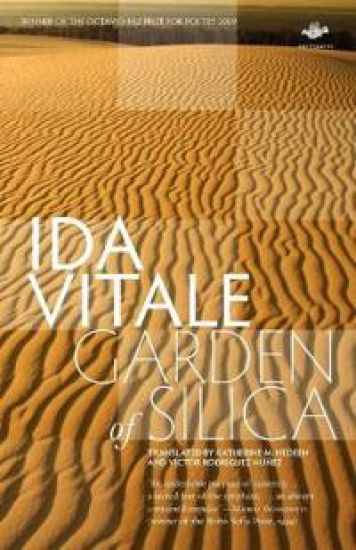
Garden of Silica is the first poetry anthology of the Uruguayan Ida Vitale to appear in English, spanning eight books published from 1960 to the present. Vitale is one of the fundamental voices of Latin American literature, and her work also encompasses essays, short stories, journalism, and translation. She belongs to Uruguay's Critical Generation of the 1940s, whose mission was the construction of a participative intellectual subject. Vitale's poetry illustrates the incompatibility of the construction of that intellectual subject and realism. It is not the case of an idealist aesthetic that denies the existence of objective reality or offers only a testimony of individuality. Rather, these texts seek a balance between subjectivity and objectivity, and accordingly the private and the public. In addition, with a revealing gesture of feminist undertones, intellectual capacity is privileged above that of sentimentality. As a result, Vitale's message is implicit, requiring an active reader, one involved in the very process of creation. Placing the intellectual subject at the forefront, and thus relegating the national and the feminine to a second plane, Ida Vitale's poetry offers one of the most profound and provocative representations of women's subjectivity in the Spanish language.