
Kirjailija
Idries Shah
Kirjat ja teokset yhdessä paikassa: 643 kirjaa, julkaisuja vuosilta 1991–2026, suosituimpiin kuuluu Die Seun Sonder 'n Stem en die Mans Wat Nie Kon Hoor Nie. Vertaile teosten hintoja ja tarkista saatavuus suomalaisista kirjakaupoista.
643 kirjaa
Kirjojen julkaisuvuodet: 1991–2026.
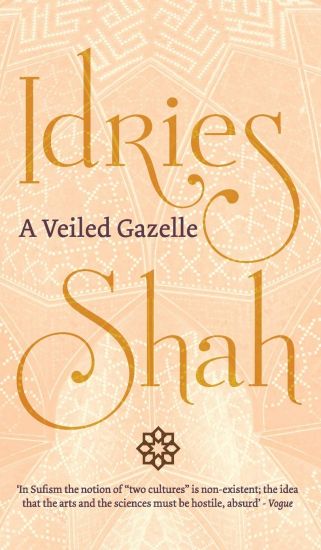
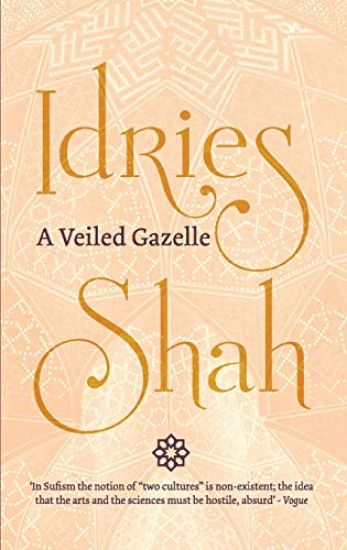
A 'Veiled Gazelle', as the great mystic Ibn Arabi explains in his Interpreter of Desires, is a subtlety, an organ of higher perception. Sufi experientialists refer to the activation of these centres of awareness as the awakening of real knowledge of Truth beyond form. A Veiled Gazelle considers the symbolic and instrumental employment of its literature in Sufi studies. Seldom didactic, and never meant only as entertainment, such works are regarded as some of the world's greatest and most important writing.
The Commanding Self, in Sufic terminology, is that mixture of the primitive and conditioned responses, common to everyone, which inhibits and distorts human progress and understanding. This book was described by Shah as the key to understanding his entire corpus of work. While complete in itself as an anthology of hitherto unpublished work, it serves to illustrate and amplify Idries Shah's preceding books on the Sufi Way. In its introduction, he writes, 'Thousands of books and monographs have been written on Sufism and the Sufis, almost all of them from the point of view of other ways of thinking. The result has been chaos in the literature, and confusion in the reader. Over the centuries, some of the world's most eminent scholars have fallen into the trap of trying to examine, access or consider the Sufi phenomenon through a set of culture-bound preconceptions.'
'Perhaps the best introduction to the body of Shah's work, the most comprehensively informative. And one is immediately forced to use one's mind in a new way.' - The New York TimesWhen it first appeared in 1964, The Sufis was welcomed as the decisive work on the subject: rich in scope, clearly explaining the traditions and philosophy of the Sufis to a Western audience for the first time. In the five decades since its release, the book has been translated into dozens of languages, and has found a wide readership in both East and West. It is used as a text in scores of leading universities around the world, and the material contained within it has been applied by psychologists and physicists, by school teachers, lawyers, social workers, and by ordinary members of the public. Ted Hughes wrote of it: 'An astonishing book. The Sufis must be the biggest society of sensible men on earth'; and Nobel laureate Doris Lessing said of it: 'I had waited my entire life to read this book.'
'Perhaps the best introduction to the body of Shah's work, the most comprehensively informative. And one is immediately forced to use one's mind in a new way.' - The New York TimesWhen it first appeared in 1964, The Sufis was welcomed as the decisive work on the subject: rich in scope, clearly explaining the traditions and philosophy of the Sufis to a Western audience for the first time. In the five decades since its release, the book has been translated into dozens of languages, and has found a wide readership in both East and West. It is used as a text in scores of leading universities around the world, and the material contained within it has been applied by psychologists and physicists, by school teachers, lawyers, social workers, and by ordinary members of the public. Ted Hughes wrote of it: 'An astonishing book. The Sufis must be the biggest society of sensible men on earth'; and Nobel laureate Doris Lessing said of it: 'I had waited my entire life to read this book.'
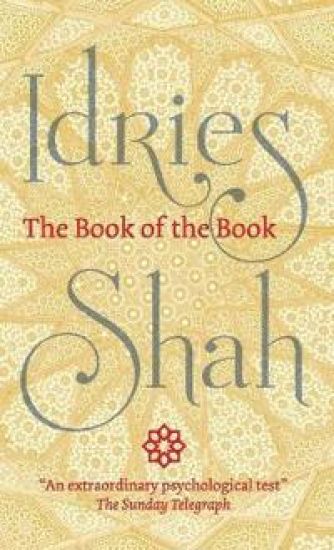
Used for more than seven hundred years as a teaching story, The Book of the Book is one of the most compelling and astonishing texts ever to emerge from the Orient. Its central premise is the simple phrase: 'When you realize the difference between the container and the content, you will have knowledge.' When the book first appeared in English thirty-five years ago, its printers questioned how it could be a book, as did reviewers, scholars, and people who paid money to buy it. The Book of the Book is now in its seventh impression, and is studied at university level, appreciated by all for its simple brilliance.
Used for more than seven hundred years as a teaching story, The Book of the Book is one of the most compelling and astonishing texts ever to emerge from the Orient. Its central premise is the simple phrase: 'When you realize the difference between the container and the content, you will have knowledge.'When the book first appeared in English thirty-five years ago, its printers questioned how it could be a book, as did reviewers, scholars, and people who paid money to buy it. The Book of the Book is now in its seventh impression, and is studied at university level, appreciated by all for its simple brilliance.
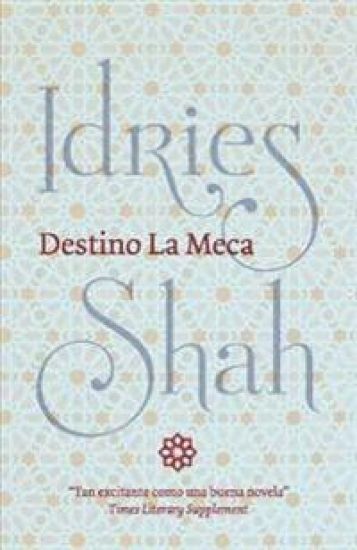
Publicado por primera vez en 1957, Destino La Meca es tanto un ambicioso diario de viaje como tambi n un trabajo de investigaci n etnogr fica y cultural. Shah documenta un amplio rango de viajes fascinantes: su expedici n tras las minas de oro del Rey Salom n en las costas del mar Rojo en Sud n, sus encuentros en caravasares del desierto y estad as con contrabandistas del Mediterr neo, y el tiempo que pas como invitado personal del anciano rey Ibn Saud. Hoy, Destino La Meca es un libro tan entretenido como cuando fue publicado por primera vez; tambi n es una gu a para aventureros y para aquellos de una naturaleza m s sosegada. Por primera vez, disponible en espa ol.
'Perhaps the best introduction to the body of Shah's work, the most comprehensively informative. And one is immediately forced to use one's mind in a new way.' - The New York TimesWhen it first appeared in 1964, The Sufis was welcomed as the decisive work on the subject: rich in scope, clearly explaining the traditions and philosophy of the Sufis to a Western audience for the first time. In the five decades since its release, the book has been translated into dozens of languages, and has found a wide readership in both East and West. It is used as a text in scores of leading universities around the world, and the material contained within it has been applied by psychologists and physicists, by school teachers, lawyers, social workers, and by ordinary members of the public. Ted Hughes wrote of it: 'An astonishing book. The Sufis must be the biggest society of sensible men on earth'; and Nobel laureate Doris Lessing said of it: 'I had waited my entire life to read this book.'
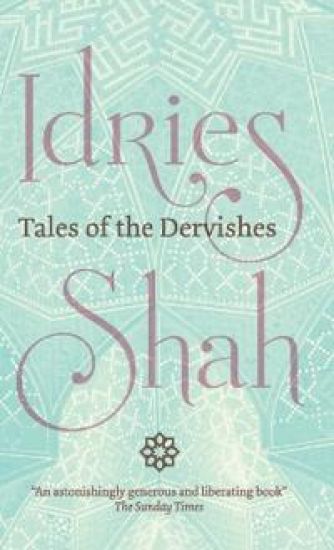
Although enormously attractive as sheer entertainment, Dervish tales were never presented merely on the level of a fable, legend or folklore. They stand comparison in wit, construction and piquancy with the finest stories of any culture, yet their true function as Sufi teaching stories is so little-known in the modern world, that no technical or popular terms exist to describe them. The material in Tales of the Dervishes is the result of a thousand years of development, during which Dervish masters used these and other teaching stories to instruct their disciples. The tales are held to convey powers of increasing perception unknown to the ordinary man.
'Perhaps the best introduction to the body of Shah's work, the most comprehensively informative. And one is immediately forced to use one's mind in a new way.' - The New York TimesWhen it first appeared in 1964, The Sufis was welcomed as the decisive work on the subject: rich in scope, clearly explaining the traditions and philosophy of the Sufis to a Western audience for the first time. In the five decades since its release, the book has been translated into dozens of languages, and has found a wide readership in both East and West. It is used as a text in scores of leading universities around the world, and the material contained within it has been applied by psychologists and physicists, by school teachers, lawyers, social workers, and by ordinary members of the public. Ted Hughes wrote of it: 'An astonishing book. The Sufis must be the biggest society of sensible men on earth'; and Nobel laureate Doris Lessing said of it: 'I had waited my entire life to read this book.'