Kirjojen hintavertailu – 12 903 725 kirjaa ja 27 kauppaa

Kirjailija

Iftekhar Ahmed

Kirjat ja teokset yhdessä paikassa: 4 kirjaa, julkaisuja vuosilta 2015–2021, suosituimpiin kuuluu Sustainable Housing Reconstruction. Vertaile teosten hintoja ja tarkista saatavuus suomalaisista kirjakaupoista.

4 kirjaa

Kirjojen julkaisuvuodet: 2015–2021.

Disaster Resilience in South Asia

Disaster Resilience in South Asia

Iftekhar Ahmed; Kim Maund; Thayaparan Gajendran

TAYLOR FRANCIS LTD
2021
nidottu
This book considers the challenges of building disaster resilience in South Asia – a region that frequently experiences some of the most severe and devastating impacts of disasters. Despite significant work to assist affected communities, many smaller South Asian countries remain particularly vulnerable in terms of fostering disaster resilience. Drawing on examples from Bangladesh, Bhutan, Maldives, Nepal and Sri Lanka, the book offers rich insights and narratives on disaster resilience policy and practice. It considers the possibilities for advancing community resilience and capacity building through an exploration of different aspects of governance and policy. Given the diversity of these countries and recent disasters, a variety of perspectives are considered: institutional and policy frameworks, risk management governance, recovery operations, building codes, and policy and media discourse. The book offers a collective understanding of practice, which can offer global lessons to a world increasingly beset by disasters and with uncertain environmental futures. This book will be a valuable resource for scholars, practitioners and students in the fields of disaster risk reduction and management, climate change adaptation, public policy and sustainable development.
Disaster Resilience in South Asia

Disaster Resilience in South Asia

Iftekhar Ahmed; Kim Maund; Thayaparan Gajendran

Routledge
2020
sidottu
This book considers the challenges of building disaster resilience in South Asia – a region that frequently experiences some of the most severe and devastating impacts of disasters. Despite significant work to assist affected communities, many smaller South Asian countries remain particularly vulnerable in terms of fostering disaster resilience. Drawing on examples from Bangladesh, Bhutan, Maldives, Nepal and Sri Lanka, the book offers rich insights and narratives on disaster resilience policy and practice. It considers the possibilities for advancing community resilience and capacity building through an exploration of different aspects of governance and policy. Given the diversity of these countries and recent disasters, a variety of perspectives are considered: institutional and policy frameworks, risk management governance, recovery operations, building codes, and policy and media discourse. The book offers a collective understanding of practice, which can offer global lessons to a world increasingly beset by disasters and with uncertain environmental futures. This book will be a valuable resource for scholars, practitioners and students in the fields of disaster risk reduction and management, climate change adaptation, public policy and sustainable development.
Sustainable Housing Reconstruction

Sustainable Housing Reconstruction

Esther Charlesworth; Iftekhar Ahmed

Routledge
2015
sidottu
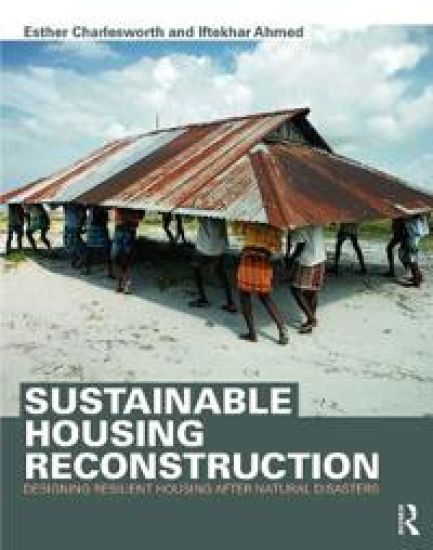
Through 12 case studies from Australia, Bangladesh, Haiti, Sri Lanka, Vietnam and the USA, this book focuses on the housing reconstruction process after an earthquake, tsunami, cyclone, flood or fire. Design of post-disaster housing is not simply replacing the destroyed house but, as these case studies highlight, a means to not only build a safer house but also a more resilient community; not to simply return to the same condition as before the disaster, but an opportunity for building back better. The book explores two main themes:Housing reconstruction is most successful when involving the users in the design and construction processHousing reconstruction is most effective when it is integrated with community infrastructure, services and the means to create real livelihoods. The case studies included in this book highlight work completed by different agencies and built environment professionals in diverse disaster-affected contexts. With a global acceleration of natural disasters, often linked to accelerating climate change, there is a critical demand for robust housing solutions for vulnerable communities. This book provides professionals, policy makers and community stakeholders working in the international development and disaster risk management sectors, with an evidence-based exploration of how to add real value through the design process in housing reconstruction. Herein then, the knowledge we need to build, an approach to improve our processes, a window to understanding the complex domain of post-disaster housing reconstruction.
Sustainable Housing Reconstruction

Sustainable Housing Reconstruction

Esther Charlesworth; Iftekhar Ahmed

Routledge
2015
nidottu
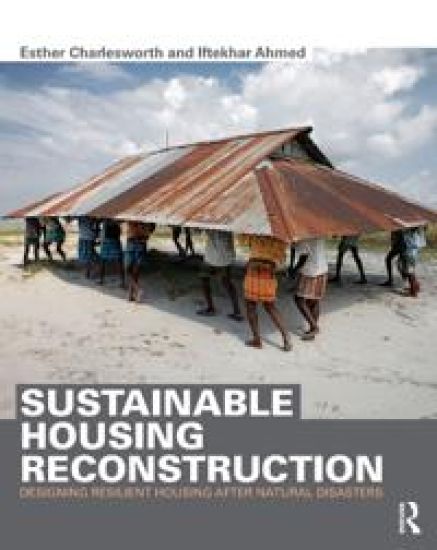
Through 12 case studies from Australia, Bangladesh, Haiti, Sri Lanka, Vietnam and the USA, this book focuses on the housing reconstruction process after an earthquake, tsunami, cyclone, flood or fire. Design of post-disaster housing is not simply replacing the destroyed house but, as these case studies highlight, a means to not only build a safer house but also a more resilient community; not to simply return to the same condition as before the disaster, but an opportunity for building back better. The book explores two main themes:Housing reconstruction is most successful when involving the users in the design and construction processHousing reconstruction is most effective when it is integrated with community infrastructure, services and the means to create real livelihoods. The case studies included in this book highlight work completed by different agencies and built environment professionals in diverse disaster-affected contexts. With a global acceleration of natural disasters, often linked to accelerating climate change, there is a critical demand for robust housing solutions for vulnerable communities. This book provides professionals, policy makers and community stakeholders working in the international development and disaster risk management sectors, with an evidence-based exploration of how to add real value through the design process in housing reconstruction. Herein then, the knowledge we need to build, an approach to improve our processes, a window to understanding the complex domain of post-disaster housing reconstruction.