
Kirjojen hintavertailu – 12 876 481 kirjaa ja 26 kauppaa

Kirjailija

Ignacio Bravo

Kirjat ja teokset yhdessä paikassa: 2 kirjaa, julkaisuja vuosilta 2024–2025, suosituimpiin kuuluu Sustainable Energy Efficient Communities. Vertaile teosten hintoja ja tarkista saatavuus suomalaisista kirjakaupoista.

2 kirjaa

Kirjojen julkaisuvuodet: 2024–2025.

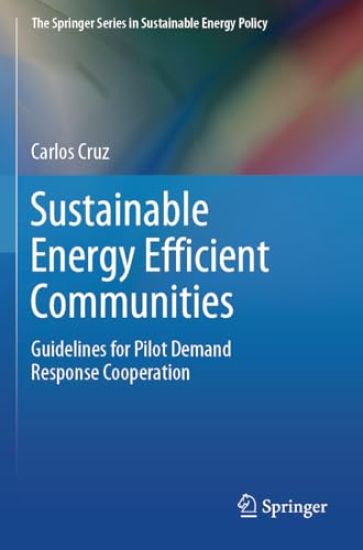
Sustainable Energy Efficient Communities

Sustainable Energy Efficient Communities

Carlos Cruz; Ignacio Bravo

Springer International Publishing AG
2025
nidottu
This book analyses issues surrounding the efficient integration of demand response programmes in residential communities. It also explores the benefits and energy efficiency co-ordination corresponding to demand response service in a cooperative system. The author explains how sensors, communication technologies, computational ability, and control can be effectively combined to create a demand planification system. Smart appliances (SAs) and other connected devices, together with smart communities (SCs)—which enable energy consumers to pursue common goals through cooperation and coordinated behaviour within the framework of the Internet of things (IoT)—have raised expectations regarding deployment of the information and communication technologies (ICTs) to encourage uptake of demand response (DR) energy efficiency programmes. DR programmes pursue a reduced carbon footprint, balanced supply and demand, and behavioural change in consumers. The book provides sustainable evidence of ICT-supported energy management that can help consumers flexibly manage demand through the formation of sustainable SCs that maximise renewable energy use through large-scale cooperative management mechanisms. SCs cooperating securely in identifying consumption patterns can foster sustainable and efficient energy use, with the outcome of benefits for the participants and for the environment.
Sustainable Energy Efficient Communities

Sustainable Energy Efficient Communities

Carlos Cruz; Ignacio Bravo

Springer International Publishing AG
2024
sidottu
This book analyses issues surrounding the efficient integration of demand response programmes in residential communities. It also explores the benefits and energy efficiency co-ordination corresponding to demand response service in a cooperative system. The author explains how sensors, communication technologies, computational ability, and control can be effectively combined to create a demand planification system. Smart appliances (SAs) and other connected devices, together with smart communities (SCs)—which enable energy consumers to pursue common goals through cooperation and coordinated behaviour within the framework of the Internet of things (IoT)—have raised expectations regarding deployment of the information and communication technologies (ICTs) to encourage uptake of demand response (DR) energy efficiency programmes. DR programmes pursue a reduced carbon footprint, balanced supply and demand, and behavioural change in consumers. The book provides sustainable evidence of ICT-supported energy management that can help consumers flexibly manage demand through the formation of sustainable SCs that maximise renewable energy use through large-scale cooperative management mechanisms. SCs cooperating securely in identifying consumption patterns can foster sustainable and efficient energy use, with the outcome of benefits for the participants and for the environment.