Kirjojen hintavertailu – 12 903 725 kirjaa ja 27 kauppaa
Kirjailija
Ignacio López-Calvo
Kirjat ja teokset yhdessä paikassa: 12 kirjaa, julkaisuja vuosilta 2005–2025, suosituimpiin kuuluu Japanese Brazilian Saudades. Vertaile teosten hintoja ja tarkista saatavuus suomalaisista kirjakaupoista.
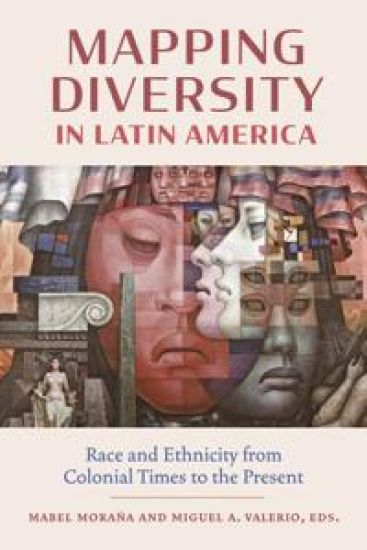
Mapping Diversity in Latin America offers ample critical coverage of recent approaches to the historical study of race and ethnicity in Latin America since the arrival of Spanish and Portuguese colonizers to the present. Bringing together the work of leading scholars, this volume presents readers with a thorough and updated examination of the formation and evolution of ideas surrounding race and ethnicity, social movements, and political processes in Latin America that provides multiple routes for future research on the topic. The book’s nineteen chapters establish the basis for a productive comparative analysis of racial developments in the whole continent to allow for a combination of diachronic and synchronic study of regional processes. Both the scope of the book and the historical and geocultural coverage on these topics are unique in the field of Latin American Studies. Taking an interdisciplinary approach to understanding issues of collective identity, otherness, alterity, and the like, Mapping Diversity in Latin America sheds light on histories that have been traditionally overlooked in texts on race in Latin America, such as the rich history of diasporic Asian, Syrian Lebanese, and Jewish communities, and the more recent emergence of Latinx populations in the United States. The book includes a critical examination of fundamental concepts such as mestizaje, mulataje, creolization, negritud, and blanquitud, as well as critical and theoretical approaches to the study of these issues in postcolonial societies.
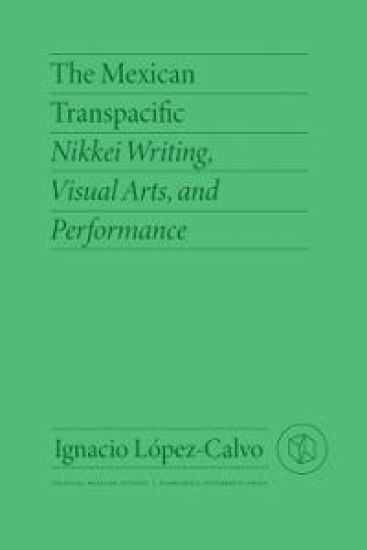
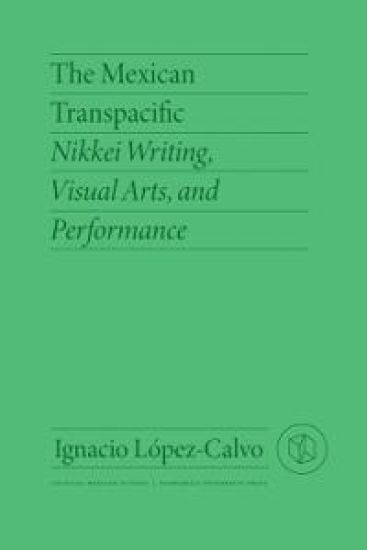
The Mexican Transpacific: Nikkei Writing, Visual Arts, and Performance considers the influence of a Japanese ethnic background or lack thereof in the writing of several twentieth and twenty-first century Mexican authors, directors, and artists. In spite of the unquestionable influence of the Nikkei communities in Mexico’s history and culture, and the numerous historical studies recently published on these two communities, the study of their cultural production and, therefore, their self-definition and how they conceive themselves has been, for the most part, overlooked. This book, a continuation of the author's previous research on cultural production by Latin American authors of Asian ancestry, focuses mostly on texts, films, and artworks produced by Asian Mexicans, rather than on the Japanese or Chinese as mere objects of study. However, it will also be contrasted with the representation of Asians by Mexican authors with no Asian ancestry. With this interdisciplinary study, the author hopes to bring to the fore this silenced community's voice and agency to historicize their own experience. The Mexican Transpacific is a much needed contribution to the fields of contemporary Mexican studies, Latin American studies, race and ethnic studies, transnational Asian studies, and Japanese diaspora studies, in light of the theoretical perspectives of cultural studies, the decolonial turn, and postcolonial theory.
On September 11, 1973, Chile's General Pinochet led a quick and brutal military coup ousting the Allende government. Ignacio Lopez-Calvo argues that the rise of the Pinochet dictatorship and the subsequent imprisonment of any Allende sympathizers shaped Chilean narrative into two structural forms: liberationist narrative--cathartic, journalistic testimonies that provide models for revolutionary behavior against authoritarianism and demystifying narrative, which uses the events of 1973, as well as the colonial aspirations of European countries, as a "Paradise Lost" backdrop in which the characters of this type of fiction are able to create their non-political realities that become models of democratization.
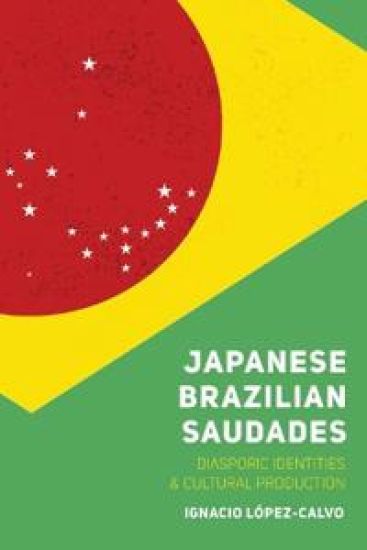
Japanese Brazilian Saudades explores the self-definition of Nikkei discourse in Portuguese-language cultural production by Brazilian authors of Japanese ancestry. Ignacio López-Calvo uses books and films by twentieth-century Nikkei authors as case studies to redefine the ideas of Brazilianness and Japaneseness from both a national and a transnational perspective. The result suggests an alternative model of postcoloniality, particularly as it pertains to the post–World War II experience of Nikkei people in Brazil. López-Calvo addresses the complex creation of Japanese Brazilian identities and the history of immigration, showing how the community has used writing as a form of reconciliation and affirmation of their competing identities as Japanese, Brazilian, and Japanese Brazilian. Japanese in Brazil have employed a twofold strategic, rhetorical engineering: the affirmation of ethno-cultural difference on the one hand, and the collective assertion of citizenship and belonging to the Brazilian nation on the other. López-Calvo also grapples with the community’s inclusion and exclusion in Brazilian history and literature, using the concept of “epistemicide” to refer to the government’s attempt to impose a Western value system, Brazilian culture, and Portuguese language on the Nikkeijin, while at the same time trying to destroy Japanese language and culture in Brazil by prohibiting Japanese language instruction in schools, Japanese-language publications, and even speaking Japanese in public. Japanese Brazilian Saudades contributes to the literature criticizing the “cognitive injustice” that fails to acknowledge the value of the global South and non-Western ways of knowing and being in the world. With important implications for both Latin American studies and Nikkei studies, it expands discourses of race, ethnicity, nationality, and communal belonging through art and narrative.
In this modern age, when the means of communication have turned individual and collective history into a spectacle, literature is the privileged space of subjectivity. This book allows us to peer into the fascinating inner world of characters trapped in their particular deliriums: a club of fetishists who discuss their sexual manias, a man in love with a whale-woman, a man whose wife has left him for another woman, and a beautiful secretary who is also a mother feeling asphyxiated by her family. Readers, no matter how they see themselves and what their sexual preferences may be, will experience the same sensation.
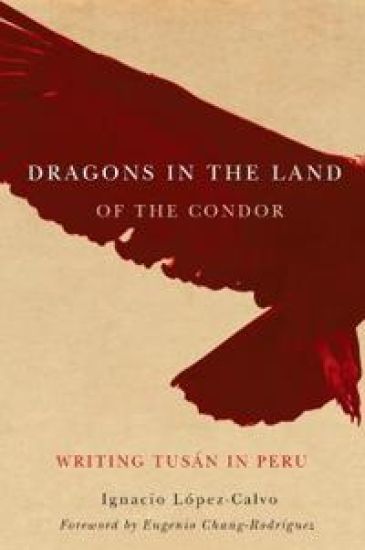
Building on his 2013 study on Nikkei cultural production in Peru, in Dragons in the Land of the Condor Ignacio López-Calvo studies the influence of a Chinese ethnic background in the writing of several twentieth- and twenty-first-century Sino-Peruvian authors. While authors like Siu Kam Wen and Julia Wong often rely on their Chinese cultural heritage for inspiration, many others, like Pedro Zulen, Mario Wong, and Julio Villanueva Chang, choose other sources of inspiration and identification. López-Calvo studies the different strategies used by these writers to claim either their belonging in the Peruvian national project or their difference as a minority ethnic group within Peru. Whether defending the rights of indigenous Peruvians, revealing the intricacies of a life of self-exploitation among Chinese shopkeepers, exploring their identitarian dilemmas, or re-creating—beyond racial memory—life under the political violence in Lima of the 1980s, these authors provide their community with a voice and a collective agency, while concomitantly repositioning contemporary Peruvian culture as transnational. López-Calvo bridges from his earlier study of Peruvian Nikkei's testimonials and literature and raises this question: why are Chinese Peruvian authors seemingly more disconnected from their Asian heritage than Japanese Peruvian authors from theirs? The author argues that the Chinese arrival in Peru half a century earlier influenced a stronger identification with the criollo world. Yet he argues that this situation may soon be changing as the new geopolitical and economic influence of the People's Republic of China in the world, particularly in Latin America and the Caribbean, affects the way Chinese and Sino–Latin American communities and their cultures are produced and perceived.
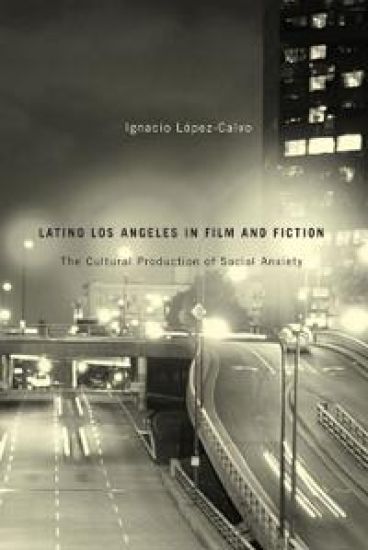
Los Angeles has long been a place where cultures clash and reshape. The city has a growing number of Latina/o authors and filmmakers who are remapping and reclaiming it through ongoing symbolic appropriation. In this illuminating book, Ignacio López-Calvo foregrounds the emotional experiences of authors, implicit authors, narrators, characters, and readers in order to demonstrate that the evolution of the imaging of Los Angeles in Latino cultural production is closely related to the politics of spatial location. This spatial-temporal approach, he writes, reveals significant social anxieties, repressed rage, and deep racial guilt. Latino Los Angeles in Film and Fiction sets out to reconfigure the scope of Latino literary and cultural studies. Integrating histories of different regions and nations, the book sets the interplay of unresolved contradictions in this particular metropolitan area. The novelists studied here stem from multiple areas, including the U. S. Southwest, Guatemala, and Chile. The study also incorporates non-Latino writers who have contributed to the Latino culture of the city. The first chapter examines Latino cultural production from an ecocritical perspective on urban interethnic relations. Chapter 2 concentrates on the representation of daily life in the barrio and the marginalization of Latino urban youth. The third chapter explores the space of women and how female characters expand their area of operations from the domestic space to the public space of both the barrio and the city. A much-needed contribution to the fields of urban theory, race critical theory, Chicana/o-Latina/o studies, and Los Angeles writing and film, López-Calvo offers multiple theoretical perspectives—including urban theory, ecocriticism, ethnic studies, gender studies, and cultural studies— contextualized with notions of transnationalism and post-nationalism.
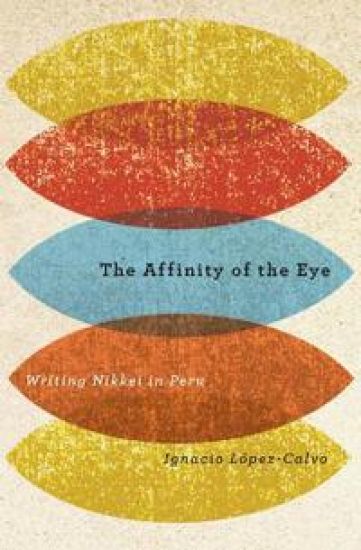
In The Affinity of the Eye: Writing Nikkei in Peru, Ignacio López-Calvo rises above the political emergence of the Fujimori phenomenon and uses politics and literature to provide one of the first comprehensive looks at how the Japanese assimilated and inserted themselves into Peruvian culture. Through contemporary writers’ testimonies, essays, fiction, and poetry, López-Calvo constructs an account of the cultural formation of Japanese migrant communities. With deftly sensitive interviews and comments, he portrays the difficulties of being a Japanese Peruvian. Despite a few notable examples, Asian Peruvians have been excluded from a sense of belonging or national identity in Peru, which provides López-Calvo with the opportunity to record what the community says about their own cultural production. In so doing, López-Calvo challenges fixed notions of Japanese Peruvian identity. The Affinity of the Eye scrutinises authors such as José Watanabe, Fernando Iwasaki, Augusto Higa, Doris Moromisato, and Carlos Yushimito, discussing their literature and their connections to the past, present, and future. Whether these authors push against or accept what it means to be Japanese Peruvians, they enrich the images and feelings of that experience. Through a close reading of literary and cultural productions, López-Calvo’s analysis challenges and reframes the parameters of being Nikkei in Peru. Covering both Japanese issues in Peru and Peruvian issues in Japan, the book is more than a compendium of stories, characters, and titles. It proves the fluid, enriching, and ongoing relationship that exists between Peru and Japan.
More than 150 years ago, the first Chinese contract laborers (""coolies"") arrived in Cuba to work the colonial plantations. Eventually, over 150,000 Chinese immigrated to the island, and their presence has had a profound effect on all aspects of Cuban cultural production, from food to books to painting. Ignacio Lopez-Calvo's interpretations often go against the grain of earlier research, refusing to conceive of Cuban identity either in terms of a bipolar black/white opposition or an idyllic and harmonious process of miscegenation. He also counters traditional representations of chinos mambises, Chinese immigrants who fought for Cuba in the Wars of Independence against Spain. ""Imaging the Chinese in Cuban Literature and Culture"" fills a void in literary criticism, breaking new ground within the small field of Sino-Cuban studies. It is destined to set the tone for years to come.
Rafael Trujillo, dictator of the Dominican Republic from 1930 until his assassination in 1961, is still heavily mythologized among Dominicans to this day. God and Trujillo, the first book-length study of works about the Dominican dictator, seeks to explain how some of those myths were created by analyzing novels and testimonials about Trujillo from Dominican writers to canonical Latin American authors, including Mario Vargas Llosa and Gabriel Garcia Marquez. Trujillo's quasi-mythological figure created a compelling corpus of literary works. Ignacio Lopez-Calvo's study offers a vigorous analysis of 36 narrative texts. He analyzes the representation of the dictator as a mythological figure, his legacy, the role of his doubles, his favorite courtiers and acolytes, and the role of women during the so-called Era of Trujillo. He also traces the evolution and significance of these narratives from a theoretical perspective that falls within the cultural studies framework. The study of the Dominican testimonio and the unveiling of the Taino myth in the ""Trujillato narratives"" are particularly innovative. In addition, he describes class antagonism and the demythification of the leftist militant in the Trujillato narratives. He also offers an illuminating account of the Dominican left and of the anti-Trujillo resistance as contained in Dominican literature.