Kirjojen hintavertailu – 12 859 828 kirjaa ja 27 kauppaa

Kirjailija

Ilaria L E Ramelli

Kirjat ja teokset yhdessä paikassa: 9 kirjaa, julkaisuja vuosilta 2015–2026, suosituimpiin kuuluu Social Justice and the Legitimacy of Slavery. Vertaile teosten hintoja ja tarkista saatavuus suomalaisista kirjakaupoista.

Nimi esiintyy myös muodoissa: Ilaria L. E. Ramelli, Ilaria L.E. Ramelli

9 kirjaa

Kirjojen julkaisuvuodet: 2015–2026.

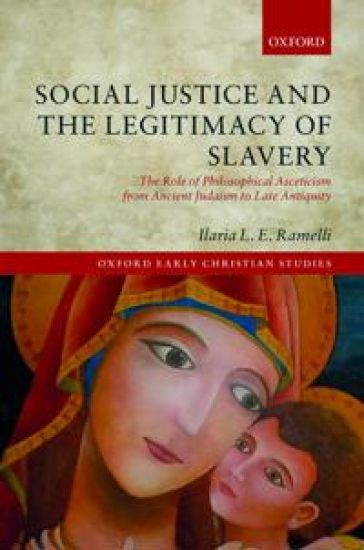
Social Justice and the Legitimacy of Slavery

Social Justice and the Legitimacy of Slavery

Ilaria L.E. Ramelli

Oxford University Press
2016
sidottu
Were slavery and social injustice leading to dire poverty in antiquity and late antiquity only regarded as normal, 'natural' (Aristotle), or at best something morally 'indifferent' (the Stoics), or, in the Christian milieu, a sad but inevitable consequence of the Fall, or even an expression of God's unquestionable will? Social Justice and the Legitimacy of Slavery shows that there were also definitive condemnations of slavery and social injustice as iniquitous and even impious, and that these came especially from ascetics, both in Judaism and in Christianity, and occasionally also in Greco-Roman ('pagan') philosophy. Ilaria L. E. Ramelli argues that this depends on a link not only between asceticism and renunciation, but also between asceticism and justice, at least in ancient and late antique philosophical asceticism. Ramelli provides a careful investigation through all of Ancient Philosophy (not only Aristotle and the Stoics, but also the Sophists, Socrates, Plato, the Neoplatonists, and much more), Ancient to Rabbinic Judaism, Hellenistic Jewish ascetic groups such as the Essenes and the Therapeutae, all of the New Testament, with special focus on Paul and Jesus, and Greek, Latin, and Syriac Patristic, from Clement and Origen to the Cappadocians, from John Chrysostom to Theodoret to Byzantine monastics, from Ambrose to Augustine, from Bardaisan to Aphrahat, without neglecting the Christianized Sentences of Sextus. In particular, Ramelli considers Gregory of Nyssa and the interrelation between theory and practice in all of these ancient and patristic philosophers, as well as to the parallels that emerge in their arguments against slavery and against social injustice.

The Seneca–Paul Correspondence

The Seneca–Paul Correspondence

Ilaria L. E. Ramelli

Mohr Siebeck
2026
sidottu
Dieser Band vereint die Ergebnisse von nahezu dreißigjähriger Forschung zum pseudepigraphen Briefwechsel zwischen Seneca und Paulus. Ilaria Ramelli präsentiert zunächst methodologische Überlegungen zum Begriff der Pseudepigraphie und dessen Bedeutung für das Verständnis des Briefwechsels. Durch den Vergleich der Seneca-Paulus-Briefe mit nicht-literarischen griechischen und lateinischen Briefen des 1.-3. Jh. n. Chr. stellt sie deren bislang angenommene Einzigartigkeit infrage und verortet sie in einem breiteren epistolaren Kontext. Die Autorin stellt Seneca und Paulus sowohl als historische Persönlichkeiten vor, als auch als literarische Figuren, wie sie aus der Korrespondenz hervorgehen. Intertextuelle Analysen offenbaren deutliche Anspielungen auf das Neue Testament - darunter Hinweise auf spätere Interpolationen von zwei Briefen. Eingehend untersucht werden syntaktische Graezismen, thematische Übereinstimmungen mit frühchristlichem und stoischem Denken (etwa die Universalität von Schuld) sowie die politischen und theologischen Implikationen der überlieferten Verlesung paulinischer Briefe durch Seneca vor Nero. Die Autorin befasst sich zudem mit Fragen der Datierung, insbesondere anhand der consules suffecti, und mit der Entstehung der Legende von Senecas „Bekehrung" zum Christentum. Darüber hinaus analysiert sie die frühe Überlieferung der Paulusbriefe, die Rezeption von Paulus' Bildung in Antike und moderner Forschung sowie Senecas Verhältnis zu Judentum und Paganismus. Indem die Autorin die Sammlung der Paulusbriefe hinterfragt sowie mögliche Bezüge zum Marcionismus, zu Tertullian und zum Muratori-Fragment einbezieht, bietet sie eine Neubewertung des Briefwechsels und seiner Bedeutung innerhalb der frühchristlichen Geistesgeschichte.
Origen, the Philosophical Theologian

Origen, the Philosophical Theologian

Ilaria L. E. Ramelli

De Gruyter
2024
sidottu

Halvin toimitettuna 199,40 €

How did Origen, one of the major Patristic thinkers, construct his philosophical theology? What are his main innovations in metaphysics, protology, Trinitarian Theology and Christology? How did he view the relation between philosophy and theology? This is a collection of over twenty essays, mostly from world-leading journals and books from outstanding publishers, besides two new ones, from Professor Ilaria L. E. Ramelli’s life-long, and always continuing, research on Origen. This coherent set of studies is grouped around Origen’s metaphysics, protology, Trinitarian theology and Christology, and the relation between theology and philosophy, with reception aspects. The essays address Origen’s towering figure in Patristic philosophy, Christian Platonism, and the Platonic tradition, facets of his reception of Platonism, reflections concerning the Christianization of Hellenism (vs. the Hellenization of Christianity) and the relation between philosophy and theology and between ‘pagan’ and Christian Platonism; Origen’s philosophical theology and connections to Platonism; the question of Origen's conversion and his lexicon of epistrophe; a comparison between the imperial Platonist Atticus’ and Origen’s theories on the soul of God the Creator; Alexander of Aphrodisias as a source of Origen’s philosophy and the birth of the eternity formula in reference to the Son; the problem of Origen’s "subordinationism", which must be nuanced; Origen’s major contribution to Trinitarian theology in the notion of hypostasis and its foundation in Scripture and philosophy; the reciprocal indwelling of the Father in the Son and its implications against Origen’s "subordinationism"; Origen’s influence on Augustine as paradoxical and a Christological case study; the divine as inaccessible object of knowledge in ancient and Patristic Platonism; the reception of Origen’s ideas in the West; the notion of divine power in Origen: sources and aftermath; Platonist exemplarism in Origen and Plotinus; Paul’s notion of nous in Origen and Evagrius; the reception of Origen in Ps. Dionysius, and Origen’s heritage in the concept of matter in the Dialogue of Adamantius. The volume is rounded off by theoretical reflections on philosophy of religion and philosophical theology. This book is very relevant to the study of Origen, the foundations of Christian thought, and ancient and late antique philosophy, theology and culture.
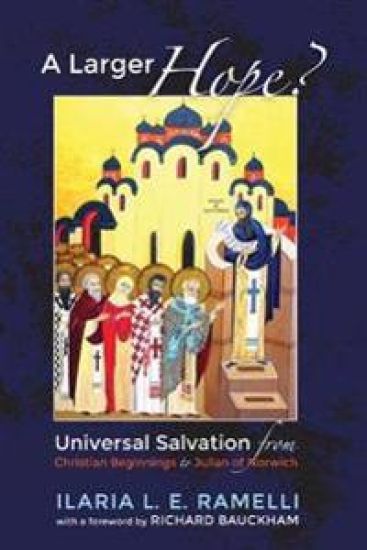
A Larger Hope?, Volume 1

A Larger Hope?, Volume 1

Ilaria L E Ramelli

Cascade Books
2019
pokkari
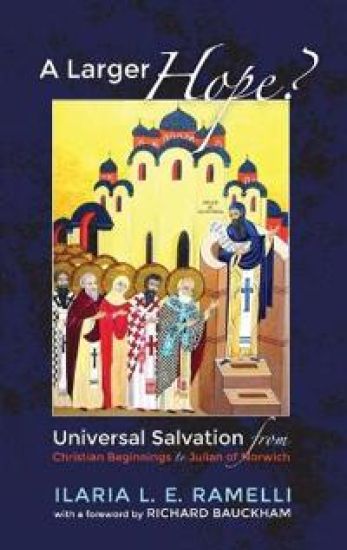
In the minds of some, universal salvation is a heretical idea that was imported into Christianity from pagan philosophies by Origen (c.185-253/4). Ilaria Ramelli argues that this picture is completely mistaken. She maintains that Christian theologians were the first people to proclaim that all will be saved and that their reasons for doing so were rooted in their faith in Christ. She demonstrates that, in fact, the idea of the final restoration of all creation (apokatastasis) was grounded upon the teachings of the Bible and the church's beliefs about Jesus' total triumph over sin, death, and evil through his incarnation, crucifixion, resurrection, and ascension. Ramelli traces the Christian roots of Origen's teaching on apokatastasis. She argues that he was drawing on texts from Scripture and from various Christians who preceded him, theologians such as Bardaisan, Irenaeus, and Clement. She outlines Origen's often-misunderstood theology in some detail and then follows the legacy of his Christian universalism through the centuries that followed. We are treated to explorations of Origenian universal salvation in a host of Christian disciples, including Athanasius, Didymus the Blind, the Cappadocian fathers, Evagrius, Maximus the Confessor, John Scotus Eriugena, and Julian of Norwich.