Kirjojen hintavertailu – 12 903 735 kirjaa ja 27 kauppaa
Kirjailija
Ilia Delio
Kirjat ja teokset yhdessä paikassa: 27 kirjaa, julkaisuja vuosilta 2007–2027, suosituimpiin kuuluu Care for Creation. Vertaile teosten hintoja ja tarkista saatavuus suomalaisista kirjakaupoista.
Three of the greatest minds in Franciscan theology, Ilia Delio, O. S. F., Franciscan Keith Douglass Warner, O. F. M., and Pamela Wood, come together to discuss one of the greatest crises of our time-the destruction of the Earth. This book takes both a theological and practical approach to developing a Franciscan spirituality of the earth. Four sections highlight the distinct relationships creation has with the world: incarnation, community, contemplation and conversion. In this meticulously researched book, the authors propose ways in which we can all understand our own roles in relationship to the Earth and ways in which we can make it better.
Ilia Delio traces a bold theological arc: the God revealed in Jesus marked a radical breakthrough -- an intimate, dynamic relationship between God and creation that was unlike anything before it. But as the early Church confronted heresy, it reached for the stabilizing frameworks of Neoplatonic thought, gradually trading that living insight for philosophical abstraction. This move was eventually codified in Thomist metaphysics, where it became the dominant tradition. Yet another current ran beneath the surface. Through Francis of Assisi, Duns Scotus, and Bonaventure, a creation-centered, incarnational faith survived -- one that kept God close to the world rather than remote from it. Delio argues the Church has remained too long in the grip of its older metaphysical inheritance, and that renewal is overdue. That renewal, she suggests, is already underway. Whitehead's process theology breathes new life into this alternative tradition, and Teilhard de Chardin draws it into dialogue with Catholic thought. The thread comes together in Pope Francis's Laudato Si' -- a genuinely Franciscan theology of creation that recovers, at last, the intimacy between God and the world that Jesus first made visible, a living God at home in a dynamically relational universe.
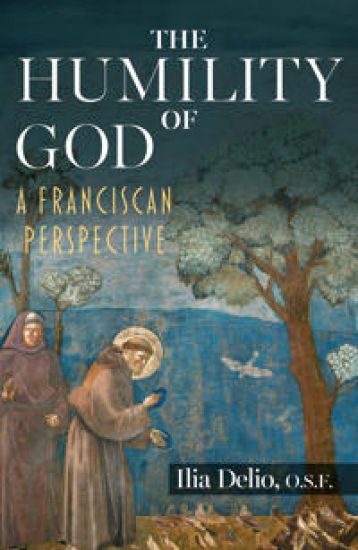
Humility isn't merely central to Franciscan spirituality-- it is divinely inspired Humility opens our hearts to the workings of God's grace and illuminates a prayerful path on which we journey. Using Saint Bonaventure's Christ-centered mysticism as a framework, Franciscan scholar Ilia Delio, O. S. F., explores the humble dimensions of the God who captured the heart of Saint Francis, Saint Clare, and other luminaries who adopted their way of life through the centuries. A must-read for anyone interested in Franciscan theology, Delio invites readers to contemplate God's humility and be transformed by the same divine dimension that set the Franciscan way into motion.
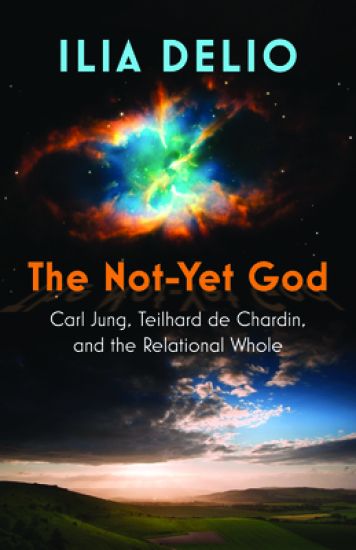
We are a species between axial periods. Thus, our religious myths are struggling to find new connections in a global, ecological order. Delio proposes the new myth of relational holism; that is, the search for a new connection to divinity in an age of quantum physics, evolution, and pluralism. The idea of relational holism is one that is rooted in the God-world relationship, beginning with the Book of Genesis, but finds its real meaning in quantum physics and the renewed relationship between mind and matter. Our story, therefore, will traverse across the fields of science, scripture, theology, history, culture and psychology. Our guides for a new myth of relational holism are the psychoanalyst Carl Jung, and the Jesuit scientist-theologian Pierre Teilhard de Chardin. The complex human can no longer be simplified to one view or another: one must see the whole of our existence or one does not see at all.
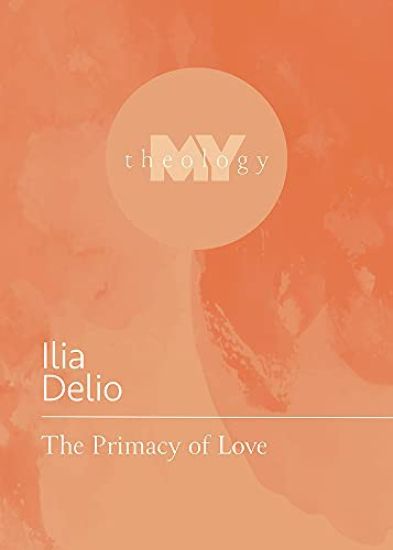
In an age of anxiety where reason is deified, what is the role of love? This short book centralizes love as the core reality of all cosmic life. From the cosmological to the theological dimensions of existence, love is shown to be the irresistible force of attraction that leads straight into the heart of God. The book is divided into three short chapters based on a metaphysics of love: we are born out of divine love, we exist in love, and we are oriented toward the fullness of love. In a world of evolutionary convergence and global consciousness, love may be the singular ethic that binds us together, heals our wounds and draws us into a new unity of planetary life. In the My Theology series, the world's leading Christian thinkers explain some of the principal tenets of their theological beliefs in concise, pocket-sized books.
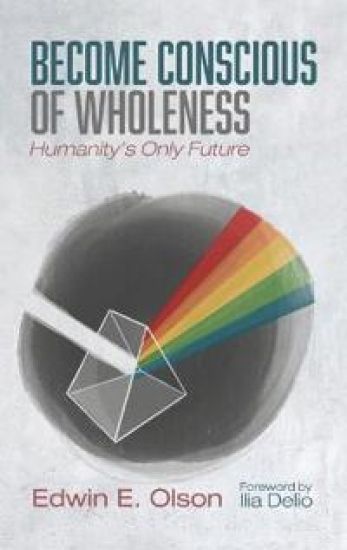
How can we transcend our tribal, philosophical, and religious differences? Is it possible to develop a global consciousness to resolve the peril to our biosphere and other human-made existential crises? Become Conscious of Wholeness: Humanity's Only Future explores how connecting human consciousness with Universal Consciousness will give individuals and societies a sense of being complete, not fragmented. Accessing Universal Consciousness, the fundamental wisdom, intelligence, and love in the Universe, will align their identity and purpose and free them from limiting beliefs and fears. Universal Consciousness is the organizing, unifying force, beyond space and time, filled with the creative potential from which our diverse philosophies, religions, and primordial traditions emerged. When Consciousness is understood from multiple scientific, spiritual, psychological, and mystical perspectives, what is of ultimate value becomes clear--our relationships with each other and the Earth, our essential Wholeness. The reader will explore various portals to Universal Consciousness, drawing upon their own mystical and spiritual experience to develop a more holistic Self. Specific action steps are also presented to reframe religion, reimagine education and mental wellbeing, and reform the business organizations, government agencies, and divisive politics that perpetuate a fragmented view of reality.
How can we transcend our tribal, philosophical, and religious differences? Is it possible to develop a global consciousness to resolve the peril to our biosphere and other human-made existential crises? Become Conscious of Wholeness: Humanity's Only Future explores how connecting human consciousness with Universal Consciousness will give individuals and societies a sense of being complete, not fragmented. Accessing Universal Consciousness, the fundamental wisdom, intelligence, and love in the Universe, will align their identity and purpose and free them from limiting beliefs and fears. Universal Consciousness is the organizing, unifying force, beyond space and time, filled with the creative potential from which our diverse philosophies, religions, and primordial traditions emerged. When Consciousness is understood from multiple scientific, spiritual, psychological, and mystical perspectives, what is of ultimate value becomes clear--our relationships with each other and the Earth, our essential Wholeness. The reader will explore various portals to Universal Consciousness, drawing upon their own mystical and spiritual experience to develop a more holistic Self. Specific action steps are also presented to reframe religion, reimagine education and mental wellbeing, and reform the business organizations, government agencies, and divisive politics that perpetuate a fragmented view of reality.
My Theology: The world’s leading Christian thinkers explain some of the principal tenets of their theological beliefs. ‘What do we live for? This is the question many of us ask at the end of a very long day, especially in the conflicted moments of life,’ writes Ilia Delio. ‘My answer is simple: we live to love. If we doubt love, we doubt our own existence.’ In this compelling book Delio explores the metaphysics of love at the centre of her theological thinking. From the cosmological to the theological dimensions of existence, she shows love to be the irresistible force of attraction that leads straight into the heart of God.
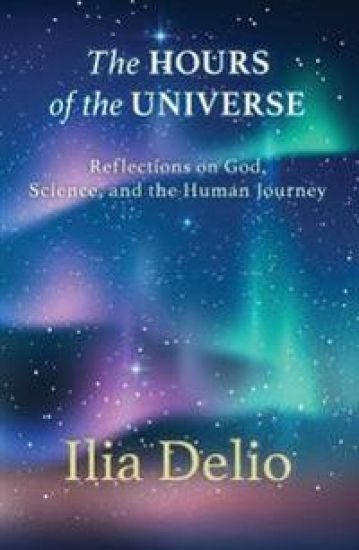
In a traditional monastery the recitation of the Hours calls to mind the work of God in our lives, from the gift of creation to the sufferings we bear. According to scientist, theologian, and author Ilia Delio, the universe is the new monastery. In her latest work she offers reflections for this new monastery to a broad, general audience seeking new meaning and purpose in today's world.
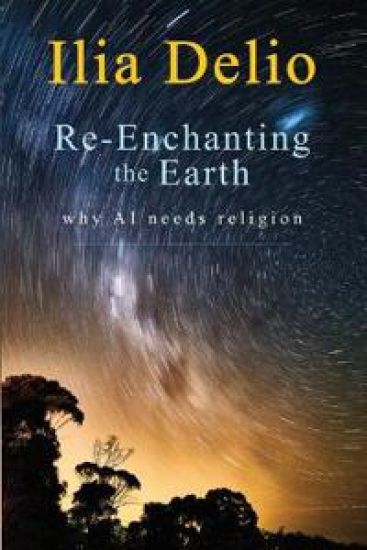
In her latest book, scientist and theologian Ilia Delio takes up the challenge of reconciling evolution and religion with particular attention to the role of Artificial Intelligence. She argues that AI represents the latest extension of human evolution, which has implications not only for science but also for religion. If the "first axial age" gave rise to the great religions, she sees us now on the cusp of a "second axial age," in which AI, oriented by new religious sensibilities, can bring about an ecological re-enchantment of the earth.
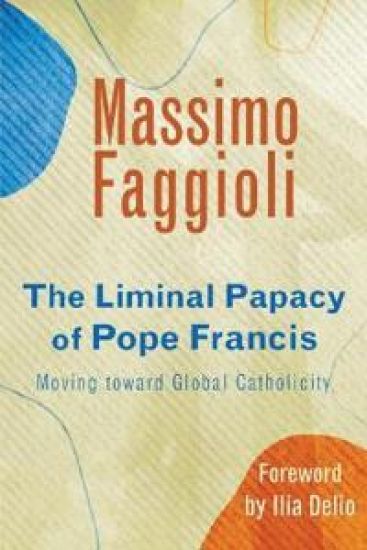
An expert on the papacy and Vatican II, Massimo Faggioli draws from world history, politics, papal biographies, and the documents of Vatican II for this incisive analysis of Francis's developing pontificate. He notes that Francis's is a liminal papacy, one that gives attention to the poor, to the peripheries, and to relations between the Vatican and other religions, with an emphasis on synodality and on the Church as the people of God. He also contrasts Francis with his immediate predecessor Benedict XVI and John Paul II, and shows his similarities with the spirit of John XXIII, the architect of Vatican II.
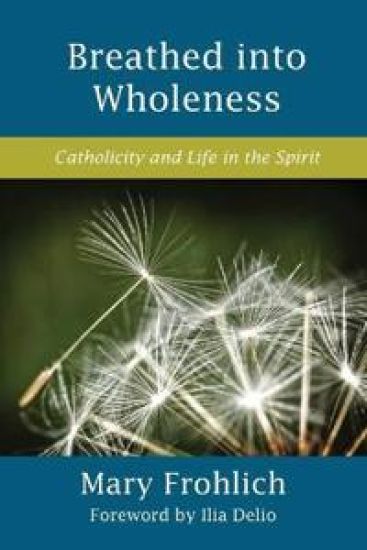
This book explores the application of catholicity to our spiritual lives, that is, how each of us strives to construct a life that bears both the integrity of ultimate wholeness and the dynamism of real-life change, pluralism, and differentiation.
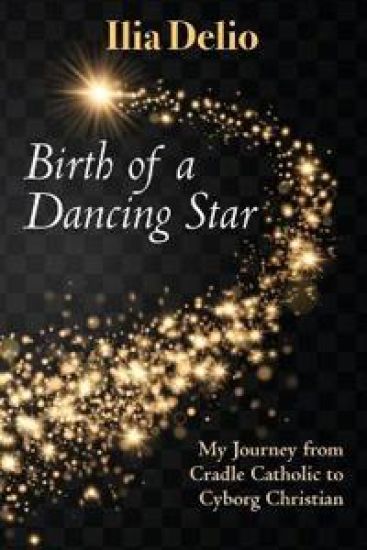
In this captivating memoir Franciscan Sister Ilia Delio, theologian, ground-breaking author, and one of the most exciting thinkers on the frontiers of dialogue between religion and science, recounts the remarkable journey that took her from scientist to theologian, and from traditional cloistered nun to a leading proponent of evolution and cyborg life.
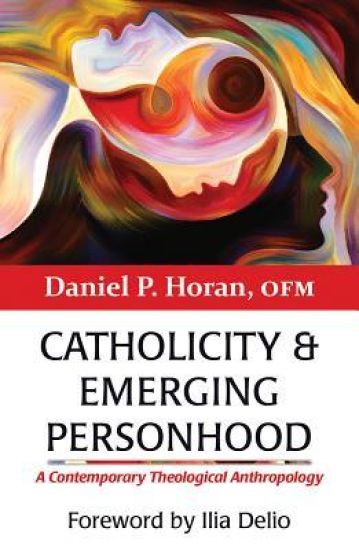
An exploration of the meaning and identity of the human person in light of a renewed theology of creation, the ongoing discoveries of evolution and natural sciences, and newly appropriated resources in the theological tradition.
Jesuit scientist Pierre Teilhard de Chardin, a keen observer of nature, posited two types of energy in the universe: tangential energy/energy of attraction and radial energy/energy of transcendence—in other words, love and consciousness, which correspond to the inner and outer dimensions of nature, respectively. Moreover, as theologian Ilia Delio points out, nature is never at rest; indeed, “Nature [is] on a continuous trajectory of transcendence.” “The Big Bang universe is a story of space but it is also a story of consciousness and love.” How are the inner universe and the outer universe related? “Is the inner universe the key to nature’s transcendence?” she asks. “Is science disclosing a new role for consciousness and thus a new role for spiritual transformation?” The author builds not only on the thought of Teilhard and others but also on the findings of quantum physics to deliver a thought-provoking, deeply insightful reflection on the relationship of God, humanity, and nature in an ever-evolving cosmos. †
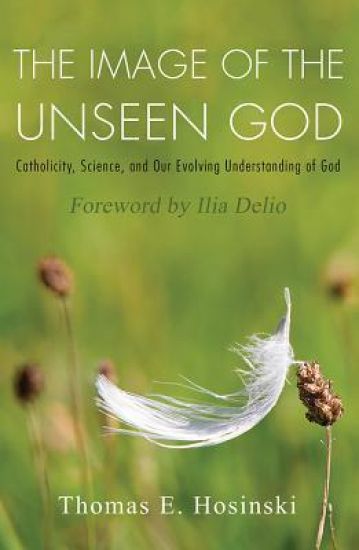
The Image of the Unseen God develops a novel understanding of God and God's action compatible with the teachings of Jesus, the Christian tradition, and contemporary science.