Kirjojen hintavertailu – 12 903 725 kirjaa ja 27 kauppaa

Kirjailija

Ilia Murtazashvili

Kirjat ja teokset yhdessä paikassa: 9 kirjaa, julkaisuja vuosilta 2012–2022, suosituimpiin kuuluu The Political Economy of Fracking. Vertaile teosten hintoja ja tarkista saatavuus suomalaisista kirjakaupoista.

9 kirjaa

Kirjojen julkaisuvuodet: 2012–2022.

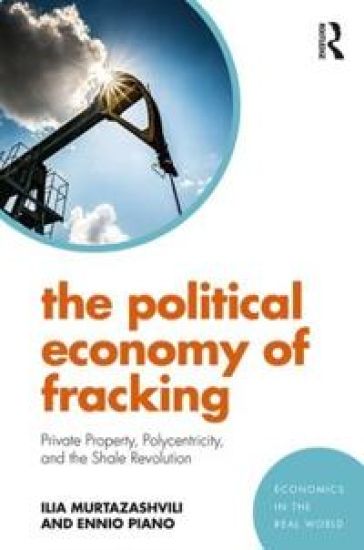
The Political Economy of Fracking

The Political Economy of Fracking

Ilia Murtazashvili; Ennio Piano

Routledge
2018
nidottu
Over the past two decades, "fracking" has led to a revolution in shale gas production. For some, shale gas promised economic opportunities, cheaper energy bills, and an alternative to coal. For others, shale gas was fool’s gold. Critics contend that the shale boom has occurred in a regulatory Wild West, that the response has been fractured and ineffective, or that the harmful environmental and health consequences exceed the benefits from shale gas production. The Political Economy of Fracking argues that the criticism of the shale revolution has been misplaced. The authors use insights from a diversity of perspectives in political economy to understand why the shale boom occurred, who won in the race for shale, and who was left behind. The book explains how private property rights and entrepreneurs led to the shale boom. It contends that polycentric governance, which encourages a diversity of regulatory responses, is a virtue because it generates knowledge about the most appropriate ways to regulate shale development. Private property rights and political institutions that provide for local self-governance also helped to ensure that the benefits of shale gas production exceeded its costs. The authors make the case for fracking shale gas using evidence from shale-producing countries from around the world, comparing them to those that have fallen behind in the shale race. They show that private property rights and markets have been a source of innovation and dynamism and that a diversity of regulatory responses is appropriate to govern shale gas development. This book is insightful reading for academics and professionals interested in the shale boom, the fracking industry in general, and regulatory policy.

The Political Economy of Fracking

The Political Economy of Fracking

Ilia Murtazashvili; Ennio Piano

Routledge
2018
sidottu
Over the past two decades, "fracking" has led to a revolution in shale gas production. For some, shale gas promised economic opportunities, cheaper energy bills, and an alternative to coal. For others, shale gas was fool’s gold. Critics contend that the shale boom has occurred in a regulatory Wild West, that the response has been fractured and ineffective, or that the harmful environmental and health consequences exceed the benefits from shale gas production. The Political Economy of Fracking argues that the criticism of the shale revolution has been misplaced. The authors use insights from a diversity of perspectives in political economy to understand why the shale boom occurred, who won in the race for shale, and who was left behind. The book explains how private property rights and entrepreneurs led to the shale boom. It contends that polycentric governance, which encourages a diversity of regulatory responses, is a virtue because it generates knowledge about the most appropriate ways to regulate shale development. Private property rights and political institutions that provide for local self-governance also helped to ensure that the benefits of shale gas production exceeded its costs. The authors make the case for fracking shale gas using evidence from shale-producing countries from around the world, comparing them to those that have fallen behind in the shale race. They show that private property rights and markets have been a source of innovation and dynamism and that a diversity of regulatory responses is appropriate to govern shale gas development. This book is insightful reading for academics and professionals interested in the shale boom, the fracking industry in general, and regulatory policy.

Toward a Political Economy of the Commons

Toward a Political Economy of the Commons

Meina Cai; Ilia Murtazashvili; Jennifer Brick Murtazashvili; Raufhon Salahodjaev

EDWARD ELGAR PUBLISHING LTD
2022
sidottu
Since Garrett Hardin published ‘The Tragedy of the Commons’ in 1968, critics have argued that population growth and capitalism contribute to overuse of natural resources and degradation of the global environment. They propose coercive, state-centric solutions. This book offers an alternative view. Employing insights from new institutional economics, the authors argue that property rights, competitive markets, polycentric political institutions, and social institutions such as trust, patience and individualism enable society to conserve natural resources and mitigate harms to the global environment. The authors support their argument by considering several types of commons: forests, fisheries, minerals, and the global environment. The central lesson of these empirical studies is that following a simple set of rules – definition and enforcement of property rights in response to local conditions, creating and maintaining democracy at the local level, and establishing markets to allocate resources – improves ecological and environmental sustainability. This book will appeal to scholars of natural resources, economics, political science and public policy as well as policymakers who are interested in environmental governance and the ways markets contribute to sustainability.
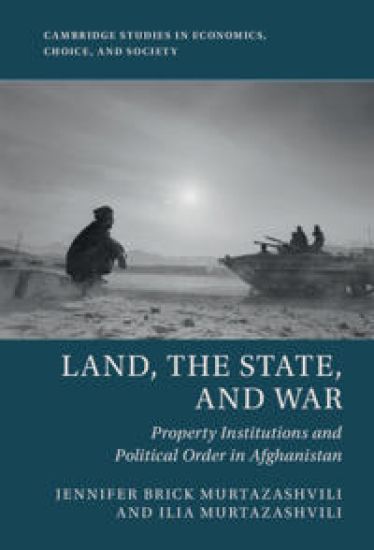
Land, the State, and War

Land, the State, and War

Jennifer Brick Murtazashvili; Ilia Murtazashvili

Cambridge University Press
2021
sidottu
Although today's richest countries tend to have long histories of secure private property rights, legal-titling projects do little to improve the economic and political well-being of those in the developing world. This book employs a historical narrative based on secondary literature, fieldwork across thirty villages, and a nationally representative survey to explore how private property institutions develop, how they are maintained, and their relationship to the state and state-building within the context of Afghanistan. In this predominantly rural society, citizens cannot rely on the state to enforce their claims to ownership. Instead, they rely on community-based land registration, which has a long and stable history and is often more effective at protecting private property rights than state registration. In addition to contributing significantly to the literature on Afghanistan, this book makes a valuable contribution to the literature on property rights and state governance from the new institutional economics perspective.
The Origins and Consequences of Property Rights

The Origins and Consequences of Property Rights

Colin Harris; Meina Cai; Ilia Murtazashvili; Jennifer Brick Murtazashvili

Cambridge University Press
2020
pokkari
Property rights are the rules governing ownership in society. This Element offers an analytical framework to understand the origins and consequences of property rights. It conceptualizes of the political economy of property rights as a concern with the follow questions: What explains the origins of economic and legal property rights? What are the consequences of different property rights institutions for wealth creation, conservation, and political order? Why do property institutions change? Why do legal reforms relating to property rights such as land redistribution and legal titling improve livelihoods in some contexts but not others? In analyzing property rights, the authors emphasize the complementarity of insights from a diversity of disciplinary perspectives, including Austrian economics, public choice, and institutional economics, including the Bloomington School of institutional analysis and political economy.
The Political Economy of the American Frontier

The Political Economy of the American Frontier

Ilia Murtazashvili

Cambridge University Press
2016
pokkari
This book offers an analytical explanation for the origins of and change in property institutions on the American frontier during the nineteenth century. Its scope is interdisciplinary, integrating insights from political science, economics, law and history. This book shows how claim clubs - informal governments established by squatters in each of the major frontier sectors of agriculture, mining, logging and ranching - substituted for the state as a source of private property institutions and how they changed the course of who received a legal title, and for what price, throughout the nineteenth century. Unlike existing analytical studies of the frontier that emphasize one or two sectors, this book considers all major sectors, as well as the relationship between informal and formal property institutions, while also proposing a novel theory of emergence and change in property institutions that provides a framework to interpret the complicated history of land laws in the United States.
The Political Economy of the American Frontier

The Political Economy of the American Frontier

Ilia Murtazashvili

Cambridge University Press
2013
sidottu
This book offers an analytical explanation for the origins of and change in property institutions on the American frontier during the nineteenth century. Its scope is interdisciplinary, integrating insights from political science, economics, law and history. This book shows how claim clubs - informal governments established by squatters in each of the major frontier sectors of agriculture, mining, logging and ranching - substituted for the state as a source of private property institutions and how they changed the course of who received a legal title, and for what price, throughout the nineteenth century. Unlike existing analytical studies of the frontier that emphasize one or two sectors, this book considers all major sectors, as well as the relationship between informal and formal property institutions, while also proposing a novel theory of emergence and change in property institutions that provides a framework to interpret the complicated history of land laws in the United States.
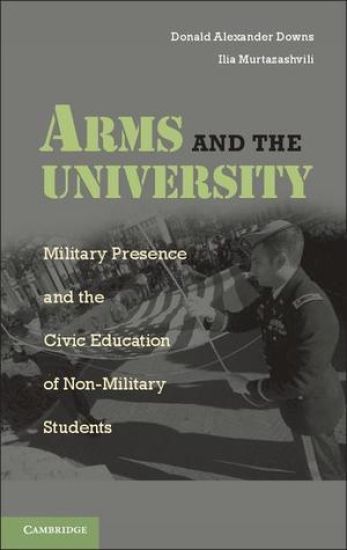
Arms and the University

Arms and the University

Donald Alexander Downs; Ilia Murtazashvili

Cambridge University Press
2012
sidottu
Alienation between the U. S. military and society has grown in recent decades. Such alienation is unhealthy, as it threatens both sufficient civilian control of the military and the long-standing ideal of the 'citizen soldier'. Nowhere is this issue more predominant than at many major universities, which began turning their backs on the military during the chaotic years of the Vietnam War. Arms and the University probes various dimensions of this alienation, as well as recent efforts to restore a closer relationship between the military and the university. Through theoretical and empirical analysis, Donald Alexander Downs and Ilia Murtazashvili show how a military presence on campus in the form of ROTC (including a case study of ROTC's return to Columbia and Harvard universities), military history and national security studies can enhance the civic and liberal education of non-military students, and in the process help to bridge the civil-military gap.
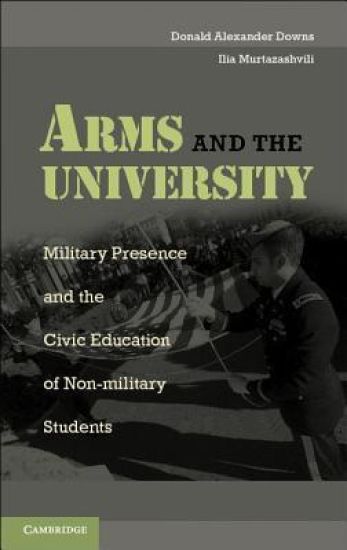
Arms and the University

Arms and the University

Donald Alexander Downs; Ilia Murtazashvili

Cambridge University Press
2012
pokkari
Alienation between the U. S. military and society has grown in recent decades. Such alienation is unhealthy, as it threatens both sufficient civilian control of the military and the long-standing ideal of the 'citizen soldier'. Nowhere is this issue more predominant than at many major universities, which began turning their backs on the military during the chaotic years of the Vietnam War. Arms and the University probes various dimensions of this alienation, as well as recent efforts to restore a closer relationship between the military and the university. Through theoretical and empirical analysis, Donald Alexander Downs and Ilia Murtazashvili show how a military presence on campus in the form of ROTC (including a case study of ROTC's return to Columbia and Harvard universities), military history and national security studies can enhance the civic and liberal education of non-military students, and in the process help to bridge the civil-military gap.