Kirjojen hintavertailu – 12 859 819 kirjaa ja 27 kauppaa
Kirjailija
Ilil Arbel
Kirjat ja teokset yhdessä paikassa: 10 kirjaa, julkaisuja vuosilta 2000–2018, suosituimpiin kuuluu The Mysterious Affair at Styles. Vertaile teosten hintoja ja tarkista saatavuus suomalaisista kirjakaupoista.
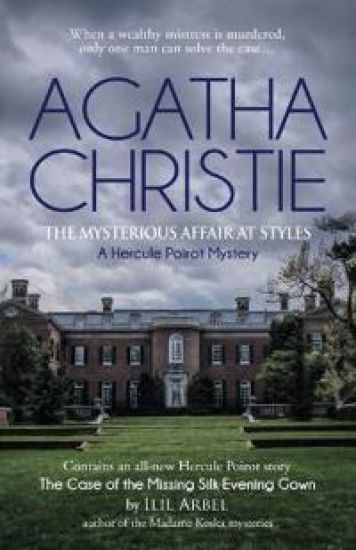
The first Hercule Poirot novel When newly married Emily Inglethorpe is found poisoned, it appears everyone is under suspicion and has a motive, including her new husband, Alfred. When retired Belgian detective Hercule Poirot arrives to investigate, it's up to him to solve the mystery, and keep the suspect from getting away with murder. This edition contains a special introduction and an all-new Hercule Poirot story, "The Case of the Missing Silk Evening Gown," written by Ilil Arbel, author of the Madame Koska mysteries.
What is God like on other planets? If we accept that a Deity who, in our common Earth tongue we call God, created the Universe, then it is logical to assume this Presence also created other worlds and other sentient life forms. He didn't stop with us. Grudgingly, humans might persist in all their wondrous narcissism that while we are not the only intelligence in the Universe, at least we are the only ones with the concept of religion, that God created the Universe but somehow only revealed Himself to Abraham and Moses and Jesus and Buddha and Mohammad and everyone else here who believes. Why? If He exists here, then He exists elsewhere, but under different names and in different forms, inspired by different mythological origin stories and different methods of worship, like the different permutations on this planet. Why shouldn't a similar process prevail elsewhere in the Universe? Other life forms have to evolve in some fashion, no matter the ultimate result. Whatever the unique circumstances of that particular world, Darwinian principles must prevail. Some species would survive, others not. At a certain point, the survivors would look around for reassurance against their hostile atmosphere by seeking a positive beneficence. Whether God would find them or they would find God or whatever the spiritual cocktail, a belief in something larger would gain traction. Besides fear, early faith might grow from selflessness, wanting to share and help, or as a brutal path to achieving domination and power. There would be highly evolved life forms lighting the way, and there would be charlatans. Much like Earth, for every Christ there would be an L. Ron Hubbard. But somewhere out there in the Universe, these distant cousins of ours would look to their stars and wonder, why and how and what does it all mean? As we did. In our new book Ancient Aliens: Extraterrestrial Gods, Religions & Mystical Practices, we're going to explore faith beyond Earth. Now this is not a book about how humans perceived ancient aliens as deities. This is about how the Marradian and Anunnaki religions originated and evolved, their mystical practices, laws and customs, and any legacies of truth and comfort they can offer humanity. If you come away with one notion after reading this book, we humbly hope that it is tolerance of the mind to see something else, to listen and learn from those who are different, yet ultimately, more similar than you thought. It would be a valuable lesson for our planet.
Welcome to the human history you didn't know. A history which the governments of the world don't want you to learn, where humans were pawns of an advanced extraterrestrial race which reshaped our evolutionary cycle through inter-breeding, science and technology. All of us have their DNA. Thirty thousand years ago, two great ancient alien civilizations, the Marradians and the Anunnaki, lived in peace. As much peace as two rivals could muster carving up the Galaxy. Living on the planet Nibiru, they were cousins before the Great Parting, a brutal war fueled by the Anunnaki's insistence that inferior life forms, if gently guided, could thrive in their own endemic image, while Marradians only believed in fealty, the boot and the death stick, or S'ar. The Anunnaki who had visited Earth thousands of years ago were impossibly handsome. They were considered Gods among the ancient Sumerians, and are mentioned in the Bible as the Nephilim - The Fallen Angels. The Marradians are not all that handsome, but they look human and intermingle easily with us. The Anunnaki do not currently live on Earth. The Marradians, on the other hand, have created stations on Earth. Many of them lived here, mostly underwater, for thousands of years. In their minds, the Marradians own the Earth, and the humans are interlopers. They have bases underwater, in the Pacific, near Puerto Rico, and under Alaska's glaciers. The objects we call USO (Unidentified Submerged Objects) are their dangerous crafts. This is just a sliver of the wealth of knowledge we'll be sharing with you. We'll use ancient texts and new research to finally bring the history, culture, traditions, religion, politics, food, science, technology, songs, sexual practices and customs of the Marradians, along with parallel information about the Anunnaki race since the two cousins' story is so bitterly entwined.
The Lemon Tree is the true story of a Siberian pioneer family's extraordinary year-long journey as they transport their late son's tiny lemon tree to Israel. Ten-year-old Sasha has one dying wish: he asks his family to take his lemon tree-the tree he raised from a seed floating in his tea-and plant it in an orchard in Israel. Nothing deters Sasha's family from fulfilling his dream. The Wissotzskys travel on cattle trains through the Trans-Siberian line, become stranded in Shanghai, are shot at by Manchurian officials, and face the constant threat of typhoid fever, as they overcome these and other harrowing obstacles on their 1918 journey. Against all odds, this real-life pioneer family perseveres in their quest to fulfill a child's dying wish. Can the little tropical tree survive the cold, harsh journey?
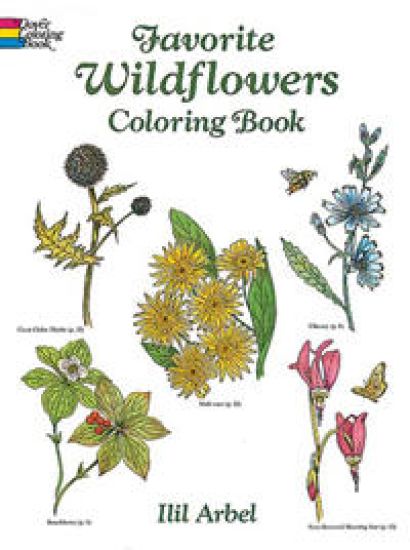
Detailed, accurate drawings of 44 familiar blooms: fringed gentian, lady slipper, ivy-leaved morning glory, yellow iris, globe thistle, wild calla, desert marigold, many more. Captions give flower's height, coloring, common and botanical names, other information. Excellent source of royalty-free illustrations for artists and craftspeople. Color illustrations on covers.