
Kirjojen hintavertailu – 12 903 725 kirjaa ja 27 kauppaa

Kirjailija

Ilir Gedeshi

Kirjat ja teokset yhdessä paikassa: 2 kirjaa, julkaisuja vuosilta 2002–2005, suosituimpiin kuuluu Poverty in Albania. Vertaile teosten hintoja ja tarkista saatavuus suomalaisista kirjakaupoista.

2 kirjaa

Kirjojen julkaisuvuodet: 2002–2005.

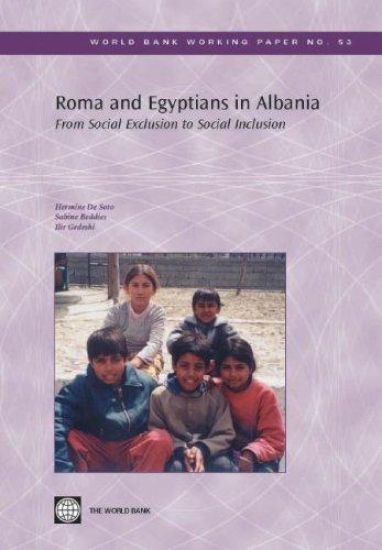
Roma and Egyptians in Albania

Roma and Egyptians in Albania

Hermine De Soto; Ilir Gedeshi; Sabine Beddies

World Bank Publications
2005
nidottu
This report provides key Insights into the social exclusion processes that affect Roma and Egyptian communities in Albania - two of the most vulnerable minority communities in Albania. It offers advice on the design of concrete actions to facilitate the inclusion of Roma and Egyptian communities into Albanian society, and also includes feedback from the Roma and Egyptian communities on the study findings and recommendations. Roma and Egyptians in Albania includes supporting data collected via participatory methodologies conducted in eleven study sites to investigate the socio-economic, cultural, Institutional, and historical situation of Roma and Egyptian communities across Albania. The report's proposed public policies and strategies on minority, poverty, and social exclusion Issues have been endorsed by the Roma and Egyptian communities.
Poverty in Albania

Poverty in Albania

Hermine De Soto; Peter Gordon; Ilir Gedeshi; Zamira Sinoimeri

World Bank Publications
2002
nidottu
Jointly, the World Bank and the Government of Albania undertook an assessment of poverty, conducted in a qualitative manner, to gain information that could guide policy development and resource allocation. The research was conducted through a series of focus groups, interviews, and surveys that permitted community members in ten areas within Albania, to define poverty in their own terms. During the ten years of reform, Albania has been buffeted by set backs which led fully 40 percent of respondents to indicate that socio-economic conditions have worsened during that period. While informal coping mechanisms have been developed in many communities, these are under stress and threaten to give way. The study suggests that a poverty reduction strategy must, at the very least, include improvements in government management, employment opportunities, provision of social services, infrastructure development, and public security.