Kirjojen hintavertailu – 12 859 828 kirjaa ja 27 kauppaa

Kirjailija

Ilja Nieuwland

Kirjat ja teokset yhdessä paikassa: 3 kirjaa, julkaisuja vuosilta 2012–2024, suosituimpiin kuuluu Pterosaurs. Vertaile teosten hintoja ja tarkista saatavuus suomalaisista kirjakaupoista.

3 kirjaa

Kirjojen julkaisuvuodet: 2012–2024.

The Lost Termini of Berlin

The Lost Termini of Berlin

Ilja Nieuwland

De Gruyter
2024
sidottu

Halvin toimitettuna 30,80 €

From the birth of Berlin’s railway network to the time when the bombs of the Second World War and the concrete slabs of the Wall changed the city forever, the Prussian and later German capital counted eight major railway stations. These were beacons in the city: impressive monuments, magnificently built for the bygone rituals of arrival and departure, yet tightly woven into a distinct part of town. Railway stations are magical, meaningful places, allowing for escape as well as promise, nostalgia as well as novelty. They process all sorts of people, from well-to-do business types to unfortunates forced to live on the fringes of society. There is a nervous energy around them, created by those looking forward to their journey, others trying to get oriented in a place that is new to them, and some facing the drudgery of yet another commute. And if pre-World War 2 Berlin was anything, it was energetic. Building an adequate transport infrastructure for Europe’s fastest-growing city proved to be a continuous challenge that required flexibility and adaptation and touched the city in ways that can still be seen today. This is the history of Berlin’s railway stations, the people that used them, and the way the city was shaped by them.
American Dinosaur Abroad

American Dinosaur Abroad

Ilja Nieuwland

University of Pittsburgh Press
2021
nidottu
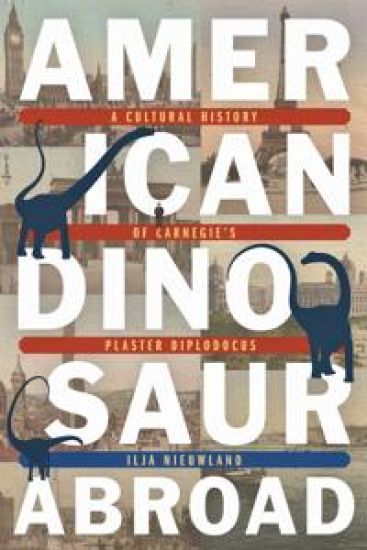
In early July 1899, an excavation team of paleontologists sponsored by Andrew Carnegie discovered the fossil remains in Wyoming of what was then the longest and largest dinosaur on record. Named after its benefactor, the Diplodocus carnegii—or Dippy, as it’s known today—was shipped to Pittsburgh and later mounted and unveiled at the Carnegie Museum of Natural History in 1907. Carnegie’s pursuit of dinosaurs in the American West and the ensuing dinomania of the late nineteenth century coincided with his broader political ambitions to establish a lasting world peace and avoid further international conflict. An ardent philanthropist and patriot, Carnegie gifted his first plaster cast of Dippy to the British Museum at the behest of King Edward VII in 1902, an impulsive diplomatic gesture that would result in the donation of at least seven reproductions to museums across Europe and Latin America over the next decade, in England, Germany, France, Austria, Italy, Russia, Argentina, and Spain. In this largely untold history, Ilja Nieuwland explores the influence of Andrew Carnegie’s prized skeleton on European culture through the dissemination, reception, and agency of his plaster casts, revealing much about the social, political, cultural, and scientific context of the early twentieth century.
Pterosaurs

Pterosaurs

Andre J. Veldmeijer; Mark Witton; Ilja Nieuwland

Sidestone Press
2012
nidottu
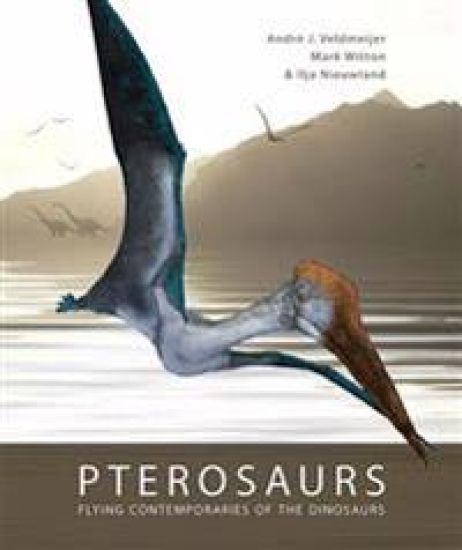
Pterosaurs or flying reptiles were the first vertebrates to evolve flight. These distant relatives of modern reptiles and dinosaurs lived from the Late Triassic (over 200 million years ago) to the end of the Cretaceous (about 65 million years ago) a span of some 135 million years. When they became extinct, no relatives survived them and as a result these prehistoric animals cannot readily be compared with our modern-day fauna. So what do we know of these highly succsessful animals? The present summary answers this and many more questions based on the most recent results of modern scientific research. After a short introduction to palaeontology as a science and its history related to pterosaurs, it explains what pterosaurs were, when and where they lived, and what they looked like. Topics such as disease, injury and reproduction are also discussed. Separated from this text are 'Mark explains' boxes. Each of these explanations puts one specific species in the spotlight and focuses on its lifestyle. They show how diverse pterosaurs were, from small insectivorous animals with a wingspan of nearly 40 centimetres to the biggest flying animals ever to take to the air, with wingspans of over 10 metres and with a way of life comparable to modern-day storks. The text is illustrated with many full colour photographs and beautiful palaeo-art prepared by experts in the field.