
Kirjojen hintavertailu – 12 903 725 kirjaa ja 27 kauppaa

Kirjailija

Immanuel Maurice Wallerstein

Kirjat ja teokset yhdessä paikassa: 2 kirjaa, julkaisuja vuosilta 1991–1998, suosituimpiin kuuluu The Cold War & the University. Vertaile teosten hintoja ja tarkista saatavuus suomalaisista kirjakaupoista.

2 kirjaa

Kirjojen julkaisuvuodet: 1991–1998.

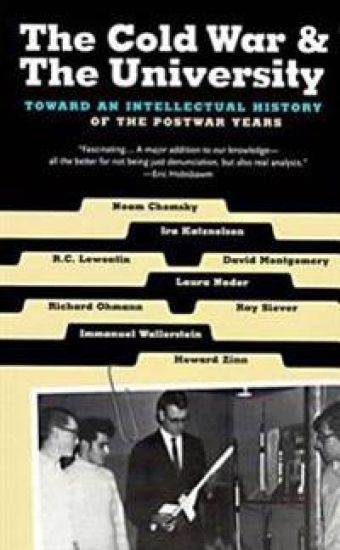
The Cold War & the University

The Cold War & the University

Noam Chomsky; Laura Nader; Immanuel Maurice Wallerstein

I.B.Tauris
1998
pokkari
The years following 1945 witnessed a massive change in American intellectual thought and in the life of American universities. The effort to mobilize intellectual talent during the war established new links between the government and the academy. After the war, many of those who had worked with the military or the Office of Strategic Studies took jobs in the burgeoning post-war structure of university-based military research and intelligence agencies, bringing large infusions of government money into many fields. The essays in this text explore what happened to the university in these years and why. They show the many ways existing disciplines, such as anthropology, were affected by the Cold War ethos, and discuss the rise of new fields, such as area studies, and the changing nature of dissent and academic freedom during and since the Cold War.
Geopolitics and Geoculture

Geopolitics and Geoculture

Immanuel Maurice Wallerstein

Cambridge University Press
1991
pokkari
This is the third volume of Immanuel Wallerstein’s essays to appear in Studies in Modern Capitalism, following the immensely successful collections The Politics of the World Economy and The Capitalist World Economy. Written between 1982 and 1989, these pieces offer Wallerstein’s perspective on the events of this period, and the background to his interpretation of the momentous events of 1989. In his introduction Wallerstein argues that the collapse of the Iron Curtain and the process of perestroika bear out his basic analysis: that the decline of US hegemony in the world-system is the central explanatory variable of change; and that the collapse of the communist empire and the approach of European unity cannot be understood without reference to this decline as a critical stage in the cyclical rhythm of the capitalist world economy. As part of the analysis the book also charts the development of a challenge to the dominant ‘geoculture’: the cultural framework within which the world-system operates. The author argues that since 1968 there has been a rejection of the universalist ideas of liberalism through an intellectual focus on ‘culture’ as opposed to economics and politics; a concern with the inherent existence of racism and sexism in the system; and a new relationship between the sciences and humanities. This collection offers the latest ideas of one of the most original and controversial thinkers of recent years, and is bound to stimulate debate among students and scholars from a variety of disciplines across the social sciences.