Kirjojen hintavertailu – 12 903 735 kirjaa ja 27 kauppaa

Kirjailija

Imran Ahmad

Kirjat ja teokset yhdessä paikassa: 13 kirjaa, julkaisuja vuosilta 2010–2026, suosituimpiin kuuluu 30 Agents Every AI Engineer Must Build. Vertaile teosten hintoja ja tarkista saatavuus suomalaisista kirjakaupoista.

13 kirjaa

Kirjojen julkaisuvuodet: 2010–2026.

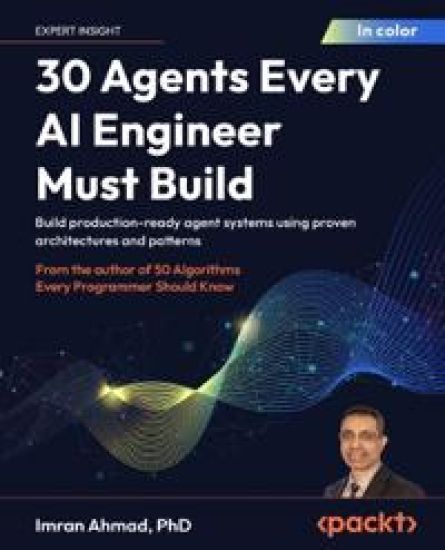
30 Agents Every AI Engineer Must Build

30 Agents Every AI Engineer Must Build

Imran Ahmad

PACKT PUBLISHING LIMITED
2026
nidottu
Learn to transform LLM capabilities into production-ready agent systems using practical patterns and domain-driven approaches, guided by Imran Ahmad, author of 50 Algorithms Every Programmer Should Know Free with your book: DRM-free PDF version + access to Packt's next-gen Reader* Key Features Design and implement 30 proven agent architectures used in real-world production environments Build scalable, secure, and resilient agent workflows that move beyond simple chat interfaces Master core agentic principles—perception, memory, reasoning, and planning—to create truly autonomous systems Book DescriptionAs AI evolves from passive tools into proactive collaborators, intelligent agents are leading a fundamental shift in computing. This guide provides the critical knowledge of agent architectures, practical tools, and industry approaches needed to build robust, autonomous AI systems that do more than just generate text—they act. You will begin by mastering foundational capabilities: perception, memory, reasoning, planning, and learning. You’ll gain deep insight into the cognitive loops that drive autonomous behavior and build sophisticated architectures using frameworks such as LangChain and LangGraph. The book explores high-impact applications across diverse sectors, including software development, finance, manufacturing, legal and education, to show how agents optimize workflows, automate quality control, and enhance advisory systems. Through real-world case studies, you will create agents capable of contextual reasoning, effective tool use, and seamless human collaboration. Finally, you’ll learn essential strategies for deployment, management, and ethical alignment, ensuring your AI solutions are both scalable and responsible in production environments. Whether you're building your first intelligent agent or improving business systems, this book provides clear, actionable guidance for creating scalable and responsible AI solutions. *Email sign-up and proof of purchase required What you will learn Deploy production-ready agent systems that scale securely and reliably Use LangChain and LangGraph to build autonomous agents with modular architectures Implement agents with sophisticated memory, planning, and reasoning capabilities Seamlessly integrate tools, APIs, and external data into agent workflows Establish robust evaluation frameworks to measure and optimize agent performance Implement guardrails and explainability features to ensure ethical and safe deployment Build multi-agent systems for complex, collaborative task orchestration Apply specific agent architectures across healthcare, finance, and legal domains Who this book is forThis book is designed for AI engineers, software developers, machine learning researchers, and technical leaders who are building intelligent systems or deploying LLM-powered applications. It is particularly beneficial for professionals transitioning from traditional machine learning to agent-based architectures or those solving complex automation challenges. Python experience and basic machine learning knowledge are recommended to get the most out of the code implementations.
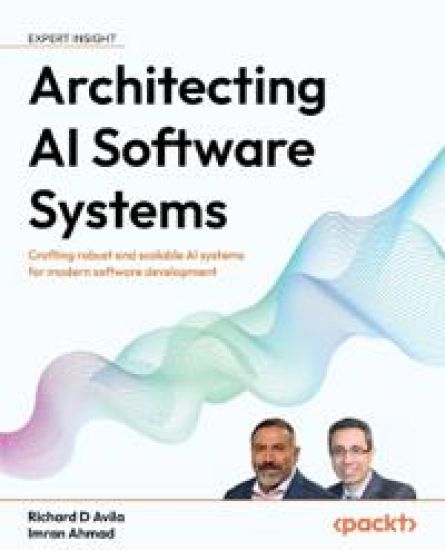
Architecting AI Software Systems

Architecting AI Software Systems

Richard D Avila; Imran Ahmad

PACKT PUBLISHING LIMITED
2025
nidottu
Discover how to design intelligent software systems by balancing AI and traditional architecture. This guide offers a roadmap for robust, scalable AI-enabled systems, blending principles with practical insights. Key Features Learn to integrate AI with traditional software architectures, enabling architects to design scalable, high-performance systems Explore key tools and processes to mitigate risks in AI-driven system development, ensuring timely project delivery and budget control Gain hands-on experience through case studies and exercises, applying architectural concepts to real-world AI systems Book DescriptionArchitecting AI Software Systems provides a definitive guide to building AI-enabled systems, emphasizing the balance between AI’s capabilities and traditional software architecture principles. As AI technologies gain widespread acceptance and are increasingly expected in future applications, this book provides architects and developers with the essential knowledge to stay competitive. It introduces a structured approach to mastering the complexities of AI integration, covering key architectural concepts and processes critical to building scalable and robust AI systems while minimizing development and maintenance risks. The book guides readers on a progressive journey, using real-world examples and hands-on exercises to deepen comprehension. It also includes the architecture of a fictional AI-enabled system as a learning tool. You will engage with exercises designed to reinforce your understanding and apply practical insights, leading to the development of key architectural products that support AI systems. This is an essential resource for architects seeking to mitigate risks and master the complexities of AI-enabled system development. By the end of the book, readers will be equipped with patterns, strategies and concepts necessary to architect AI-enabled systems across various domains. What you will learn Understand the challenges of building AI-enabled systems and managing risks like underperformance and cost overruns Learn architectural tools to design and integrate AI into traditional systems Master AI/ML concepts like inference and decision-making and their impact on architecture Use architectural models to ensure system cohesion and functionality Simulate and optimize AI performance through prototyping and iteration Design scalable AI systems using patterns and heuristics Integrate AI into large systems with a focus on user experience and performance Who this book is forThis book is designed mainly for software and systems architects responsible for designing and integrating AI capabilities into existing and new systems. It also serves as a valuable resource for CTOs, VPs of Engineering, and aspiring architects seeking a comprehensive understanding of the holistic approach to AI system development. Additionally, AI/ML engineers and software developers will benefit from gaining deeper insights into the architectural principles that underpin AI systems, enabling them to align their work with broader architectural goals
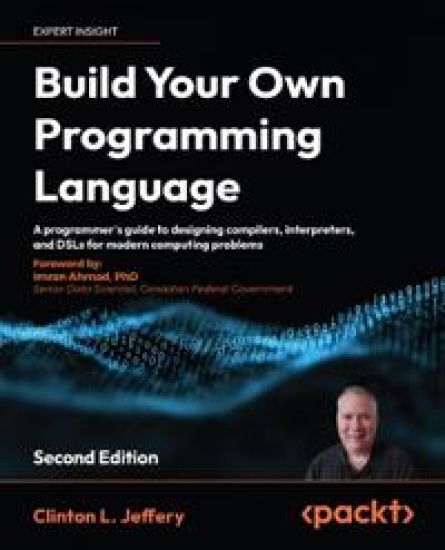
Build Your Own Programming Language

Build Your Own Programming Language

Clinton L. Jeffery; Imran Ahmad

PACKT PUBLISHING LIMITED
2024
nidottu
Learn to design your own programming language in a hands-on way by building compilers, using preprocessors, transpilers, and more, in this fully-refreshed second edition, written by the creator of the Unicon programming language. Purchase of the print or Kindle book includes a free PDF eBook Key Features Takes a hands-on approach; learn by building the Jzero language, a subset of Java, with example code shown in both the Java and Unicon languages Learn how to create parsers, code generators, scanners, and interpreters Target bytecode, native code, and preprocess or transpile code into a high-level language Book DescriptionThere are many reasons to build a programming language: out of necessity, as a learning exercise, or just for fun. Whatever your reasons, this book gives you the tools to succeed. You’ll build the frontend of a compiler for your language and generate a lexical analyzer and parser using Lex and YACC tools. Then you’ll explore a series of syntax tree traversals before looking at code generation for a bytecode virtual machine or native code. In this edition, a new chapter has been added to assist you in comprehending the nuances and distinctions between preprocessors and transpilers. Code examples have been modernized, expanded, and rigorously tested, and all content has undergone thorough refreshing. You’ll learn to implement code generation techniques using practical examples, including the Unicon Preprocessor and transpiling Jzero code to Unicon. You'll move to domain-specific language features and learn to create them as built-in operators and functions. You’ll also cover garbage collection. Dr. Jeffery’s experiences building the Unicon language are used to add context to the concepts, and relevant examples are provided in both Unicon and Java so that you can follow along in your language of choice. By the end of this book, you'll be able to build and deploy your own domain-specific language. What you will learn Analyze requirements for your language and design syntax and semantics. Write grammar rules for common expressions and control structures. Build a scanner to read source code and generate a parser to check syntax. Implement syntax-coloring for your code in IDEs like VS Code. Write tree traversals and insert information into the syntax tree. Implement a bytecode interpreter and run bytecode from your compiler. Write native code and run it after assembling and linking using system tools. Preprocess and transpile code into another high-level language Who this book is forThis book is for software developers interested in the idea of inventing their own language or developing a domain-specific language. Computer science students taking compiler design or construction courses will also find this book highly useful as a practical guide to language implementation to supplement more theoretical textbooks. Intermediate or better proficiency in Java or C++ programming languages (or another high-level programming language) is assumed.
50 Algorithms Every Programmer Should Know - Second Edition
Delve into the realm of generative AI and large language models (LLMs) while exploring modern deep learning techniques, including LSTMs, GRUs, RNNs with new chapters included in this 50% new edition overhaulPurchase of the print or Kindle book includes a free eBook in PDF format. Key FeaturesFamiliarize yourself with advanced deep learning architecturesExplore newer topics, such as handling hidden bias in data and algorithm explainabilityGet to grips with different programming algorithms and choose the right data structures for their optimal implementationBook DescriptionThe ability to use algorithms to solve real-world problems is a must-have skill for any developer or programmer. This book will help you not only to develop the skills to select and use an algorithm to tackle problems in the real world but also to understand how it works. You'll start with an introduction to algorithms and discover various algorithm design techniques, before exploring how to implement different types of algorithms, with the help of practical examples. As you advance, you'll learn about linear programming, page ranking, and graphs, and will then work with machine learning algorithms to understand the math and logic behind them. Case studies will show you how to apply these algorithms optimally before you focus on deep learning algorithms and learn about different types of deep learning models along with their practical use. You will also learn about modern sequential models and their variants, algorithms, methodologies, and architectures that are used to implement Large Language Models (LLMs) such as ChatGPT. Finally, you'll become well versed in techniques that enable parallel processing, giving you the ability to use these algorithms for compute-intensive tasks. By the end of this programming book, you'll have become adept at solving real-world computational problems by using a wide range of algorithms. What you will learnDesign algorithms for solving complex problemsBecome familiar with neural networks and deep learning techniquesExplore existing data structures and algorithms found in Python librariesImplement graph algorithms for fraud detection using network analysisDelve into state-of-the-art algorithms for proficient Natural Language Processing illustrated with real-world examplesCreate a recommendation engine that suggests relevant movies to subscribersGrasp the concepts of sequential machine learning models and their foundational role in the development of cutting-edge LLMsWho this book is forThis computer science book is for programmers or developers who want to understand the use of algorithms for problem-solving and writing efficient code. Whether you are a beginner looking to learn the most used algorithms concisely or an experienced programmer looking to explore cutting-edge algorithms in data science, machine learning, and cryptography, you'll find this book useful. Python programming experience is a must, knowledge of data science will be helpful but not necessary. Table of ContentsCore AlgorithmsData StructuresSorting and Searching AlgorithmsDesigning AlgorithmsGraph AlgorithmsUnsupervised Machine Learning AlgorithmsSupervised Learning AlgorithmsNeural Network AlgorithmsNatural Language ProcessingSequential ModelsAdvanced Machine Learning ModelsRecommendation EnginesAlgorithmic Strategies for Data Handling Large-Scale AlgorithmsEvaluating Algorithmic SolutionsPractical Considerations
40 Algorithms Every Programmer Should Know -

40 Algorithms Every Programmer Should Know -

Imran Ahmad

PACKT PUBLISHING LIMITED
2023
nidottu
Solve classic computer science problems from fundamental algorithms, such as sorting and searching, to modern algorithms in machine learning and cryptography Key Features * More emphasis on modern deep learning techniques, including LSTMs, GRUs, and RNNs * Newer topics include how to handle hidden bias in data and the explainability of the algorithms * Explore different programming algorithms and choose the right data structures for their optimal implementation Book Description Beyond traditional computing, the ability to use algorithms to solve real-world problems is an important skill that any developer or programmer must have. This book will help you not only to develop the skills to select and use an algorithm to tackle problems in the real world by understanding how it works. You'll start with an introduction to algorithms and discover various algorithm design techniques, before exploring how to implement different types of algorithms, such as searching and sorting, with the help of practical examples. As you advance to a more complex set of algorithms, you'll learn about linear programming, page ranking, and graphs, and even work with machine learning algorithms, understanding the math and logic behind them. Case studies on weather prediction, tweet clustering, and movie recommendation engines will show you how to apply these algorithms optimally. Then you will focus on deep learning algorithms and will learn about different types of deep learning models along with their practical use. Finally, you'll become well versed in techniques that enable parallel processing, giving you the ability to use these algorithms for compute-intensive tasks. By the end of this programming book, you'll have become adept at solving real-world computational problems by using a wide range of algorithms. What you will learn * Design algorithms for solving complex problems * Become familiar with neural networks and deep learning techniques * Explore existing data structures and algorithms found in Python libraries * Implement graph algorithms for fraud detection using network analysis * Work with machine learning algorithms to cluster similar tweets and process Twitter data in real time * Create a recommendation engine that suggests relevant movies to subscribers * Implement foolproof security using symmetric and asymmetric encryption on Google Cloud Platform Who This Book Is For This computer science book is for programmers or developers who want to understand the use of algorithms for problem-solving and writing efficient code. Whether you are a beginner looking to learn the most used algorithms concisely or an experienced programmer looking to explore cutting-edge algorithms in data science, machine learning, and cryptography, you'll find this book useful. Python programming experience is a must, knowledge of data science will be helpful but not necessary.
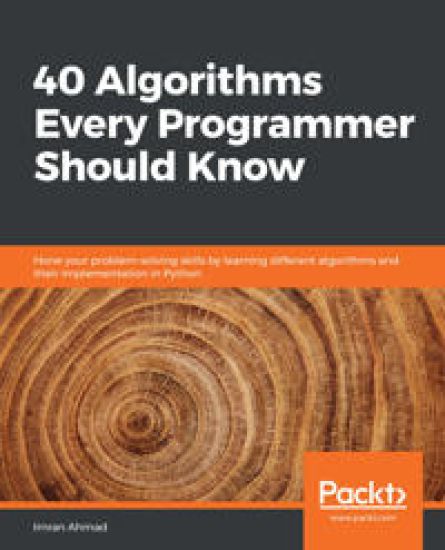
40 Algorithms Every Programmer Should Know

40 Algorithms Every Programmer Should Know

Imran Ahmad

Packt Publishing Limited
2020
nidottu
Learn algorithms for solving classic computer science problems with this concise guide covering everything from fundamental algorithms, such as sorting and searching, to modern algorithms used in machine learning and cryptography Key Features Learn the techniques you need to know to design algorithms for solving complex problems Become familiar with neural networks and deep learning techniques Explore different types of algorithms and choose the right data structures for their optimal implementation Book DescriptionAlgorithms have always played an important role in both the science and practice of computing. Beyond traditional computing, the ability to use algorithms to solve real-world problems is an important skill that any developer or programmer must have. This book will help you not only to develop the skills to select and use an algorithm to solve real-world problems but also to understand how it works. You’ll start with an introduction to algorithms and discover various algorithm design techniques, before exploring how to implement different types of algorithms, such as searching and sorting, with the help of practical examples. As you advance to a more complex set of algorithms, you'll learn about linear programming, page ranking, and graphs, and even work with machine learning algorithms, understanding the math and logic behind them. Further on, case studies such as weather prediction, tweet clustering, and movie recommendation engines will show you how to apply these algorithms optimally. Finally, you’ll become well versed in techniques that enable parallel processing, giving you the ability to use these algorithms for compute-intensive tasks. By the end of this book, you'll have become adept at solving real-world computational problems by using a wide range of algorithms. What you will learn Explore existing data structures and algorithms found in Python libraries Implement graph algorithms for fraud detection using network analysis Work with machine learning algorithms to cluster similar tweets and process Twitter data in real time Predict the weather using supervised learning algorithms Use neural networks for object detection Create a recommendation engine that suggests relevant movies to subscribers Implement foolproof security using symmetric and asymmetric encryption on Google Cloud Platform (GCP) Who this book is forThis book is for programmers or developers who want to understand the use of algorithms for problem-solving and writing efficient code. Whether you are a beginner looking to learn the most commonly used algorithms in a clear and concise way or an experienced programmer looking to explore cutting-edge algorithms in data science, machine learning, and cryptography, you'll find this book useful. Although Python programming experience is a must, knowledge of data science will be helpful but not necessary.
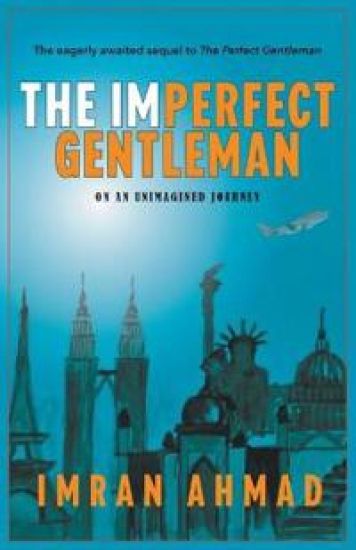
The Imperfect Gentleman: on an Unimagined Journey

The Imperfect Gentleman: on an Unimagined Journey

Imran Ahmad

New Generation Publishing
2020
nidottu
Imran Ahmad thought that life was clear and unambiguous, good-and-bad, Heaven-and-Hell - as long as you had a solid moral foundation and rational beliefs based on the application of reason to empirical observation. Apparently, this was an oversimplification. The Perfect Gentleman (originally published as Unimagined) has touched the hearts of readers all over the world and received an astonishing breadth of acclaim from all quarters. For years, readers have been impatient for this, the long-overdue sequel ... The Imperfect Gentleman. With searing clarity, breathtaking honesty and a unique structure which encompasses stunning story arcs that span decades, Imran Ahmad explores what it is to be human - imperfect, insecure, superficial, sometimes ignorant, perhaps arrogant - in a world of extremes and narrow-minded convictions. A beautiful, complex, multilayered, often surprising world in which there are many versions of humanity for him to discover ... and Time is merely a means of organising our understanding. The boy who grew up wanting to be the perfect gentleman learns that nothing is quite so black-and-white in reality, and that no life can be lived in only a single genre. Written in a unique 'multi-genre' style, this unimagined journey is guaranteed to provoke and fascinate, as it explores the possibility that nothing we hold as absolute truth may actually be so. And that those whom we hate may actually be worthy of our deepest love. His website is: www.unimagined.co.uk
The Perfect Gentleman: a Muslim boy meets the West

The Perfect Gentleman: a Muslim boy meets the West

Imran Ahmad

New Generation Publishing
2019
nidottu
Both deliciously funny and deeply insightful, THE PERFECT GENTLEMAN is a beguiling multi-layered memoir that has touched the hearts of readers all over the world and has received a truly astonishing list of endorsements from all quarters across the political, religious, ethnic and cultural spectrums. (Some say spectra, but spectrums is also valid.)At the age of one (and-a-half, nearly), Imran Ahmad moved from Pakistan to London, growing up torn between his Islamic identity and his desire to embrace the West. Join Imran on his struggle against corruption and injustice, his eternal quest to be the quintessential English gentleman (The Saint), his yearning for the coolest car (Jaguar XJ-S), his desire for the perfect girlfriend (preferably brunette, but any kind considered). Can he maintain a James Bond persona without the vodka, cigarettes and women - even whilst his parents are trying to arrange his marriage? Will he really burn in Hell for all eternity if he follows the wrong religion? If you pray to God to help you pass an exam, do you still have to study for it? What are the correct protocols to follow on your wedding night? Imran's unimagined journey makes thoughtful, compelling, and downright delightful reading. With a unique style and unflinching honesty, THE PERFECT GENTLEMAN addresses serious issues in an extraordinarily light way, and will leave readers both thinking deeply and laughing out loud. Originally published in the UK and Australia as Unimagined; picked up by Hachette for US publication as The Perfect Gentleman (in American English, with additional material and an extended ending); now re-translated back into British English as a global edition with even more material, a new Afterword by the author and, most helpfully, some notes to explain matters peculiarly British (especially for American readers). This edition precedes the upcoming sequel, The Imperfect Gentleman, and the sequel's sequel, The Gentle Man.
Final FRCA: 300 SBAs

Final FRCA: 300 SBAs

Kariem El-Boghdadly; Imran Ahmad

JP Medical Ltd
2015
nidottu
Final FRCA: 300 SBAs offers a wealth of exam questions focussing on the new SBA format. With so few resources available for candidate wishing to practice the new exam format, Final FRCA: 300 SBAs will ensure that trainees have sufficient experience to ensure success in the exam. Presented as 10 complete SBA mock paper sections, and featuring the most up-to-date and comprehensive coverage of practice questions, the content is carefully designed to test knowledge and improve exam technique. Covering the full breadth of the syllabus with particular focus on clinical scenarios, Final FRCA: 300 SBAs provides the definitive SBA revision guide to maximise chances of exam success. 300 SBAs providing large number of questions in the new exam formatAnswers feature detailed explanations to consolidate knowledgeTables, diagrams and graphs to assist in understanding answers and help clarify complex conceptsA further reading reference is provided with each SBA question to aid understanding of answersUp to date and relevant SBA questions reflect RCA style questioning, along with accepted current practice and guidelines