Kirjojen hintavertailu – 12 903 725 kirjaa ja 27 kauppaa

Kirjailija

Imre Lakatos

Kirjat ja teokset yhdessä paikassa: 9 kirjaa, julkaisuja vuosilta 1979–2015, suosituimpiin kuuluu Beweise und Widerlegungen. Vertaile teosten hintoja ja tarkista saatavuus suomalaisista kirjakaupoista.

9 kirjaa

Kirjojen julkaisuvuodet: 1979–2015.

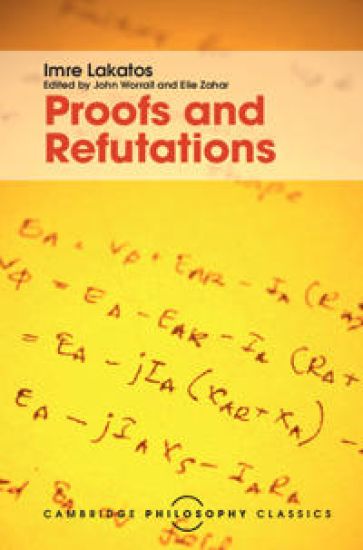
Proofs and Refutations

Proofs and Refutations

Imre Lakatos

Cambridge University Press
2015
sidottu
Imre Lakatos's Proofs and Refutations is an enduring classic, which has never lost its relevance. Taking the form of a dialogue between a teacher and some students, the book considers various solutions to mathematical problems and, in the process, raises important questions about the nature of mathematical discovery and methodology. Lakatos shows that mathematics grows through a process of improvement by attempts at proofs and critiques of these attempts, and his work continues to inspire mathematicians and philosophers aspiring to develop a philosophy of mathematics that accounts for both the static and the dynamic complexity of mathematical practice. With a specially commissioned Preface written by Paolo Mancosu, this book has been revived for a new generation of readers.
Die Methodologie der wissenschaftlichen Forschungsprogramme
Royal Society, betrachtet die Hexentheorie als das Musterbeispiel empirischen Denkens. Wir müssen das empirische Denken definieren, ehe wir mit Hume anfangen, Bücher zu verbren­ nen. Das wissenschaftliche Denken konfrontiert die Theorien mit den Tatsachen; und eine der Hauptbedingungen dabei ist, daß die Theorien von den Tatsachen gestützt sein müs­ sen. Wie ist das nun des genaueren möglich? Darauf sind mehrere verschiedene Antworten vorgeschlagen worden. Newton selbst glaubte, seine Gesetze aufgrundder Tatsachen bewiesen zu haben. Er war stolz darauf, keine bloßen Hypothesen anzubieten; er veröffentlichte nur Theorien, die aufgrundder Tatsa­ chen bewiesen waren. Und zwar behauptete er, seine Gesetze aus den Keplerschen 'Erschei­ nungen' abgeleitet zu haben. Doch das war Unsinn, denn nach Kepler bewegten sich die Plane­ ten in Ellipsen, nach Newton aber wäre das nur richtig, wenn die Planeten nicht gegenseitig ihre Bewegung stören würden, und eben dies tun sie. Daher mußte Newton eine Störungstheo­ rie entwickeln, nach der sich kein Planet auf einer Ellipse bewegt. Heute kann man leicht zeigen, daß sich kein Naturgesetz aus endlich vielen Tatsa­ chen schlüssig ableiten läßt; doch man liest immer noch, wissenschaftliche Theorien würden aufgrundder Tatsachen bewiesen. Woher kommt diese hartnäckige Sperre gegen die elemen­ tare Logik? Das läßt sich sehr einleuchtend erklären. Die Wissenschaftler möchten ihren Theorien Achtung verschaffen, sie sollen die Bezeichnung 'Wissenschaft' verdienen, also echte Erkenntnis sein. Nun bezog sich im 17. Jahrhundert, als die Wissenschaft entstand, die wichtigste Erkenntnis auf Gott und den Teufel, auf Himmel und Hölle.

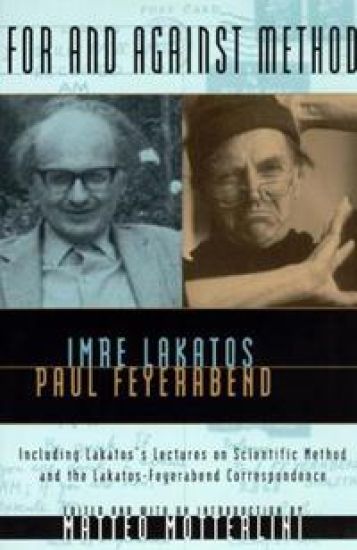
For and Against Method

For and Against Method

Imre Lakatos; Paul Feyerabend

University of Chicago Press
2000
nidottu

Halvin toimitettuna 50,10 €

The work that helped to determine Paul Feyerabend's fame and notoriety, "Against Method," stemmed from Imre Lakatos's challenge: "In 1970 Imre cornered me at a party. "Paul", he said, "you have such strange ideas. Why don't you write them down? I shall write a reply, we publish the whole thing and I promise you - we shall have a lot of fun." Although Lakatos died before he could write his reply, this text reconstructs his original counter-arguments from lectures and correspondence previously unpublished in English, allowing us to enjoy the "fun" two of this century's most eminent philosophers had, matching their wits and ideas on the subject of the scientific method. The text opens with an imaginary dialogue between Lakatos and Feyerabend, which Matteo Motterlini has constructed, based on their published works, to synthesize their positions and arguments. Part one presents the transcripts of the last lectures on method that Lakatos delivered. Part two, Feyerabend's response, consists of a previously published essay on anarchism, which began the attack on Lakatos's position that Feyerabend later continued in "Against Method." The third and longest section consists of the correspondence Lakatos and Feyerabend exchanged on method and many other issues and ideas, as well as the events of their daily lives, between 1968 and Lakatos's death in 1974.
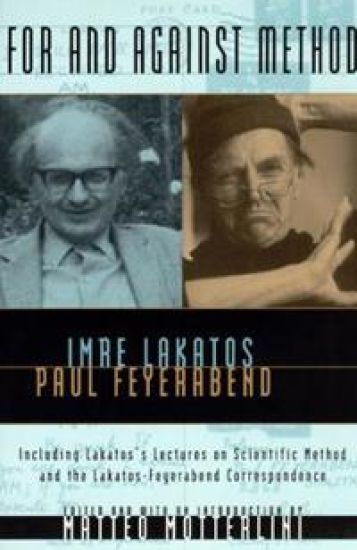
For and Against Method

For and Against Method

Imre Lakatos; Paul Feyerabend

University of Chicago Press
1999
sidottu
The work that helped to determine Paul Feyerabend's fame and notoriety, "Against Method," stemmed from Imre Lakatos's challenge: "In 1970 Imre cornered me at a party. "Paul", he said, "you have such strange ideas. Why don't you write them down? I shall write a reply, we publish the whole thing and I promise you - we shall have a lot of fun." Although Lakatos died before he could write his reply, this text reconstructs his original counter-arguments from lectures and correspondence previously unpublished in English, allowing us to enjoy the "fun" two of this century's most eminent philosophers had, matching their wits and ideas on the subject of the scientific method. The text opens with an imaginary dialogue between Lakatos and Feyerabend, which Matteo Motterlini has constructed, based on their published works, to synthesize their positions and arguments. Part one presents the transcripts of the last lectures on method that Lakatos delivered. Part two, Feyerabend's response, consists of a previously published essay on anarchism, which began the attack on Lakatos's position that Feyerabend later continued in "Against Method." The third and longest section consists of the correspondence Lakatos and Feyerabend exchanged on method and many other issues and ideas, as well as the events of their daily lives, between 1968 and Lakatos's death in 1974.
Mathematics, Science and Epistemology: Volume 2, Philosophical Papers
Imre Lakatos’ philosophical and scientific papers are published here in two volumes. Volume I brings together his very influential but scattered papers on the philosophy of the physical sciences, and includes one important unpublished essay on the effect of Newton’s scientific achievement. Volume 2 presents his work on the philosophy of mathematics (much of it unpublished), together with some critical essays on contemporary philosophers of science and some famous polemical writings on political and educational issues.