Kirjojen hintavertailu – 12 859 819 kirjaa ja 27 kauppaa
Kirjailija
Imtiaz Hussain
Kirjat ja teokset yhdessä paikassa: 5 kirjaa, julkaisuja vuosilta 2008–2019, suosituimpiin kuuluu Afghanistan, Iraq, and Post-conflict Governance: Damoclean Democracy?. Vertaile teosten hintoja ja tarkista saatavuus suomalaisista kirjakaupoista.
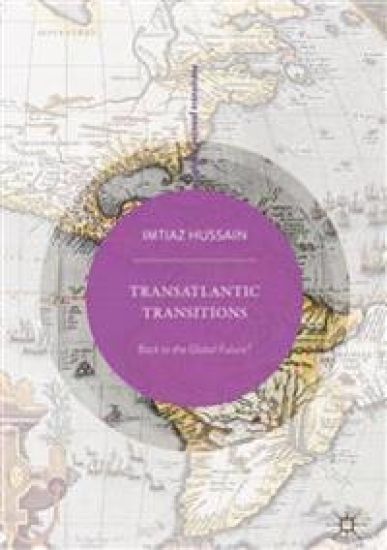
With North Atlantic post-World War II transatlantic dynamics as the subject, this volume inquires if its theoretical tenets hold in other epochs and Atlantic arenas. Both case and comparative studies of such historical cases as the silver, slave, and commodity trades, and whether ideas, such as faith and democracy, have as much impact as these merchandise flows, simultaneously challenge and strengthen the transatlantic paradigm. They permit transatlantic relations to be stretched as far back as to the 8th Century, in turn exposing transatlantic flows hugging global threads, while revealing the strength and size of several unaccounted types of transatlantic transactions, such as the north-south varieties.
With North Atlantic post-World War II transatlantic dynamics as the subject, this volume inquires if its theoretical tenets hold in other epochs and Atlantic arenas. Both case and comparative studies of such historical cases as the silver, slave, and commodity trades, and whether ideas, such as faith and democracy, have as much impact as these merchandise flows, simultaneously challenge and strengthen the transatlantic paradigm. They permit transatlantic relations to be stretched as far back as to the 8th Century, in turn exposing transatlantic flows hugging global threads, while revealing the strength and size of several unaccounted types of transatlantic transactions, such as the north-south varieties.
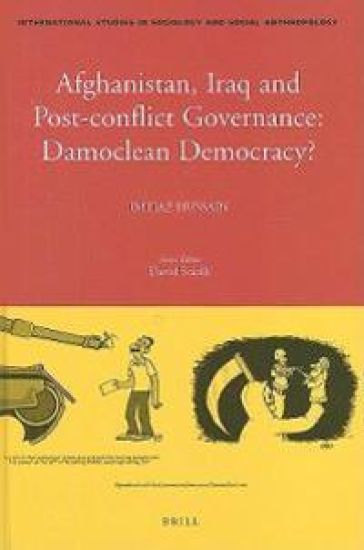
Much has been written about democratizing Afghanistan and Iraq, yet a clear-cut, theoretically-enriching, and empirically thick comparative analysis remains overdue for societies as divided as these two. To partly fill in the vacuum, this book utilizes various theories and stages of international negotiations(which catalyzed democratization in both cases) in interpreting both cases, while also distinguishing between endogenous and exogenous democratization forces. How electoral democracy came about in both cases is traced from the negotiating table through at least 4 stages and 6 chapters. The study finds democratization being more stable when left on its own momentum (as in Afghanistan) than when conflict-driven (as in Iraq). Though full-fledged democracy does not appear inevitable in either case, the study's insightful exploration of its interface in Islamic communities and as a Bush Doctrine component alerts us to fasten our seat belts before elections beckon again.
Did 9/11 revive a North American guns-butter trade-off? Established in the largest administrative overhaul since World War II, the Department of Homeland Security was charged with keeping the United States safe within a wider security community, but confronted the Washington Consensus-based Western Hemisphere free trade movement, beginning with the North American Free Trade Agreement (NAFTA) and extending to the Central American Free Trade Agreement (CAFTA) in 2003, to materialize a Free Trade Area of the Americas (FTAA) compact. Whether 9/11 restrictions impeded these trade-related thrusts or not, embracing neoliberalism permitted Canada and Mexico to pursue their own initiatives, such as proposing free-trade to the US—Canada in 1985, Mexico in 1990, but, as during the Cold War, security imperatives ultimately prevailed. This work investigates Canada's and Mexico's Department of Homeland Security responses through three bilateral studies of policy responses along comparative lines, case studies of security and intelligence apparatuses in each of the three countries, and a post-9/11 trilateral assessment. Ultimately, they raise a broader and more critical North American question: Will regional economic integration continue to be trumped by security considerations, as during the Cold War era, and thereby elevate second-best outcomes, or rise above the constraints to reassert the unquenchable post-Cold War thirst for unfettered markets replete with private enterprises, liberal policies, and full-fledged competitiveness?