Kirjailija
Inazo Nitobe
Kirjat ja teokset yhdessä paikassa: 102 kirjaa, julkaisuja vuosilta 2000–2026, suosituimpiin kuuluu The Way of the Warrior. Vertaile teosten hintoja ja tarkista saatavuus suomalaisista kirjakaupoista.
Nimi esiintyy myös muodoissa: Inazo Nitobé, Inazo¿ Nitobe, Inazô Nitobe
102 kirjaa
Kirjojen julkaisuvuodet: 2000–2026.
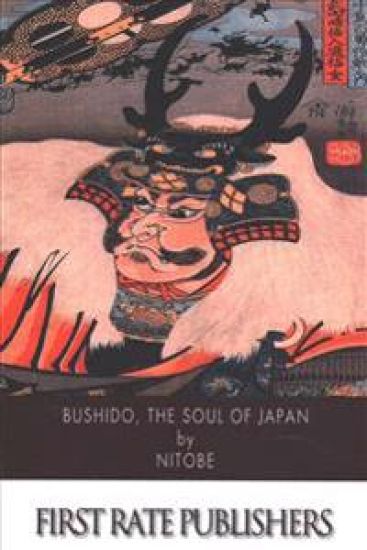
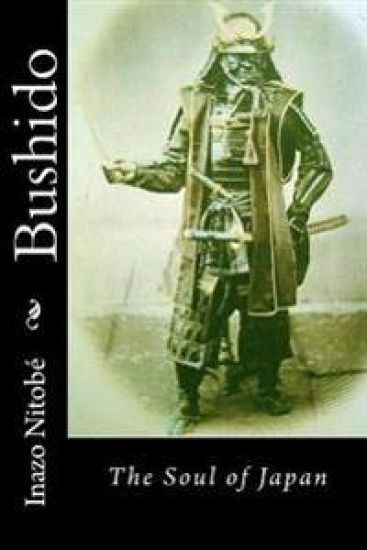
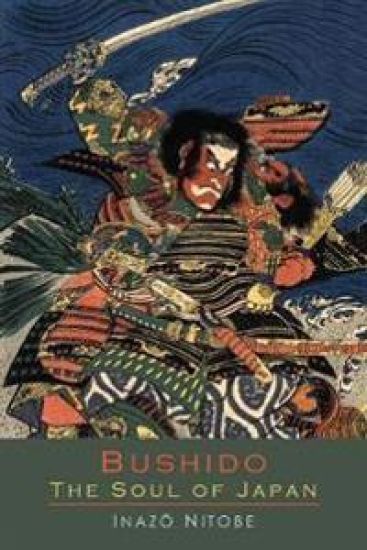
Bushido: The Soul of Japan is a book written by Inazo Nitobe exploring the way of the samurai. Bushido: The Soul of Japan is, along with the classic text Hagakure by Tsunetomo Yamamoto (1659-1719), a study of the way of the samurai. A best-seller in its day, it was read by many influential foreigners, among them President Theodore Roosevelt, President John F. Kennedy and Robert Baden-Powell, the founder of the Boy Scouts. Nitobe originally wrote Bushido: The Soul of Japan in English (1899), in Malvern, Pennsylvania. The book was not translated into Japanese until it had been popular in the English-speaking world for several years. As Japan underwent deep transformations of its traditional lifestyle while becoming a modern nation, Nitobe engaged in an inquiry into the ethos of his nation, and the result of his meditations was this seminal work. A fine stylist in English, he wrote many books in that language, which earned him a place among the best known Japanese writers of his age. He found in Bushido, the Way of the Warrior, the sources of the eight virtues most admired by his people: rectitude, courage, benevolence, politeness, sincerity, honor, loyalty and self-control.
Bushido, the Soul of Japan
Inazo Nitobe
Createspace Independent Publishing Platform
2015
nidottu
Halvin toimitettuna 12,50 €
Bushido the Soul of Japan: Illustrated
Blago Kirov; Inazo Nitobe
Createspace Independent Publishing Platform
2014
nidottu
Halvin toimitettuna 14,80 €
Bushido is the code of moral principles which the knights were required or instructed to observe. It is not a written code; at best it consists of a few maxims handed down from mouth to mouth or coming from the pen of some well-known warrior or savant. More frequently it is a code unuttered and unwritten, possessing all the more the powerful sanction of veritable deed, and of a law written on the fleshly tablets of the heart. It was founded not on the creation of one brain, however able, or on the life of a single personage, however renowned. It was an organic growth of decades and centuries of military career. It, perhaps, fills the same position in the history of ethics that the English Constitution does in political history; yet it has had nothing to compare with the Magna Charta or the Habeas Corpus Act. True, early in the seventeenth century Military Statutes (Buk Hatto) were promulgated; but their thirteen short articles were taken up mostly with marriages, castles, leagues, etc., and didactic regulations were but meagerly touched upon. We cannot, therefore, point out any definite time and place and say, "Here is its fountain head." Only as it attains consciousness in the feudal age, its origin, in respect to time, may be identified with feudalism. But feudalism itself is woven of many threads, and Bushido shares its intricate nature. As in England the political institutions of feudalism may be said to date from the Norman Conquest, so we may say that in Japan its rise was simultaneous with the ascendancy of Yoritomo, late in the twelfth century. As, however, in England, we find the social elements of feudalism far back in the period previous to William the Conqueror, so, too, the germs of feudalism in Japan had been long existent before the period mentioned.
Bushido: The Soul of Japan written by Inazo Nitobe, along with the classic text Hagakure by Tsunetomo Yamamoto (1659-1719), is a study of the way of the samurai. Inazo Nitobe found in Bushido, the Way of the Warrior, the sources of the virtues most admired by his people: rectitude, courage, benevolence, politeness, sincerity, honor, loyalty and self-control. His approach to his task was eclectic and far-reaching.
Bushido: The Soul of Japan is a book written by Inazo Nitobe that explores the Japanese code of ethics and morality known as Bushido. The book is divided into ten chapters, each of which delves into a different aspect of Bushido, such as loyalty, courage, and honor. Nitobe draws on his own experiences as a Japanese scholar and diplomat to provide insights into the historical and cultural context of Bushido, as well as its significance in Japanese society. Throughout the book, Nitobe emphasizes the importance of Bushido as a guiding principle for individuals and society as a whole. He argues that the values of Bushido, such as self-discipline, respect, and compassion, are essential for creating a harmonious and just society. Nitobe also explores the relationship between Bushido and other aspects of Japanese culture, such as Zen Buddhism and the samurai warrior class. Overall, Bushido: The Soul of Japan is a thought-provoking and insightful examination of one of Japan's most important cultural traditions. It offers a unique perspective on the values and beliefs that have shaped Japanese society for centuries, and provides readers with a deeper understanding of the country's history and culture. This Is A New Release Of The Original 1909 Edition. This scarce antiquarian book is a facsimile reprint of the old original and may contain some imperfections such as library marks and notations. Because we believe this work is culturally important, we have made it available as part of our commitment for protecting, preserving, and promoting the world's literature in affordable, high quality, modern editions, that are true to their original work.
This volume collects together essays and lectures given by the author from 1922-1927 to a variety of international audiences. Together they illuminate essential aspects of the Japanese mentality and way of life, particularly in social, religious and linguistic aspects.
Bushido is the code of conduct that governed the lives and conduct of the samurai. Written by one of Japan's most respected thinkers, this book was the first in English to explore the roots of Japanese ethics and morality. A century ago, when Japan was transforming itself from an isolated feudal society into a modern nation, a Japanese educator queried about the ethos of his people composed this seminal work, which with his numerous other writings in English made him the best, known Japanese writer in the West during his lifetime. He found in Bushido, the Way of the Warrior, the sources of the virtues most admired by his people: rectitude, courage, benevolence, politeness, sincerity, honor, loyalty and self-control. His approach to his task was eclectic and far-reaching. On the one hand, he delved into the indigenous traditions, into Buddhism, Shintoism, Confucianism and the moral guidelines handed down over hundreds of years by Japan's samurai and sages. On the other hand, he sought similarities and contrasts by citing not only Western philosophers and statesmen, but also the shapers of European and American thought and civilization going back to the Romans, the Greeks and Biblical times. This book is a classic to which generations of scholars and laymen alike have long referred for insights into the character of the Japanese people. And all of its many readers in the past have been amply rewarded, as will be all those who turn to its pages in the next and future decades.
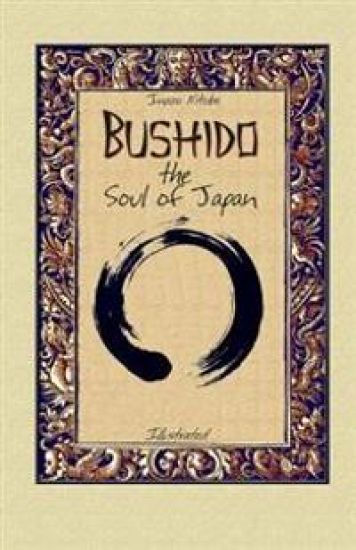
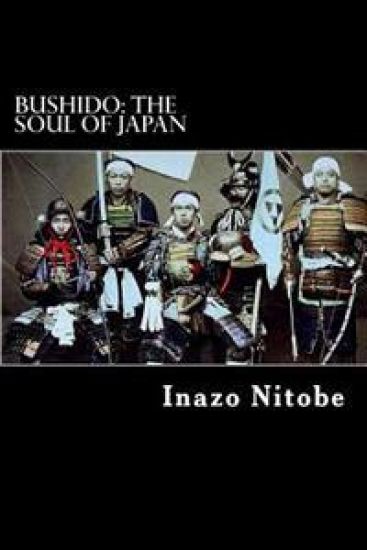
"Bushido: The Soul of Japan" was written in English for a Western audience by Inazo Nitobe, a career diplomat and scholar in his native Japan. First published in 1900, Bushido has enjoyed great popularity ever since, and has been reprinted many times. The current edition, however, is the first to preserve the content and voice of Nitobe's original while bringing the text into the 21st century and including explanations of obscure references. The samurai warriors of Japan have fascinated generations of people worldwide. Simultaneously well-known and misunderstood, the samurai's existence is popularly depicted as one dominated by violence -- a life and death ruled by the sword. But there is much more to this elite class of warriors, and Nitobe thoroughly explores the samurai themselves -- their military traditions, their reverence for the sword, and how they lived their daily lives. Nitobe discusses samurai values and beliefs, and explains how they translated into actions. He explores the lasting influence of Bushido and the samurai, whose legacy is perhaps most obvious to us today in Japanese martial arts. Not only did the samurai refine the technical aspects of the arts, they infused them with the spirit of Zen Buddhism, teaching that the highest mastery was attainable only by becoming one with yourself, your weapon and your opponent. Inazo Nitobe was dedicated to a greater understanding between East and West at a time when Japan's engagement with the Western world was in its adolescence. Though his primary subject is the moral code upon which the samurai built and wielded their power, Nitobe quickly broadens his scope into an examination of nothing less than what the title of the book suggests -- the soul of Japan itself. New to this edition are a short essay about the author, illustrations showing the samurai in their waning years, and an index.
Bushido, meaning "Way of the Warrior", is a Japanese code of conduct and a way of the samurai life, loosely analogous to the concept of chivalry. It originates from the samurai moral code and stresses frugality, loyalty, martial arts mastery, and honor unto death. Born of two main influences, the violent existence of the samurai was tempered by the wisdom and serenity of Japanese Shinto and Buddhism. Bushido developed between the 9th and 12th centuries and numerous translated documents dating from the 12th to 16th centuries demonstrate its wide influence across the whole of Japan, although some scholars have noted "the term bushido itself is rarely attested in pre-modern literature." According to the Japanese dictionary Shogakukan Kokugo Daijiten, "Bushido is defined as a unique philosophy (ronri) that spread through the warrior class from the Muromachi (chusei) period." In Bushido: The Soul of Japan (1899), author Nitobe Inazo wrote: "... Bushido, then, is the code of moral principles which the samurai were required or instructed to observe... More frequently it is a code unuttered and unwritten... It was an organic growth of decades and centuries of military career." Nitobe was not the first person to document Japanese chivalry in this way. In his text Feudal and Modern Japan, (1896) Historian Arthur May Knapp wrote: "The samurai of thirty years ago had behind him a thousand years of training in the law of honor, obedience, duty, and self-sacrifice..... It was not needed to create or establish them. As a child he had but to be instructed, as indeed he was from his earliest years, in the etiquette of self-immolation. The fine instinct of honor demanding it was in the very blood..."
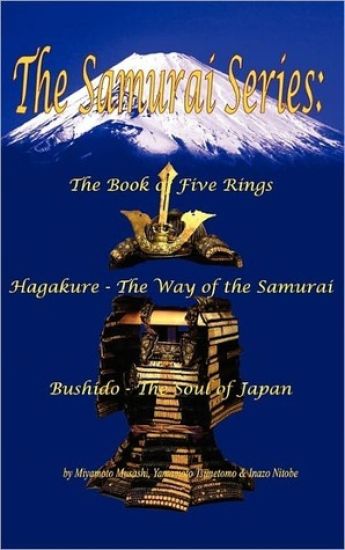
The Samurai Series: The Book of Five Rings, Hagakure - The Way of the Samurai & Bushido - The Soul of Japan
Miyamoto Musashi; Yamamoto Tsunetomo; Inazo Nitobe
Digital Pulse Publishing
2011
sidottu
Halvin toimitettuna 30,80 €
The Samurai Series brings together three of the most important books dealing with the Samurai path and philosophy into one deluxe, illustrated hardcover volume. The Book of Five Rings was written by Miyamoto Musashi, a Samurai of legendary renown, about 1645. It is a masterpiece of simple exposition written by a master swordsman, who, near the end of his spectacular life, tried earnestly to explain the essentials of individual combat and the essence of being a Samurai. His book is widely considered to a cornerstone of the philosophy of Bushido. Hagakure - The Way of the Samurai, which means: "Hidden by Leaves," was composed from dialogs by the famous Samurai Yamamoto Tsunetomo, by a scribe, Tashiro Tsuramoto, about 1716 AD. It explains the major ideas and philosophy that are essential to the "way of the Samurai", by which is meant the "way of dying". It contains numerous tales of various Samurai and their deeds which illustrate their philosophy and practice. Bushido - The Soul of Japan by Inazo Nitobe was first published 1899. It is an extremely literate presentation by a Japanese intellectual who wished to present Japan and its fundamental philosophy in a way that could be understood by Westerners. It describes how the Shinto religion and Buddhism are the underpinnings of the essentially militaristic view of honor and life that are inherent in Bushido, the Samurai code. Excerpt from The Book of Five Rings. Reprinted by permission. All rights reserved. The Gaze in Strategy The gaze should be large and broad. This is the twofold gaze, "Perception and Sight". Perception is strong and sight, weak. In strategy, it is important to see distant things as if they were close, and to take a distanced view of close things. It is important in strategy to know the enemy's sword, yet not be distracted by insignificant movements of his sword. You must study this. The gaze is the same for single combat and for large-scale strategy. It is necessary in strategy to be able to look to both sides without moving the eyeballs. You cannot master this ability quickly. Learn what is written here; use this gaze in everyday life and do not vary it...
This volume collects together essays and lectures given by the author from 1922-1927 to a variety of international audiences. Together they illuminate essential aspects of the Japanese mentality and way of life, particularly in social, religious and linguistic aspects.